Category Archives: health

When Will We Learn?

Two cases in point.

Case One:

The Yale School of Public Health reports that

Some “non-menthol” cigarettes that are being marketed as a “fresh” alternative in states where traditional menthol cigarettes are banned use synthetic chemicals to mimic menthol’s distinct cooling sensations, researchers at Yale and Duke University have found.

The synthetic additives could undermine existing policies and a U.S. Food and Drug Administration ban on menthol cigarettes expected later this year that is intended to discourage new smokers and address the harmful health effects of tobacco use.

https://tinyurl.com/35r7t7wz

….

Hundreds of municipalities across the United States and some states – Massachusetts and California – have already restricted the sale of flavored tobacco products, including menthol cigarettes.

In a study published Oct. 9 in the Journal of the American Medical Association, researchers from the Yale School of Public Health, the Center for Green Chemistry & Green Engineering at Yale, and Duke School of Medicine identified a synthetic flavoring agent known as WS-3 in the newly introduced “non-menthol” cigarettes that delivers similar, or stronger, cooling sensations as menthol but without the minty aroma or taste.

….

Flavored tobacco products such as menthol cigarettes tend to reduce tobacco’s harsh effects making them particularly popular among young people and those just starting to smoke. Historically, menthol cigarettes have also been aggressively marketed towards African Americans, with up to 90% of African Americans who smoke using menthol cigarettes.

It seems likely that this “gap” in the regulatory regime for death-dealing cigarettes results from the regulations being based on specific chemicals rather than on the effects of flavor-enhancing chemicals regardless of type. The lesson to be learned from this, yet again, is that industries looking to make money regardless of impacts on public health will always look for an escape route and finding such routes is always easier when the “thing to avoid” is named rather than relying on the effects of the danger factor or the way it influences behavior.

The historical conduct of the tobacco industry, among others, should be a lesson for governments at all levels that you have to think very deeply about what you’re trying to prevent and how such prevention may be avoided. This doesn’t seem that hard.

Case Two:

The Virginia Highway Use Fee (the “HUF”).

I only recently learned about this assessment even though we bought a highly fuel-efficient hybrid vehicle in late 2020. The fee is not a lot of money, but the purpose of the fee is offensive and counter to other goals, or what should be other goals, as we try to offset some of the worst environmental effects of our dependency on automobiles.

The fee is $25 a year. The Virginia law provides a way of saving, maybe, $5 of the fee but is very complicated and, in my judgment, not worth the effort that involves obtaining another “reader” for your windshield, taking and reporting readings, etc. No thanks. Not to save $5.

More troubling is the motivation for this fee.

According to the Virginia Department of Motor Vehicles,

     You pay the HUF if you register a:

    • Fuel-efficient vehicle, which is a vehicle that has a combined fuel economy of 25 miles per gallon (MPG) or greater
    • Vehicle made in a year in which the average combined MPG rating for all vehicles produced in that year is 25 MPG or greater
    • Low Speed Vehicles, pay an annual $25 HUF

The highway use fee (HUF) helps make up for the fuel taxes that drivers with fuel-efficient and electric vehicles spend less on, because they’re not using as much fuel.

Among the vehicles exempted from the HUF are:

  • Vehicles with a combined MPG rating less than 25 MPG
  • Autocycles
  • Motorcycles
  • Mopeds

The HUF was started in 2020 but in July 2022,

the state launched an alternative program to let drivers pay the fee at a per-mile rate — a cost savings for those who drive less than the average amount, which officials peg at 11,600 miles annually. For drivers of battery-powered cars, that fee works out to a penny per mile. [https://tinyurl.com/yh4kt6tx]

In plain English, Virginia wants to penalize you for using a fuel-efficient vehicle (like a hybrid or fully electric, that, by the way, costs more than a regular gas-using vehicle) by forcing you to pay taxes based on gasoline consumption you don’t use, BUT you can potentially reduce the penalty slightly by signing up for the complex pay-per-mile program.

Or you can have what’s behind Curtain No. 1.

Seriously, this crazy scheme is a product of multiple conflicting forces, including Congress’s failure to increase gas taxes since 1993, the attraction of fuel-efficient vehicles and the inability of states to see the clear alternative of just taxing vehicles sufficiently to provide the revenue they need for road maintenance without depending on gasoline consumption. The current system must be beloved in the hallowed halls of the oil companies as it disincentivizes the purchase of fuel-efficient vehicles.

The more one looks at these systems of regulation, the more our government looks like something created by the Keystone Kops. If you don’t know what they are, see https://en.wikipedia.org/wiki/Keystone_Cops


The Music We Cannot Hear

I have finally finished my slog through the third book by Siddhartha Mukherjee, The Song of the Cell (2022). You may know that Mukherjee won the Pulitzer Prize in 2011 for the extraordinary work, The Emperor of All Maladies: A Biography of Cancer.

I say “slog,” because I understood only a fraction of what I read in this remarkable book and could only take it in small doses. Even then it was a challenge, not because of exposition issues but because I simply cannot understand how scientists know what they know. Much of the story of the cell, which is really a multitude of highly differentiated “things,” has been learned in fairly recent times, but that reality is one of the keys to what I did come to realize as I moved through the astonishing complexities of cell-level biology.

The realization was how most of what we think is known by those who know this stuff is the product of accumulated trial, and sometimes egregious error, by a vast array of people over extended periods of time. Typically, someone in a laboratory somewhere comes up with some idea, inspiration, theory, call it what you will. He (typically a “he,” but thankfully less so over time) works on it, sometimes for years and then, with or without a meaningful or useful conclusion, moves on to other pastures.

Then, and this is the key to the whole story, years, sometimes decades later, some other scientist in a lab somewhere else, or maybe just in a library, finds a paper about the earlier person’s work, decides to take it up for further exploration perhaps with the benefit of intervening developments in the science, expands the theory, tests it and … sometimes … makes a major new discovery. The old idea may be rejected entirely or merely extended with the use of new technologies.

This narrative occurs over and over and over again through time. One discovery or idea builds on another, then is added to by someone else, then another person or entire team takes it up and … discovery occurs. Truth emerges. Theory becomes practice. Concepts become medical solutions to previously unsolvable mysteries of illness. One thing builds on another. Along the way there are many false starts, mis-directions, failed experiments, misunderstandings.

Sometimes the “establishment” rejects out of hand a new idea that challenges the current orthodoxy. Reputations are ruined for some along the way. Some give up and just move on to other subjects until someone else, somewhere, picks up the trail, has a new insight, solves a seemingly unsolvable mystery.

Thus, are born immunotherapy and a multitude of medical “miracles” never conceived of. Transplants of organs become possible. Open heart surgeries. On and on. It’s never easy and there is often resistance to progress. When embryonic stem cells were being investigated,

…critics, mostly from the religious right, would have none of it. They argued that human embryos had been destroyed – defiled – during the production of these cells and that embryos constituted humans. That these IVF [in vitro fertilization]-produced embryos were yet to acquire sentience, had no organs, were no more than a ball of undifferentiated cells that would otherwise have been discarded anyway, hardly placated them; it was their potential to form future humans that made them currently human …. In 2001 President George W. Bush, pressured by opponents of ES cell research, passed a law restricting federal funding to research involving ES cells that had already been derived …; any attempts to make new ES cells could not be federally supported. In Germany and Italy, too, research on human ES cells was highly restricted and, in some cases, banned.

The book touches on other “cutting edge” dilemmas, as well, such as human enhancement through genetic engineering.

But for me, the main story was the way in which science moves forward. Working scientists separated by time and space find each other and each other’s work, building on it and bring humanity the most remarkable discoveries. Not least of these were the vaccines that brought an end, more or less, to the COVID pandemic. At least for now. The work will continue, just as the challenges will continue to come. And the song of the cell will expand into new rhythms, new stanzas, new understandings without end.

Why Are Doctors Not Allowed to Practice Everywhere?

For reasons I don’t recall, I subscribe to the JAMA Network, which is a monthly medical journal published by the American Medical Association with a large variety of articles about the biomedical sciences. I’m reasonably sure my interest was driven by the pandemic. In any case, much of the contents are beyond my ability to understand. But every so often, I find something compelling either about some disease or, in the present case, about the manner and method by which medicine is practiced in our peculiar collection of regions we call “states.”

The present issue is how we have collectively prevented doctors from counseling patients across state lines into states where they are not “admitted to practice.”

As a retired lawyer, I certainly understand the reason we limit, with a notable exception, unadmitted lawyers from the practice of law in states in which they have not passed the state bar exam. That reason is that the laws of each state often vary significantly, particularly regarding the details of procedure but also in many substantive areas such as estate law. It would be problematic to permit lawyers with no knowledge of those laws and procedures to regularly give advice to clients in those states.

There is, as stated, a notable exception, which is that out-of-state lawyers may appear in trials and some other court proceedings if they associate with “local counsel,” an attorney who is admitted to practice in that jurisdiction. The “foreign” attorney may do all the work, but “local counsel” must sign off on it as assurance to the court that the foreign attorney is complying with local law and procedure.

Turning then to the issue of “foreign” doctors “practicing medicine” by, in modern times, counseling patients using technologies like Zoom for “televisits,” I have wondered for some time why the states restrict this activity. Laws and procedures differ from state to state, but is the science on which medical practice is based different from state to state? I am not aware that it is.

Yet, as reported in Jama Network, https://tinyurl.com/5dab4tcm, Providing Responsible Health Care for Out-of-State Patients:

while exceptions may have been made here and there during the pandemic, the states have returned to their prior position of barring “foreign” doctors from remotely advising patients:

…physicians have increasingly been told by lawyers and compliance officers that calling patients located in another state is a legal gray area and introduces a risk of sanctions. States have accelerated this concern. The New Jersey Attorney General’s Office recently warned out-of-state physicians that, without a New Jersey medical license, “any practice by way of telemedicine, will constitute the unlicensed practice of your profession, and may subject you to administrative and criminal action” (email communication, March 31, 2023). These restrictions are impeding other communications as well. When Virginia ended its temporary pandemic regulations around physician licensure, Johns Hopkins had to inform more than 1000 patients they were no longer eligible to utilize telehealth appointments with its providers.

Physicians given this advice are understandably frustrated because these restraints disrupt and reduce the quality of the care they provide. This is especially true for specialty physicians who serve a broad geographic area and physicians whose practice is near a state border. For example, many states lack any pediatric subspecialists and the majority of the population must travel more than 100 miles.

Notwithstanding the negative consequences for patients who may have a long-standing successful relationship with a doctor in another state where the patient, for example, once lived, state laws say such relationships must end. The law of Texas is typical:

Any “person who is physically located in another jurisdiction but who, through the use of any medium, including an electronic medium, performs an act that is part of a patient care service initiated in this state…that would affect the diagnosis or treatment of the patient, is considered to be engaged in the practice of medicine.

I didn’t know this, but the JAMA article notes that many telemedicine visits are now accomplished by persistent and/or desperate patients who “sit in cars or coffee shops on smartphones, searching for good WiFi and sharing tips about the best parking lots that are just across the state border.

 These constraints severely inconvenience patients, especially those with serious illness, physical disabilities, or lower income and limited resources; threaten patient privacy; encourage discontinuity of care; and might force private health care conversations to take place in ineffective and public settings.

Have we lost our collective minds?

Not only is this bad for patients, but it places doctors in a precarious legal situation in which the “best” solution for them is simply to “fire the patient.” Every doctor these days carries medical malpractice insurance. Is continuing to advise an out-of-state patient malpractice under those policies? Or is the opposite true, that failing to continue giving needed advice is malpractice? What about the not-unusual situation where the patient cannot reach a local doctor and seeks out his former doctor in the prior state of residence? Should that doctor respond? Not respond? It’s a Hobson’s choice.

The authors of the JAMA article propose several common-sense solutions that, for example, allow for “any follow-up care after a relationship has been appropriately established through in-person or virtual means.” A “bigger” solution would be federal preemption of the field that would override state laws. Examples include expansion of the principles in the Sports Medicine Licensure Clarity Act in which reasonable exceptions for licensure are created to cover clinicians who travel with a sports team to another state and provide care, even if they are not licensed in the state in which the sporting event occurs.

Interestingly, the authors note that:

the delivery of medical care could be defined as being rendered where the physician is located, although that could potentially upend our existing system and impact state licensure authority. Although congressional action would mean the federal government supersedes, or preempts, existing state regulations, the advantage of either federal legislative approach is uniformity and clarity, rather than requiring physicians to navigate through 50 different approaches to the issue.

Indeed, such action would likely face a gauntlet of opposition from local doctors wanting to preserve their “monopoly” on access to local patients, present and future. Therein lies, I believe, the root of this problem. If someone can convince me that medical practice should vary from state to state in the manner of local law, I will confess error. Until then, I will assign “blame” for the present shameful situation on doctor protecting their turf.

If it was medically acceptable to do interstate televisits during the pandemic, then it must be true that there is no medical problem in the post-pandemic period to allow interstate doctor-patient communications as they choose.

This situation cries out for a federal solution. I understand that some states limit medical services such as assistance in death (known as Death with Dignity) which is forbidden in Virginia but allowed in many other states. A federal solution would leave responsibility for knowing such local restrictions to the doctors in question. Beyond that, let them practice their magnificent craft unimpeded by artificial state boundaries and licensure rules designed to protect doctors’ incomes rather than promote the welfare of all patients.

An Appalling Failure of a Great City

I just posted New York City is Back! https://shiningseausa.com/2023/06/03/new-york-city-is-back/ And it is.

But I remain astonished and appalled that New York City, whose history is bound so closely to the subway system used by millions of people to get around the vast city every year, has failed to address the problem of access for the elderly and physically limited traveler in any meaningful way after all these years.

The passenger-use data tells an interesting story – the subway system consists of more than 6,455 cars that collectively traveled about 331,000,000 miles in 2021 through 472 stations on 665 miles of track. https://tinyurl.com/muksdukt Too big to comprehend but not too big to fail. In 2021, the first year of post-pandemic recovery, about 760,000,000 people rode the rails. While that is an amazing figure, it is less than half the volume that rode in 2016 (nearly 1.8 billion)!

I was forcefully reminded of this on our Memorial Day weekend trip, when, already worn out, we approached the 30thStreet Station in Astoria to find an elevated platform. The only observable means of getting to the train platform was to climb not one but two flights of stairs. I did it but I cannot imagine that many people my age or with other physical limitations could do so.

The 30th Street Station in Astoria is not the only such problem site. Only 98 of the 472 stations (covering all boroughs but not counting the Staten Island Railway) are ADA-accessible. https://new.mta.info/document/25961 Many stations counted as ADA-accessible meet that test in only one direction, or only for some subway lines or only at some times of day.

I understand that adding escalators and elevators would be very costly and, given the physical constraints, could result in reducing stairwell access in some cases. Given the substantial reduction in ridership since 2016, there is no better time to fix this problem than now. I am astounded that the people of New York City put up with this situation for so long and that New York politicians have been able to escape accountability for their failure to require the MTA to act.

I have read that a Judge Approves MTA Deal to Make Subways 95% ADA-Compliant by 2055 as part of a class action settlement [https://tinyurl.com/yc5398d2] but, seriously, by 2055? No doubt this was a victory of sorts, but that deadline, even if met, is 32 years away. The number of New York City residents with some form of disability is close to one million and more than 15 percent are 65 or over. It is unconscionable that their transportation needs have been ignored for so long and still are.

Let’s Hear It For the Women

Any society that stagnates or retrogresses is unlikely to survive in a digitally unified world. Societies that are moving backward toward what is perceived as “better times back then” are almost certainly doomed in the long run. Cultural and ethnic diversification is a force that may be delayed for a while, even reversed, but not indefinitely. As it happens, one of the moving forces in this country, perhaps the only one that can save it in the long run, is the women. The women who marched for women’s rights, the women who went to work doing “men’s labor” during the last world war. Many of them never went back, mentally, to the “role that women are supposed to occupy.” While some men have not adapted to the new reality of equality, they face an unhappy and unproductive future. The tide of history cannot be stopped. The love affair of white men with male dominance is a mirage. Loss of status hurts. Get over it. Move on. Think of how exciting it is to know intelligent, thoughtful women who believe in themselves and what they can contribute. There is no going back.

Yesterday established that women will not be suppressed. Voters in all five states where there were ballot measures on abortion rights, the right of women to control their own bodies and health decisions, opted for freedom for women. The women have spoken, Republicans. Good for them. Good for all of us.

The Root of All Evil

A Biblical quotation worked its way into the popular vernacular a long time ago: the love of money is the root of all evil. The quote is often abbreviated to “money is the root of all evil.”  I have no idea whether the attribution to Apostle Paul is correct, but I also don’t care. I don’t believe either version of it is true.

The love of money, like the love of many other things, both physical and otherwise, can certainly lead to problematic outcomes. But the opposite of love can equally lead to problematic outcomes. There are just too many problematic outcomes to assign all the blame on love of money or just on money. When I think about this, I am reminded of the wonderful Robert Frost poem, Fire and Ice:

Some say the world will end in fire,

Some say in ice.

From what I’ve tasted of desire

I hold with those who favor fire.

But if it had to perish twice,

I think I know enough of hate

To say that for destruction ice

Is also great

And would suffice.

In my view, ignorance is the real root of all evil. Donald Trump once said, “I love the poorly educated!” He knew something that had apparently escaped the notice of even experienced political analysts. It’s not that the “poorly educated” are unintelligent. Many of them are quite intelligent and can perform many tasks effectively. They can be successful in many lines of commerce and in life generally.

On the other hand, the “poorly educated” may be susceptible to believing misinformation/false information because they have not been exposed to the discipline of education and have not undertaken to study on their own. But they are not alone in that, so being poorly educated is neither explanation nor excuse, despite Trump’s claimed admiration for them. During the height of the pandemic, we saw nurses and doctors embrace conspiracy theories, promote quack remedies for COVID and resist vaccination. And many members of Congress who support insane conspiracy theories and engage in traitorous and illegal activities are highly educated.

The problem is more complicated than the simple explanation that the “poorly educated” mistakenly thought Trump as president would be good for them. In trying to understand this, I have read numerous books, articles, theories, and studies. Most recently I discovered Strangers in Their Own Land, by Arlie Russell Hochschild, professor emeritum of sociology at the University of California, Berkeley, and the author of many notable books. The book was a 2016 Finalist for the National Book Award. This work is based on her personal research conducted in post-Katrina, post-Deepwater Horizon coastal Louisiana. The date of publication, 2016, was just before Trump was elected president and all that ensued. The book nevertheless seems wholly predictive of everything that followed.

Hochschild defined her mission at the outset as an effort to explore feelings, the “emotion in politics.” Strangers at 15. Some of those feelings were disturbing – she notes that “reminders of the racial divide were everywhere.” Strangers at 20. She did not draw much on that fact of coastal Louisiana life but indirectly seemed to acknowledge its abiding and broad influence on political life there.

Strangers focuses on what Hochschild calls the Great Paradox, stated roughly as the massive disconnect between the economic and life interests of the local people and their devotion to the Tea Party which was in full flower in the period covered. The locals were adamantly opposed to regulation, especially federal regulation, that might help restore the opportunity to continue the livelihoods they had pursued for generations in fishing/hunting/farming the abundant natural resources of coastal Louisiana.

One of the Tea Party’s darlings was Bobby Jindal. As Hochschild notes at the end of the book, Louisiana was left a “shambles” after eight years of Tea Party-style leadership by Governor Jindal. Yet his support among locals never waned. They bought into the capitalism mythology completely. Such devotion also led to support for Republican congressman David Vitter who opposed all federal environmental intervention, voted to terminate the Environmental Protection Agency and more. Strangers at 48.

The author said she was struck by what political candidates avoided in their pitches to voters: “that the state ranks 49th out of 50 on an index of human development, that Louisiana is the second poorest state, that 44 percent of its budget comes from the federal government – the Great Paradox.” Strangers at 59. People with little to begin with worried more about what others were getting (“non-working, non-deserving people”) than about destruction of the environment or years lost to bad health conditions.  Somehow this was seen as a loss of “honor” and that was more important than more tangible issues. Strangers at 60-61.

They knew that Big Oil and Big Chemical had undeniably wrecked the local environment, but they adhered to the mythology that the companies also brought jobs and other economic benefits that could not be secured under any form of regulation. They concluded that the honorable thing was to muddle through, accepting their fate while continuing to assert their” principles.”

Hochschild notes three paths by which Tea Party believers arrived at their profound dislike for the federal government:

their religious faith (the government curtailed the church, they felt),

hatred of taxes (which they saw as too high and too progressive), and

the government’s impact on their loss of honor …. [Strangers at 35]

They bought into the belief that taxes went to lazy welfare cheats and “government workers in cushy jobs.” Id. They thought climate change was bogus science. They resented what they perceived to be bias against the “little guy,” meaning mainly the little white guy, and interference with the role of God in overseeing humanity. Strangers at 52. Those are easy myths for resentful people to embrace without having to make the effort to understand complex systems and ideas. Indeed, for many, the outcome was in the hands of their God and humans thus had little responsibility for outcomes.

In portents of things to come, Hochschild notes that at the Republican Women of Southwest Louisiana meeting,

I heard a great deal about freedom in the sense of freedom to – to talk on your cellphone as you drove a car, to pick up a drive-in daiquiri with straw on the side, to walk about with a loaded gun. But there was almost no talk about freedom from such things as gun violence, car accidents, or toxic pollution. [Strangers at 71]

The perplexing reality is that people living with more pollution are more likely to believe in less regulation and more likely to be Republicans. Strangers at 79. This mental orientation set them up for manipulation and exploitation.

The initial tip to the problem of the book’s analysis comes at the beginning. Hochschild observes that the reason for population shifts in the United States had changed: people moved less to find better jobs, housing or (she didn’t mention this) education but rather to align more closely with people of similar political views. The sharpening of political division is, she says, attributable to the ‘right moving right.’ Strangers at 6-7. She recounts the dire economic conditions afflicting the southern states, Louisiana being among the worst of the worst:

Given such an array of challenges, one might expect people to welcome federal help. In truth, a very large proportion of the yearly budgets of red states – in the case of Louisiana, 44 percent – do come from federal funds. $2,400 is given by the federal government per Louisianan per year.

But Mike S_____ doesn’t welcome that federal money and doubts the science of climate change. “I’ll worry about global warming in fifty years,” he says. Mike loves his state, and he loves the outdoor life. But instead of looking to government, like others in the Tea Party, he turns to the free market. [Strangers at 9]

He turns to the same “free market” exploited by Big Oil and others to wreak havoc on the state that Mike purported to love so much. Thus, again, the Great Paradox.

The other major theme in the book is the Deep Story, the myths by which social groups, or tribes, are developed and sustained. Strangers at 135. Here perhaps is the core principle at work. In coastal Louisiana the Tea Party promoted, and locals accepted, the idea that undeserving people were cutting into the line ahead of hard-working “true Americans.” While their perceptions of race are complex, older whites interviewed by Hochschild saw Blacks especially as a problematic class afflicted by special issues not shared by most white people.

Economic class distinctions tracked race and distinguished between “makers” and “takers,” with the latter being the “line-cutters” supported by the federal government, those people unfairly getting ahead of everyone else. This grievance was at the root of many white Louisianans’ attitudes unrelated to the reality of local social and economic standing. Strangers at Ch. 9, and at 157-159.

Despite noting the data showing that “the higher the exposure to environmental pollution the less worried the individual was about it” [Strangers at 253], Hochschild concludes that the continuation of the Great Paradox is not the result of ignorance. [Id.] But that view is remarkable because it’s not supported by most of the data cited in the book. One of dozens of examples is the belief that 40 percent of all U.S. workers are employed by the federal government. The actual figure at the time was 1.9 percent. Strangers at 161.

Such ignorance of economic reality was at the root of many local people’s vigorous resistance to all forms of regulation. Such interventions could have helped to restore the balance of nature and, along with it, the jobs and environment they claimed to cherish. Yet, by and large, they wanted none of it. Hochschild was aware of this because data in Appendix C to the book was often interspersed in the text to illustrate how the real facts refuted the central myths on which the resistance depended. Peoples’ explanations of their views were rife with classical political myths and massively wrong factual beliefs.

Locals that Hochschild interviewed appeared to believe that a woman’s role was to be completely subordinate to her husband. Strangers at 174. This attitude is consistent with the analysis of “what makes a Republican” in George Lakoff’s 1996 Moral Politics that, controversially, applies principles of cognitive science to politics. As summarized in Wikipedia:

Lakoff argues that the differences in opinions between liberals and conservatives follow from the fact that they subscribe with different strength to two different central metaphors about the relationship of the state to its citizens. Both, he claims, see governance through metaphors of the family.

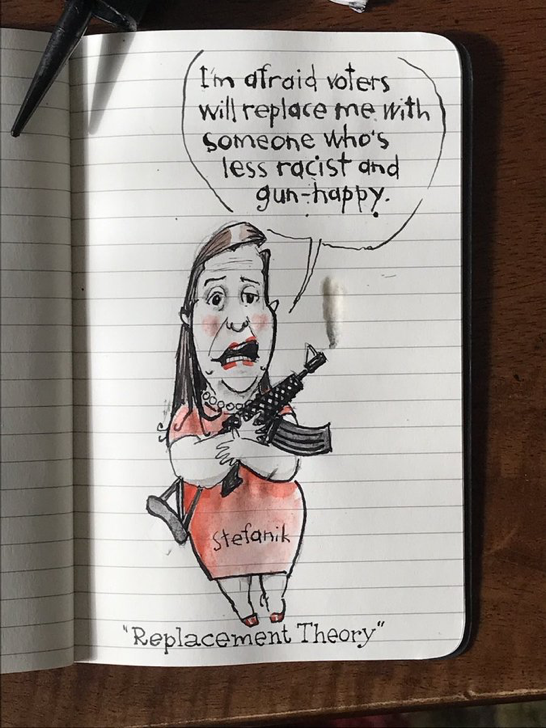
Conspiratorial thinking was also rampant among Hochschild’s subjects. Few people believed science had made the case for global warming. Strangers at e.g., 183. They did not understand what the lives of the seriously poor were like, rejected much historical truth, adopted phantasmagorical solutions dependent upon the “free market” and adopted what has come to be known more recently as “replacement theory.” Strangers at Ch. 14.

In the end, it seemed to me that the author was profoundly fooled by the mannered façade she experienced in her research with the locals whose “good-hearted acceptance” of her, their “great personal warmth and famous Southern hospitality,” misled her to conclude that

in human terms, the [empathy] wall can easily come down. And issue by issue, there is possibility for practical cooperation. [Strangers at 233]

There is nothing in the buildup to the end of the book or in the data set out throughout it that would support such a conclusion. And, of course, the history under Trump’s presidency is the most profound refutation of the “we can all just get along” thesis. The author’s starry-eyed belief in future harmony and progress was, I believe, a grievous error by a researcher whose approach to her study was primarily based on just talking with locals, eating meals with them, and looking at the surrounding conditions that determine their lives and livelihoods.

The book confirms my suspicions in its treatment of the rise of Trump as a political power.

Three elements had come together. Since 1980, virtually all those I talked with felt on shaky economic ground, a fact that made them brace at the very idea of “redistribution.” The also felt culturally marginalized: their views about abortion, gay marriage, gender roles, race, guns, and the Confederate flag all were held up to ridicule in the national media as backward. And they felt part of a demographic decline; “there are fewer and fewer white Christians like us….”        [Strangers at 221]

Economically, culturally, demographically, politically, you are suddenly a stranger in your own land. The whole context of Louisiana – its companies, its government, its church and media – reinforces that deep story. [Strangersat 222]

Trump, consciously or otherwise, fed this sense of disaffection and loss.

His supporters have been in mourning for a lost way of life Many have become discouraged, others depressed. They yearn to feel pride but instead have felt shame. Their land no longer feels their own. Joined together with others like themselves, they now feel hopeful, joyous, elated … in a state of rapture… no longer strangers in their own land. [Strangers at 225]

Rapture indeed. This degree of magical thinking is beyond imagining: a Pew Research Center 2010 study reported that “41 percent of all Americans believe the Second Coming “probably” or “definitely” will happen by the year 2050.” Strangers at 125. Hochschild labels them “victims without a language of victimhood.” Strangers at 131, a missing element that Donald Trump readily supplied.

My overall conclusion about this book is that the people it discusses suffer from a central fatal flaw: they mistakenly believed that the land belonged to them in the sense that the whole of it was their natural right. Anything that challenged that idea was alien, undermining their sense of “our land.” This, I think, is about as un-American a concept as you will find. It ignores history, economic reality, and the nature of democracy. The root concept that “this land is ours then, now and always,” meaning us God-fearing white people who have an entitlement that others are unjustly trying to steal, fundamentally misunderstands the nature of the country, its origins, and its development.

This issue may be connected to education, but I suspect it’s much deeper than that. The possessory and superiority components of these cultural beliefs leave these people vulnerable to the “it’s ok to hate” message from a demagogue like Donald Trump who lacks any core value system of principles except greed. These people have less to fear from interlopers than from their own ignorance.

The problem, however, is that someone so ignorant is usually unaware of his ignorance and simply feels put upon by the forces of change. He just wants what he thought he had before, notwithstanding that the oil-based economy was a complete fraud on coastal Louisiana society, wrecking the environment while failing to deliver the economic benefits that locals were sure existed. It’s also often true that the ignorant are unwilling to learn; they lack empathy and see others’ gains mainly as their losses.

I don’t want to be told I’m a bad person if I don’t feel sorry for that [sick African child on TV with Christiane Amanpour]” Strangers at 128.

But even those who fancy ourselves as “not ignorant” are capable of delusional thinking. I have confessed multiple times to having fundamentally misunderstood the degree of disfunction in the country. I thought the election of Barack Obama was a sign that, overall, the country had changed. That was wrong.

The essential proof is that despite his record of lies, incompetence and corruption, Trump received 74 million votes in 2020. Joe Biden received many more, of course, but the thinnest of margins remains in both houses of Congress. People with short term concerns about things like inflation, and no or limited understanding of its causes, may drive the country back into an abyss from which democracy may not re-emerge. It can happen here. Only the voters can prevent it.

I heard recently from a reliable source that many young people, in their 20’s and 30’s, may not feel they are much affected by what is happening in politics. That absence of perceived impact often makes them indifferent to the outcome of critical issues. If that is true, we are in even more trouble than I imagined.

Republicans are highly motivated by their grievances and can be expected to turn out in large numbers in the 2022 mid-terms. If Democrats stay home, it’s game over. You have been warned.

The Faces

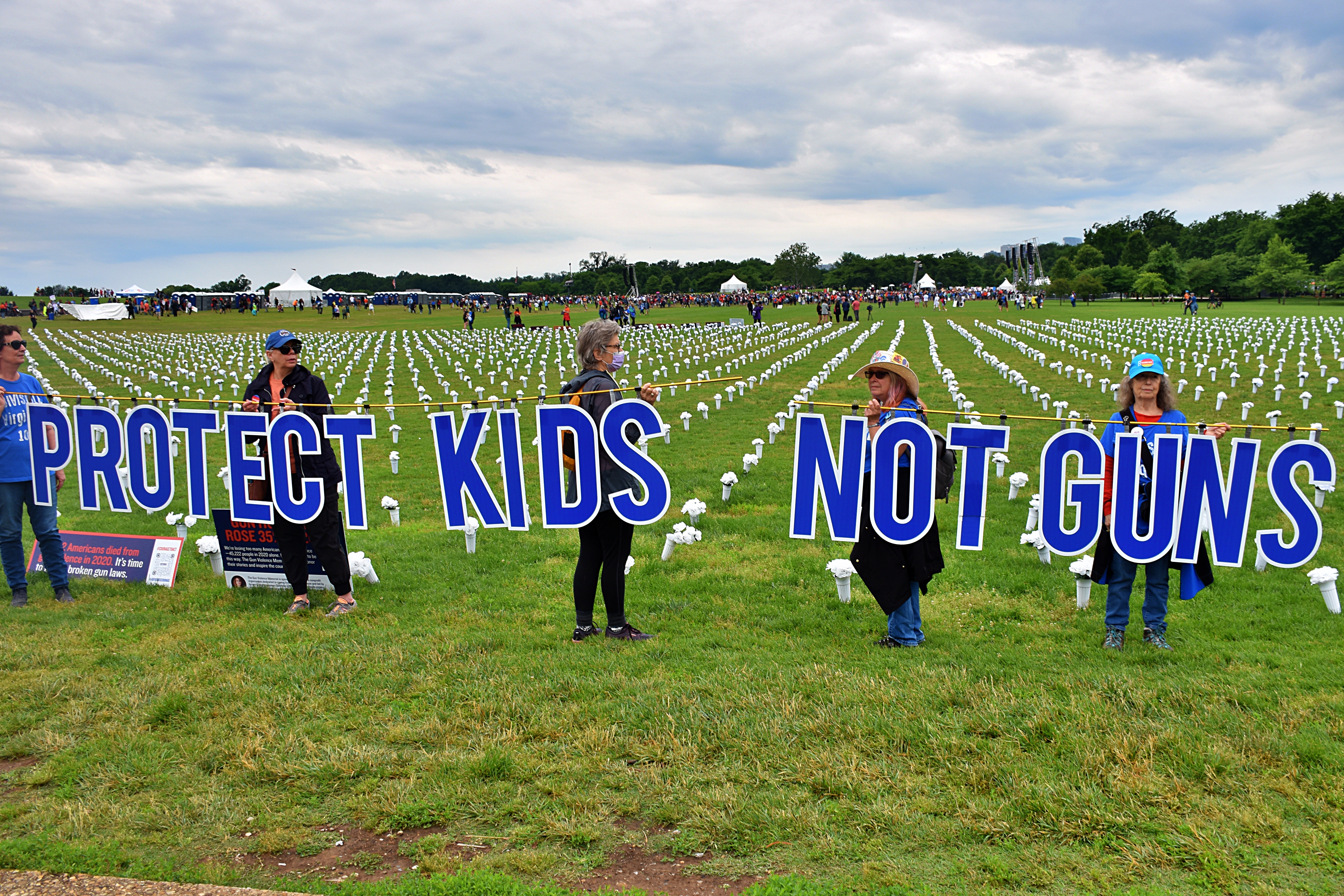
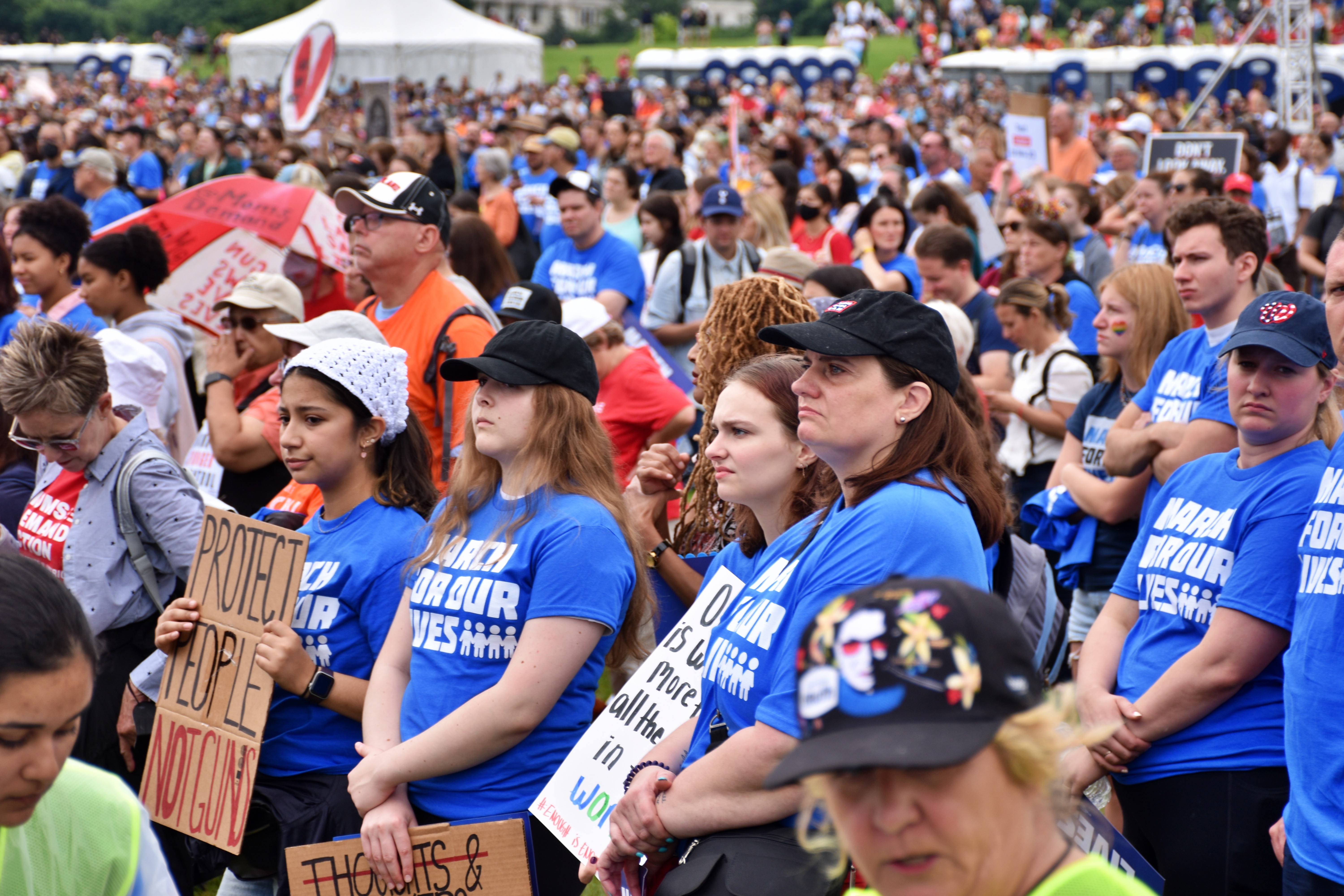
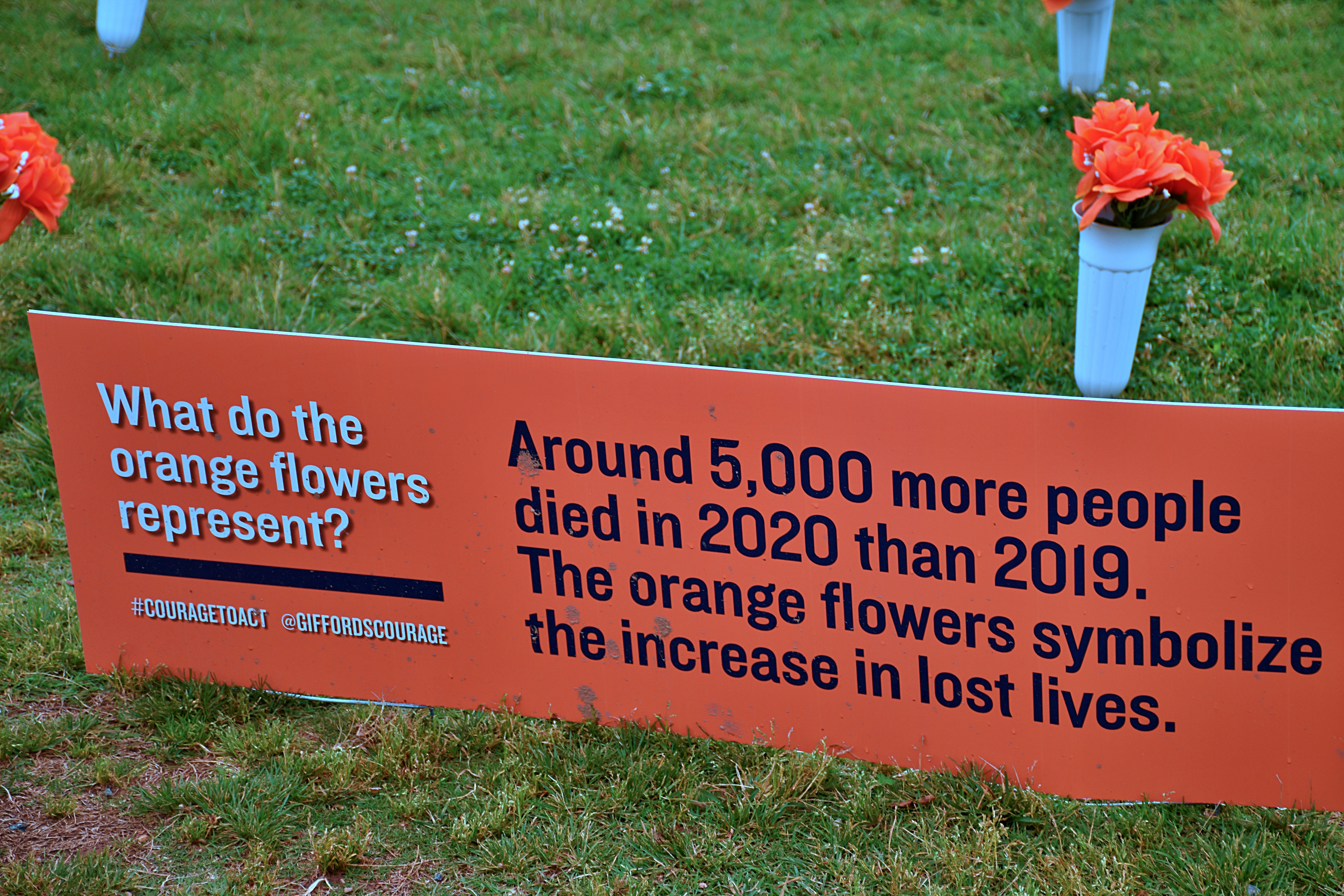
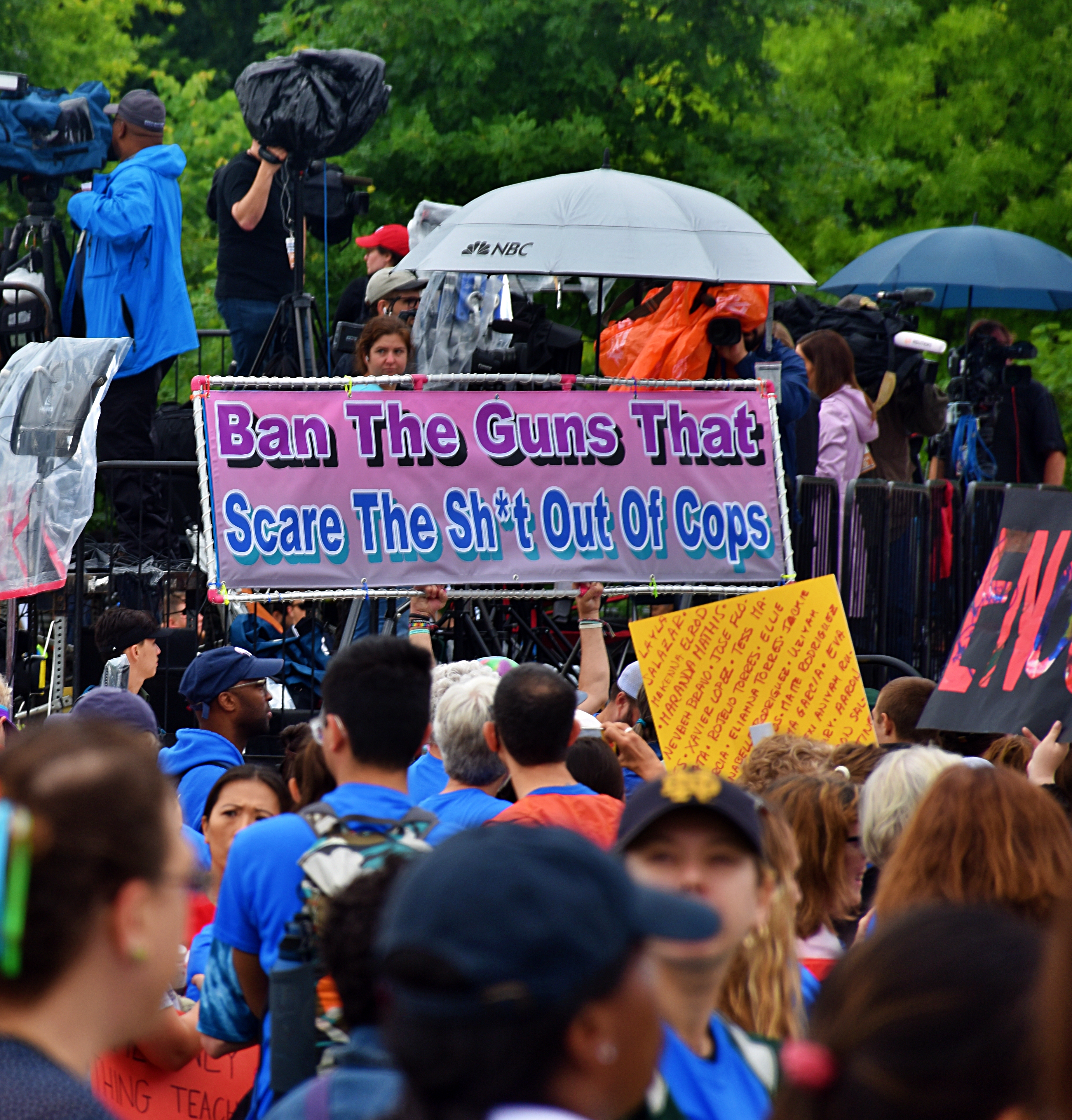
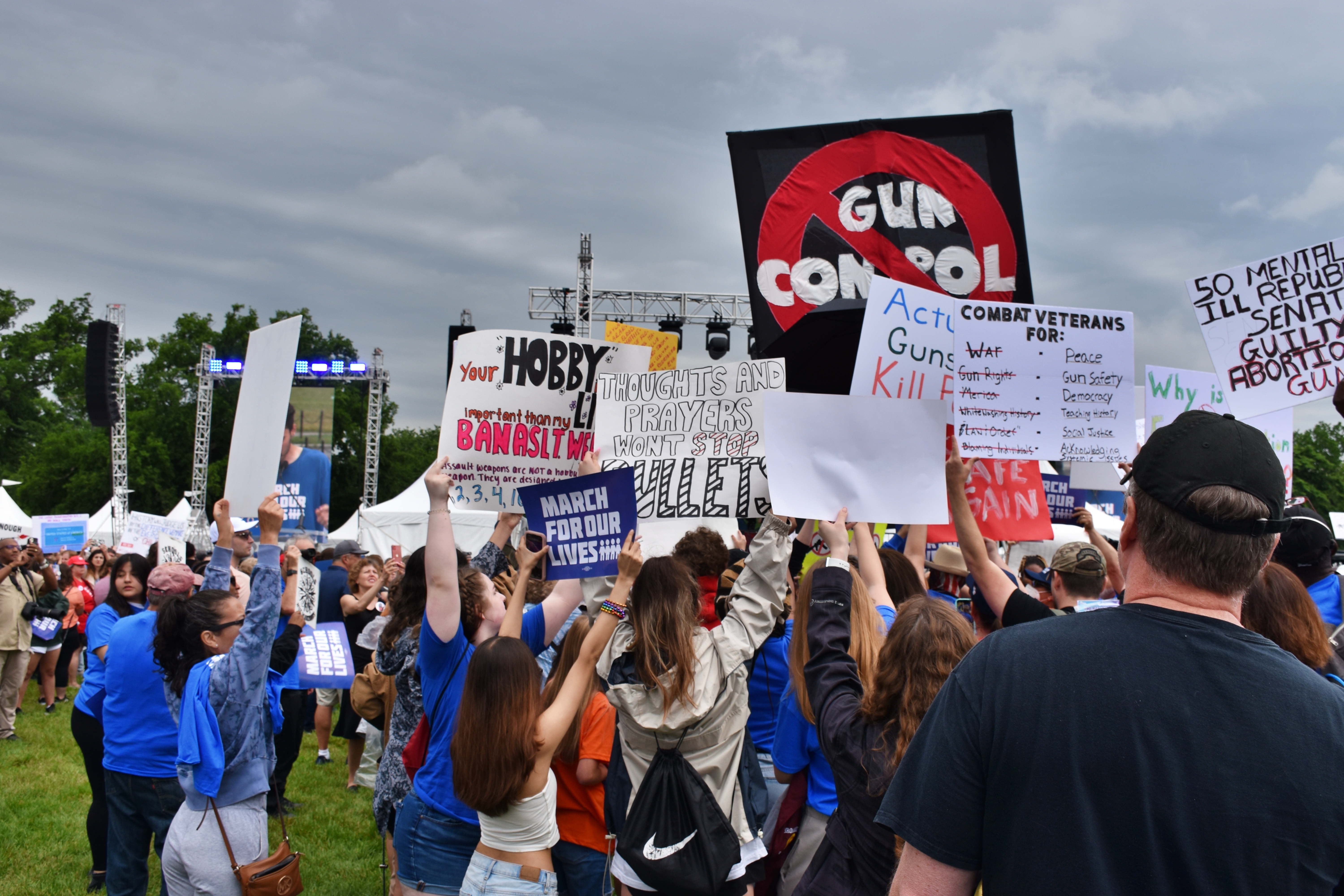
Yesterday the reckoning began. In marches, rallies, and gatherings across the country, tens of thousands of Americans came together to declare war. The target is the death-mongers who value guns over human life, guns over children, guns over the elderly, guns over everything. The unique problem of Americans and guns has reached the breaking point. Mass shootings are almost as routine as car accidents. Death by gun in schools, places of worship, grocery stores, shopping malls, the streets. Only in America.

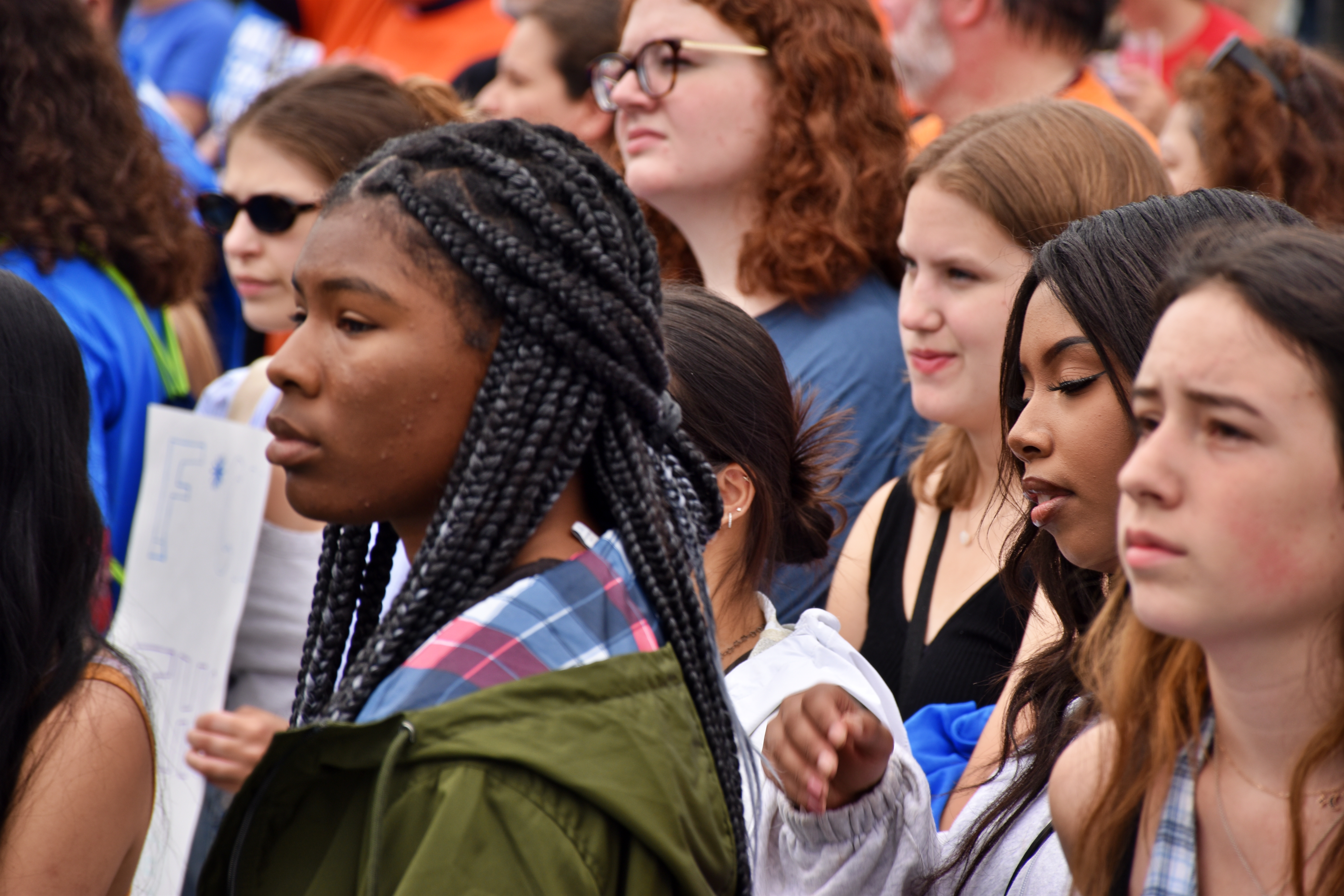
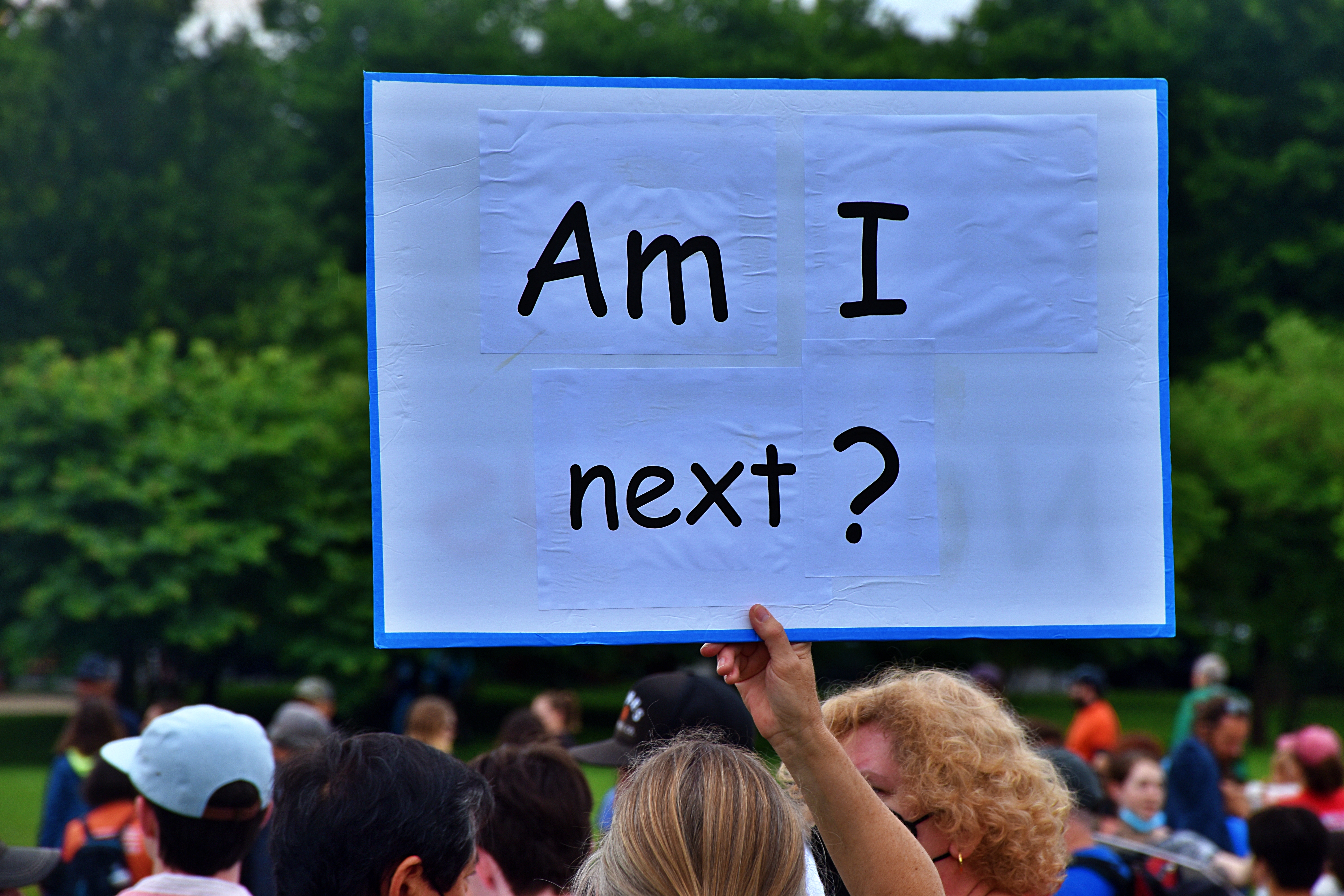
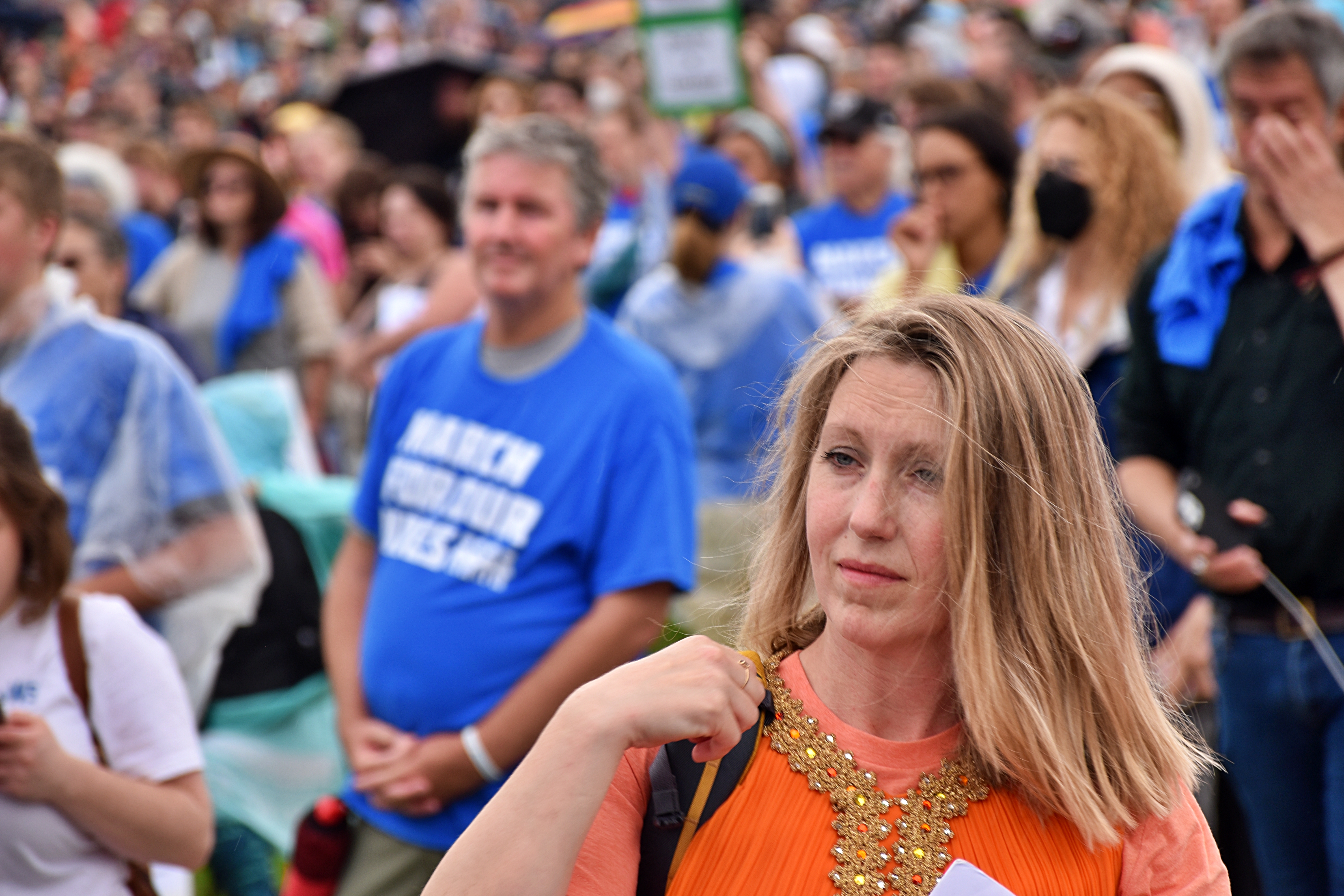
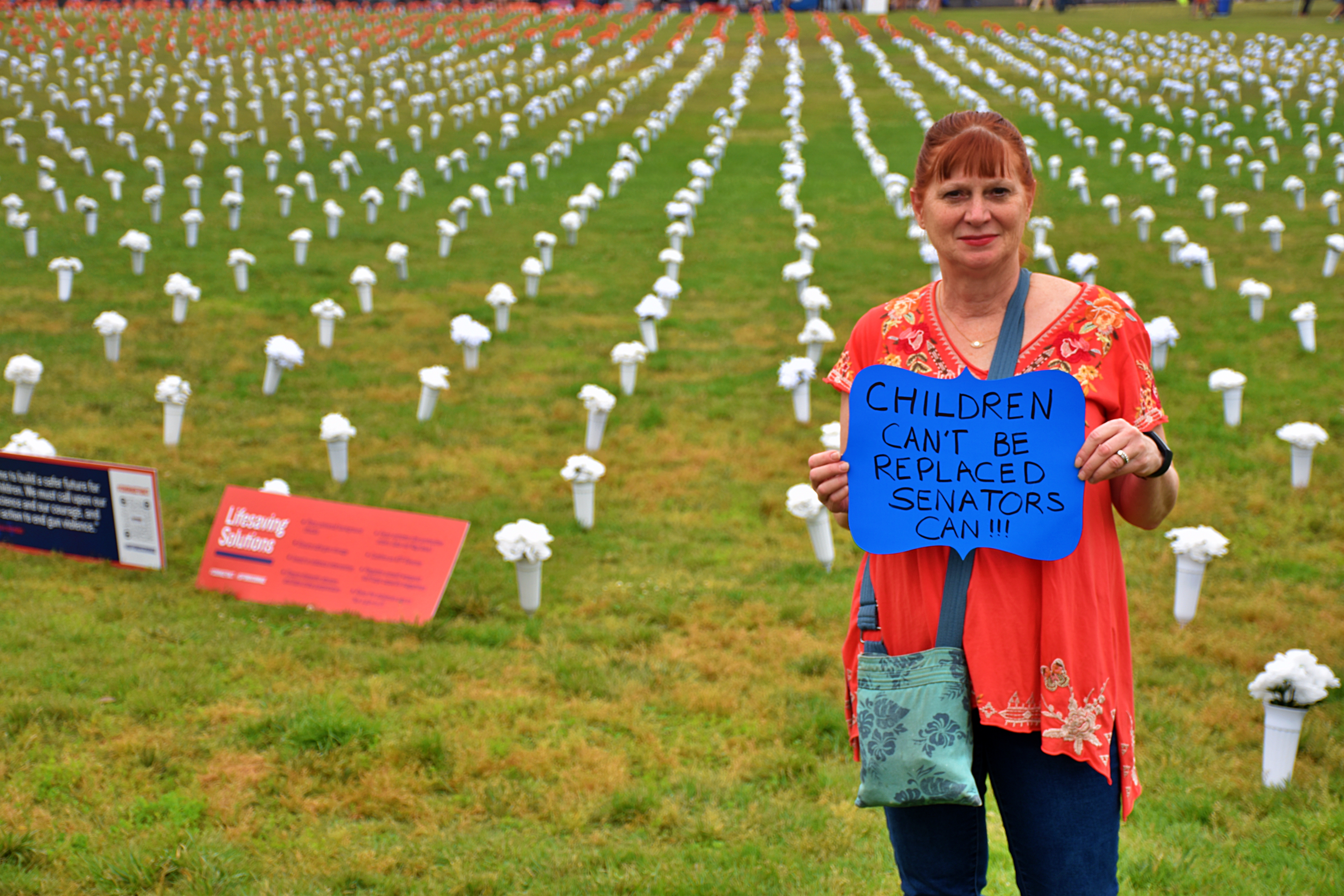
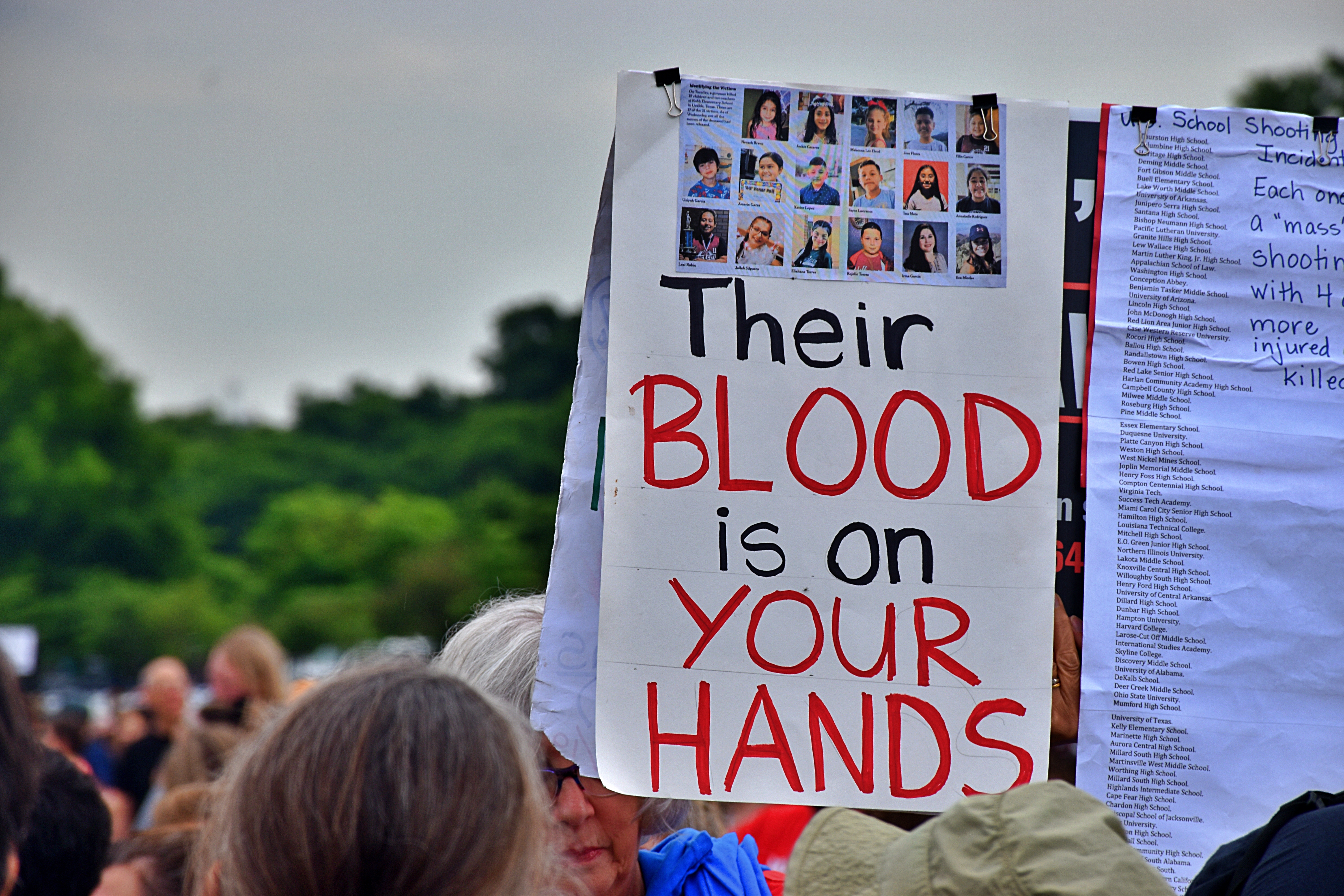
Yesterday you could see in the faces and the signs. Sadness, fear, anger.

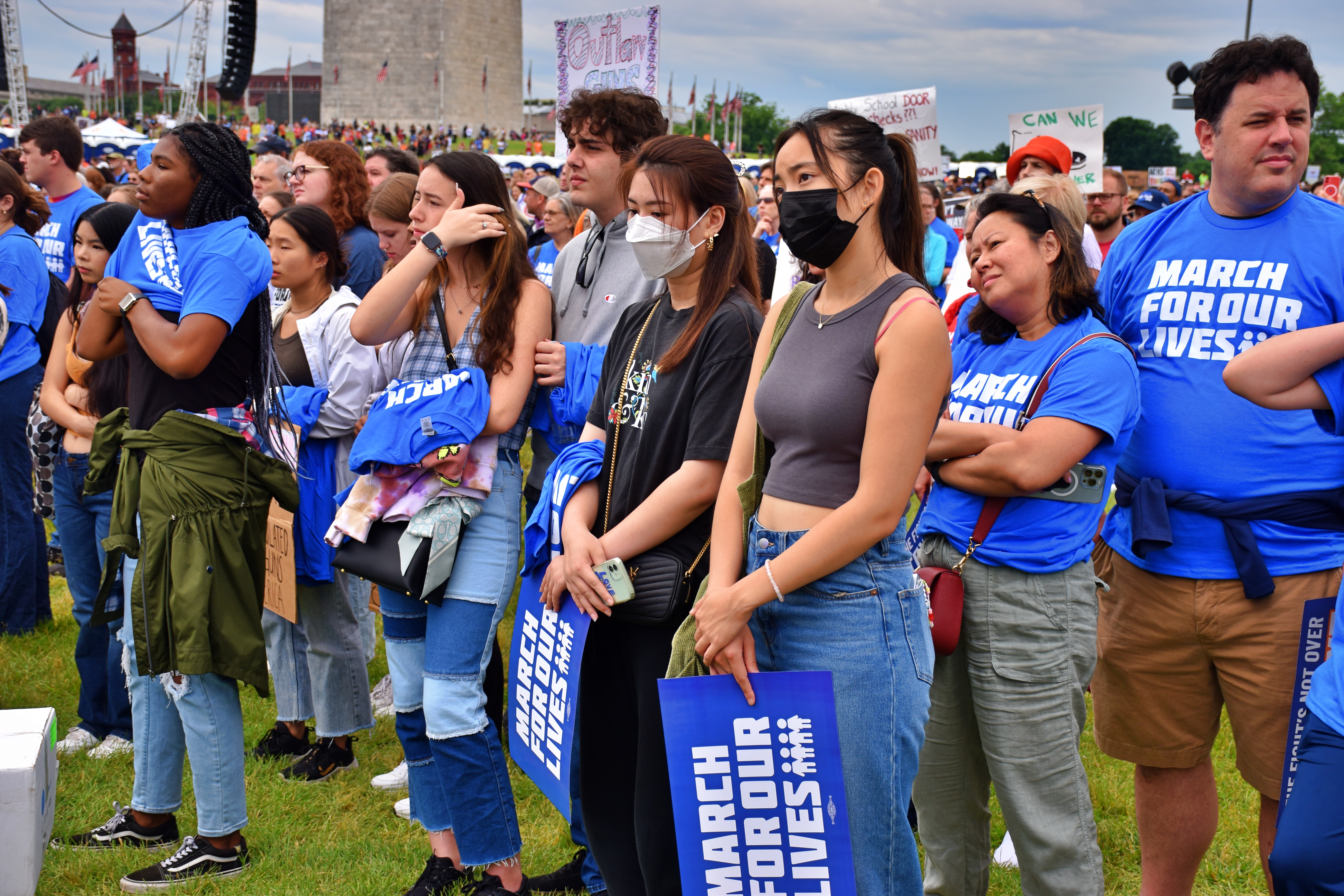
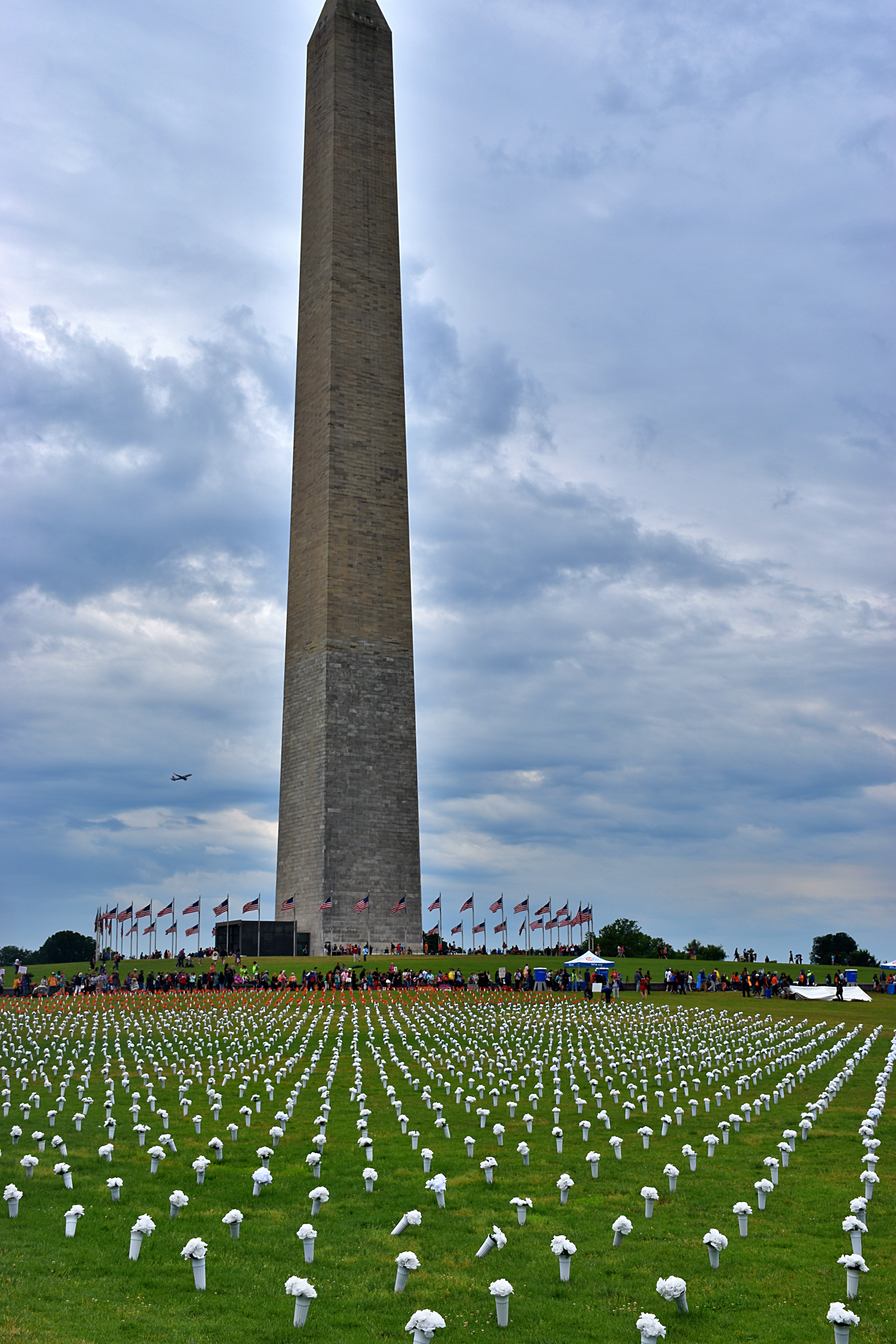
The rally in Washington, DC attracted an estimated 40,000 people. An extraordinary turnout considering the foul weather. Sadness – why don’t more Americans care about us? Fear – am I or one of my loved ones the next to die by gunfire? Anger – the killing must stop; we cannot continue to live like this. Why do so many Americans care more about their guns than they do about their children and their parents and grandparents?

The crowd was very large, spread over the north side of the Washington Monument grounds.

One of the speakers lost his mother to gunfire a short time ago. She had lived 86 years, only to be gunned down while shopping for groceries. The average age of the people slaughtered in Buffalo was 62. Shopping for groceries. Slaughtered by an 18-year-old racist with a history of violence and mental health issues, none of which prevented him from legally buying assault weapons and armor plating. He live-streamed his deadly assault which he had been planning for months. He shot four people outside the store, a security guard inside, then eight more inside (six of whom died). When police arrived, he surrendered without resistance.

The faces of the people listening to speeches like that were grim but determined. They have had enough of Republican thoughts-and-prayers, the rote response to the uniquely American tragedy facilitated by legal systems that allow people with the maturity level of children buy assault weapons intended to kill as many people as quickly as possible.

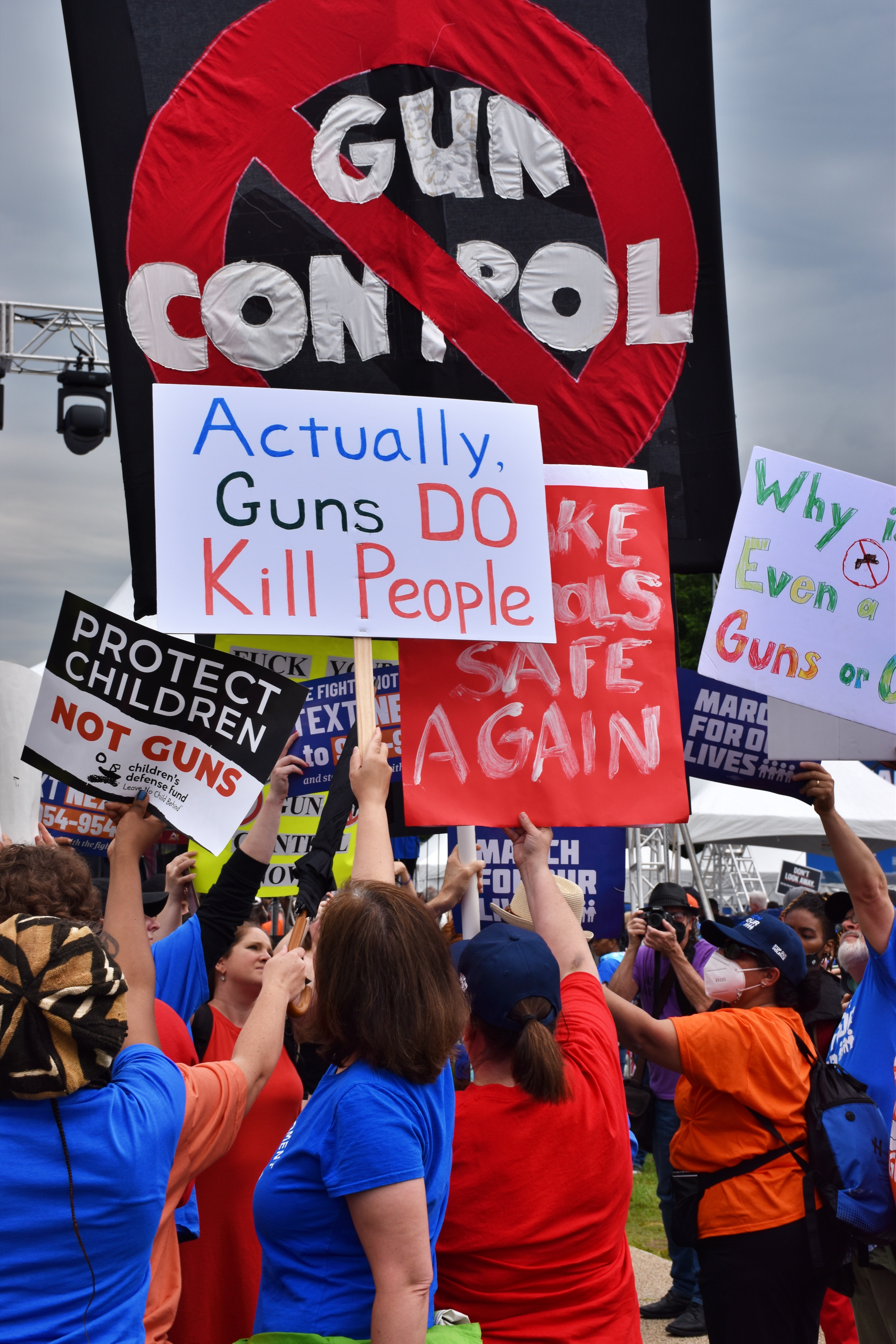
Aside from the power of the speeches there were two moments of “drama” that we observed. The first involved a jerk who arrived in the middle of the presentations with a large poster on poles that said “Guns-Bacon” on one side (no idea what it meant) and Gun Control with a slash mark on the other.

When he set up in the middle of the crowd listening to the speeches, his sign blocked the view of the jumbo screens. Only a few seconds passed before two women rushed up behind him to block his signs and within a minute a multitude joined them.

The jerk was surrounded and engulfed in anti-gun signs. His face was covered the entire time. After a while security arrived and escorted him off the grounds trailed by comments from the crowd that are a bit too raw for a family-oriented blog.

The other excitement occurred during a moment of silence called for by one of the late speakers. Someone in the crowd yelled either “I have a gun” or “I am God,” according to reports. This sparked a very short-lived panic that subsided within seconds. Pay no attention to any news reports otherwise. We were at the back of the crowd when this happened and witnessed the entire thing. Nothing there but stupidity. We believe the fool was arrested, as he should have been.

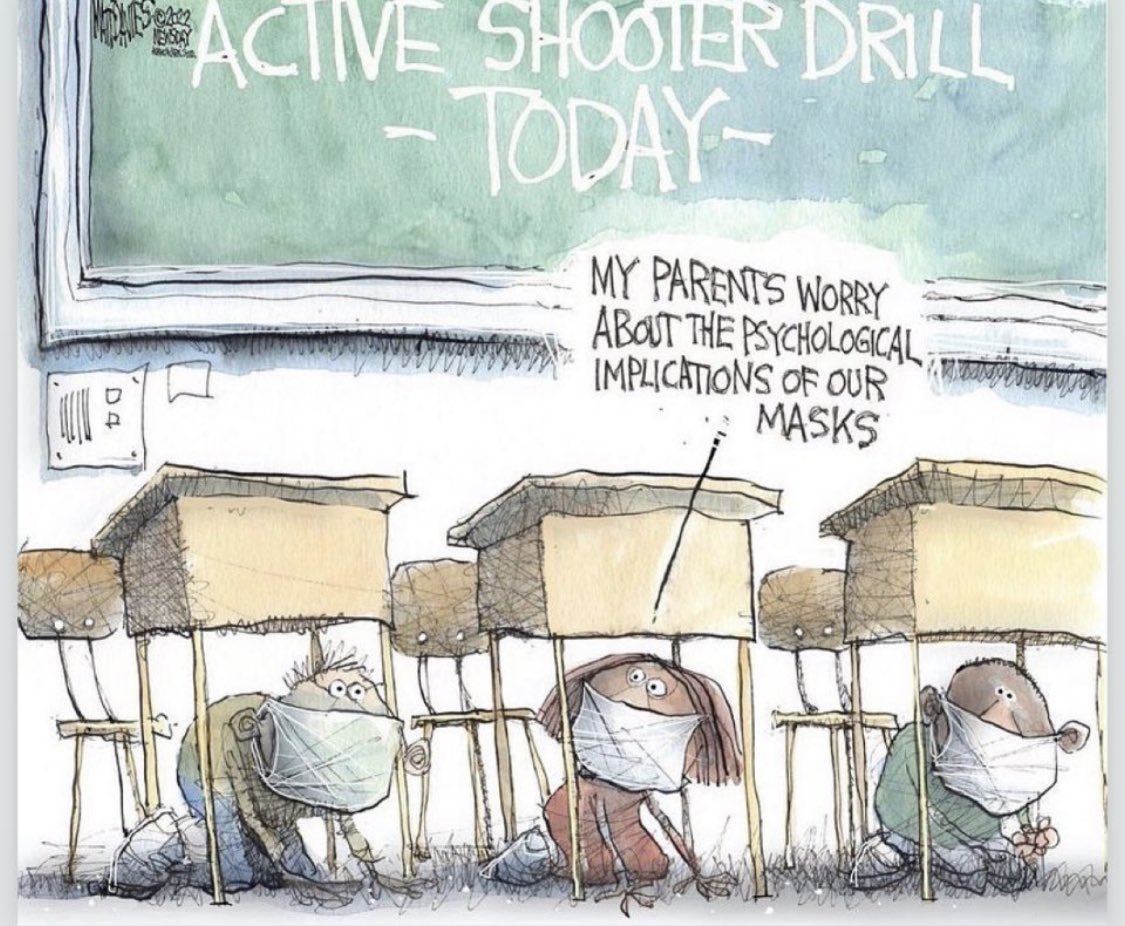
As indicated, many of the speeches were hard to hear, coming from people who had directly experienced the horror of losing family and friends to gun violence. Some were in the schools when they were attacked (David Hogg, for example, at Stoneman Douglas High School). They remind us that children in grammar school are being subjected to active shooter drills.

Can you imagine the affect that is having on those kids? When I attended grammar school in the 1950s, we did nuclear attack drills, practicing hiding under desks as if that could protect us from the annihilation of a nuclear strike. It seemed unreal and had little impact. But active shooter drills when mass shootings occur almost every day and the kids are aware. The children subjected to this may be scarred for life. It seems like another form of grooming, making them afraid all the time that their lives or those of their friends could be snuffed out by a total stranger for no reason at all.

While preparing this post, I read in the Washington Post https://wapo.st/3zyYihF  that,

A bipartisan group of Senate negotiators announced Sunday that it had reached a tentative agreement on legislation that would pair modest new gun restrictions with significant new mental health and school security investments — a deal that could put Congress on a path to enacting the most significant national response in decades to acts of mass gun violence.

A group of 20 senators — 10 Democrats and 10 Republicans — signed a statement announcing the framework deal. That indicated that the agreement could have enough GOP support to defeat a filibuster, the Senate supermajority rule that has impeded prior gun legislation.

I call B.S. on this. The bolded portions of the report explain why:

Under the tentative deal, a federal grant program would encourage states to establish “red flag” laws that allow authorities to keep guns away from people found by a judge to represent a potential threat to themselves or others, while federal criminal background checks for gun buyers under 21 would include a mandatory search of juvenile justice records for the first time.

It does not include a provision … that would raise the minimum age for the purchase of at least some rifles from 18 to 21. Handguns are already subject to a federal 21-and-over age limit.

Other provisions could funnel billions of new federal dollars into mental health care and school security programs, funding new campus infrastructure and armed officers. Several senators last week said they expected one cornerstone of the deal would be … to establish a nationwide network of “community behavioral health clinics.”

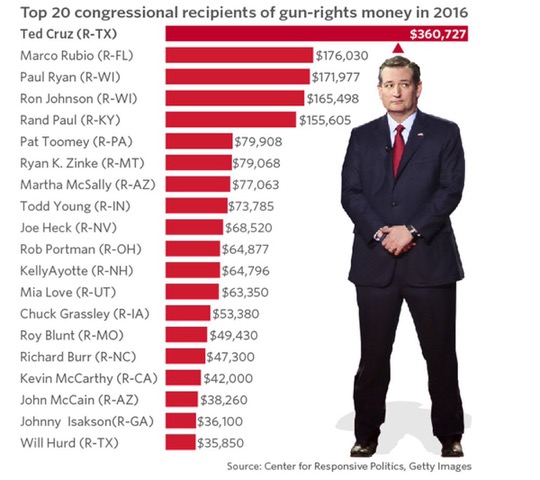
Those are nice things to have but they fall grossly short of what is required to address gun violence in a meaningful way. We need to be careful we don’t embrace the first simplistic glossy object thrown at us to “show progress” when the real effect is to further deflect substantive progress because Republicans do not intend to give real ground on these issues and thereby disappoint their arms industry funders.

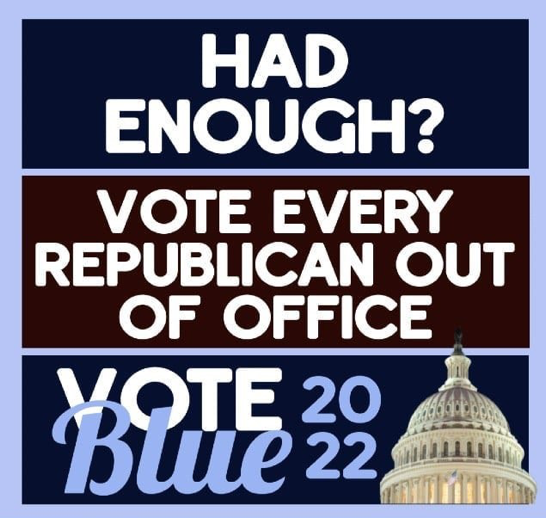
The real solution, promoted by several speakers at the March for Our Lives, is “VOTE THEM OUT.” Unless and until that happens, Republicans will continue obstructing real progress to stop or even seriously mitigate the wave of gun violence that makes the United States stand out among all nations as the most dangerous in so many ways. VOTE THEM OUT is the only real answer and the opportunity to start is coming soon in the mid-term elections.

If you agree that the time is past for meaningful action on gun violence prepare to VOTE THEM OUT. In addition to voting, work the polls, offer transportation and money and other help to elect Democrats up and down the ticket.

Don’t forget that a majority of Republicans around the country still believe Trump was unlawfully defeated and are working very hard to take over the electoral machinery in the states. The sole purpose is to prepare Republicans to invalidate elections they lose and simply install Republican candidates as winners. The only way to stop this is with overwhelming Democratic majorities. Make it so. Make it so.

Thoughts & Prayers

Bear with me.

One of the early lessons learned in law school related to the issue of causation and intent. We were introduced to this question through Scott v Shepard, an English decision from 1773. Yes, 1773. The decision known as the Famous Squib [firecracker]. Flying Squib, or Lighted Squib case was the subject of extended discussion and debate. Among its many lessons is the principle that intentionally doing an act with known or predictable consequences means that you intended those consequences, caused those consequences and are legally accountable for them.

Here, for your edification, is a published summary of the case:

Facts

The defendant threw a squib, which is a small, lit firework, into a busy marketplace with lots of people and stalls. In order to protect themselves and avoid damage, the squib was thrown on by two other people. When it landed near to the complainant, it exploded and caused injury to his face. He later lost the use of one of his eyes. The original thrower, the defendant, was charged with assault and trespass.

Issues

The defendant was found liable for trespass and he appealed this decision. The defendant argued that the injury to the complainant was not caused by his actions; it was not a direct act, as others threw the squib on. The issue in the appeal was whether the defendant throwing the squib caused the injury or whether other people broke this chain of causation and the injury was caused by novus actus interveniens.

Decision/Outcome

The court dismissed the appeal; the injury to the complainant was the direct and unlawful act of the defendant who originally threw and intended to throw the squib. The other people were not ‘free agents’ in this situation and threw on the squib for their own safety and this was justifiable. The throwing on was classed as a continuation of the defendant’s action, which was intended. Whatever followed this was part of the defendant’s original act. [https://bit.ly/3xfYZJL]

The class discussion of this case was a shock, an early admission to the inner sanctum of legal reasoning. This simple case introduced us to the complexity of the seemingly obvious, the intricacies of causation, intent and other themes that run through the law.

One principle we took away was this: if you take an action knowing the likely consequences, you will be presumed to have intended those consequences. It’s the same principle that underlies the limit on freedom of speech with which most rational people are familiar: you can’t shout “fire” in a darkened theater and disclaim responsibility for injuries resulting from the panic that ensues. It’s ultimately why you can’t drink yourself into a stupor, drive a car, have an accident, and deny responsibility for the results. The principle is fundamental.

So what? This. Republicans in Congress have consistently refused to consider any gun regulations, no matter how limited, claiming Second Amendment privileges. The result is the massacre of school children in Uvalde, TX and all the others that preceded it and that will inevitably follow it. The refusal to change the law, knowing what will result, means that the legislators who refuse to act must intend the resulting carnage. It means they are content with the hundreds and thousands of deaths and injuries that could be prevented or at least reduced. There are no excuses.

There was a hearing in the House on gun regulation a few days ago. The following is the entire testimony of Dr. Roy Guerrero. It is not easy to read but it is important. If you know someone who believes gun regulation is unnecessary, consider sending this to them:

“My name is Dr. Roy Guerrero. I am a board-certified pediatrician, and I was present at Uvalde Memorial Hospital the day of the massacre on May 24th, 2022, at Robb Elementary School. I was called here today as a witness. But I showed up because I am a doctor.

Because how many years ago I swore an oath — An oath to do no harm.

After witnessing first-hand the carnage in my hometown of Uvalde, to stay silent would have betrayed that oath. Inaction is harm. Passivity is harm. Delay is harm. So here I am.

Not to plead, not to beg or to convince you of anything. But to do my job. And hope that by doing so it inspires the members of this House to do theirs.

I have lived in Uvalde my whole life. In fact, I attended Robb Elementary School myself as a kid. As often is the case with us grownups, we remember a lot of the good and not so much of the bad. So, I don’t recall homework or spelling bees, I remember how much I loved going to school and what a joyful time it was. Back then we were able to run between classrooms with ease to visit our friends. And I remember the way the cafeteria smelled lunchtime on Hamburger Thursdays.

It was right around lunchtime on a Tuesday that a gunman entered the school through the main door without restriction, massacred 19 students and two teachers and changed the way every student at Robb and their families will remember that school, forever.

I doubt they’ll remember the smell of the cafeteria or the laughter ringing in the hallways. Instead, they’ll be haunted by the memory of screams and bloodshed, panic, and chaos. Police shouting, parents wailing. I know I will never forget what I saw that day.

For me, that day started like any typical Tuesday at our Pediatric clinic – moms calling for coughs, boogers, sports physicals – right before the summer rush. School was out in two days then summer camps would guarantee some grazes and ankle sprains. Injuries that could be patched up and fixed with a Mickey Mouse sticker as a reward.

Then at 12:30 business as usual stopped and with it my heart. A colleague from a San Antonio trauma center texted me a message: ‘Why are the pediatric surgeons and anesthesiologists on call for a mass shooting in Uvalde?’

I raced to the hospital to find parents outside yelling children’s names in desperation and sobbing as they begged for any news related to their child. Those mother’s cries I will never get out of my head.

As I entered the chaos of the ER, the first casualty I came across was Miah Cerrillo. She was sitting in the hallway. Her face was still, still clearly in shock, but her whole body was shaking from the adrenaline coursing through it. The white Lilo and Stitch shirt she wore was covered in blood and her shoulder was bleeding from a shrapnel injury.

Sweet Miah. I’ve known her my whole life. As a baby she survived major liver surgeries against all odds. And once again she’s here. As a survivor.

Inspiring us with her story today and her bravery.

When I saw Miah sitting there, I remembered having seen her parents outside. So, after quickly examining two other patients of mine in the hallway with minor injuries, I raced outside to let them know Miah was alive.

I wasn’t ready for their next urgent and desperate question: ‘Where’s Elena?’

Elena, is Miah’s 8-year-old sister who was also at Robb at the time of the shooting. I had heard from some nurses that there were “two dead children” who had been moved to the surgical area of the hospital. As I made my way there, I prayed that I wouldn’t find her.

I didn’t find Elena, but what I did find was something no prayer will ever relieve.

Two children, whose bodies had been so pulverized by the bullets fired at them, decapitated, whose flesh had been so ripped apart, that the only clue as to their identities was the blood-spattered cartoon clothes still clinging to them. Clinging for life and finding none.

I could only hope these two bodies were a tragic exception to the list of survivors.

But as I waited there with my fellow Uvalde doctors, nurses, first responders and hospital staff for other casualties we hoped to save, they never arrived. All that remained was the bodies of 17 more children and the two teachers who cared for them, who dedicated their careers to nurturing and respecting the awesome potential of every single one. Just as we doctors do.

I’ll tell you why I became a pediatrician. Because I knew that children were the best patients. They accept the situation as it’s explained to them. You don’t have to coax them into changing their lifestyles in order to get better or plead them to modify their behavior as you do with adults.

No matter how hard you try to help an adult, their path to healing is always determined by how willing they are to take action. Adults are stubborn. We’re resistant to change even when the change will make things better for ourselves. But especially when we think we’re immune to the fallout.

Why else would there have been such little progress made in Congress to stop gun violence? Innocent children all over the country today are dead because laws and policy allows people to buy weapons before they’re legally even old enough to buy a pack of beer. They are dead because restrictions have been allowed to lapse. They’re dead because there are no rules about where guns are kept. Because no one is paying attention to who is buying them.

The thing I can’t figure out is whether our politicians are failing us out of stubbornness, passivity, or both.

I said before that as grown-ups we have a convenient habit of remembering the good and forgetting the bad. Never more so than when it comes to our guns. Once the blood is rinsed away from the bodies of our loved ones and scrubbed off the floors or the schools and supermarkets and churches, the carnage from each scene is erased from our collective conscience and we return once again to nostalgia.

To the rose-tinted view of our second amendment as a perfect instrument of American life, no matter how many lives are lost.

I chose to be a pediatrician. I chose to take care of children. Keeping them safe from preventable diseases I can do. Keeping them safe from bacteria and brittle bones I can do. But making sure our children are safe from guns, that’s the job of our politicians and leaders.

In this case, you are the doctors, and our country is the patient. We are lying on the operating table, riddled with bullets like the children of Robb Elementary and so many other schools. We are bleeding out and you are not there.

My oath as a doctor means that I signed up to save lives. I do my job. And I guess it turns out that I am here to plead. To beg. To please, please do yours.”

– Dr. Roy Guerrero, Pediatrician, Uvalde, TX

Nothing left to say.

Memes Again — Devoted to Guns

WARNING: many of the images here are disturbing to anyone who is not enamored of guns. DO NOT LOOK further if you think you may be emotionally damaged by these images. They tell a story but it is the saddest story I know. PLEASE be careful.

This first set of images was selected from the suddenly archived website of Daniel Defense, the company that made/sold the weapon used by the Uvalde, Texas school shooter.

The caption on this one read: “He is Risen.” Followed by a hands-in-prayer emoji:

Caption: Don’t miss the chance to spoil mom this Mother’s Day! Take 25% off all ladies’ tees and save on gifts that will have mom feeling like #1. Valid through May 9, 2022. Shop for mom today at danieldefensestore.com.
This one advocates using sound suppressors:

Finally, and most remarkable, with this caption: “Train up a child in the way he should go, and when he is old, he will not depart from it. 🙏”

The remaining images are from Twitter & Facebook posts.

You likely know that we lead the world in gun deaths. You also know that every effort to address the issues has been stymied by Republican politicians. You know what to do.

Acceptable Losses – How Many?

Acceptable Losses — a military euphemism for casualties or destruction inflicted by the enemy that are considered minor or tolerable.

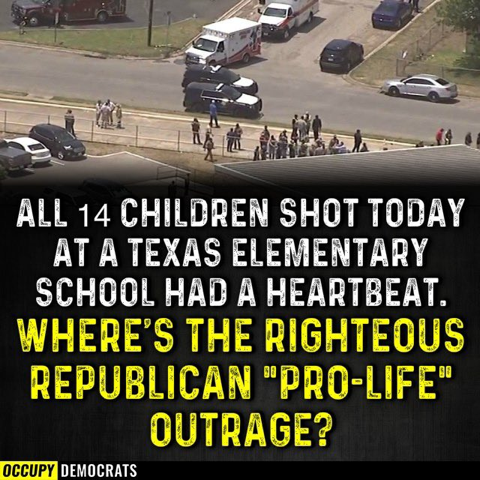
That is where we are. Supported by the money from the National Rifle Association, the Republican Party has decided that the losses of hundreds of children at the hands of gun-wielding men with grievances is acceptable. It has happened again – this time in Texas. So far, 19 dead children and two dead teachers. So far.

This year – 27 school shootings. https://n.pr/3MPgqaS But it’s only May. Plenty of time to slaughter more kids. Thoughts and prayers. The NRA/Republican Party mantra – thoughts and prayers – but our guns, come and take ‘em. Just try. Nineteen dead children – acceptable losses.

The Gun Violence Archive, an independent data collection organization, has counted 212 mass shootings that have occurred so far this year…. It defines a mass shooting as an incident in which four or more people were shot or killed, excluding the shooter.

Data on the mass shootings that have occurred so far this year can be found here.

The U.S. ended 2021 with 693 mass shootings, per the Gun Violence Archive. The year before saw 611. And 2019 had 417.

That’s the trend. A few weeks ago, another shooter killed ten people in a supermarket. The most “civilized/advanced country in the world,” we like to say, has more mass shootings, more children slaughtered by guns than any other country in the entire world.

How many would be enough? One hundred? A thousand? Think of it. A thousand dead children at the hands of angry men with guns. Would that be enough to move Republicans to moral action? How many? When do acceptable losses become unacceptable? Five thousand?

The ritualistic political reactions have, of course, already begun. Republican politicians holding press conferences, tweeting “thoughts and prayers.” I wonder what those “thoughts” actually are. And “prayers?  They comfort some people, I suppose. I wonder, though, if politicians’ prayers will comfort a parent or sibling devastated by yet another preventable massacre. It all seems just like ritual at this point.

Angry kid buys guns and slaughters helpless children in school. Police and others rush to the scene, usually killing the gunman. It’s always a gun man. But it’s always too late. The dead kids pile up and the Republican politicians head for the microphones to repeat the ritual. Thoughts and prayers. But no action.

I read now that Democratic political leaders are going to try yet again to negotiate some gun law improvements, anything at all that Republicans might accept. https://wapo.st/3NEE3CH But the past is almost certainly prologue. There is no reason at all to think Republican politicians will agree to anything meaningful. And if that’s true, the only point is to show the public, yet again, who the politicians are that resist all efforts to stop the massacres. Will it matter?

Consider that Republicans in Georgia have renominated Marjorie Taylor Greene to occupy a seat in the House of Representatives. The same one who embraced QAnon conspiracy theories and now said about the Texas massacre that the solution is to “embrace God.” Ritual. She really means, do nothing. Pray for help that will not come.

Consider that Republican voters in Georgia nominated Herschel Walker, a former football player, to occupy one of the 100 Senate seats. Walker seems to have trouble stringing two coherent sentences together. Republicans want him to represent them in the Senate, where he will be expected to think about and vote on complex budget and international policy issues, among many other subjects about which he has zero experience and likely even less knowledge.

Walker is running to displace the sitting Senator Raphael Warnock. Reverend Warnock grew up in public housing in Savannah. His mother grew up in Waycross where she spent summers picking tobacco and cotton. The Senator graduated from Morehouse College, earned a PhD, and was ordained in the ministry. For over 15 years, Senator Warnock has served as Senior Pastor at Ebenezer Baptist Church in Atlanta, the former pulpit of Reverend Dr. Martin Luther King, Jr. He is an exceptional orator and the youngest pastor selected to serve in that leadership role at the historic church.

Consider that multiple leading Republican politicians are going to attend the National Rifle Association conference in Houston this weekend. There they will engage in the ritual obeisance to the God of Guns and Ammo that funnels campaign contributions to willing recipients completely ready to do vote for the NRA’s agenda: keep the guns and to Hell with the children.

Yes, the ritual will go on. And on. Until the American public finally says: ENOUGH! There is no reason to think we’re there now. I would, of course, love to be wrong about that, but the rational part of my mind says, don’t be a fool. Republican politicians across the country have continued to embrace Donald Trump’s Big Lie about the 2020 election. Republican voters for the most part are fine with the fantasy. Is there any reason to think such people are going to care about a bunch of children they don’t know? Not very likely.

So, what to do? Complaining isn’t going to change anything. Only voting will. Along with many others, I have continued to note that “we” outnumber “them” by a substantial margin. Yet the future of the country literally depends on an issue on which the nation’s record is far from reassuring. It’s all about turnout. Will enough people who understand what is at stake actually vote in the next elections? Or will the Republicans regain control of one or both Houses of Congress and end, once and for all, any chance of protecting and advancing democracy in America? That is literally what is at stake. Because as sure as you are reading this, nothing is going to change until the supporters of violence against children are removed from office. Nothing.

Democrats could, of course, accomplish a lot by removing the filibuster. But they won’t. They’re apparently concerned about what would happen if Republicans get control of Congress. But if Republicans get control (more than they already have now), they will exercise their power mercilessly. It’s time to act while action is possible.

Be afraid. Be very afraid. Democracy is under challenge around the globe. It will not save itself. Imagine what your life and the lives of your children and grandchildren will be like under a Republican managed government. Imagine.