Category Archives: Reviews

Words

Call me a quibbler if you like. I don’t mind. I believe that how we use words is very important and can reveal hidden meanings of intention of which the writer may be unaware. I expect, however, that the Editorial Board of the New York Times would be particularly conscious of the meaning of their statements. Recent experience suggests I am wrong about that, and I suspect I know the reason.

Some background. The Times describes its editorial board as “a group of opinion journalists whose views are informed by expertise, research, debate and certain longstanding values. It is separate from the newsroom.” Fine as far as it goes although a bit vague on details.

On May 1 a digital version of the Editorial Board’s position titled There Is a Way Forward:  How to Defeat Trump’s Power Grab was published in the Times. On May 4, “A version” of the article appeared in print, Section SR, Page 2 of the New York edition with the headline: Fight Like Our Democracy Depends On It. Having not seen that version, I address here the digital version. The printed version at least has a title more accurately stating what the battle is really about.

Note first that the article is introduced by a probably-AI generated depiction of an American bald eagle, our national symbol, struggling to free itself from a green, goo-like substance adhering to its wings and claws. I read that image to mean that democracy is in serious trouble, an assertion that I and many others have made in multiple posts, and which I believe cannot rationally be denied.

I was intrigued to see the Times standing up for democracy this way. Then I read it.

The opening was very strong:

The first 100 days of President Trump’s second term have done more damage to American democracy than anything else since the demise of Reconstruction. Mr. Trump is attempting to create a presidency unconstrained by Congress or the courts, in which he and his appointees can override written law when they want to. It is precisely the autocratic approach that this nation’s founders sought to prevent when writing the Constitution.

The opening was followed by recognition that the Trump challenge is not ephemeral:

Mr. Trump has the potential to do far more harm in the remainder of his term. If he continues down this path and Congress and the courts fail to stop him, it could fundamentally alter the character of American government. Future presidents, seeking to either continue or undo his policies, will be tempted to pursue a similarly unbound approach, in which they use the powers of the federal government to silence critics and reward allies.

But wait. Let’s look more closely:

Mr. Trump has the potential to do far more harm in the remainder of his term. If he continues down this path and Congress and the courts fail to stop him, it could fundamentally alter the character of American government. Future presidents, seeking to either continue or undo his policies, will be tempted to pursue a similarly unbound approach, in which they use the powers of the federal government to silence critics and reward allies.

The piece continues with “It pains us to write these words” …. The patriotic response to today’s threat is to oppose Mr. Trump. But it is to do so soberly and strategically, not reflexively or performatively.”

The strong opening has thus been diluted with reference to the “potential” for future harms that will occur “if he continues down this path,” suggesting there is a reasonable chance Trump will suddenly transform into a person different than he has been his entire life. And the article makes clear that the writers don’t like having to criticize Trump. The solution they propose is implicitly critical of what many people have been doing and thinking in response to Trump’s unhinged blast through the federal government. The authors slip-slide into a description of a “coalition” of damn near everyone who isn’t a committed Trump cultist. A coalition of the willing so broad and encompassing that it will seem, because it is, a bridge too far.

I am encouraged in my cynicism about the position being advocated by what comes next:

 The building of this coalition should start with an acknowledgment that Mr. Trump is the legitimate president and many of his actions are legal. Some may even prove effective. He won the presidency fairly last year, by a narrow margin in the popular vote and a comfortable margin in the Electoral College. On several key issues, his views were closer to public opinion than those of Democrats. Since taking office, he has largely closed the southern border, and many of his immigration policies are both legal and popular. He has reoriented federal programs to focus less on race, which many voters support. He has pressured Western Europe to stop billing American taxpayers for its defense.

The reference to the southern border and other Trump policies is apparently based on a poll of 2,128 Americans crafted by and analyzed by the crafters for another article in the Times.

In the interest of fairness, I note this closing of the paragraph arguing that Trump has been doing what the American public wants:

Among these policies are many that we strongly oppose — such as pardoning Jan. 6 rioters, cozying up to Vladimir Putin of Russia and undermining Ukraine

But even that qualification comes with a qualification: “but that a president has the authority to enact. Elections have consequences.”

Then:

Mr. Trump nonetheless deserves criticism on these issues, and Congress members and grass-roots organizers should look for legal ways to thwart him.

Just criticism? Is the Times Editorial Board unaware that the Republican Party has majorities in both Houses of Congress and that the Congress thus constituted is incapable of judgment independent of whatever madness Trump wants, including an astonishing array of unqualified and incompetent cabinet and agency appointments?

The equivocation continues throughout the article. Under “Pillars of democracy,” the writers felt it necessary to point out that Presidents Biden and Obama had “tested these boundaries [separation of powers] and at times overstepped them.” While the Editorial Board strongly criticizes Trump/Vance about their attitude toward the judiciary, in my view there is no question that the approach used undermines the full impact of the Trump story. They note, for example, that Trump/Vance “seem to have defied clear [court] orders.”

Regarding Congress, the Board says, “Mr. Trump’s steamrolling of Congress involves more legal complexity, many scholars believe.” The obvious implication is that “many scholars dispute the view being stated. More equivocation subtly inserted at every turn. Another example:

Other attempts to assert power over previously independent parts of the executive branch seem more defensible, however. The executive branch reports to the president, after all, and parts of it have suffered from too little accountability in recent decades.

It is true, I admit, that the Editorial Board’s article contains much damning information about Trump’s conduct of the presidency. It could not be otherwise.

Yet, again and again, the subtle equivocation creeps in:

It remains possible that our concerns will look overwrought a year or two from now. Perhaps Mr. Trump’s shambolic approach to governance will undermine his ambitions. Perhaps federal courts will continue to constrain him and he will ultimately accept their judgments.

Sure, it’s “possible” that a lot of unexpected things may happen, but why in an article ostensibly designed to expose the President’s violations of the Constitution and his oath of office, to name just a few, are these constant “on the other hands” inserted?

Maybe I am just quibbling, but, as the Editorial Board notes near the end of its article:

our constitutional order depends to a significant degree on the good faith of a president. If a president acts in bad faith, it requires a sophisticated, multifaceted campaign to restrain him. Other parts of the government, along with civil society and corporate America, must think carefully and rigorously about what to do. That’s especially true when the most powerful alternative — Congress — is prostrate.

Yet, while noting that Trump’s political support seems to be waning, the Board warns us to avoid:

“exaggeration about what qualifies as a violation. Liberals who conflate conservative policies with unconstitutional policies risk sending conservatives back into Mr. Trump’s camp.”

In the end, the Board gets one thing right:

The past 100 days have wounded this country, and there is no guarantee that we will fully recover. But nobody should give up. American democracy retreated before, during the post-Reconstruction era, Jim Crow, the Red Scare, Watergate and other times. It recovered from those periods not because its survival was inevitable but because Americans — including many who disagreed with one another on other subjects — fought bravely and smartly for this country’s ideals. That is our duty today.

Having beat this dead horse, I point the Times Editorial Board and my readers to a video that nails it. The woman in the video understands how language usage matters as she states ways to avoid equivocation and ambiguity. You can see the video here: https://www.threads.com/@debbieelledgeofficial/post/DJb2YEIN-pg?xmt=AQF0BLloj6EmrkRVS8pzJFTxn8QHvGWYkz2cHHWwynWmrA

A New York State of Mind

Hopefully you’re familiar with that title of an anthem song about New York City that was written and made famous by Billy Joel. We achieved this euphoric condition last week with four glorious days there.

We took Amtrak as usual on Wednesday, arriving in plenty of time to get squared away in the Luxury Collection Hotel (formerly the Conrad), one of our favorites well-located on West 54th Street. The weather was perfect. We dined at PJ Clarke’s across the street from Lincoln Center, and walked there to see New York City Ballet perform Apollo, Ballo della Regina, Tschaikovsky Pas de Deux, and, finally, Chaconne. The dancing was, as always, perfectly performed. We weren’t thrilled by Apollo, but the ballerinas were exceptional. Another night to remember.

The next night we traveled out Broadway to Smoke, the post-pandemic remodeled version, where Cyrus Chestnut was performing. We’ve seen Cyrus many times, perhaps too many, but his playing still resonates, and his trio is always “on.” One odd but serendipitous thing was that we chose our seats from the online seat map that showed we would be seated immediately behind Cyrus and could thus follow his hands on the keyboard. But it turned out that the map was inaccurate, and we were going to be jammed in the back corner in an uncomfortably tight space.

As it happened a couple seated a few tables forward of the bandstand overheard our exchange with the maître d’. They told her that the couple who were to join them had come down with COVID and would not be present, so would we like to join them? [Finally, COVID fortuitously did something good for us.] We moved to their table and discovered two delightful New Yorkers who loved jazz as much as we do and have seen pretty much everyone we have. The man was a retired professor; his wife was a neuro-psychologist. They were most interesting and engaging companions for the evening.

The Cyrus Chestnut trio performed as expected and were applauded by a packed house of jazz enthusiasts.

The third night we traveled to the Winter Garden Theater that sits in the center of Times Square. Winter Garden dates to 1911 (remodeled in 1922) and while it is well-worn, the seats were surprisingly roomy. We were there to see Good Night, and Good Luck, starring George Clooney. We snagged our tickets early and avoided paying the current extremely high prices. In the event, it would have been worth almost any amount. Clooney’s acting was what you would expect, such that you tended to forget he was not Edward R. Murrow reincarnated.

The show tracked the movie very closely … except for the ending. I will not spoil it by revealing the ending here. Suffice to say, I have seen many plays over my long years and never was I stunned and moved by an ending like this one. Hopefully, you will see this play and experience it for yourself.

Incidentally, because of the way the play is staged, with normal action and dialogue on stage combined with screens of Joe McCarthy and others, it doesn’t much matter where you sit. You can see and hear just fine. Just be ready for the ending. I am still reeling.

The final night of our New York experience arrived with a challenging weather forecast but the details said it would clear by the time to line up (seats at Birdland are first come-first seated; there is always a line outside well before the doors open). We were meeting a New York friend (and my wife’s fellow hula dancer from the local dance group) who also loves the music and joins us for these shows when she is not traveling the world.

As our Lyft crept down West 44th Street in the usual stop-and-stop traffic, and we were 100 feet from the club, the clouds suddenly dropped their water (all of it) in an overwhelming deluge, zero to a hundred in one second. When we finally reached the club, the rain had intensified; our driver offered to pull over and let us stay in his car until the rain let up (tell me again about those rude New Yorkers). Seeing our friend being drenched in the rear of the line, we declined the offer, departed the car, and were promptly soaked. My wife approached the club people managing the line, and we were immediately admitted to the club. This led to everyone being admitted well before the official “doors” time (see prior parentheses).

The trio this night was led by Emmet Cohen at the piano, with Phillip Norris on bass, and Joe Farnsworth on drums. We had seen a different group under Cohen’s leadership on the first post-pandemic night of jazz at Birdland, so we didn’t know what to expect. We had thought Cohen was great that night, but part of the vibe was excitement that “jazz was back!”

There was no reason for concern. The band was “on” from the first note. And Joe Farnsworth put on a class in drum technique accentuated by his constant change of facial expressions as he and Cohen communicated in that mysterious way that jazz musicians have. Over my life of 150 years, I have had the pleasure of seeing many great jazz drummers, including the magical Eric Harland and Billy Kilson. Farnsworth left no room between him and the best. I told him so after the performance and he seemed genuinely delighted at the praise. I also spoke briefly with Norris who was open and welcoming to my approach.

One thing about Cohen and his ensemble – they seemed always to be having fun, and that vibe translated through the music to the audience. It was an extraordinary performance that left us exhilarated and spent when it was over. They played for almost an hour and a half, long by jazz group standards, and left nothing on the table. Halfway through, my wife leaned over and whispered to me, “this is an amazing show.” Indeed, it was.

Thus, ended our New York State of Mind for this trip, memorable in every way. We still talk about the play, something I will never forget. There is no place on earth like New York City. We miss it every day. I suspect that once you achieve that New York State of Mind, it never leaves you. I hope not.

New York Times Lines Up with Bezos

Yesterday was a great day in our country. Millions of Americans participated in peaceful protests all over the country, including cities in  Red States and even other countries. Millions. Hopefully, this signals the beginning of the early end of the Trump administration and the clowns he has appointed, with Republican Party complicity, to destroy the government and our international standing.

In reviewing the remarkably clever signs created by protesters around the country and marveling at the size of many of the crowds, I turned to the New York Times online, expecting to see the top headline and at least a photo from the huge turnout in New York City, despite bad weather. But, lo, what did my eyes behold but a photo of Donald Trump and, well, see for yourself:

If you skip the dog story and the “Analysis” whose title suggests everything is going to be ok, scroll down a screen, you see this:

A presidential seal and another photo of Trump dominate the page. In the lower left corner, you finally  reach the report about the nationwide protests over Trump’s attempt to destroy the federal government.

Do the editors of the New York Times now thing a story about dogs in the workplace and talking about women’s cleavage there is more important? This presentation reminded me of how CNN had promoted Trump in the run-up to the 2016 election, showing constant pictures of podiums while waiting for Trump to appear. This is a Washington Post type presentation in the post-Bezos-ownership era.

The Times owes the world an explanation.

Kennedy Center

Last night my wife and I ventured out in the cold to the Kennedy Center to see the Paul Taylor Dance Company, one of our favorites that we saw several times during our sojourn in New York City between late 2017 and late 2020. They never disappoint. I believe their performances tend more toward balletic movement than, for example, those of Alvin Ailey but I have no expertise in this – I just know what I like.

We were a bit concerned about what me would find in the wake of Donald Trump’s mind-boggling and culture-destroying decision to assume management of the Center. Everything seemed normal until we entered the great hall that leads to the performance auditoriums. Arrayed in the center of the hall, at both ends, were four airport-style magnetometers with “guards” in uniforms to check bags, including placing cell phones and keys in trays for separate examination.

It was a bit unnerving and I, having a big mouth (lies, all lies) asked one of the guards whether this was the product of Trump’s “leadership.” She responded testily that it was to “protect the performers,” a statement that made no sense until we realized that the China-based Shen Yun was performing in the Opera House adjacent to our show in the Eisenhower Theater. Much of the large crowd milling around was apparently there to see Shen Yun who we then assumed was responsible for the security.

Once through that minor but irritating inconvenience we joined what seemed a sell-out crowd for the Paul Taylor performance. The program explained it this way:

The Paul Taylor Dance Company makes a triumphant return to the Kennedy Center as the company commemorates 70 years of extraordinary dance. Paul Taylor emerged as a cutting-edge choreographer in the 1950s. Over six decades, he crafted 147 company works that provoke social issues and spotlight theatrical modern dance. Taylor’s astonishing legacy continues today under the leadership of Michael Novak, a company member appointed to the role of Artistic Director by Taylor before his passing in 2018.

The company ushers in a new era with the world premiere of How Love Sounds by Hope Boykin (Artistic Advisor for Dance Education at the Kennedy Center). Nine dancers perform boundary-pushing movement, all set to Boykin’s favorite songs that “sound like love.” You’ll hear the joyful timbre of Stevie Wonder, the shimmering pulse of Donna Summer, the heartbroken twang of Patsy Cline, and even the stirring music of Antonín Dvořák. Commissioned by the Kennedy Center, the work was developed as part of the Social Impact Office Hours residency program.

The Paul Taylor Dance Company will also perform two classics by Paul Taylor. In Arden Court, dancers move playfully in a romantic scene inspired by Shakespeare, performing to symphonic excerpts by baroque composer William Boyce. Celebrating its 50th anniversary in 2025, Esplanade transforms the idea of pedestrian movement into a riveting performance, set to music by Johann Sebastian Bach.

As we expected, the performances were stunning, defying our understanding of human stamina in the presence of extraordinary, coordinated movements. We could not help but wonder what kind of humans these were that could keep up that pace for so long without a slip or falter at any point.

I am posting this mainly for two reasons, first to express our gratitude that, notwithstanding the surprise of facing the security gauntlet inside, the rest of the experience was what we have always had at the Kennedy Center. So far, at least, Trump has not managed to ruin it.

The other reason is to thank the Paul Taylor Dance Company for not canceling. We would have understood if they had, but our lives are all the richer for having spent some time in their presence. Their gifts are beyond what words can convey. The work they put in to do what they do is superhuman and a true joy to watch.

Viewpoint Discrimination at Substack — AI Bot??

The previous post elicited one reply: “I am appalled.” As I reflected on that, I thought, “that was a very human reaction that mirrors my own response to this situation.” Then it hit me.

The Substack content moderation is being run by an AI bot, not a person or group of persons. That would explain its inability to respond appropriately to my comments about its claims of spam and phishing, as well as its apparent insistence on the presence of links that do not appear in my Substack posts. The bizarre “conversation” narrated in the previous post has all the marks of a chatbot with limited understanding of our language and of the content posted on Substack.

I could be wrong about this, of course, but I suspect pretty strongly that my insight is correct. In any case, sadly, I have requested that my Substack account be cancelled.

If Substack’s content moderation is in fact being run in whole or part by an AI-based bot, Substack should disclose that to its audiences immediately.

The Nauseating Descent of Mainstream Media

[+Homage to Harry Litman]

This is not how I had planned to spend this day, but I can be silent no longer. This morning I read the latest USAToday hit-piece on President Biden’s decision to pardon his son, Hunter Biden, to protect him from the vengeance that has been promised by the incoming Trump administration and the compliant Supreme Court that has granted the President of the United States king status, free of criminal responsibility to pervert the Department of Justice to serve the personal goals of the president rather than do its statutory jobs with political neutrality.

I have stated previously my belief that the media’s obeisance to Trump will cost it, and the country, dearly. Now, we see plainly the media doing exactly what experts in authoritarianism, like Yale Professor Timothy Snyder, have repeatedly warned against – obeying in advance. If they believe that someone of Trump’s ilk is going to give them credit for this, they are ignoring the lessons of history and will come, too late, to regret their cowardice.

I subtitled this piece regarding Harry Litman, who, after starting to write, I chanced to discover had resigned from the Los Angeles Times in protest to the editorial interference of its billionaire owner and Trump supporter. For those interested, Mr. Litman’s statement can be read here:

https://open.substack.com/pub/harrylitman/p/why-i-just-resigned-from-the-los?r=4gbf6r&utm_campaign=post&utm_medium=email

Everyone should read it.

Returning to my own thoughts inspired by USAToday’s attack on Biden, the title implies there is a “debate” over Biden’s legacy resulting entirely from his “broken promise” not to pardon his son. To clarify, the author, Swapna Venugopal Ramaswamy is, as near as I can tell, not a relation to Vivek Ramaswamy, the Trump bootlicker of same last name. An odd coincidence, but there it is.

 The article notes that “The backlash against the 82-year-old lame-duck chief executive was predictable, swift and bipartisan,” implying the criticism is justified and widespread. The first “authority” cited is Marjorie Taylor Greene, Congressthing from Georgia, famous for belief in QAnon and other phantasmagorical conspiracy theories, screamer during Biden’s SOTU speeches, supporter of Matt Gaetz, and, well, you probably know the rest.

But, as if there were no history, notable Democrats have also jumped on the “let’s self-immolate” bandwagon. Adam Schiff is cited, claiming “It sets a bad precedent.”

Ramaswamy goes on to note that Biden’s pardon has “precedent-setting nature” that “could shape how he is remembered for years to come” because, according to Douglas Brinkley, presidential historian and professor of history at Rice University, he said he wouldn’t do it and “There’s nothing positive about it.”

There are plenty of positive aspects to it, to which I will return after I finish excoriating this execrable piece of journalistic nonsense. The author, for example, claims that virtually universal condemnation of Biden’s about-face on the pardon “make clear that his legacy will be defined by his two sons – and his nemesis Donald Trump, whose two nonconsecutive terms as president will serve as bookends to Biden’s single term in office.”

I suggest, with full disrespect, that Ms. Ramaswamy and the USAToday editors need to read some more history. And, after noting that Biden stepped in after the catastrophic failure of Trump’s administration to effectively deal with the COVID-19 pandemic, promising to and “mobilizing vaccination shots and instituting an unpopular mask mandate. Over time, COVID deaths declined, Biden lifted the mask mandate, and Americans went on with their lives.”

But that apparently counts for nothing because “Biden’s presidency also was at times rocked by turmoil. Inflation rose to a 40-year high [not plausibly charged to Biden], 13 soldiers died during the chaotic withdrawal of U.S. troops from Afghanistan [a deal made by Trump], migrants poured into the country illegally along the southern border [Trump stopped the bipartisan deal to address this], and wars in Ukraine [Putin, Trump’s idol, started that war, not Biden] and the Gaza Strip [chargeable to Biden, really???] “tested the nation’s influence on the world stage.”

Well now, considering that Trump’s legendary ignorance and refusal to learn about foreign affairs, almost certain conspiracy with Russia to get elected and with whom he treasonously shared U.S. state secrets, any testing of the nation’s influence, if chargeable to anyone, is chargeable to Trump. And, to quote from the line in Natural Born Killers (movie), “you ain’t seen nothing yet.”

The author’s bias is further evident in the claim that Kamala Harris’ loss to Trump dealt a “serious blow to Biden and his legacy since many of his accomplishments in office will almost certainly be wiped out by Trump when he returns to the White House in January.”

The reality is that history, if there is any after Trump’s presidency, will condemn Trump’s legacy for destroying the progress made under Biden’s presidency. If you don’t know about the American economy under Biden, you haven’t been paying attention. If you don’t realize what a bunch of losers and lunatics Trump is proposing to populate his cabinet and bring down the federal government, you understand nothing about how this country is governed.

It’s more than a little curious that a historian like Douglas Brinkley is so quick to make sweeping interpretations of current affairs when historians have always warned us against premature judgments about historical realities. Maybe he just likes seeing his name in the media. Equally disturbing in a piece of this nature, is the author’s observation, delivered without context, that Trump’s “attempts to pressure Ukraine into investigating Joe and Hunter Biden resulted in his first impeachment, which ended in a Senate acquittal.”

Yes, Trump was acquitted but he wasn’t found “not guilty” of the acts he obviously took (it’s on the tapes and everyone with a functioning mind knows what he did); he was “acquitted” because the Republicans in the U.S. Senate refused to do their duty, refused to hear evidence or witnesses of Trump’s traitorous conduct because they feared his vulgar retributive response. The author ignores those facts because they conflict with the narrative flow and, besides, Trump would not approve.

Finally, the author gets around to the reality of the Hunter Biden situation. Quoting the ever-quotable historian Brinkley:

If it had been a different type of Republican being inaugurated president in January, Biden may have thought twice. But the thought of Trump in the end having control over his son’s future in a federal prison was a bridge too far.

Indeed. Imagine that Joe Biden leaves office with his son exposed to Trump’s promise revenge along with the useless space-occupying Congressman Comer also promising to continue pursuing Hunter after years of fruitless and costly investigations into the Biden family. Republicans smell blood in the water and like the sharks they are, figured Hunter was an easy target once Joe Biden was out of the way. What would be said about Biden then? That he failed to protect his family in the face of multiple overt threats by Trump and his vengeance army? That he was a “bad father?” Worse?

Nevertheless, Ramaswamy persists with a roundup of Democrats eager to get their names in the press by criticizing Biden’s decision to protect his son, including Sen. Michael Bennett, D-Colo and Rep. Marie Gluesenkamp Perez, D-Wash.

Finally, the author notes, without acknowledgment, that her earlier statement about the “unprecedented” nature of the Biden pardon was exaggerated if not outright false:

…many [presidents], like Biden, have faced criticism for how they’ve used that power. Gerald Ford’s pardon of Richard Nixon probably cost him a second term. Bill Clinton was pilloried for granting a series of pardons in his final hours in office, including one for his brother Roger Clinton, who had been convicted of selling cocaine to an undercover police officer. Trump pardoned dozens of people during his first term, including his son-in-law’s father and some of his closest allies who were convicted of crimes ranging from financial fraud to witness tampering and more.

Ah, but Ramaswamy notes that “Biden … is the first president to pardon one of his children” while dragging into the story the unnecessary criticism of a Trump-appointed judge who gratuitously offers his judgment that “nowhere does the Constitution give the President the authority to rewrite history.” Another example of a Trump-appointed judge speaking about a political matter that is none of his business. Maybe he’s looking for a Trump appointment to a higher court. We’ll know soon perhaps.

Finally, Ramaswamy drags in Melissa DeRosa, identified as a “Democratic strategist and author” bitching that Biden’s protection of his son from the promised vengeance of Donald Trump and his army of mindless sycophants was somehow going to contribute to the further splintering of the Democratic Party. Until now I though Ms. DeRosa was bright and committed to the country’s welfare. She was the “right hand” to Governor Cuomo during the pandemic that rages through New York in 2020, killing tens of thousands. Cuomo, you will recall, was forced to resign in the face of accusations of sexual misconduct, about which one hopes Ms. DeRosa was ignorant. Why she would choose now to say that Biden’s decision to protect his son against Trump creates questions Joe’s standing as an “honorable man with integrity” is beyond my ability to understand.

You might think from all this that Joe Biden acted arbitrarily to free his son of the potential consequences of an objective, independent prosecution directed by politically neutral law enforcement. In fact, however, the reality is that Trump has sworn vengeance against Joe Biden and his family. Anyone with a reasonably objective mind should be able to understand that the President had good reason to protect his son from what Trump credibly promised.

As Harry Litman noted in his resignation announcement cited at the outset of this post, Trump is exactly what you see. With the help of his appointed judges, the inexplicable reticence of Attorney General Garland, and the unprecedented interference of the U.S. Supreme Court’s Trump-appointed majority, Donald Trump has escaped accountability for his many crimes before and during his presidential terms. Now that he has been given a free hand to exact retribution against his perceived enemies, he has made clear his determination to use that power to the fullest.

Given that reality, I salute Joe Biden for protecting his family to the extent he can by using the power the Constitution gives him (no exceptions for President’s family members and plenty of precedent). There was no reason for Biden to leave his son at the mercy of a criminal like Donald Trump so his “legacy” could remain untouched. Like all presidents, who occupy the most difficult job in the world, there are many grounds for criticism for those who never stood in his shoes. In my book, Joe Biden has no reason to be concerned about how history will judge him in relation to his predecessors and successors. He has much to brag about, and his decision to protect his son is among those difficult decisions of which he should be most proud.


Book Announcement


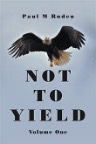
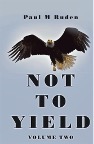
I am delighted to announce the publication of Not to Yield, a two-volume compilation of essays adapted from my blog at http://shiningseausa.com and, to a lesser extent, my retired blog at AutumnInNewYork.net.

This is most important: I do not expect you to buy the book because you know me.

If you are interested, please do buy it, but I will never ask. You owe me no explanation of your decision. Similarly, if you are offended by the contents, I’m sorry for that but the book, in addition to being a political and legal history, is replete with my opinions about many subjects. They are my opinions, and that’s that. I have explained the basis for them in, I hope, every case. If you agree, wonderful. If not, you are entitled to. This is the United States, after all. At least for now. One thing seems certain: if Trump loses the election, he will not accept the loss and just retire quietly to Mar-a-Lago. Many of the essays in this book will remain instructive for some time to come.

How to buy Not to Yield”
 
The books are now available at Barnes & Noble:

For Volume One: https://www.barnesandnoble.com/w/not-to-yield-paul-m-ruden/1146438480?ean=9798823034661

For Volume Two: https://www.barnesandnoble.com/w/not-to-yield-paul-m-ruden/1146448160?ean=9798823034685

You may qualify for a Member Discount and Free Shipping.

If you prefer to buy from the publisher, here is the AuthorHouse website:

For Volume One: https://www.authorhouse.com/en/bookstore/bookdetails/863010-not-to-yield
For Volume Two: https://www.authorhouse.com/en/bookstore/bookdetails/863011-not-to-yield

There may be shipping and handling charges.

In the relatively near future, they will be available through Amazon, among others. If you want to know when that occurs, state so in a comment  and I will advise at the appropriate time.

The e-book version of the volumes will also be available in the near future on the AuthorHouse website, as well as Amazon and Barnes & Noble, for a lower price and useable on any e-platform. If e-books are your thing, you may wish to wait. In all events, if you buy it/them, I hope the reading will be stimulating and thought-provoking. Remember that experience (history) keeps a dear school …. [Ben Franklin]

If you think you might want to read some of the essays but not all (each volume is long), you may want to consider buying the book, reading what you like, and donating the books to a local library, perhaps for a tax deduction.

To assist in deciding whether you want to buy one or both volumes, I have set out below a list of the main chapters, each of which usually has multiple essays within it.

From the Back Cover:

“This raw, provocative book of essays adapted from the blog ShiningSeaUSA pulls back the curtain on the Trump presidency, providing a panoramic view of his turbulent time in office, the legal implications of his actions, and the inactions of those surrounding him, enabling him, or standing by. The book includes memoir about life in New York City, legal analyses of major political developments since Donald Trump emerged, deep dives into what went wrong in the Mueller investigation, Trump’s mishandling of the COVID pandemic, and the threat to American democracy from Trump, the Republican Party he has captured, and the “conservative” Supreme Court. Not to Yield exposes the corruption and incompetence that dominated Trump’s presidency, his denial of his 2020 election loss, the January 6 attack on the Capitol and Trump’s attempt to return to power, all observed through a legal lens that spotlights blatant disregard for the law of the land and our democratic system.”

Chapters Volume One: Chapters Volume Two:


1 NEW YORK CITY MEMORIES 16 TRUMP’S PRESIDENCY 2017


2 PEOPLE 17 TRUMP’S PRESIDENCY 2018
3 CLIMATE, ENVIRONMENT, SCIENCE, & SOCIETY 18 TRUMP’S PRESIDENCY 2019


4 CONGRESS 19 TRUMP’S PRESIDENCY 2020
5 DEMOCRACY 20 PANDEMIC 2020
6 LAW & COURTS 21 ELECTION 2020
7 TERRORISM 22 TRUMP IN 2021
8 MEDIA 23 TRUMP IN 2022
9 REPUBLICAN POLICY 24 TRUMP IN 2023


10 GUNS IN AMERICA 25 ELECTION 2024


11 POLICING IN AMERICA
12 RACISM & MYSOGNY
13 ELECTION 2016
14 MUELLER REPORT
15 TRUMP’S PRESIDENCY 2016

Republican Grinches – Get Over Yourselves

You really must wonder how extreme Republican Trump worshippers can keep so many conflicted ideas in their minds at the same time.

The White House just had the Dorrance Dance Company perform there, doing a tap version of The Nutcracker. The First Lady Jill Biden posted a video of some of it on Instagram and, predictably, Fox News and the New York Post (the closest thing to a supermarket tabloid), went nuts. https://tinyurl.com/326drmsx For Trump acolytes who purport to oppose cancel culture, it’s interesting that they want to terminate Dorrance Dance because its website promotes racial justice. Fox and NYP prefer a police state like the one Donald Trump is promising to instigate if elected in 2024.

In keeping with Republican orthodoxy, Fox and NYP would prefer to continue spending billions and more to incarcerate “bad guys” rather than looking for constructive ways to reduce crime and improve social/economic equity in American society. It’s “just lock them all up” all the time for these people, all the while complaining about the cost of everything.

We saw the Dorrance Nutcracker performance at the Kennedy Center a few weeks ago. While I’m not generally that interested in tap dance as an art form (but loved the movie White Nights) and have only limited interest in the Nutcracker even as a classical ballet, the Dorrance show was amazing. The energy and creativity of the dancers were remarkable. They are plainly qualified to perform at the White House.

The show there was not about political or related issues. It was about art, and anyone with even a minimal artistic appreciation would see the glory in the Dorrance Company’s art. But not the Grinchy Fox News and New York Post. I’d wager they’d sing a very different tune if Dorrance’s website promoted “law and order” and “deport them all.” Will no one rid me of these troublesome negators of everything American?

When Will We Learn?

Two cases in point.

Case One:

The Yale School of Public Health reports that

Some “non-menthol” cigarettes that are being marketed as a “fresh” alternative in states where traditional menthol cigarettes are banned use synthetic chemicals to mimic menthol’s distinct cooling sensations, researchers at Yale and Duke University have found.

The synthetic additives could undermine existing policies and a U.S. Food and Drug Administration ban on menthol cigarettes expected later this year that is intended to discourage new smokers and address the harmful health effects of tobacco use.

https://tinyurl.com/35r7t7wz

….

Hundreds of municipalities across the United States and some states – Massachusetts and California – have already restricted the sale of flavored tobacco products, including menthol cigarettes.

In a study published Oct. 9 in the Journal of the American Medical Association, researchers from the Yale School of Public Health, the Center for Green Chemistry & Green Engineering at Yale, and Duke School of Medicine identified a synthetic flavoring agent known as WS-3 in the newly introduced “non-menthol” cigarettes that delivers similar, or stronger, cooling sensations as menthol but without the minty aroma or taste.

….

Flavored tobacco products such as menthol cigarettes tend to reduce tobacco’s harsh effects making them particularly popular among young people and those just starting to smoke. Historically, menthol cigarettes have also been aggressively marketed towards African Americans, with up to 90% of African Americans who smoke using menthol cigarettes.

It seems likely that this “gap” in the regulatory regime for death-dealing cigarettes results from the regulations being based on specific chemicals rather than on the effects of flavor-enhancing chemicals regardless of type. The lesson to be learned from this, yet again, is that industries looking to make money regardless of impacts on public health will always look for an escape route and finding such routes is always easier when the “thing to avoid” is named rather than relying on the effects of the danger factor or the way it influences behavior.

The historical conduct of the tobacco industry, among others, should be a lesson for governments at all levels that you have to think very deeply about what you’re trying to prevent and how such prevention may be avoided. This doesn’t seem that hard.

Case Two:

The Virginia Highway Use Fee (the “HUF”).

I only recently learned about this assessment even though we bought a highly fuel-efficient hybrid vehicle in late 2020. The fee is not a lot of money, but the purpose of the fee is offensive and counter to other goals, or what should be other goals, as we try to offset some of the worst environmental effects of our dependency on automobiles.

The fee is $25 a year. The Virginia law provides a way of saving, maybe, $5 of the fee but is very complicated and, in my judgment, not worth the effort that involves obtaining another “reader” for your windshield, taking and reporting readings, etc. No thanks. Not to save $5.

More troubling is the motivation for this fee.

According to the Virginia Department of Motor Vehicles,

     You pay the HUF if you register a:

    • Fuel-efficient vehicle, which is a vehicle that has a combined fuel economy of 25 miles per gallon (MPG) or greater
    • Vehicle made in a year in which the average combined MPG rating for all vehicles produced in that year is 25 MPG or greater
    • Low Speed Vehicles, pay an annual $25 HUF

The highway use fee (HUF) helps make up for the fuel taxes that drivers with fuel-efficient and electric vehicles spend less on, because they’re not using as much fuel.

Among the vehicles exempted from the HUF are:

  • Vehicles with a combined MPG rating less than 25 MPG
  • Autocycles
  • Motorcycles
  • Mopeds

The HUF was started in 2020 but in July 2022,

the state launched an alternative program to let drivers pay the fee at a per-mile rate — a cost savings for those who drive less than the average amount, which officials peg at 11,600 miles annually. For drivers of battery-powered cars, that fee works out to a penny per mile. [https://tinyurl.com/yh4kt6tx]

In plain English, Virginia wants to penalize you for using a fuel-efficient vehicle (like a hybrid or fully electric, that, by the way, costs more than a regular gas-using vehicle) by forcing you to pay taxes based on gasoline consumption you don’t use, BUT you can potentially reduce the penalty slightly by signing up for the complex pay-per-mile program.

Or you can have what’s behind Curtain No. 1.

Seriously, this crazy scheme is a product of multiple conflicting forces, including Congress’s failure to increase gas taxes since 1993, the attraction of fuel-efficient vehicles and the inability of states to see the clear alternative of just taxing vehicles sufficiently to provide the revenue they need for road maintenance without depending on gasoline consumption. The current system must be beloved in the hallowed halls of the oil companies as it disincentivizes the purchase of fuel-efficient vehicles.

The more one looks at these systems of regulation, the more our government looks like something created by the Keystone Kops. If you don’t know what they are, see https://en.wikipedia.org/wiki/Keystone_Cops


Jake–Gifts Beyond Measure

Monday evening, for probably the sixth time, we saw the virtuoso ukulele player, Jake Shimabukuro, perform at the Birchmere Music Hall in Alexandria.

Physically, Jake is rather diminutive, proving yet again that giants come in all sizes. His intimate connection with his music and his obvious joy when he performs keep him looking much younger than the 46 years in which he has graced the planet with his talent. You can read his biography here. https://jakeshimabukuro.com/biography/

The main Birchmere performance hall seats 500 guests at tables for six people each. It is a massive space, but in the hands of someone like Jake, it becomes remarkably intimate. We have seen Jake and other performers at the Birchmere many times. This time he was doing his magic on a Monday night and while the doors opened at 5 pm, the show wasn’t scheduled until 7:30. We figured to have plenty of time to arrive around 6:15 and finish dinner before the show started. The parking lot rings one half of the large building that houses the venue. We were shocked to find it was almost completely full when we arrived. The crowd knew Jake and had come early for the best seats. There were probably a few empty spots at show time but not many.

Jake wastes no time in displaying his prodigious musical gifts. It can be overwhelming for first-timers. You just can’t anticipate such sounds from a ukulele, even one electrically amplified. When Jake bounded onto the stage, the audience went nuts. He was obviously excited to be back at the Birchmere, and they were equally excited to see him again.

I don’t have words adequate to convey the power and quality of Jake’s playing. This evening he was accompanied by a young electric bass player, Jackson Waldhoff who has some impressive chops of his own:

[Waldhoff]  grew up in Kyoto, Japan, and moved to Hawaii when he was 15 years old. Jackson did not speak English at the time, and started to play music as a way to break language barriers. Later he fell in love with bass guitar, and decides to follow his passion for music. Since then Jackson has performed and recorded with wonderful artists such as Jake Shimabukuro, Mick Fleetwood, Alan Parsons, Sonny Landreth, Keb Mo, Sam Bush, Taku Hirano, Fiji, Mark Yamanaka, Conner Johnson, and many others. [https://www.jacksonwaldhoff.com/]

After a few pieces, Jake welcomed Conner Johnson to the stage. Johnson was an “America’s Got Talent” contestant whose voice and guitar riffs attracted Jake’s attention. He clearly loved to sing. Johnson performed and sang several great pieces, among them the amazing Hallelujah by Leonard Cohen.

We thought Johnson would stay for the remainder of the show, but he departed after four or so pieces. We anticipated the show would wrap up soon thereafter, but Jake has so much fun performing that he continued with bassist Waldhoff into the night. He managed to work in two of my absolute favorite pieces, While My Guitar Gently Weeps [https://tinyurl.com/mr2scjjr] and Sakura, Sakura [ https://tinyurl.com/ye2aat4r?v=FuqdeFqtxCg]

Then, when we were sure the show was about to end, Jake broke into the great anthem by Queen, Bohemian Rhapsody [https://www.youtube.com/watch?v=IYhcN8p4yhg] followed by, yes, We Will Rock You. On the ukulele. The audience was transfixed, singing the words (hundreds of people knew the words) as everyone joined in the excitement.

The YouTube videos of Jake playing do not do justice to his astonishing talent. But they give you a small hint of what it’s like to witness his performance live. If you ever have the chance to see him, do yourself a favor. You will, quite simply, be amazed and uplifted.

Two closing notes.

Jake played for about 1 hour and 45 minutes, which is extraordinary in itself. He closed the show by thanking everyone involved in producing it and the people in the venue, the waiters, the cook-staff in the kitchen, and delivered a message to the young people in the audience to stay drug-free. After all that, he appeared in the outer hall to speak with every person there who wanted to meet him. He stood for hugs, for photos, signing CDs, books, shirts, ukeleles. Always smiling. Always friendly. Never rushing anyone. The line was long – my wife waited in it for over a half hour and there were still many people behind her when she finally had her minute with Jake. She had him sign her CD and, typically, another one for the kumu hula (hula master) for her hula troupe with which she has been dancing hula for more than 15 years. Jake was probably there another half hour or more speaking to the last guests who wanted to meet him.

The other note is that Jake’s website mentions one of his

dearest friends and favorite singers — Pōmaika`i Keawe. In addition to her incredible musical talent, Jake is always so inspired to see how much time she dedicates to local non-profit organizations, lifting up the community through outreach opportunities. Pōmaika`i had always wanted to record “Ho`okahi Akua,” as a tribute to her late grandmother, the legendary Aunty Genoa Keawe. It was Aunty Genoa who arranged the music with the help of her friend Malia Craver who provided the Hawaiian translation. They had originally recorded the song during the pandemic and both were in tears by the end of it. Fate would have it that the song had to be re-recorded and the recent track captured the more hopeful and joyful feelings they now share.

As it happens, Pōmaika`i Keawe is the daughter of Eric and Marlene Keawe who are wonderful friends of ours in Hawaii. The entire Keawe family are exceptionally talented musicians on multiple instruments, carrying on a multi-generational love of Hawaiian music and culture. Pōmaika’i’s voice is spectacular. We were thrilled to see the entire family perform at a local show some years ago on a visit to Oahu and had dinner with them on our last visit. We saw Jake at the Hawaii Blue Note together. Eric on his guitar accompanied my wife’s surprise performance of a special hula dance as a treat for the audience at a travel industry business conference where she spoke a few years ago. She and he were a smashing success. It’s Hawaii. It’s what they do.

Now, go see Jake.