Category Archives: Reviews

Donald Trump — A Gangster in the White House

I write to give you the gist of Jeffrey Toobin’s excellent True Crimes and Misdemeanors.

If there is anything to be disappointed about, it is that the book was published in early August of 2020 and thus does not address Trump’s (and other Republicans’) incitement of the January 6 attack and his second impeachment. But there is likely little that Toobin could add at this stage to what is known about that, given the stonewalling by most of Trump’s enablers and the apparent indifference of the Department of Justice to the entire matter.

That limitation aside, this book, like the exceptional Where Law Ends by Andrew Weissman, displays throughout the gift of clear exposition. A complex tale told well. And, like Weissman, Toobin pulls none of his punches in judging the behavior of most of the participants in the criminal enterprise that defined the Trump presidency. If there is anything to complain about in that regard, it’s Toobin’s obvious fascination with and adoration of the role, style, and grit of Speaker of the House Nancy Pelosi, perhaps the only major player to come out of the Trump crime spree as a genuine hero in Toobin’s eyes.

The book reads like a true crime novel, and it is all about crimes. Sad to say, it’s also not a novel. It’s true. All of it.

So, where to begin? The book opens with a summary analysis of Trump’s survival despite the findings of the Mueller Report. There is plenty of blame to go around but much of it rests at the feet of Mueller himself:

Mueller’s caution and reticence led him to fail at his two most important tasks.  Thanks to the clever actions (and strategic inaction) of Trump’s legal team, Mueller failed to obtain a meaningful interview with Trump himself. Even worse, Mueller convinced himself – wrongly – that he had to write a final report that was nearly incomprehensible to ordinary citizens in its legal conclusions. [True Crimes at 8]

Toobin ends the opening with the observation that,

everyone – friends as well as enemies – knew what [Trump] had done. It was obvious to any sentient observer that he did what he was accused of in the Mueller Report and in the articles of impeachment. [[True Crimes at 11]

The book then narrates the story of how that happened, beginning with James Comey’s betrayal of the country by his decision to ignore FBI policy about disclosing details of investigations at all, let alone on the literal eve of an election, with the result that Hillary Clinton’s candidacy was undermined at the last minute. The subsequent narrative will be familiar to everyone who was paying attention but the details, including many not previously revealed (to my knowledge) propel the story forward. Toobin concludes, “it appears likely, if not certain, that Comey cost Clinton the presidency.” [[True Crimes at 28] Indeed.

Toobin makes a compelling case that Robert Mueller was hyper-focused on bringing his investigation to a rapid close and thus failed to pursue “the single most important piece of evidence,” namely, the testimony of Donald Trump himself. But,

Mueller didn’t. He backed down. He couldn’t bring himself to launch a direct legal attack against the president of the United States. [True Crimes at 197]

Of all the mistakes made, and in truth every serious investigation of complex events will have some, the failure to force Trump’s testimonial hand stands out as the largest and the least understandable in light of Mueller’s assignment. Everyone – Mueller’s team, Trump’s lawyers – knew Trump would perjure himself if questioned under oath. He would have had extreme difficulty responding to skilled cross-examination of his conduct and motives. This is particularly important because Mueller believed that Trump’s “state of mind” was critical to bringing charges against him. For me, that will always remain a mystery. State of mind is simply never directly knowable, despite what we’ve seen in some phantasmagorical science fiction movies. It is inferable from conduct in context and circumstances, always.

Mueller made other mistakes. He should have squeezed Michael Cohen, Trump’s personal lawyer whom they had dead to rights on campaign finance violations and lying to Congress. Without ever asking whether his jurisdiction might include the Cohen issues, Mueller turned the case over to the Southern District of New York. Because those prosecutors, accomplished though they were, saw their role narrowly – Cohen was the target, not Trump – they never sought Trump’s tax returns or his financial records.

In a precursor to what was to come, William Barr, who had once been Mueller’s boss at DOJ, volunteered in June 2018 a 19-page memo to Deputy Attorney General Rod Rosenstein, who had appointed Mueller as Special Counsel, attacking the legitimacy of the Mueller investigation. Barr argued that the president could, for any reason or no reason (the legal standard for “at will” employment firing), fire the head of the FBI (Comey) and such action could not be attacked as obstruction of justice. Barr also objected on constitutional grounds to any attempt to force Trump to testify. [True Crimes at 234-235]

Thereafter, negotiations over Trump’s possible testimony were postponed while Rudy Giuliani was brought in to lead Trump’s legal defense team. At a “get-acquainted” meeting with Mueller’s team,

Giuliani wanted to nail down Mueller’s commitment that he would follow the [DOJ Office of Legal Counsel] policy barring indictments of sitting presidents. Aaron Zebley volunteered that Mueller would. [True Crimes at 236, italics mine]

When I read that, I almost gagged. Zebley was Mueller’s former Chief of Staff at the FBI and his top aide in the Trump investigation. Zebley was the subject of much critical assessment in Andrew Weissmann’s Where Law Ends, discussed in detail here: https://bit.ly/3Jn8ye3

I can think of no plausible reason for Mueller or his team to offer such a concession at that point, or likely at any point, in the investigation without getting something of extraordinary importance in return. But, no, the point was “volunteered” away. Astonishing and inexplicable in my opinion.

Many key players in the prolonged saga of Trump’s presidency come in for harsh criticism in Toobin’s accounting, including Judge T.S. Ellis, the judge in the first trial of Paul Manafort, Trump’s former campaign chair. Toobin notes the judge’s “partisanship and incompetence.” [True Crimes at 238] Strong words, indeed, but justified by the shocking events he narrates.

One beef I have with Toobin relates to the central issue in the Mueller investigation. Mueller concluded that there was no evidence proving that Trump or his campaign “colluded” with Russia. Toobin accepts this finding, with the qualification that Trump and his inner circle certainly wanted to collude. [True Crimes at 269] Given the failure to examine Trump personally under oath or to subpoena his taxes and financial records, Toobin’s total acceptance of Trump’s innocence on the collusion issue is, I think, unjustified. Even more so because Trump’s answers to the written questions ultimately submitted to him by Mueller included 36 instances of “don’t remember” by the man who repeatedly claimed to have a genius level mind and memory. [True Crimes at 273]

Toobin holds nothing back in stating that Rudy Giuliani’s involvement in the Ukraine extortion episode “must rank among the most disastrous pieces of advocacy in the history American lawyering.” [True Crimes at 292] No doubt, but Toobin also holds nothing back regarding the Mueller Report itself. He correctly concludes that the Report established that “Trump committed several acts of criminal obstruction of justice.” [True Crimes at 300] Using his gift of snark to full advantage, Toobin paraphrases the Mueller conclusions on obstruction:

We can investigate the President, but we can’t prosecute the President. If our investigation determined that he was in the clear, we’d say that – but we’re not saying that. Nor are we saying that he’s guilty of anything. So we’re not saying he’s guilty – but we’re not saying he’s innocent either. Basically. [True Crimes at 302]

Toobin characterizes the decision to avoid saying whether prosecution was warranted as a “gift to Trump.” [True Crimes at 302] Right again.

For several reasons, a special mention must be made of then- Attorney General William Barr’s issuance of a second letter, two days after he received the 448-page Mueller Report, interpreting the Report to say things it did not say and drawing conclusions the Report did not draw. Or, as Toobin put it, Barr put “a stake in Mueller.” [True Crimes at 307] And then, one of the highlights of the entire book for me,

Many on Mueller’s team, especially at the lower levels, were incandescent with fury at Barr.” [True Crimes at 308]

I don’t think will ever forget that phrase, “incandescent with fury” that so graphically describes how I and many others felt when Barr’s treachery sank in.

The book goes on to cover Trump’s Ukraine extortion scheme, the outrageous efforts of the White House and outside counsel to defend the indefensible, the refusal of Republican senators to hear the evidence through witnesses and their determination to protect Trump at any and all costs. Toobin is unsparing in his condemnation of these efforts, and all are worth reading.

The main thing that really surprised me in the book was an omission. I may have missed it, though I doubt it. There was no discussion of the fate of the full written report (I will not dignify it with the term “transcript,” since it was in no sense an actual transcript) on the Trump-Zelensky call that was widely reported to have been sequestered in a White House server to which access was extremely limited. I have seen no reports about whether the Biden administration has opened the server to discover its contents or whether the server was removed with by the outgoing administration to, again, protect Trump from further exposure of his crimes.

I also strongly disagree, as I have previously written, with the decision of the House managers (mainly the Speaker) to limit the impeachments to narrowly drawn issues, given the breadth and depth of Trump’s crimes in office. The House was not bound by the self-imposed limitations of the Mueller Report and, knowing, as the House did, that conviction of Trump was completely unlikely, they should have thrown the book at him, exposing for the watching world the range and importance of his crimes in office.

I also must record my fundamental disagreement with Toobin’s judgment about the proper role of the Senate in the impeachments. He says,

The senators were nothing more, and nothing less, than politicians were supposed to decide the president’s fate based just in part on the evidence at trial but also on their overall sense of what was best for the country.

That view is far too narrow and validates the refusal of the Republican Party to come to grips with the realities of Trump’s presidency. There remains, and history will confirm, no doubt that Donald Trump committed multiple crimes in office and that he committed crimes in attempting to stop the peaceful transfer of power to the Biden administration. To say that the Senate’s judgment was rightly based on a self-interested determination of “what was best for the country” makes a sham of the entire constitutional process. I do not believe the Founding Fathers, if they had been able to imagine a president like Trump, would have intended that the Senate could just say “it’s in our best interest to keep the leader of our party in power, so he’s ‘not guilty’ regardless of what he did.” I believe the Founding Fathers, whatever their other flaws, wanted and expected more when the extraordinary remedy of impeachment was brought against a president.

Toobin does not spend much time on Trump’s handling of the pandemic because that was not the primary topic of the book. But, as some of the Republican senators observed, the people would eventually render their judgment of Trump on election day in 2020. And they did. For reasons I still cannot grasp, Trump received more than 74 million votes, despite everything. But, fortunately for the republic and the world, Joe Biden won more than 81 million votes and a sufficient margin in the Electoral College to take the presidency. Then, Trump incited a coup to try to stop the transfer of power to the new president.

This was what Trump cared about the most. Toobin presciently notes,

Trump had no great passions on the issues, no policy agenda that he was determined to enact. For Trump, his presidency was more about him than what he could accomplish. For this reason, the only verdict that has ever mattered to Trump is the one rendered on Election Day.

Thus it was written and thus it was done.

You may recall Michael Cohen’s testimony before Congress in which he likened Trump to a mafia boss. While Cohen’s handling of Trump and his legal affairs was problematic, to say the least, it appears that he correctly identified the central idea of Trump’s personal code of conduct.

The central question facing us now is, I think, whether the current Attorney General, Merrick Garland, is just another Robert Mueller. As an earlier post has discussed, the statute of limitations has already run on one of Trump’s obstruction crimes. Garland has publicly stated he will follow the evidence and the law even if it leads to Trump. More lawyers have apparently been hired to work on Trump matters.

Meanwhile, time marches only in one direction. The country waits for action. Trump’s crimes, and those of his enablers in the White House and Congress, stretch well back into his presidency, with the capstone being his incitement of the attack on the Capitol on January 6, 2021, more than 15 months ago. The nation waits ….

Ballet in Hawaii – Oh Yes!!

You probably recall the experience of being invited to the home of a relative or friend to see the “slides” of their vacation somewhere. If you were fortunate, enough alcohol was served to get you through the seemingly interminable photos of places you hadn’t been and people you didn’t know, but you were sure a grand time was had by all. And how can I gracefully get out of here? If the internet had existed back then, the “slide show” would surely have been a popular meme.

I recall that because I did it, mostly to relatives who, I had convinced myself, were interested in what we had seen and done on the many trips I took for business and pleasure. I now doubt they were interested but tolerant enough.

That said, if you have followed this blog for long, you know that I occasionally post photos of places and sights that I think are worth sharing. The good news is you don’t have to look.

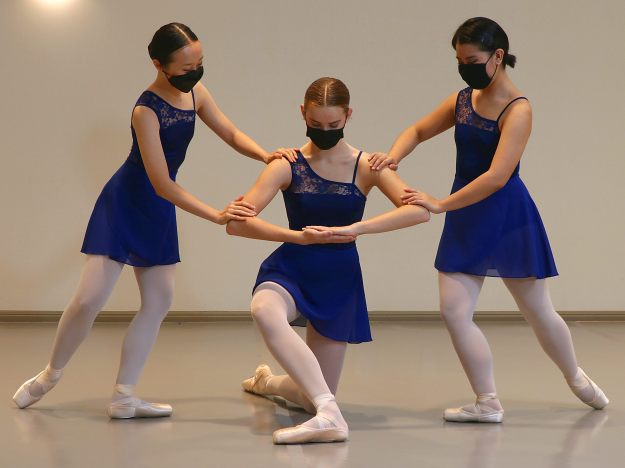
But I hope you will look at these few shots because they represent the future of ballet in Hawaii and these young people are genuinely amazing and deserving of support. What? Ballet in Hawaii? Indeed.

Our recent, twice postponed (pandemic) vacation/anniversary/wife’s birthday trip to Honolulu let to a surprising and inspiring discovery. As usual, we had planned many elements of the trip, but we found ourselves on the first day with … no plan! We had expected to be jet-lagged and not much into activity, but upon looking for something to do, we came upon https://ballethawaii.org. Their final studio performance was the next day, so we bought tickets and took an Uber to the studio.

What a wonderful surprise! These young and gifted people put on a show to remember. Short pieces involving different members of the group and covering the full range of classical and modern themes. Their commitment to the discipline of ballet was evident in the quality of their dancing and their obvious enthusiasm for this difficult art form.

These are two professional shots of the group that they kindly shared with us.

Below are a few of the shots I took. I wanted to capture some of the dancing, but the setting was too intimate for me to be clicking away while they did their thing.

You can see the Performing Ensemble up close here: https://ballethawaii.org/performing-ensemble/  Note them well. Someday, we’re sure, we’ll be seeing some of these names in major dance companies around the country.

Strong At Every Position

The title of this post is a phrase often used in sports journalism to describe a team that has highly rate players in every position on the starting team. It is a gross understatement as it applies to the American Ballet Theater dancers and others involved in producing Don Quixote last night at the Kennedy Center. The program can be seen here: https://bit.ly/3J4cFeI

The evening began when Devon Teuscher, principal dancer with ABT, emerged on stage to announce that the evening’s performance was dedicated to Ukraine and its fight for independence. She then invited “those who are able” to stand for the playing of the Ukraine national anthem. The audience roared its approval and virtually everyone was on their feet. A wonderful moment.

The performance that followed was extraordinary as well. From the spectacular stagecraft to the dancing itself, words almost fail. The ballet has three acts, the middle one being somewhat slow but with elegance that reminded me of scenes from Swan Lake. The first and third acts were just high-energy explosive displays of artistry, discipline and skill. The unison of the dancing groups was surreal.

The leading role of Kitri, the heroine whose affections are the subject of the main “contest” for her hand in marriage, was performed by Christine Shevchenko, a native of Ukraine, making the evening’s dedication even more poignant. Her extraordinary biography is here: https://bit.ly/3u2yvek and last night she lived up to her credits, dominating every scene in which she appeared. Phenomenal in every way. That is not to take away from the other dancers. Everyone was exceptional in their assigned parts.

The evening ended with another surprise. Shevchenko, having taken her bows with the others, ran off stage and returned with the Ukraine flag, producing another roar of approval from the standing crowd. This is the photo, hurriedly taken with a cell phone to capture the unexpected moment.

New York City Ballet company is coming to the Kennedy Center in June. That too will be spectacular. There are likely seats left. Get yours before it’s too late!


DC – Be More Like Hawaii

We have returned from a twice postponed and much-needed vacation in Hawaii. We spent the entire week in Honolulu but, in our over-priced rental car, we toured the island as we always do, stopping for garlic shrimp at one of the local huts on the North Shore and marveling at the amazing scenery. We had a wonderful birding experience, about which more in another post.

The point now is to highlight an aspect of Hawaii life that we would do well to emulate here in the District of Columbia. It’s not hard to do and would contribute measurably to the quality of life here. Elsewhere as well.

I refer to the fact that virtually no one honks their car horn at other drivers in Hawaii. It is frowned upon as extremely discourteous, rude and … unacceptable. Associated with this wonderful custom is the concept of sharing the road. Traffic on Oahu, the island of which Honolulu occupies a big space and has most of the population, is, well, heavy. And on the few interstates, traffic tends to move fast when fast is possible. It resembles the interstates on the mainland in that regard. If you’re going to survive, you must pay attention to the road and other drivers and not so much the highly distractive surroundings.

That said, when it’s time to exit, giving a signal of your intentions reasonably in advance will almost always result in someone in the lane to your side allowing you to enter that lane and exit. The same is true for changing lanes to get into one whose speed is more comfortable. At congested points within Honolulu, and there are many, drivers, with rare exceptions, alternate with each other at choke points. You don’t have to force your way into the traffic. Other drivers seem to understand that they have been where you are and yield to you, if not willingly, still pretty consistently.

This degree of courtesy on the road can take some getting used to, but it doesn’t take long to realize that this is a culture change, a way of getting along with others who are all trying to do the same thing — reach their destinations safely.

The absence of routine angry horn honking and the common and almost universal courtesy of drivers yielding and sharing space with you makes for a quieter and calmer driving experience and general atmosphere. In DC, where we live now, I am convinced that the propensity of drivers to think they are somehow more important than everyone else and show this with blasting horns and insanely dangerous driving habits, leads to a kind of follow-the-leader atmosphere.  Horn honking leads to more horn honking. Hesitation at a light is not tolerated and often no space is given at merge points without forcing one’s way into the line of traffic. The more of this that occurs, the more it becomes the norm. Bad behavior begets bad behavior.

We can do better. Hawaii is proof that we can learn to accommodate each other, at least in this one respect, so that good behavior begets good behavior. You don’t have to visit Hawaii to figure this out, although it will do you a world of good to spend some time there. More about that in future posts. [I took over 1,000 photos in one week there.] Meanwhile, DC, try to be more like Hawaii.

Why I Hate the Snow

We had fair warning even though my two weather apps had drastically different predictions of how the second snow of the year would play out. Until the snow had already exceeded predictions, both said it would amount to little, somewhere between a dusting and three inches. Not that big a deal. And anyone who has lived a while or read books about weather will know that predictions are highly uncertain. Fine, as far as that goes.

My tale.

My wife is flying back to Washington DC from California, scheduled to land at National Airport (DCA to we cognoscenti) at 4:53 pm, a few hours after the snow was expected to start but given the predictions, we should have no issues. I drive a Ford Escape Hybrid that, in addition to extraordinary gas mileage, has front-wheel drive. It’s really a computer on wheels, with multiple sensors around the perimeter (aside: on road trips it will often suggest, by flashed dashboard message, that I am tired and should take a “rest”).

I set out from our apartment in the West End of DC at 4:30, plenty of time given that my wife checked her bag on the return flight. I am monitoring the flight’s progress on a cell phone app that, it will later appear, provides way more information than anyone could need, making the key information very hard to read while also trying to stay on the road whose lane markers have long ago disappeared.

Indeed, traffic is very light, although it’s apparent immediately that the car in front of me has no business being out in this weather. I carefully navigate Washington Circle, one of the cruel gifts of the original French designer of the city’s layout, and proceed down the hill to the Memorial Circle (site of the iconic Lincoln Memorial) and cross the Memorial Bridge to the George Washington (yes, that one) Parkway leading to the airport. Road conditions are not great but I’m moving right along and arrive at the Roaches Run Waterfowl Sanctuary parking lot, a short hop from DCA. I join a handful of other cars hopefully waiting to proceed to the airport where the cellphone “waiting” area is very small and the other places to stop and wait are patrolled regularly by police with guns.

[Aside No 2: According to the Washington Post, Roaches Run is named that because “The stream that feeds the lagoon is named for the family of James Roach, who ran a nearby brickworks and owned a mansion, since torn down, called Prospect Hill.” https://wapo.st/3KhGU3R Do not read that article because you will then be tempted to read the Comments where you will find yet another unnecessary war of words between two readers set off by an allegedly “off topic” comment and followed by “you’re one – no you are – no you…”]

After a while, I glance at my phone and see that the flight arrival is being pushed back. Not surprising considering the weather, runway clearing, etc. My weather app now changes as well – we’re now looking at 3 to 6 inches. No problem. Even had I known that before departure, my plan would not have changed. After all, I drive a Ford Escape ….

I wait. I look at the phone again and BOOM, I now see that the flight has been DIVERTED to Dulles International Airport (IAD to we cognoscenti) which is about 27 miles away and road conditions are deteriorating fast.

I depart Roaches Run, drive into DCA, and go around by the arrivals terminal so I’m now driving north on the GW. There are a few options for routes to IAD, but I choose to stay on the GW Parkway. I know the road well and traffic is sparse though road conditions are deteriorating fast. Several of the cars that also chose this route for whatever reasons are regretting the error as they slide around and, in some cases, get stuck in the mounting snow/ice/slush.

Undeterred, and in any case irrevocably committed to my chosen route, I forge ahead. I believe I am racing against a jet airplane that could be in final approach. Road conditions are deteriorating fast, but it could be worse. Only one driver does something really stupid, forcing me to brake suddenly to avoid him. I do. It’s all good.

I reach the Capital Beltway (the ring road around DC known to cognoscenti as 495), which is the link to the Dulles No-Toll superhighway that takes you straight to IAD. Traffic is much heavier on 495. Why? Is it really necessary for all these people to be driving on a Sunday night in a snowstorm when road conditions ….? Dumb question.

Still, I’m making good progress until the exit for the Dulles No-Toll Road. Here the snow has apparently melted near the pavement, the plows have missed the area and several cars are having that uh-oh moment of realization that they are now spinning in one place. Even my chariot is having a lot of trouble maintaining forward momentum.

But I ease around the floundering cars, leaving them in my dust (very figuratively speaking) and make it onto the No-Toll road. I could take the Toll Road that parallels (literally right next to) the No-Toll Road but why pay when you can drive for free (the Devil whispers in my ear)? I think I will make it to IAD in plenty of time because the government usually keeps the No-Toll Road pretty clear, and traffic remains light. I am maintaining a nice steady 20 mph on a road designed for 55 and often driven at 65 to 70 by many (other people).

Once clear of other cars and with open (figuratively speaking) road ahead, I glance at my phone for a time check. WHAT???? The flight has been RE-DIVERTED back to DCA!!!!

Now, for those who don’t know, the thing about the No-Toll Road is that, because it’s free and might be abused by commuters who want to escape the frequent congestion on the parallel Toll Road, once you’re on the No-Toll Road you may not exit until you reach the airport. Aaarghhh!!!

There are, of course, a few “Official Vehicles Only” exits with dire warnings about high penalties, gates, red lights, and other reasons not to use those exits. Once entering one of those lanes, you might not be able to get out and the police are around trying to help motorists when the can.

Soooo, I chicken out and keep driving – allllll the way out to IAD where I circle through the airport. My computer-on-wheels is now flashing all manner of dashboard warnings to the effect that the sensors that tell you when you’re about to crash and burn are blocked. I am a bit concerned that the computers may simply shut the engine off, so I stop in a no-stopping zone at the end of the terminal, exit the car and try, unsuccessfully, to remove the ice caked all around the lower perimeter of the car (where, naturalement, the sensors are located).

To hell with it. I get back in the car and head back onto the No-Toll Road back toward DCA, still 27 miles from where I just came. I can’t be sure, but it appears that my wife’s fight is still circling DCA so I’m still good on arrival time.

Indeed, the snow is turning to rain/sleet (a miracle?) and while it’s cold as hell (world class mixed metaphor), the rain is clearing the road of snow much better than the snowplows could. I am traveling 40 mph at times. I stay on the No-Toll Road until it merges with I-66 (known to cognoscenti as The Road Where Cars Go to Run Out of Gas While Idling in Traffic) and miraculously arrive in Crystal City (don’t ask if you don’t know). The phone rings — my wife is in the terminal with a large group of people awaiting delivery of their luggage, running back and forth from one carousel to another (Guess Which Carousel If You Can – a favorite game of the baggage handlers at DCA). I slow down, arrive in the “road” that serves as the airport pick-up zone for arriving passengers, acquire my wife plus luggage and head back to DC.

She is starving because she believed that having been served a meal traveling west, she would also get one coming east. She had, after all, paid for an upgrade to Premium Economy. In reality, enroute from LAX (Los Angeles for cognoscenti on a flight that exceed five hours, she was served a … cookie. Meanwhile, my total driving time was almost as long as her flight, so there’s that.

All’s well that ends well, of course, and the ride from DCA was uneventful, I didn’t get a ticket for the U-turn I didn’t make on Pennsylvania Avenue to acquire carry-out at the local Thai place, and we settle in to watch a blood-soaked movie starring an aging Pierce Brosnan who, miraculously, fought like a twenty-something.  There is hope.


Steaming at Blues Alley

‘Twas a wet and blustery night

With cold descending on the town,

But the smoke was pouring hot

From the best jazz club around.

It was Saturday night and Kenny Garrett’s sextet was playing at Blues Alley, the premier Washington jazz club in the heart of Georgetown. The club is really located in an alley, which adds somehow to its charm. Inside, it’s the real deal. Tightly packed tables seating 140, surrounding a compact stage that is crowded on a night like this because the sextet has a lot of instruments.

We booked late, a bit unsure about attending such an event indoors, but we had seen Garrett several times before and the attraction of live jazz again, just a few blocks from our apartment, was too much to resist. Very wisely, the club has a firm policy: proof of vaccination to enter and masks-on when not eating or drinking. Even Garrett wore a mask before starting to play. All the audience seats appeared to be occupied as a few late walk-ins arrived to take the few remaining.

The traditional tools of the jazz trade jammed the stage: piano (baby grand, I think), drum kit (everything you can imagine), full-size bass, many microphones and, in this case, a full set of bongos, sound devices whose names I can’t guess and, in the center, a small electronic keyboard. In the hands of musical masters, these instruments enable the creation of the magical place a jazz club can be when a master of the art accompanied by others of surpassing talent are at the top of their game.

The people attending this event were primed for some top-level stimulation and they got it. Garrett’s sextet included: Vernell Brown Jr.: piano; Corcoran Holt: bass; Ronald Bruner Jr.: drums; Rudy Bird: percussion, snare; and Melvis Santa: vocals and keyboard, among other things. Those folks can play. For me, the drummer stood out, driving the music forward with powerful strokes and extraordinary energy. Few people can play like that for so long. But in truth the whole ensemble was a unit in an exceptional display of jazz at its most powerful.

At the end, Garrett called on the audience, already fully tuned up by the propulsive sound, to rise up and “work it out” to the closing number … and they did. I have never seen anything quite like that after attending many jazz performances over the years. Dancing in the aisles, even where there were no aisles.

Garrett’s style may not be for everyone (the first number lasted probably 15 or 20 minutes) but the crowd Saturday night was totally into it, as were all audiences in prior shows we saw. Typically, his entire body rocks back and forth to repeated riffs of sound. Maybe it’s how he keeps time. Doesn’t matter. The man can blow. He never seems to tire. His saxophone dominates the music, but the other instruments have their time as well when the tunes go from post-modern bop to Latin, Cuban, Afro something something, who knows. It’s all great.

At the end, Garrett dismissed each performer by name. The crowd erupted in appreciation and one-by-one the musicians exited. Garrett departed next-to-last, leaving the drummer, playing, for him, sedately. Then, he stopped and just walked off. It was all over but the vibrations. The steam subsided … until the next set.

Tickets are still available for tonight’s shows at 8 and 10.

The 2022 Pulitzer Prize for Fiction–My Nomination

The Pulitzer Prize for Fiction is awarded each year (usually) for books published the previous year. Thus, the 2021 Pulitzer went for a book published in 2020.

I am, therefore, in time to make my sole nomination for the Prize this year. I have never done this before.

My nomination is Late City by Robert Olen Butler. Butler already has a Pulitzer for the remarkable, A Good Scent from a Strange Mountain. But that was way back in 1993. With Late City, I believe Butler should be considered for the rarified club of double winners occupied by my favorite author, John Updike plus Booth Tarkington, William Faulkner and Colson Whitehead.

I cannot improve upon the dustjacket’s description:

A visionary and poignant novel centered around former newspaperman Sam Cunningham as he prepares to die, Late City covers much of the early twentieth century, unfurling as a conversation between the dying man and a surprising God. As the two review Sam’s life, from his childhood in the American South and his time in the French trenches during World War I to his fledgling newspaper career in Chicago in the Roaring Twenties and the decades that follow, snippets of history are brought sharply into focus, moments that resonate profoundly forward even into our own century.

Given that story line, I was surprised at the deep impression the book made. Butler’s prose is remarkable, and his storytelling has few equals. This book is cleverly constructed and brilliantly written. Part history, part memoir and more. I give you three short examples with little context.

Sam is often beaten by his father. At age twelve, he reads a report of the 62 lynchings of Negroes that year. Sam asks aloud “What’s wrong with us?” and more. Sam’s father prods him with his foot and says, “Stand up.” Sam knows what is coming “But I understand this blow is different. It’s the first one for an idea. An idea that feels like my own.” His father speaks,

“You will not indict America for this, he says. “You will not even indict the misguided white men who did this. These men are your people. They were hasty. They acted unlawfully. But they have grievances. They rely on you for understanding, not censure. Is that clear?”

Elsewhere, in another context entirely, Butler’s gift for prose shines in phrases like “the chaste seemliness of the age, which we have inevitably assimilated.” In another scene, “… our thighs tightly and unwaveringly aligned, ardent but chaste, as our shoulders square around to each other and our lips speak wordlessly of what we have become.”

This is, I believe, a genuine masterwork. Maybe it will surprise, delight and move you as it did me.

Artists Speak in Tongues

I often don’t understand. I recently had this experience again at DC’s Hirshhorn Museum https://hirshhorn.si.edu/about-us/ when we visited the huge Laurie Anderson exhibit, https://hirshhorn.si.edu/exhibitions/laurie-anderson-the-weather/ that will be displayed until July 31, 2022.

The museum describes Anderson as a “groundbreaking multimedia artist, performer, musician, and writer.” While I’m not qualified to judge, the description seems accurate. She’s going to be performing live at the museum next year, at times yet to be published, and, to my surprise, I think I want to see her. This woman has designed new musical instruments! Hirshhorn describes her thus:

As a Grammy Award-winning musician, performer, writer, and artist, Anderson has an international reputation as an artist who combines the traditions of the avant-garde with popular culture. Anderson’s theatrical works combine a variety of media, including performance, music, poetry, sculpture, opera, anthropological investigations, and linguistic games, to elicit emotional reactions. As a visual artist, Anderson has been shown at the Guggenheim Museum, SoHo, and extensively in Europe, including the Centre Georges Pompidou in Paris. She has also released seven albums for Warner Brothers, including Big Science, featuring the song “O Superman,” which rose to No. 2 on the British pop charts. She is currently Charles Eliot Norton Professor of Poetry at Harvard University.

Her particular style/mode of artistic expression is not one to which I have been drawn in the past, but the two expressions below got my attention and I am something of a convert:

These photos are but a tiny portion of the full exhibit that includes many forms of multi-media, including video of Anderson dancing with electronic devices strapped to her body that make drum sounds when slapped.

You probably should read this before visiting the exhibit, https://www.nytimes.com/2021/10/06/magazine/laurie-anderson.html, but visit you should. I am still thinking about what I saw. Such stimulation of a distracted mind (you know, the destruction of our democracy) must mean something important is going on. Note that when the Hirshhorn first proposed a retrospective on Anderson’s long career (74 now), she refused and proposed an all-new show.

What Freedom Really Looks like

Many people are refusing to be vaccinated against COVID-19. Some of them have adopted a mantra that they will not be vaccinated because complying with government directives or even guidelines somehow compromises their “freedom.” It’s sometimes expressed as “I’m an American and no one tells me what to do.” Even if it’s for their own good and the good of their fellow Americans. Freedom first, they say.

These people are becoming increasingly marginalized because American businesses are recognizing, slowly but surely, that the best hope we as a whole people have to return to normalcy rests with achieving a high percentage of vaccinated citizens. The federal government recognizes this as well and is requiring vaccination for federal employees.

I’m not here to argue about that. You know where I stand on vaccination. No, I’m here to talk about what true “freedom” looks and feels like.

True freedom was the ability this past Saturday night to attend the Paul Taylor Dance Company performances at the Kennedy Center. Everyone entering had to show a vaccination record, ID and then received a wrist band (see the photo above). Everyone had to remain masked in the theater. What did this mean?

First and foremost, it meant the freedom, for the first time since early 2020, to watch remarkable talented performers live on stage right in front of us. We can’t do what they do but we soared with them in another way. I wanted to jump up and shout but I restrained myself.

It meant that my wife had the freedom to chat with the man seated next to her about his having seen the first set of dances ten years ago. He clearly felt the freedom too, that deep sense of relief that we can live again. Live dancers – no Zoom! The real thing.

The audience was a good mixture of older people and many younger ones as well. Some of the latter group looked like dancers and I have no doubt they were as excited to see the Paul Taylor company as we were.

The performances were amazing. The first set was devoted to music from the late 1930’s and 1940’s sung by the Andrews Sisters, tunes like Pennsylvania Polka, Boogie Woogie Bugle Boy and Rum & Coca Cola. The boogie woogie vibe of that era was fully realized in the choreography and high energy of the dancers. The dancers were clearly having a good time, and the audience was extremely responsive to the skills and enthusiasm of those remarkable people.

The second set was quite different: danced to Bach’s Violin Concerto in E Major and Double Concerto for Two Violins in D Minor (Largo & Allegro). If you aren’t familiar with those somewhat obscure titles, treat yourself here: https://yhoo.it/3lwXQc1 and here https://yhoo.it/3Bzy0tJ

While the set began with what seemed, to me at least, some pointless running around, it didn’t take too long for the choreographer’s vision to take hold with spectacular acrobatic leaps, rolls and more. Amazing athleticism. Amazing grace. Freedom!

Two days later we were still talking about the performance and the feelings it inspired.

Obviously, there are other more profound and, in a broader sense, more important aspects of freedom, but I’ll take this for now. We could breathe again, stop being afraid and just rejoice in the passion of the moment. Because everyone in the theater was vaccinated and wearing a mask. Everyone was respecting everyone else. The truth is I hate the mask. But it’s a small thing to do for my own and everyone else’s safety. And, not surprisingly, during the performances I forgot entirely that I was wearing a mask.

I read now that the Delta variant of COVID is in “remission” and that cases and deaths are once again declining. That’s good news, but we’ve been here before. Instead of declaring victory, do the smart thing: get vaccinated immediately. Demand that friends, family and co-workers do the same. That’s the only way we’re going to emerge from this nightmare. If you live in states where leadership is resisting vaccination mandates, replace those people. They don’t care about you.

If you want true freedom again, the fastest, best and only road there runs through the vaccination program. Do it now.

Places to Go, Things to See

The weekend looms. A good opportunity to review some of the places we’ve visited recently for relief from the continuing gloom of a city not yet recovered from COVID’s shutdown of the economy.

Over a span of a few months we have been on the road quite a bit. A very brief sample of some of the available delights follows, starting with the most distant from Washington:

Savage River Lodge

This place is located at the end of a 1.5 mile gravel road in upper northwest Maryland, best attempted only if you have at least a front-wheel drive vehicle and (in winter) 4-wheel drive. The lodge has a restaurant with outdoor seating and a collection of cabins and yurts for rent. The site is remote and hilly but abounds in natural beauty. It is an easy drive to Grantsville, MD and close to Frostburg.

In one day we saw about a dozen deer, a personal record. The Casselman Bridge in the last photo is in Grantsville whose principal attraction is the Hill Top Fruit Market which is mainly a candy store, lined with bins of all manner of sweet stuff, including many you haven’t seen since childhood. You can also buy fresh fruits and vegetables there. The Fernwood Soap shop and the flowers are in the Spruce Forest Artisan Village, adjacent to the Penn Alps Restaurant & Craft Shop.

Be advised that for a more accessible but still interesting “remote” experience, the cabins in New Germany State Park are very hospitable and inexpensive. They are a fun place to use as a base for exploring the area, maybe doing a little fishing, rafting and such.

Skyline Drive

This, of course, is the 105-mile mountain-top ride in Shenandoah National Park in the magnificent Blue Ridge Mountains of Virginia, Don’t  think about driving the full length of the Drive unless you plan to stay overnight at some of the few on-site lodges. The speed limit is low and the road curves, rises and falls incessantly so fast driving is not in the cards. Besides, you’ll miss the scenery.

Great Falls Park After Hurricane Ida

One of the interesting aspects of Great Falls Park is that it is radically affected by upstream rainfall, which is evident in this small sample of photos showing the impact of Hurricane Ida having dropped massive water upstream. The water is high and brown. Impressive but you wouldn’t want to fall in.

Dyke Marsh

This little gem, about two miles roundtrip, flat as a pancake, can surprise you with unexpected visual delights. In the right season, red-wing blackbirds make the adjoining vegetation their nesting grounds. The Potomac River runs alongside. There are usually a few walkers along the way but even on weekends, we have found Dyke Marsh trail uncrowded and pleasant for a short easy walk. My wife’s uncanny ability to spot creatures in the wild accounts for the grasshoppers and Blue-tailed Skinks that I would have missed entirely.

Sadly, there is always evidence that humans have been here before us, seemingly the unavoidable consequence of so much nature so close to so many people who just don’t understand:

Tregaron

Finally, even closer to [our] home is Tregaron Conservancy, entered most conveniently from either Macomb Street NW or Klingle Road NW. It is situated between the Cleveland Park and Woodley Park neighborhoods just west of Rock Creek Park. The park is small but considering it’s in the middle of a city neighborhood, it has some interesting features, the best of which, for us, was the Lily Pond, small but full of life.

There were, of course, many more frogs and dragon flies, as well as a small armada of goldfish. The frogs are quite bold, as these photos attest.

Frogs have featured in Japanese haiku for centuries and somehow capture the essence:

The old pond

A frog leaps in.

Sound of the water.

What else is there to say?

Conclusion

We continue to be pleasantly surprised at the natural resources available around the Washington area and are often surprised by the wildlife that thrives in our midst. Walking slowly and observing quietly usually pays off.