Tag Archives: New York Times

WAPO, Your Bezos Is Showing

It didn’t take long for the Washington Post to launch a hysterical attack on the choice of the voters in New York City who, apparently tired of the way things have been run, chose convincingly between the options presented to them by the democratic process there. Zohran Mamdani drops the mask  https://www.washingtonpost.com/opinions/2025/11/08/zohran-mamdani-class-warfare-new-york-mayor/  I suppose this is not surprising after Jeff Bezos stopped the paper from endorsing Kamala Harris in the 2024 presidential race. Still, this is the Washington Post, once venerated as one of the leading independent (remember Watergate?) news sources in the country and, indeed, the world.

No more. It’s now apparent that its owner has completely coopted the so-called Editorial Board and revealed his and its acquiescence in the fascist model of government promoted by Donald Trump. Bezos has a lot of money, so he probably doesn’t care much what happens to the paper as it is abandoned by many of its leading thinkers and many also of its subscribers. It is interesting how individuals who amass vast fortunes become indifferent to the needs and wants of the people whose patronage created those fortunes.

Mr. Bezos has aligned himself, and his newspaper, with Donald Trump, a man who has no respect for the Constitution he swore to uphold, no respect for anything that does not serve his personal interests. The Post’s Editorial Board (EB) has now gone full Trump by attacking the choice made by the voters of New York City. The EB apparently no longer believes in democracy. Maybe it’s time for the Post to change its name to reflect what it now represents. The paper’s motto still says, “Democracy Dies in Darkness.” But the lights are out at the Post now, and it is dark indeed.

Consider what the EB has said about the choice of New York City’s voters.

They opened by calling him “Generalissimo,” a reference typically applied (though not exclusively) to fascists and dictators. Donald Trump loves to call opponents names and the Post’s EB has apparently gone full in on Trump’s approach. The Post’s EB must be terrified. I watched the same acceptance speech that it did. I saw a young man relishing his hard-earned victory (you don’t win in New York politics the easy way but remember the wisdom of Sinatra: if you can make it there, you can make it anywhere).

I am not going to waste a good Monday with chapter-and-verse discussion of the Post’s new-found discovery that less government is the solution to New York’s (and presumably everyone’s) problems. Note, however, that whoever watched the acceptance speech at the Post failed to note how often Mamdani smiled, how often he spoke of using the power of government to help the general population of the city. Now, suddenly, the Post’s EB has become the voice of the “small government is the best government” crowd while whining that Mamdani mentioned Donald Trump eight times but didn’t utter “growth” even once. The people at the Heritage Foundation must be ecstatic. And it is a fundamental mistake to believe that Donald Trump is an adherent of “small government.” Trump’s “philosophy” is that of the prototypical dictator: “the government is me.” Size is irrelevant.

It is a fundamental truth that humans often hear what they want to hear. That principle applied to the Post’s EB as it listened to Mamdani’s speech. What seems most clear in all this is that the Post editors are terrified that the people of New York City have chosen someone whom the editors don’t trust because they don’t know him. They apparently have not been paying enough attention and now that the people of New York City have spoken, the EB is panicked.

The ”observers” at the Post apparently missed the part of Mamdani’s acceptance speech in which he spoke eloquently about his election being a victory for those “so often forgotten by the politics of our city.” He spoke the importance of keeping hope alive, a vital tenet at a time when hungry people are being cut off from their daily bread by a hostile president who is now threatening the city and Mamdani personally. Trump threatens to punish NYC over Mamdani. Will he arrest new mayor and block funds? https://www.usatoday.com/story/news/politics/2025/11/08/trump-threat-nyc-mayor-mamdani/87133111007/?utm_source=usatoday-newsalert-strada&utm_medium=email&utm_campaign=newsalert&utm_term=hero&utm_content=usat-mclean-nletter01

Trump’s blather aside, perhaps hope comes first and growth follows.

The only real alternative was former governor Andrew Cuomo. I happen to appreciate some aspects of Cuomo’s service as New York’s governor. I wrote about it here: https://shiningseausa.com/2020/05/01/governor-andrew-cuomo-presents/ but also here: https://shiningseausa.com/2023/06/04/appalling-failure-great-city/ It is also true that I was deeply disappointed to learn of the accusations against him from multiple women whose complaints I fully credit. It’s too bad, but it is what it is. Cuomo created his own trouble and paid the price. If the same principles were applied to Donald Trump, he would be sitting in a prison cell right now.

Mr. Cuomo lost the Democratic primary to Mr. Mamdani, ran against him as an independent, and lost again. The people of New York City made their choice in a free and fair election, something that should be respected. Instead, the Post’s EB chose to suck up to Jeff Bezos and, make no mistake, to Donald Trump whose last-minute endorsement of Cuomo failed badly. What the Post’s EB hopes to achieve from this hatchet job on the voters of New York (Mamdani was their clear choice), I can’t imagine.

Finally, compare the approach taken by the New York Times in an opinion piece more appropriately entitled: 6 Ways Mayor Mamdani Can Improve New York https://www.nytimes.com/2025/11/04/opinion/mayor-mamdani-new-york-election.html

Anyone who has lived in New York City (I did for three glorious years [including the decidedly inglorious pandemic year 2020]) and who was paying attention understands the enormous challenges the city presents to anyone trying to engineer major changes. But change is possible if bold thinking is supported. It won’t be easy, but little worth the effort is easy. Instead of whining about Mamdani’s “class consciousness,” the Washington Post would do well to remove its collective head from Donald Trump’s hindquarters and join the parade that the Democratic victories on November 2 suggested were now within reach.

Words

Call me a quibbler if you like. I don’t mind. I believe that how we use words is very important and can reveal hidden meanings of intention of which the writer may be unaware. I expect, however, that the Editorial Board of the New York Times would be particularly conscious of the meaning of their statements. Recent experience suggests I am wrong about that, and I suspect I know the reason.

Some background. The Times describes its editorial board as “a group of opinion journalists whose views are informed by expertise, research, debate and certain longstanding values. It is separate from the newsroom.” Fine as far as it goes although a bit vague on details.

On May 1 a digital version of the Editorial Board’s position titled There Is a Way Forward:  How to Defeat Trump’s Power Grab was published in the Times. On May 4, “A version” of the article appeared in print, Section SR, Page 2 of the New York edition with the headline: Fight Like Our Democracy Depends On It. Having not seen that version, I address here the digital version. The printed version at least has a title more accurately stating what the battle is really about.

Note first that the article is introduced by a probably-AI generated depiction of an American bald eagle, our national symbol, struggling to free itself from a green, goo-like substance adhering to its wings and claws. I read that image to mean that democracy is in serious trouble, an assertion that I and many others have made in multiple posts, and which I believe cannot rationally be denied.

I was intrigued to see the Times standing up for democracy this way. Then I read it.

The opening was very strong:

The first 100 days of President Trump’s second term have done more damage to American democracy than anything else since the demise of Reconstruction. Mr. Trump is attempting to create a presidency unconstrained by Congress or the courts, in which he and his appointees can override written law when they want to. It is precisely the autocratic approach that this nation’s founders sought to prevent when writing the Constitution.

The opening was followed by recognition that the Trump challenge is not ephemeral:

Mr. Trump has the potential to do far more harm in the remainder of his term. If he continues down this path and Congress and the courts fail to stop him, it could fundamentally alter the character of American government. Future presidents, seeking to either continue or undo his policies, will be tempted to pursue a similarly unbound approach, in which they use the powers of the federal government to silence critics and reward allies.

But wait. Let’s look more closely:

Mr. Trump has the potential to do far more harm in the remainder of his term. If he continues down this path and Congress and the courts fail to stop him, it could fundamentally alter the character of American government. Future presidents, seeking to either continue or undo his policies, will be tempted to pursue a similarly unbound approach, in which they use the powers of the federal government to silence critics and reward allies.

The piece continues with “It pains us to write these words” …. The patriotic response to today’s threat is to oppose Mr. Trump. But it is to do so soberly and strategically, not reflexively or performatively.”

The strong opening has thus been diluted with reference to the “potential” for future harms that will occur “if he continues down this path,” suggesting there is a reasonable chance Trump will suddenly transform into a person different than he has been his entire life. And the article makes clear that the writers don’t like having to criticize Trump. The solution they propose is implicitly critical of what many people have been doing and thinking in response to Trump’s unhinged blast through the federal government. The authors slip-slide into a description of a “coalition” of damn near everyone who isn’t a committed Trump cultist. A coalition of the willing so broad and encompassing that it will seem, because it is, a bridge too far.

I am encouraged in my cynicism about the position being advocated by what comes next:

 The building of this coalition should start with an acknowledgment that Mr. Trump is the legitimate president and many of his actions are legal. Some may even prove effective. He won the presidency fairly last year, by a narrow margin in the popular vote and a comfortable margin in the Electoral College. On several key issues, his views were closer to public opinion than those of Democrats. Since taking office, he has largely closed the southern border, and many of his immigration policies are both legal and popular. He has reoriented federal programs to focus less on race, which many voters support. He has pressured Western Europe to stop billing American taxpayers for its defense.

The reference to the southern border and other Trump policies is apparently based on a poll of 2,128 Americans crafted by and analyzed by the crafters for another article in the Times.

In the interest of fairness, I note this closing of the paragraph arguing that Trump has been doing what the American public wants:

Among these policies are many that we strongly oppose — such as pardoning Jan. 6 rioters, cozying up to Vladimir Putin of Russia and undermining Ukraine

But even that qualification comes with a qualification: “but that a president has the authority to enact. Elections have consequences.”

Then:

Mr. Trump nonetheless deserves criticism on these issues, and Congress members and grass-roots organizers should look for legal ways to thwart him.

Just criticism? Is the Times Editorial Board unaware that the Republican Party has majorities in both Houses of Congress and that the Congress thus constituted is incapable of judgment independent of whatever madness Trump wants, including an astonishing array of unqualified and incompetent cabinet and agency appointments?

The equivocation continues throughout the article. Under “Pillars of democracy,” the writers felt it necessary to point out that Presidents Biden and Obama had “tested these boundaries [separation of powers] and at times overstepped them.” While the Editorial Board strongly criticizes Trump/Vance about their attitude toward the judiciary, in my view there is no question that the approach used undermines the full impact of the Trump story. They note, for example, that Trump/Vance “seem to have defied clear [court] orders.”

Regarding Congress, the Board says, “Mr. Trump’s steamrolling of Congress involves more legal complexity, many scholars believe.” The obvious implication is that “many scholars dispute the view being stated. More equivocation subtly inserted at every turn. Another example:

Other attempts to assert power over previously independent parts of the executive branch seem more defensible, however. The executive branch reports to the president, after all, and parts of it have suffered from too little accountability in recent decades.

It is true, I admit, that the Editorial Board’s article contains much damning information about Trump’s conduct of the presidency. It could not be otherwise.

Yet, again and again, the subtle equivocation creeps in:

It remains possible that our concerns will look overwrought a year or two from now. Perhaps Mr. Trump’s shambolic approach to governance will undermine his ambitions. Perhaps federal courts will continue to constrain him and he will ultimately accept their judgments.

Sure, it’s “possible” that a lot of unexpected things may happen, but why in an article ostensibly designed to expose the President’s violations of the Constitution and his oath of office, to name just a few, are these constant “on the other hands” inserted?

Maybe I am just quibbling, but, as the Editorial Board notes near the end of its article:

our constitutional order depends to a significant degree on the good faith of a president. If a president acts in bad faith, it requires a sophisticated, multifaceted campaign to restrain him. Other parts of the government, along with civil society and corporate America, must think carefully and rigorously about what to do. That’s especially true when the most powerful alternative — Congress — is prostrate.

Yet, while noting that Trump’s political support seems to be waning, the Board warns us to avoid:

“exaggeration about what qualifies as a violation. Liberals who conflate conservative policies with unconstitutional policies risk sending conservatives back into Mr. Trump’s camp.”

In the end, the Board gets one thing right:

The past 100 days have wounded this country, and there is no guarantee that we will fully recover. But nobody should give up. American democracy retreated before, during the post-Reconstruction era, Jim Crow, the Red Scare, Watergate and other times. It recovered from those periods not because its survival was inevitable but because Americans — including many who disagreed with one another on other subjects — fought bravely and smartly for this country’s ideals. That is our duty today.

Having beat this dead horse, I point the Times Editorial Board and my readers to a video that nails it. The woman in the video understands how language usage matters as she states ways to avoid equivocation and ambiguity. You can see the video here: https://www.threads.com/@debbieelledgeofficial/post/DJb2YEIN-pg?xmt=AQF0BLloj6EmrkRVS8pzJFTxn8QHvGWYkz2cHHWwynWmrA

New York Times Lines Up with Bezos

Yesterday was a great day in our country. Millions of Americans participated in peaceful protests all over the country, including cities in  Red States and even other countries. Millions. Hopefully, this signals the beginning of the early end of the Trump administration and the clowns he has appointed, with Republican Party complicity, to destroy the government and our international standing.

In reviewing the remarkably clever signs created by protesters around the country and marveling at the size of many of the crowds, I turned to the New York Times online, expecting to see the top headline and at least a photo from the huge turnout in New York City, despite bad weather. But, lo, what did my eyes behold but a photo of Donald Trump and, well, see for yourself:

If you skip the dog story and the “Analysis” whose title suggests everything is going to be ok, scroll down a screen, you see this:

A presidential seal and another photo of Trump dominate the page. In the lower left corner, you finally  reach the report about the nationwide protests over Trump’s attempt to destroy the federal government.

Do the editors of the New York Times now thing a story about dogs in the workplace and talking about women’s cleavage there is more important? This presentation reminded me of how CNN had promoted Trump in the run-up to the 2016 election, showing constant pictures of podiums while waiting for Trump to appear. This is a Washington Post type presentation in the post-Bezos-ownership era.

The Times owes the world an explanation.

Shame on the New York Times

The comments are closed, or I would have posted this in the New York Times following the frontpage article that somehow the Times believes is part of “all the news that’s fit to print,” the legendary creed it places on every print edition. The article by Katie Rogers, “a White House correspondent, covering life in the Biden administration, Washington culture and domestic policy” since 2014, is entitled, The Peril in Biden’s Inability to Say No to Son. The online version is titled differently: President Biden Keeps Hunter Close Despite the Political Peril. https://www.nytimes.com/2023/09/10/us/politics/joe-biden-hunter-relationship.html Both titles imply that Hunter Biden somehow controls or exerts undue influence over the President.

I have searched this 2,400-word piece for “news,” something that was not previously reported and widely known about Hunter Biden and his problems along with President Biden’s continuing struggle to support his son and hold his family together following tragedy after tragedy. I searched again and again. Nothing. No news. Nothing not known before.

The article begins with the collapse of Hunter’s Justice Department plea deal, leading the President to a state of “sadness and frustration” according to “several people close to him” and “more than a dozen” who spoke only anonymously. [I counted at least 7 references to unnamed sources for the various slights and jabs laced through the piece.] Predictably, this will lead to renewed Republican attacks that, even though lacking any factual basis, Ms. Rogers asserts leave “no doubt that Hunter’s case is a drain, politically and emotionally, on his father and those who wish to see him re-elected.” The link is to a CNN article about a poll asserting that, largely along partisan lines, a majority of Americans think President Biden was inappropriately involved in Hunter Biden’s business affairs. Yet, later in the article,

Mr. Biden does not believe that Republican attacks on his son will hurt him with voters as he runs for re-election in 2024, and there is data to suggest that is largely true, at least for now. A June poll by Reuters and Ipsos found that 58 percent of Americans would not factor Hunter Biden into their decision in the presidential race.

“At least for now.” Of course, in case you missed it, Ms. Rogers wants to be sure you don’t think this sad story isn’t going to affect the election.

And when it comes to polls, you can pick your poison. See Jennifer Rubin’s excellent piece on polling in Sunday’s Washington Post. I don’t write about polls. You shouldn’t bother with them, either.https://tinyurl.com/mpj94udv

The Times piece then turns to the family history, Hunter, Beau, all of it, 830 words, more than a third of the entire article, rehashing Hunter’s descent into addiction.

The article then goes subtle as a sledgehammer to the head. It describes Hunter traveling with the President on Air Force One. The piece notes that “No hard evidence has emerged that Mr. Biden personally participated in or profited from the business deals or used his office to benefit his son’s partners while he was vice president.” It’s likely true, of course, as the article suggests, that Hunter used his father’s prominence to create the “illusion” of access, but that is on Hunter, not on the President. And the “revelation” is not new or surprising that someone in Hunter’s position and condition would try to exploit his “connections.”

The article then turns back to Hunter’s life in California and his continuing struggles, another 357 words to be sure we know what a problem Hunter is. Like father like son. You know the cliché. If Hunter is bad, Joe Biden must also be bad.

Then, the final knife in the President’s back:

Last month, when asked by reporters at Camp David about the special counsel investigation into his son, Mr. Biden’s response was terse. “That’s up to the Justice Department,” Mr. Biden said, “and that’s all I have to say.” Mr. Biden then left Camp David and rode aboard Air Force One to Lake Tahoe for vacation. Hunter joined him there.

That time, the president’s son flew commercial.

End of article. Very cute.

What possible purpose in “all the news that fit to print” could this piece serve other than to remind readers yet again that (1) Hunter Biden has a lot of problems, (2) Republicans are trying to pin those problems as evidence of corruption by the President (because, you know, the Republicans are supporting a twice-impeached, four-time felony indicted man named Trump to lead the country). And, oh yes, (3) the President loves his son despite his problems but cannot solve those problems, yet still supports him. No news. Zero. Yet, the Times puts it on the Sunday front page and devoted an entire page, replete with photos, inside the paper.

Why? The continued undermining of President Biden by publishing this no-news hit-piece is obvious and obnoxious. The editors of the New York Times should be ashamed that they published this attack and, worse, prominently featured it on the front page of the Times where it would garner the most attention.

News About the News

I am puzzled by an Opinion piece published in the Washington Post, entitled “It appears CNN and the New York Times forgot a lesson of the Trump years.” https://wapo.st/3v3aynM

The lead paragraph says,

Two of America’s most important news outlets, CNN and the New York Times, are signaling that they will continue and even increase some of the both sides-ism, false equivalence and centrist bias that has long impaired coverage of U.S. politics and therefore our democracy itself. I hope they reconsider.

The ensuing argument suggests that these decisions have something to do with limiting coverage intended “to reaching people whose views might not be in the mainstream,” including in particular Black people who “disproportionately lack power and influence.”

The changes, according to author Perry Bacon, Jr., are wrapped in the cloth of “independence,” citing, importunings that Times’ staff not use Twitter so much and a CNN memo saying the network “must return to largely covering ‘hard news.’”

Mr. Bacon notes that,

Twitter was essential to the rise of Black Lives Matter — and also was a useful platform for former president Donald Trump. Trump is now off Twitter, but it remains a powerful tool for movements and activists, particularly on the left and outside both parties’ establishments.

In terms of independence, let’s be honest, the Times and CNN are declaring freedom from the left — they are not worried about being cast as too aligned with the Republicans.… I suspect independence and not doing advocacy are just updated terms for problematic forms of objectivity and neutrality that mainstream news organizations have long favored. During Trump’s presidency, the Times and CNN played an important role in signaling to the nation that he was behaving in extreme and at times anti-democratic ways. This honest coverage was nothing to be ashamed of. Now, these news executives are implying some of that coverage was misguided and won’t happen in the future.

I worry that what these executives want in the future is for their coverage of political issues to be perceived as equally independent from Republicans and Democrats. Such an approach is likely to lead to false equivalence and obfuscation — for example, reporters being worried about forthrightly identifying inaccurate statements by politicians. It basically encourages Republicans to continue to lodge bad-faith claims of media bias. It will put Black reporters in a bind, since honestly describing that the aim of some GOP-sponsored voting laws is to make it harder for Black people to cast ballots might sound like what a civil rights advocate or a Democrat might say.

The problem here, I suspect, is that of which view of journalistic history we take here. My experience, and that of many, many others inside and outside of journalism, was that CNN helped Trump’s campaign and his presidency with its non-stop coverage of his every utterance, no matter how false or destructive. CNN became Fox-Light for a very long time. If there was a turn-around at all, it occurred during the worst days of the pandemic, when Trump’s dissembling, lying, incompetence and malfeasance regarding COVID, supported across the board by the Republican Party, was daily killing Americans by the thousands and tens of thousands.

Mr. Bacon speculates that what is coming is, “replacing political commentary with more reporters standing in front of buildings like the White House and summarizing the words of elected officials. Such an approach will no doubt limit anti-Republican commentary and make GOP officials happier. But the goal should be to inform the audience, not appease officials in each party equally. When I watch cable news, I learn the most from the commentators ….”

Maybe what’s at the root of the problem is that the Trump-era media, here looking mainly at New York Times, Washington Post, CNN and the old MSM networks, became confused about the distinction between actual “news” (what happened, when, etc. focusing on genuinely significant facts about significant events) and “arguments.” With the view that a 24-hour news cycle must be covered, and that “breaking news” was the only item of interest at any moment, it wasn’t surprising perhaps that major media bought into the Trump/Bannon “flood the zone” approach.

An alternative, still available, would be to revert to the model that worked well back in the day. For example, CBS’s Walter Cronkite, a news figure trusted by most Americans at the time, presented the “news” every evening. He was followed by Eric Sevareid who “analyzed” or “interpreted” a selection of important events. They did not need constant panels of political shills arguing endlessly and repetitively about what was happening, what it meant, and who was winning.

This is how Wikipedia summarizes Cronkite’s career:

Walter Leland Cronkite Jr. (November 4, 1916 – July 17, 2009) was an American broadcast journalist who served as anchorman for the CBS Evening News for 19 years (1962–1981). During the 1960s and 1970s, he was often cited as “the most trusted man in America” after being so named in an opinion poll. Cronkite reported many events from 1937 to 1981, including bombings in World War II; the Nuremberg trials; combat in the Vietnam War; the Dawson’s Field hijackings; Watergate; the Iran Hostage Crisis; and the assassinations of President John F. Kennedy, civil rights pioneer Martin Luther King Jr., and Beatles musician John Lennon. He was also known for his extensive coverage of the U.S. space program …. Cronkite is known for his departing catchphrase, “And that’s the way it is”, followed by the date of the broadcast.

When Cronkite spoke editorially, it was clear what he was doing, as in his famous report on the Vietnam War after the Tet Offensive:

We have been too often disappointed by the optimism of the American leaders, both in Vietnam and Washington, to have faith any longer in the silver linings they find in the darkest clouds. They may be right, that Hanoi’s winter-spring offensive has been forced by the Communist realization that they could not win the longer war of attrition, and that the Communists hope that any success in the offensive will improve their position for eventual negotiations. It would improve their position, and it would also require our realization, that we should have had all along, that any negotiations must be that – negotiations, not the dictation of peace terms. For it seems now more certain than ever that the bloody experience of Vietnam is to end in a stalemate…. To say that we are closer to victory today is to believe, in the face of the evidence, the optimists who have been wrong in the past. To suggest we are on the edge of defeat is to yield to unreasonable pessimism. To say that we are mired in stalemate seems the only realistic, yet unsatisfactory, conclusion. On the off chance that military and political analysts are right, in the next few months we must test the enemy’s intentions, in case this is indeed his last big gasp before negotiations. But it is increasingly clear to this reporter that the only rational way out then will be to negotiate, not as victors, but as an honorable people who lived up to their pledge to defend democracy, and did the best they could. [https://bit.ly/3L3DxgY]

Clear separation between “news” – the facts – and “opinions, interpretations, evaluations” is still possible but it requires a major change of focus by the media, an end to click-bait headlines followed by often inaccurate and confusing mixtures of “what happened” and “what it means.” It also requires resistance to the idea that “news” consists of constantly covering the most clownish and false claims just because someone “famous” said them. The best case in point was the constant coverage of the daily “press conferences” held by Trump to promote himself and his administration’s alleged response to the pandemic.

The separation of news and opinion will require more work from editors to be sure that “reports” are factual, clear about the unknowns in situations in which facts are unclear, and free of opinions of reporters about the importance of “facts” reported. Have reporters stick to facts and interpreters do the evaluating. Forget the panels of political shills and when an interpreter makes claims that are false, tell the audience that there is no evidence to support the statements made. It’s not easy to do this, obviously, but being clear will be appreciated by the audience in the long run.

Is It Too Late?

On Sunday, January 2, 2022, the New York Times published an Editorial entitled “Every Day Is January 6 Now.” https://nyti.ms/3qKLbEH Rather than summarize it, I am going to quote liberally from it so that it’s clear who is speaking and what is being said. I may add some thoughts of my own here and there, clearly indicated, and, of course, at the end.

This is not to say that I think the Times is the final word on this or anything. I have, and will continue to, criticize the writing in the Times and other media whose careless and/or deliberate use of words takes news reporting into another realm. A recent example is this headline: “American officials scrambled to clarify Biden’s suggestion that Putin ‘cannot remain in power.’” https://nyti.ms/3NlwD8a Three co-authors are shown and, presumably, at least one editor reviewed the headline before publication. Drop the word “scrambled” and you have the same news: that officials offered clarifications of Biden’s statement. That is the fact, shorn of the authors’ nuances implying confusion and that Biden was making a proposal rather than some of the other possible interpretations of his remark. See https://bit.ly/3tKPiTa It’s hard to avoid the conclusion that the Times was tilting the table against the President here. Why would it do that?

It’s likely part of the journalism philosophy that leads to “both sides-ing” stories. In any case, the practice is inconsistent with the editorial position of the Times on one of the most important issues of our time. Returning, then, to my main purpose here, I quote now extensively from the editorial of January 2, noting in passing that it is now March 28, another fact to which I will return at the end. Bear with me. This is really important. Really. [ As usual, the bolded text is my doing]

Jan. 6 is not in the past; it is every day.

It is regular citizens who threaten election officials and other public servants, who ask, “When can we use the guns?” and who vow to murder politicians who dare to vote their conscience. It is Republican lawmakers scrambling to make it harder for people to vote and easier to subvert their will if they do. It is Donald Trump who continues to stoke the flames of conflict with his rampant lies and limitless resentments and whose twisted version of reality still dominates one of the nation’s two major political parties.

In short, the Republic faces an existential threat from a movement that is openly contemptuous of democracy and has shown that it is willing to use violence to achieve its ends. No self-governing society can survive such a threat by denying that it exists. Rather, survival depends on looking back and forward at the same time….

The effort extended all the way into the Oval Office, where Mr. Trump and his allies plotted a constitutional self-coup.

We know now that top Republican lawmakers and right-wing media figures privately understood how dangerous the riot was and pleaded with Mr. Trump to call a halt to it, even as they publicly pretended otherwise. We know now that those who may have critical information about the planning and execution of the attack are refusing to cooperate with Congress, even if it means being charged with criminal contempt….

Over the past year, Republican lawmakers in 41 states have been trying to advance the goals of the Jan. 6 rioters — not by breaking laws but by making them. Hundreds of bills have been proposed and nearly three dozen laws have been passed that empower state legislatures to sabotage their own elections and overturn the will of their voters ….

Thus the Capitol riot continues in statehouses across the country, in a bloodless, legalized form that no police officer can arrest and that no prosecutor can try in court….

A healthy, functioning political party faces its electoral losses by assessing what went wrong and redoubling its efforts to appeal to more voters the next time. The Republican Party, like authoritarian movements the world over, has shown itself recently to be incapable of doing this. Party leaders’ rhetoric suggests they see it as the only legitimate governing power and thus portrays anyone else’s victory as the result of fraud — hence the foundational falsehood that spurred the Jan. 6 attack, that Joe Biden didn’t win the election….

Polling finds that the overwhelming majority of Republicans believe that President Biden was not legitimately elected and that about one-third approve of using violence to achieve political goals. Put those two numbers together, and you have a recipe for extreme danger….

Democrats aren’t helpless…. They hold unified power in Washington, for the last time in what may be a long time. Yet they have so far failed to confront the urgency of this moment — unwilling or unable to take action to protect elections from subversion and sabotage. Blame Senator Joe Manchin or Senator Kyrsten Sinema, but the only thing that matters in the end is whether you get it done. For that reason, Mr. Biden and other leading Democrats should make use of what remaining power they have to end the filibuster for voting rights legislation, even if nothing else.

Whatever happens in Washington, in the months and years to come, Americans of all stripes who value their self-government must mobilize at every level — not simply once every four years but today and tomorrow and the next day — to win elections and help protect the basic functions of democracy. If people who believe in conspiracy theories can win, so can those who live in the reality-based world.

Above all, we should stop underestimating the threat facing the country. Countless times over the past six years, up to and including the events of Jan. 6, Mr. Trump and his allies openly projected their intent to do something outrageous or illegal or destructive. Every time, the common response was that they weren’t serious or that they would never succeed. How many times will we have to be proved wrong before we take it seriously? The sooner we do, the sooner we might hope to salvage a democracy that is in grave danger.

[End of Times editorial]

Three months have passed since that editorial was published. We are now a year and three months past the January 6 attack on the Capitol and on American democracy. Here’s where we are:

  1. No main planners behind the January 6 insurrection (referring here to members of the Trump administration, members of Congress and Trump himself) have been indicted,
  2. Members of Congress and others continue to spit in the face of the Select Committee to Investigate the January 6th Attack on the United States Capitol by defying demands, including subpoenas, for records and testimony.
  3. The Select Committee is moving at a pace that makes the tortoise in the famous tale look like War Admiral, the fourth winner of the Triple Crown. At this rate nothing of substance will have been accomplished by the mid-term elections of 2022.
  4. Attorney General Merrick Garland’s Department of Justice has not produced a single indictment of any of the principal conspirators behind January 6, or any indictments of those refusing to comply with lawful orders of the Select Committee, meaning that any indictment now almost certainly would not be tried before the 2024 elections.

I practiced law for 48 years, including conducting investigations of lying and highly resistant conspirators, and closely observed Watergate, the Clinton impeachment, and other sordid political matters. Strategies such as “run out the clock” are well-known by prosecutors. The statute of limitations has already run on at least one of Trump’s crimes. See https://shiningseausa.com/2022/02/18/trump-may-skate-obstruction-justice/

I understand the natural reluctance of prosecutors to bring cases they fear might lose and that might lead to judicial decisions with lasting negative effects on our politics. No one wants to be associated with losing a big case. But failing to bring a case that is justified by evidence, but where the law may be unclear, for fear of defeat is to be defeated already. You have beaten yourself and the country too. That’s where we seem to be now. We are defeating ourselves by allowing the primary perpetrators of the January 6 insurrection to escape swift justice.

Lawyers lose cases all the time. Every trial has a winner and a loser. It’s rare that losing a case has long-term consequences for the attorneys involved.

We’ve seen this before, as I noted in reviewing Andrew Weissmann’s remarkable analysis of the Mueller investigation in Where Law Ends: “rigid thinking and timidity in the face of threats from the subjects of the investigation led to catastrophic errors.” https://bit.ly/3uTJ7M7 Among the leading ones were decisions not to interview Trump’s children who worked in the White House throughout his term.

Even more egregious was the decision not to force Trump’s hand regarding testimony under oath. I almost fell over yesterday when reading in Jeffrey Toobin’s True Crimes and Misdemeanors [started before the 2020 election but only now being finished – more on that in a future post] that Aaron Zebley, Mueller’s chief of staff at the FBI and a senior member of the investigation team, committed one of the worst negotiating sins imaginable.

A meeting was held between Mueller’s people and Trump’s defense team, for the purpose of introducing Rudy Giuliani as the new lead defense lawyer. According to  Toobin, Giuliani wanted to,

nail down Mueller’s commitment that he would follow the DOJ’s Office Legal Counsel policy barring indictments of sitting presidents. Aaron Zebley volunteered that Mueller would. [True Crimes at 236]

It appears that Mueller got nothing in exchange for this astounding concession that removed one of the largest leverages that Mueller had. I would not have believed this happened were it not consistent with Weissmann’s descriptions of the influence Zebley exerted at critical moments in the investigation.

Successful investigations require maximum pressure. I don’t mean that the investigators should behave unreasonably or unfairly. That approach would likely backfire at some point. But there is no reason whatsoever to give away leverage without securing at least an equal value in some other form. As it happened, Trump himself was never placed under oath  for an interview, never answered many of the written questions posed to him and almost certainly lied in answering many others in which the self-declared “stable genius” claimed to not remember much of anything. See my series of posts about the Mueller investigation, beginning at https://bit.ly/3tLT2Us.

The Select Committee is run by politicians so there is perhaps even less reason to expect world-class investigative technique, but if something doesn’t change soon, the entire point will be lost. In what universe do leaders of a democracy, all sworn to follow the law and sustain the Constitution, walk free in the face of evidence that they conspired to overthrow the democratically constituted government?

I say ‘evidence’ recognizing we don’t have all of it. But if all the evidence would show they were innocent, is it plausible that so many members of Congress and of the Trump administration would refuse to cooperate, refuse to produce documents, and refuse to testify under oath? Enough is already known to warrant very aggressive and immediate action to bring the Republican dogs to justice. ALL of them.

As the New York Times astutely said back in January 2022,

Jan. 6 is not in the past; it is every day.

The White House and the Department of Justice had better wake up before it’s too late.

Why Is Media Not Naming the Names?

We now have reports of a 38-page PowerPoint document laying out a plan for Trump to declare a national emergency and continue in office. That’s 38 pages, not likely something just scrabbled together by some bozo whose mind is infected with conspiracy theories. But, whatever the case there, the document, or versions of it, apparently has been circulating on the internet for a while. Where on the internet, and when and by whom, is a bit fuzzy in the media reports.

What is significant about this report is not that such a PowerPoint exists. It has been clear throughout Trump’s presidency and during the coup attempt near its end that there are around the country numerous people, many holding public office and many just out there is the woods somewhere, who believe, without rational or evidentiary basis, that the election was stolen by various fraudulent means.

No, what is important here is that the document sets out [with the same excitement as the 8th item in food recipe] that members of Congress – both senators and House representatives – received briefings based on the document two days before the January 6 insurrection! https://nyti.ms/31Hho6N

But let’s back up. The title of the New York Times article is “Jan. 6 Committee Examines PowerPoint Document Sent to Meadows.” Sufficiently bland to be easily passed over. But, in case your interest is piqued, the summary deck beneath the headline seems further calculated to prime you to think nothing all that important is going on.

Mark Meadows’s lawyer said the former White House chief of staff did not act on the document, which recommended that President Donald J. Trump declare a national emergency to keep himself in power.

Well, of course, Meadows’ lawyer said that. What else was he going to say?

If you were still interested enough to read it, the article explains that the PowerPoint contained “extreme plans to overturn the 2020 election,” the idea being to have Trump declare a national emergency that would delay certification of Biden’s win. It relied upon claims that “China and Venezuela had obtained control over the voting infrastructure in a majority of states.”

We’ve heard about those types of claims before. FOX “News” and Trump’s team of lawyers promoted such claims repeatedly, without investigation or plausible evidence, and have been sued and sanctioned by courts for filing frivolous suits based on such nonsense.

As reported in NYT, the provenance of the PowerPoint is this:

Phil Waldron, a retired Army colonel and an influential voice in the movement to challenge the election, said on Friday from a bar he owns outside Austin, Texas, that he had circulated the document — titled “Election Fraud, Foreign Interference & Options for 6 JAN” — among Mr. Trump’s allies and on Capitol Hill before the attack. Mr. Waldron said that he did not personally send the document to Mr. Meadows, but that it was possible someone on his team had passed it along to the former chief of staff.

You can almost hear the theme song from the Twilight Zone playing in the background.

The actual author is unknown but “it is similar to a 36-page document available online, and it appears to be based on the theories of Jovan Hutton Pulitzer, a Texas entrepreneur and self-described inventor who has appeared with Mr. Waldron on podcasts discussing election fraud.”

More Twilight Zone.

NYT reports further that,

On Jan. 4, members of Mr. Waldron’s team — he did not identify them — spoke to a group of senators and briefed them on the allegations of supposed election fraud contained in the PowerPoint, Mr. Waldron said. The following day, he said, he personally briefed a small group of House members; that discussion focused on baseless claims of foreign interference in the election. He said he made the document available to the lawmakers.

NYT notes that Rudy Giuliani, sometimes known on Twitter as Rudy Colludy, has cited Waldron “as a source of information for his legal campaign.” That would likely be the “legal” campaign that led to Giuliani’s law license suspension in New York.

But wait, stop the music. Where in this article are the names of the House members and Senators who received these briefings two days before the insurrection and attempted coup at the U.S. Capitol? You won’t find them.

Why not? How can the New York Times, one of the country’s most prestigious newspapers report a story saying that members of Congress were briefed by private parties seeking to overturn the presidential election two days before the coup attempt that took lives and inflicted massive damage on the Capitol and there is no reference to the names of those members of Congress and no explanation as to why they are omitted?

And note how casually the article reports that Meadows, a founder of the ludicrously named Freedom Caucus and later Chief of Staff for Trump’s White House, has told the House Select Committee that “he had turned in the cellphone he used on Jan. 6 to his service provider, and that he was withholding some 1,000 text messages connected with the device.” Given Meadows’ central role in the effort to keep Trump in office despite having lost the election, could there be a clearer case of evidence tampering? Why would Meadows turn in the cell phone he used on January 6 if not to hide evidence it might contain? No plausible explanation appears in the article.

And at the same time the article gives Meadows a pass with this: “Even though Mr. Meadows did not appear to act on the PowerPoint….” Why? Because Meadows’ lawyer said so? Really? Meadows is clean because his lawyer says he is?

This article was written by seasoned award-winning reporters. Are they really content with this treatment? Were these details in the article but removed by editors?

Almost simultaneously, the Washington Post, my hometown rag, added more shocking details to the story. https://wapo.st/3lX90Xz Waldron is reported to have said he visited the White House multiple times after the election and “spoke with President Donald Trump’s chief of staff “maybe eight to 10 times.”” He also said he “briefed several members of Congress on the eve of the Jan. 6 riot.”

But, again, no names. No mention of efforts to get the names. Why not?

The names are particularly significant because,

The PowerPoint circulated by Waldron included proposals for Vice President Mike Pence on Jan. 6 to reject electors from “states where fraud occurred” or replace them with Republican electors. It included a third proposal in which the certification of Joe Biden’s victory was to be delayed, and U.S. marshals and National Guard troops were to help “secure” and count paper ballots in key states.

In short, the document set out a plan to overthrow the legitimate government, prevent the transfer of power and install Donald Trump as de facto dictator of the United States.

 These “briefings” of members of Congress are not casual affairs. Anyone who has practiced law/politics in Washington for any length of time will confirm how difficult it is to get direct access to members of Congress and especially to a group of them. Someone inside had to be helping arrange all of this and multiple staff would have known about it. Yet, here we are, almost a year from the January 6 attack and we’re just learning that members of Congress were briefed two days beforehand.

The WAPO report goes along with the “both sides” narrative by assuring us that,

it is not clear how widely the PowerPoint was circulated or how seriously the ideas in it were considered. A lawyer for Meadows, George J. Terwilliger III, said on Friday that there was no indication that Meadows did anything with the document after receiving it by email. “We produced it [to the committee] because it was not privileged,” Terwilliger said. A Meadows spokesman, Ben Williamson, declined to comment. Waldron said he was not the person who sent the PowerPoint to Meadows.

Nevertheless, the Post report recognizes that Meadows’ efforts to disappear himself in the post-coup investigation are fading in light of these revelations and the previously reveal fact that Meadows had personally “pressed senior Justice Department leaders to investigate baseless conspiracy theories about election fraud.”

According to Waldron, Meadows sought to help his group pursue their conspiracy theories about foreign interference, quoting Meadows as, “What do you need? What would help?” Of course, the Post also reports comments from an unnamed “person familiar with the matter” purporting to exonerate Meadows from any responsibility. Despite Meadows’ critical role in the White House, he is presented as someone who just received and passed around documents without paying attention to their content. If so, Meadows is monumentally incompetent or monumentally stupid.

Then there is the Giuliani connection.

Waldron said that he and Meadows “weren’t pen pals” and that their communication was often through Trump’s personal attorney Rudolph W. Giuliani, who sometimes asked him to “explain this to Mark” over the phone.

Unsurprisingly, “Giuliani did not respond to requests for comment.”

Waldron’s explanation of events included a claim of a meeting with Trump himself (November 25) and some Pennsylvania legislators in the Oval Office. Waldron also claimed to have briefed Sen. Lindsey O. Graham (R-S.C.) “at the White House, in the chief of staff’s office, with Giuliani present.” Naturally, Graham also had nothing to say about that meeting. And Trump, of course, had no comment about the November 25 meeting.

Still, no disclosure of the attendees at the January 4 briefings. The Post did get one thing right,

The role played after the election by Waldron is another example of how the president aligned himself with a cast of fringe personalities as he worked to sabotage the U.S. democratic process

But the issue of members of Congress meeting with, and possibly conspiring with, a person like Waldron to overturn the election is a matter of the utmost national importance. The revelations in the New York Times and Washington Post articles about meetings in the days immediately leading to the attack are evidence suggesting that members of Congress knew about, likely approved of and possibly participated in the planning of the attack.

It is very hard to understand why the Times and WAPO would treat so cavalierly the issue of which members of Congress attended briefings about thoroughly debunked election fraud just two days before the deadly attack on the Capitol. These are FACTS, and the papers owe readers an explanation of why this information was so casually ignored.

Closing Note: I have been told that this post is uncomfortably close to the kinds of attacks Trump routinely levels against the mainstream media with his “fake news” trope. Not so, I say, because I am not saying the news reports are false, only that information crucial to complete reporting has been omitted without explanation. I want the media to tell the whole important truth and when it cannot find it, explain why not.


A Tale of Two Worlds

I love the New York Times. I hate the New York Times. It has the best stories.  It has the worst stories….

What?

Maybe that reminds you of the remarkable opening of Charles Dickens’ A Tale of Two Cities that didn’t occur to me until I had penned the opening lines of this post:

It was the best of times, it was the worst of times, it was the age of wisdom, it was the age of foolishness, it was the epoch of belief, it was the epoch of incredulity, it was the season of Light, it was the season of Darkness, it was the spring of hope, it was the winter of despair, we had everything before us, we had nothing before us, we were all going direct to Heaven, we were all going direct the other way – in short, the period was so far like the present period, that some of its noisiest authorities insisted on its being received, for good or for evil, in the superlative degree of comparison only.

Dickens, writing in 1859, two years before the start of the American Civil War, was on to something fundamental. He could have been writing today.

I pretend no such comparison, of course. It’s just that as I read the New York Times Sunday Review “Guest Essay” by Christopher Caldwell, entitled, What if There Wasn’t a Coup Plot, General Milley? [https://nyti.ms/3fsvPPC], I experienced the cognitive dissonance that I wrote about in a prior post: Media Bias—Who Are the Victims? [https://bit.ly/2Vf7PIH] Caldwell is the author of a book, published in January 2020, that Amazon describes as explaining how the social justice “reforms of the past fifty years gave the country two incompatible political systems—and drove it toward conflict.” I haven’t read the book, but the description suggests, not surprisingly, that the liberal movement toward equality, educational opportunity and the rest are the root cause of Donald Trump’s appeals to racism and xenophobia. That’s an argument for another day, perhaps.

Here we are in August 2021, more than six months past the January 6 mob attack on the Capitol that killed police officers among many other outrages and Mr. Caldwell suggests that the chairman of the Joint Chiefs of Staff, Gen. Mark Milley, was hallucinating when he viewed Trump’s post-election assault on the Constitution as “some kind of coup.”  Caldwell is offended by Milley’s suggestion, reported in a new book, that a coup would fail because the military would step up to prevent it.

While some might greet such comments with relief, General Milley’s musings should give us pause. Americans have not usually looked to the military for help in regulating their civilian politics. And there is something grandiose about General Milley’s conception of his place in government. He told aides that a “retired military buddy” had called him on election night to say, “You represent the stability of this republic.” If there was not a coup underway, then General Milley’s comments may be cause more for worry than for relief.

Caldwell claims that Milley’s only evidence of a coup was the January 6 attack, and this is where the idea of Two Worlds comes in. Caldwell says, “that day’s events are ambiguous.”

Seriously? Ambiguous? This is better, I suppose, than the argument I encountered on LinkedIn recently in which a large number of Trumpers stated, I kid you not, that the January 6 attack did not happen and that the videos are “all lies.”

To be more than fair, Caldwell accepts the reality that,

On the one hand, it is hard to think of a more serious assault on democracy than a violent entry into a nation’s capitol to reverse the election of its chief executive. Five people died. Chanting protesters urged the hanging of Vice President Mike Pence, who had refused Mr. Trump’s call that he reject certain electoral votes cast for Joe Biden.

But then Caldwell dismisses the entire event as “something familiar: a political protest that got out of control.” Caldwell says that what he describes as merely “contesting the fairness of an election” and calling the election a “steal,” while “irresponsible” coming out of the mouth of a president, are mere hyperbole equal to “calling suboptimal employment and health laws a “war on women.”

Nor did the eventual violence necessarily discredit the demonstrators’ cause, any more than the July 2016 killing of five police officers at a rally in Dallas against police violence, for instance, invalidated the concerns of those marchers.

There are so many problems with this exercise in deflection and what-about-ism, it’s hard to know where to begin. Suffice to say, Mr. Caldwell has chosen to ignore the planning that we now are beginning to understand went into the January 6 attack. The “protest that just got out of hand” is a convenient intellectual ruse to plaster over the realities revealed by, for example, the New York Times’ video, “Day of Rage”. See https://nyti.ms/2VLfDSI

Caldwell is quite comfortable observing that Trump “ended his presidency as unfamiliar with its powers as with its responsibilities. That is, in a way, reassuring.” In effect, Caldwell seems to argue that Trump was too ignorant and incompetent to bring off a real coup. So, no need to worry.

Then, after noting that the few rational people in Trump’s administration left or were ousted, his claims of a stolen election inspired his followers. And, Caldwell hastens to declare,

Republicans had — and still have — legitimate grievances about how the last election was run. Pandemic conditions produced an electoral system more favorable to Democrats. Without the Covid-era advantage of expanded mail-in voting, Democrats might well have lost more elections at every level, including the presidential.

If you’re going to claim legitimacy for arguments of electoral unfairness arising from a public health crisis, then you must also address how that public health crisis unfolded. And there, my friends, is where we find Mr. Caldwell’s hero stuck in the sucking muck of his incompetence and indifference. Trump’s legendary and thoroughly documented mishandling of the pandemic is likely at the heart of his defeat, and he cannot have it both ways. If the pandemic was another “Democrat hoax,” it cannot be blamed for his defeat.

Mr. Caldwell continues his monologue lost in the illogic of his argument that what began as a perfectly rational, if not necessarily correct, dispute about election procedures spun out of control in the hands of an “infuriated and highly unrepresentative hard core.” That “hard core” was precisely the group of politicians and supporters that Trump turned to in his desperation. His one true skill, inspiring hatred and irrational behavior, rose to the occasion just when he needed it most. Trump urged the mob to go to the Capitol, told them he would be there with them – and they believed him. Many of them have argued in court that they could not have committed crimes because they were “invited” into the building by Trump himself.

Undeterred by reality, Caldwell says.

The result was not a coup. It was, instead, mayhem on behalf of what had started as a legitimate political position. Such mixtures of the defensible and indefensible occur in democracies more often than we care to admit. The question is whom we trust to untangle such ambiguities when they arise.

Caldwell assumes away the central issue by simply declaring the situation was ambiguous and that the debate about the election just got out of hand when the mob listened to Trump claiming that the nation would be destroyed if the election were allowed to stand.

Under the rules of logical reasoning, defects in the premise remain in the outcome of a logical progression from that premise. By January 6 there was no even superficial plausibility to the argument that the election was flawed by fraud and “stolen,” notwithstanding the absurd claims of Republican politicians that the mob was just a bunch of friendly tourists. It is therefore impossible to logically argue that a rational dispute about the validity of the election simply got out of hand and led to the vicious beating of police trying to protect Members of Congress carrying out explicit Constitutional responsibilities.

In the end, Caldwell’s argument is that January   6 was not a coup attempt because he says so. And, therefore, he concludes that military leaders should not have “any kind of role in judging civilian ones.”

Most thoughtful people who respect the Constitutional scheme, despite its flaws, would agree that in normal circumstances the military should stay out of politics. Trump’s aspiration to turn the US into a “banana republic” notwithstanding, we remain a democratic republic and our military is subordinate to civilian authority. However, the Trump crowd should not get the wrong idea about that. Recall that it was Trump who called out military forces against civilian demonstrators in Washington. Gen. Milley had every reason to be concerned that Trump’s disrespect for, and fundamental ignorance about, the Constitution and his oath of office might lead to an attempt to use the military to overturn the election. I, for one, am happy to hear the General say “hell, no, not now, not ever.”

Lost in Space

I am harping a bit about the failure of the mainstream media to recognize the peril in which the country, and the MSM itself, finds itself. This failure is reflected in numerous ways, the latest being the decision of favorite New York Times to publish on page 21 of Sunday’s edition a story about the astonishing direct efforts by Donald Trump to suborn the Department of Justice to support his unfounded claims that the 2020 election was invalidated by fraud. Not only is Trump guilty of this effort to subvert the election, but compelling evidence has been produced that he had secured the support and active cooperation of Jeffrey Clark, the acting head of the Justice Department’s civil division. https://nyti.ms/3iy3Gsw

This story is related to the on-going attempts of Trump and his enablers in Congress and the Republican-controlled states to overturn the lawful election of Joe Biden for President. That is the most important story of our time, right up there with the pandemic. If Trump had succeeded (or succeeds in the future), the democratic republic known as the United States of America would be finished. Seriously, is there a more important story than that?

As usual, the key players at the Justice Department have gone dark, refusing to comment substantively. But the testimony of Jeffrey Rosen, who was Acting Attorney General at the time, indicates that despite being directed otherwise, Clark continued having private conversations with Trump while Trump was still president. Clark even “drafted a letter that he asked Mr. Rosen to send to Georgia state legislators, wrongly asserting that they should void Mr. Biden’s victory because the Justice Department was investigating accusations of voter fraud in the state.” The proposal was rejected but the apparent fact remains that Clark engaged in multiple violations of DOJ policy, and possibly federal law, in working collaboratively with Trump to overturn the election.

Clark has a spectacular resume. https://bit.ly/2VG7yi4 That fact does not mean that he was incapable of the acts to which Rosen, with a similar resume (https://bit.ly/37vlgqu), has testified. The story mentioned almost in passing the suggestion by one of Trump’s lawyers that Trump “might take some undisclosed legal action if congressional investigators sought “privileged information.” That is, of course, a huge issue, but privilege (executive or attorney-client or whatever) cannot be used to coverup conversations about the commission or attempt at commission of a crime.

I well understand that there are many other big stories afoot at the same time. The Times front page this morning covers some of those: the Cuomo scandal, Republicans supporting infrastructure legislation, problems attributable to children being denied in-classroom learning, restaurant struggles in New York City and, of course, the Olympics. But page 21 for the inside story of attempts to defeat the lawful transfer of power?

Meanwhile, my other favorite publication, the Washington Post, has once again elected (it clearly had a choice) to publish an op-ed that undermines the effort to rid the country of COVID-19 through vaccinations and other public health measures. https://wapo.st/3iwpgxx This piece was written by Drew Holden, a public affairs consultant in D.C. and a former Republican congressional staff member. There is no surprise, therefore, that he objects to the recently re-established mask mandate in Washington, including those already vaccinated. Typically, he downplays the significance of the Delta Variant that is sweeping the country and overwhelming medical resources in numerous states. He focused on a “slight uptick in local cases” and “only three deaths from the coronavirus in the past two weeks and with a positive test rate hovering around 1 percent.Only three dead in two weeks, so who cares?

The author’s data, however, is massively contradicted by the Center for Disease Control’s COVID Data Tracker, https://bit.ly/3Cs8qrt. And, of course, the author dredges up the usual Republican talking points about overbearing government (ignoring, for example, the new Red Hero, the Governor of Florida, who has worked around the clock to defeat public health measures in his state that might help control the virus — #DeathSantis doesn’t hesitate to overrule local officials and to prevent Florida jurisdictions from following CDC guidance). So much for the principle of limited government.

Apparently no fan of logical consistency, Mr. Holden argues that while indoor mask mandates will reduce viral transmission, they will undermine the effort to persuade more people to vaccinate. He argues that more vaccinations are the “best way” to prevent more deaths, a view that most rational humans would accept, but Holden argues that vaccination is the only viable path forward, so the solution is to use the “best message” by repeating over and over again that vaccines are safe and effective.

Mandating masks even for the vaccinated sends a clear (if unintended) message to the contrary: Even when you have the vaccine, you aren’t really safe to yourself or others, even if we just told you the opposite was true. How can those already deservedly distrustful of the medical wisdom of the government overcome their skepticism if the government itself can’t seem to get the story straight?

Wow. If the author were really paying attention, he would understand that no one has claimed that vaccines were 100 percent security against COVID infection. This has been clear since the earliest public disclosures of the vaccines. The author also confuses mask requirements with other forms of incentive to vaccinate.

I could go on and on about this piece, but the real issue I want to raise is: why does the Washington Post continue to give credence and exposure to views like this? Is the Post’s commitment to truth tied to both-sides-ing issues of public health? Does the Post really believe that this type of message is essential to understanding the public health risks of another, and perhaps yet another, surge in COVID cases? If the Post is going to continue both-sides-ing COVID messaging, should it not explain its editorial policy to its readers?  If the issue were whether it is in the national interest to maintain a union of 50 states or whether we’d be better off as a nation by having multiple states secede, would the Post also both-sides that issue? How about smoking? Does the Post intend to publish both-sides commentary on the benefits and detriments of smoking tobacco? Wearing seat belts? How is this different?

January 6 Video: Capitol Under Siege

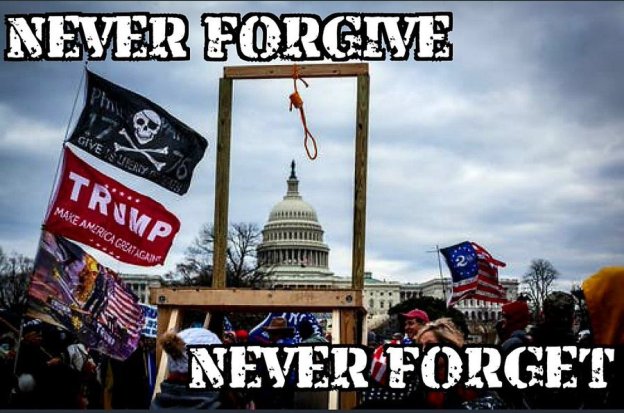
The New York Times has published a video covering the events of January 6, 2021 at the U.S. Capitol Building. There is nothing to add to this at the moment, except to wish that the government arrests, convicts and sends to long prison terms the Proud Boys, Oath Keepers and other white supremacist groups that planned their attack, along with those who joined them in a lunatic rampage of violence and desecration. I also urge everyone to subscribe to the New York Times. You may not agree with everything the publish (I don’t) but their comprehensive coverage and analysis is unparalleled in journalism.

Here is the link to the video: https://www.nytimes.com/video/us/politics/100000007606996/capitol-riot-trump-supporters.html?