
Disclaimer: Since my earliest days as a lawyer, when I was assigned a few times by judges in the District of Columbia to perform pro bono (free) defense services for indigent criminal defendants, I am not, and have never been, a criminal defense attorney. But I do know a few things. Believe. Or not.
The circus surrounding the charges against Hunter Biden has its roots in the fact that he is the President’s son and Republicans are desperate to undermine the President who appears, for the present, destined to obliterate the criminal traitor Donald Trump on whom the Republican Party has pinned its hopes for 2024. Otherwise, Hunter Biden’s alcohol and drug-fueled misbehavior would be just another relatively small and unimportant criminal case against a person who, sadly and despite having all the advantages of being the son of a prominent politician, could not control himself. Addiction will do that. A Nobel Prize awaits the person who figures out how addiction works and how its deadly work can be derailed. But until then, it’s clear that the interest in the Hunter Biden case stems from one source.
Hunter Biden has been under investigation for years when the Trump administration was in charge and Trump’s personal lackeys were in charge of the Department of Justice, the FBI and more. In the ordinary boring course of such investigations, absent the connection to Joe Biden, the charges brought would most likely resemble those in the present case and a plea bargain would have emerged. Something went terribly wrong in Hunter Biden’s case and there is plenty of blame and reason for suspicion to go around.
Reports indicate that “whistleblowers” who formerly worked at DOJ have claimed their attempts to tie Hunter to the President were stymied. Yet, the man in charge of the process at DOJ says otherwise. He, like the judge assigned to Hunter Biden’s case, was appointed by Donald Trump (odd how that keeps happening). US Attorney David Weiss led the entire investigation and has been clear that there were no restraints on him from any source.
Little clarity surrounds the “restraints” claimed by the “whistleblowers” who arguably are carrying water for Rep. Jim Jordan and other MAGA Republicans whose main goal is not “justice for Hunter Biden” but pinning a corruption charge on President Biden. David Weiss has offered to testify before Jordan’s House committee but only in public and not behind closed doors as, curiously, the Republicans desire. Jordan’s approach would, of course, enable Republicans to make irrefutable claims about Weiss’s testimony, a ploy that he, despite presumed loyalty to Trump, is wise to.
The other major and possibly unique circumstance surrounding the plea deal and sentencing hearing is that the MAGA Republicans filed their own brief on Hunter Biden’s sentencing, urging the judge to reject it. And she did. Not, ostensibly, because of the claims of political interference by Biden loyalists at DOJ, but because of a serious oddity: an asserted concern raised by the judge on her own initiative, ostensibly, about the constitutionality of the plea deal’s secondary issue: Hunter Biden’s purchase of a gun when, as an admitted drug addict, he was forbidden from doing so.
Then, under probing from the judge about possible other charges against Hunter for illegal foreign lobbying under the Foreign Agents Registration Act, it was revealed that the Biden defense team and the prosecutors had different understandings of Hunter’s future exposure to such charges. And that, ladies and gentlemen, is the remarkable, astounding fact that is apparently at the root of the plea deal’s rejection, at least for now, by the judge.
If the judge’s questioning was motivated only by her appropriate interest is assuring that the parties had a complete meeting of the minds on the plea agreement, without regard to the political pressure brought to bear by the Republican Congressmen calling for rejection, the judge cannot be faulted. On the other hand, she is a Trump appointee and the issue of possible unconstitutionality of the plea deal as structured seems a bit of a stretch. We’ll likely never know.
I am personally very troubled, deeply, at the idea that a Congressional committee of partisan politicians injected itself into a criminal proceeding. I would be equally troubled if a committee of Democrats intervened in a criminal proceeding involving a Republican. We’ll never know what influenced the judge who reportedly said she had not digested the entire brief from the Congressional committee but signaled her intention to consider it.
One report characterized the judge’s concerns this way:
Noreika expressed frustration that the two sides structured the tax and gun plea deals in a way where she would need to approve the gun deal but had no powers to approve or reject the tax agreement.
The diversion agreement – which isn’t often submitted to a judge – has a provision that says if there is a dispute over whether Hunter Biden breached the terms of the deal, it would go to the judge for fact-finding. Noreika questioned why it would “plop” her in the middle of a deal she didn’t have a say in, and potentially block the Justice Department from bringing charges, a function of the executive branch.
[https://www.cnn.com/2023/07/26/politics/takeaways-hunter-biden-plea-hearing/index.html] I don’t understand the judge’s attributed remark that she had no say in the deal when the deal was before her for acceptance or rejection.
Beyond the judge, however, it is clear to me that one of counsel’s most important functions in a case like this is to suss out every possible issue that could come up, every possible thing that could do awry. This is as true of the prosecutor as it is of the defense counsel. Here, apparently, both failed in this critical responsibility. They made a deal that was incomplete, and the omitted factor was, I believe, obvious. A plea deal is a settlement and a central issue in every settlement is the question of its completeness. Does it resolve all issues? In civil settlements, it is typical to include the broadest possible language showing that all issues between the parties arising out of the dispute are resolved. No less is this to be expected in a criminal plea bargain.
Yet, in Hunter Biden’s case, the parties did not, apparently, consider the issue of future charges for other offenses even though the potential of such charges was known to and should have been obvious to both sides.
The end result is that there is no end result. Hunter Biden ended up pleading “not guilty” to the current charges while the judge considers her options. Presumably, the defense and prosecution will reconvene to negotiate further. Time will tell.
So, who was responsible for this mess? I don’t know and decline to speculate. As with the charges that appear to be imminent against Donald Trump and his many co-conspirators for the January 6 insurrection, the false electors gambit and the fully documented attempts to overturn the election in Georgia, we will have to remain patient for a while longer. Serious and expert observers of this case share your, and my, amazement that this issue was not resolved before the plea hearing. https://www.rawstory.com/hunter-biden-2662485694/
A final observation: one issue that has been raised in the press is whether the agreed charges against Hunter Biden are inappropriately “light” given the offenses involved. One’s views of this question are most heavily influenced by one’s political partisanship. I caution only this: plea deals are just that. Each side assesses the strengths and weaknesses of its case, and each side gives something to achieve settlement.
Sentencing is inherently difficult and often results in terms that seem sharply disparate. The most prominent examples lately are the various impositions on January 6 insurrectionists who were found guilty, by trial or plea in the face of overwhelming evidence. There are many reasons for this. If you are really interested in how this happens, read Noise, by behavioral economist Daniel Kahneman (Nobel Prize-winning author of Thinking, Fast and Slow), Olivier Sibony and Cass Sunstein where the variability of judgments by judges, doctors and others is analyzed in shocking detail.
















 Finally, and most remarkable, with this caption: “
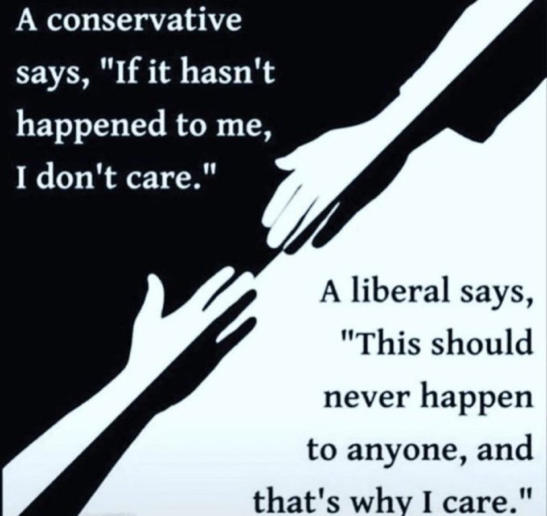
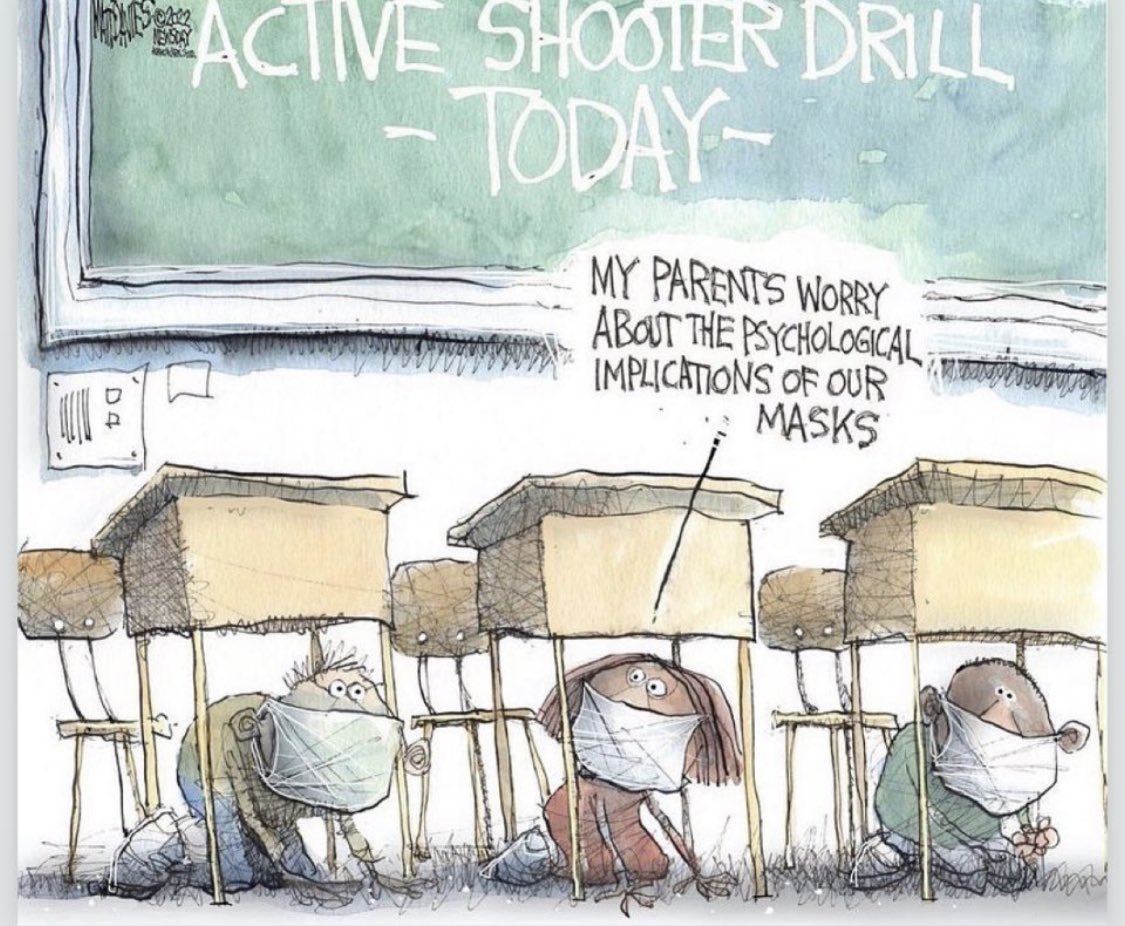
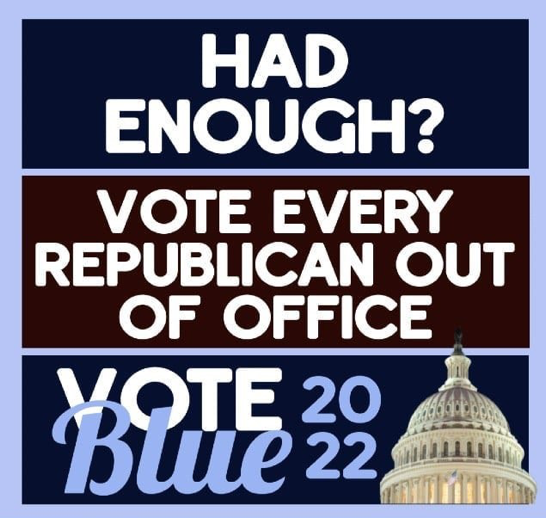
 The remaining images are from Twitter & Facebook posts.









 SHINING SEA