Category Archives: Law

Facing the Abyss – What Should CDC Do Now?

The COVID-19 virus that Trump predicted would “just go away” has now killed More than648,000 Americans out of more than40 million cases. https://wapo.st/38PnK3N

The leading states in new deaths are, unsurprisingly, South Carolina (+36%), Florida (+32%) and Texas (+24%). As cooler weather approaches and more people stay indoors more of the time, the cases/deaths toll can be expected to rise, especially in places with low vaccination rates and persistent refusal to follow national health guidance on masking and distancing. It is what it is.

Predictions now always face opposition from the determined crowd of COVID deniers, anti-maskers and anti-vaxxers who are doing their best to ignore reality and push the country closer to the abyss. This is happening despite the overwhelming evidence that the vaccines are safe and effective and that masking works to reduce infection rates. The excuses offered for rejecting vaccines, masking, etc. are too well known to warrant recital.

The CDC and the leaders of the healthcare community that know the most about all this have, to be sure, made “mistakes” during the runup from early 2020 to now. Those mistakes are an inevitable part of the steep learning curve during a novel virus epidemic, especially when combined with inept and corrupt national leadership promoting bogus cures and inspiring resistance to promising candidates to contain the spread. We are where we are.

The question now is what could be done to change the national narrative. I address this with full awareness that millions of Americans would rather risk a horrible death than be seen to “comply” with national health guidance. There may be nothing we can do about them, but I think there are some things we haven’t tried yet.

Starting with the CDC, setting aside the chaotic approach in the early days when Trump’s political pressure seemed to influence CDC’s public posture, I have been troubled by what I label “website data bloat.” The CDC Data Tracker [https://bit.ly/3hd72A0] is the object of my derision. The site is an extraordinary trove of information for Job and others with much patience, consisting of a multitude of boxes and lists and maps, many of which are redundant or require some study to fully understand what is being shown.

I speculate that the site is the product of turning over the communication function to programmers who believe more is always better and just don’t know where to stop or how to organize information to tell a story rather than “show what we’ve got.” But, whatever the root cause, the site, for all its robustness, does not communicate the story as dramatically as it could. And if anything cries out for dramatic storytelling, it is the continued, and avoidable, rampage of COVID through America.

It should come as no surprise at this late date that, having been blunted in impact among most older people (who, generally, have a higher percentage of vaccinated individuals than other cohorts), is turning its mindless “attention” toward other groups, including children, many of whom are too young to be vaccinated according to the latest protocols.

In my view, parents of young children who refuse vaccination should be prosecuted for child endangerment, but we know that’s not going to happen. We can, however, more effectively communicate the danger.

This is how. It will require a fundamental change in the way the government does things.

Instead of presenting a vast array of charts/graphs/pathways to still more charts/graphs and offering data in various formats (gross, per capita, per this and that), focus on one thing: the message. This is a situation in which the data should be used not just to inform but to persuade. To teach. To affect.

So, what to do?

First, move all the “just data” charts/graphs to the back of the site with a simple index of what’s there.

Second, in the front, using graphs backed by data, show the key facts in a direct comparison of, for example, deaths of vaccinated versus deaths of unvaccinated people over time. Include data on adverse effects of vaccinations to the extent it exists.

Third, add to the data on cases and deaths, the data on known cases of adverse health impacts (heart, lung, brain, etc.) for COVID “survivors,” information that has largely been ignored.

Fourth, stop focusing on the number of people with one shot. We know that for the main two vaccines, two shots are essential and that’s the key number to show. Focusing on one shot is misleading.

Fifth, show the damn videos!

A wealth of videos exists showing, especially, the end stage of COVID experience in hospital ICUs: the ones where the unvaccinated, wired and tubed beyond recognition, are facing intubation and medically induced comas and are begging doctors and nurses for vaccination and “do anything to save my life.” Show those videos in TV ads in lieu of the bland “please do the right thing” messages now in use. Show the healthcare providers, dressed like aliens from Planet X, saying, “I’m sorry but it’s too late. Vaccines can’t help you now.”

 Some people will see this as unacceptably harsh. To them I say, if you don’t like it, don’t watch. But if done properly (get some experts in this kind of dramatic communication on the task), this stands some chance of jolting resisters into doing the intelligent thing and rushing to get vaccinated.

Make the message simple and clear and unmistakable – if you don’t get vaccinated, this is what may await you. Or your family. Your children. Do it now.

We know from experience that presenting the public with vast quantities of unconsumable statistics is not achieving the level of success we need to stop the pandemic. It is time to pull out all the stops. Stop acting like the government and act like you’re trying to sell something: public health. Survival.

Do it now. We’re almost out of time. The abyss is nearer by the day. It doesn’t have to be this way. Act like it’s the emergency it really is. Just do it.

Texas, the Handmaid State

Texas, through its legislature, has now made unmistakably clear that women are not equal to men. It is no exaggeration to say that Texas has moved from being the Lone Star State to being the Handmaid State. The reference, for the small number of people who don’t know, is to The Handmaid’s Tale, the dystopian novel by Margaret Atwood in which women in a theocratic authoritarian society are forced into what amounts to sexual slavery for the benefit of the men who run the country.

The headlines about the adoption of SB 8 by Texas are still fresh and resonating around the country and the world. The U.S. Supreme Court has refused to enjoin the enforcement of the law while its constitutionality is considered on the merits. Thus, Texas, proud Texas, has become the leader in subordination of women. Through the back door in Texas, a Republican (53%)/male (73%)/aged (67% over 49/14% over 69)-dominated state legislature has introduced a version of Sharia Law to the United States.

There are, of course, significant reasons to believe that SB 8 is unconstitutional under both the Texas Constitution and the U.S. Constitution. Whether Texas likes it or not, the established federal constitutional principles of the Fourteenth Amendment “equal protection of the laws” and “due process” still apply to the states:

No State shall make or enforce any law which shall abridge the privileges or immunities of citizens of the United States; nor shall any State deprive any person of life, liberty, or property, without due process of law; nor deny to any person within its jurisdiction the equal protection of the laws.

The dissenting opinions in the Supreme Court’s astonishing back-handed approval of the Texas maneuver say as much. If the Court’s current view of the law stands, states will be encouraged to adopt similar laws on other subjects, insulating such laws from judicial review. That, as with the current case, is simply unsustainable and would undermine the separation of powers, among other things.

It’s important to understand that Texas thinks it’s been very clever in crafting this statute so that it will escape meaningful judicial review on the merits. It had the audacity to represent to the Supreme Court that it was entirely realistic to believe that the entire elaborate text of SB 8 would have been enacted but that no one would take up the opportunity to earn a quick $10,000 (the minimum statutory damages). In perhaps the most ridiculous legal position I have seen in years, the Texas Attorney General told the Supreme Court, “This Court cannot expunge the law itself. Rather, it can enjoin only enforcement of the law.” He argued since government officials “explicitly do not enforce the law,” the abortion providers “have not shown that they will be personally harmed by a bill that may never be enforced against them by anyone.”

Thus, Texas would have us believe that it passed a law giving private citizens standing to bring lawsuits against other citizens with a minimum payoff of $10,000 plus attorneys’ fees and costs, with zero risk of having to pay fees & costs for the defendant if the suit were judged frivolous, but no one will bother to file suit under the law. That’s a whopper even by Texas standard.

There are a multitude of serious substantive problems with SB 8. Here are just a few of the big ones:

    • The medical premise for the law is not scientifically accurate;
    • The essence of the statute is to confer “standing” on the entire civilian population of Texas to bring actions to sue physicians who perform abortions in conflict with the many non-medical details of the statutory scheme and to sue any person or entity that aids and abets the violation, with the assured award of not-less-than $10,000 in damages for each successful case brought, plus reimbursement of attorneys’ fees and costs incurred;
    • Plaintiffs may not be assessed attorney’s fee and costs even if the suit is thrown out because the statute is ruled unconstitutional, so the millions of potential plaintiffs incur no risk in bringing such suits;
    • Being an aider or abettor is determined without regard to the actor’s knowledge of the legality of the procedure;
    • Relying on some unspecified mind meld, the law authorizes suits against aiders/abettors who merely “intend” to assist forbidden abortions;
    • The clear intent of the legislation is to stack the legal deck against people who would help a woman with an abortion and thereby prevent abortions from being performed in Texas;
    • The statute in the words of Justice Sotomayor, “a breathtaking act of defiance—of the Constitution, of this Court’s precedents, and of the rights of women seeking abortions throughout Texas,” dissenting from the Court’s decision to allow the Texas law to be effective Sept. 1 without appellate review;
    • The Supreme Court’s decision to allow SB 8 to become effective was based on a complete distortion of the holding in California v. Texas, a 2021 case addressing whether injunctive relief could be had against a statute whose key operative provision had been removed by Congress. The Court there said, “to find standing here to attack an unenforceable statutory provision would allow a federal court to issue what would amount to “an advisory opinion without the possibility of any judicial relief.” That is plainly not the case with the Texas statute which is not only enforceable but is drafted precisely to induce massive enforcement by citizen bounty-hunters. The fact that enforcement may occur at the hands of private persons inspired and enabled by a state law does not affect the impact of the law on its targets. Further, the cause of action created by the statute is fully effective and ready to be used, totally different than the tax provision removed from the law at issue in California v Texas.
    • Texas devoted much legislative language trying to (a) prevent federal court review of the statute and (b) control the nature and effect of the review. The very obvious goal was to have the law continue to apply to everyone who had not yet been sued, even if judicial review held the law facially unconstitutional in one case. Texas-sized hubris here, trying to tell the federal courts what they can and can’t do. Texas has decided to simply ignore the Supremacy Clause of the Constitution.

Justice Sotomayor’s eloquent dissent in Whole Woman’s Health v Austin Reeve Jackson, Judge, joined by Justices Breyer and Kagan, said everything that should have been needed to stop the law in its tracks:

The Court’s order is stunning. Presented with an application to enjoin a flagrantly unconstitutional law engineered to prohibit women from exercising their constitutional rights and evade judicial scrutiny, a majority of Justices have opted to bury their heads in the sand.

It cannot be the case that a State can evade federal judicial scrutiny by outsourcing the enforcement of unconstitutional laws to its citizenry.

… the Court has re- warded the State’s effort to delay federal review of a plainly unconstitutional statute, enacted in disregard of the Court’s precedents, through procedural entanglements of the State’s own creation

I am going to go out on a limb here and predict that after further briefing and argument, a majority on the Supreme Court will find its way back to reality and reason by rejecting the Texas law on multiple constitutional grounds . Meanwhile, the women of Texas will have to live with the white hoods of handmaidens under the thumb of their totalitarian masters.

*****

For those with the interest and fortitude to understand the details of this astounding act of legislative hubris, here is an unfortunately long explanation of exactly what SB 8 purports to do.

The key scientific idea on which the law is based is that the presence of a fetal heartbeat “has become a key medical predictor that an unborn child will reach live birth.” Texas tries to tie this idea to a further finding that “the pregnant woman has a compelling interest in knowing the likelihood of her unborn child surviving to full-term birth based on the presence of cardiac activity.” Based on my limited review, those “findings” are of limited relevance, since there are other significant predictors of ultimate viability and nothing in the law specifically addresses the communication of this specific information to the pregnant woman considering an abortion.

Instead, absent a “medical emergency,” the statute bans abortions after the mere detection of a fetal heartbeat and nothing more. Adding to the pretextual nature of this, the statute conveniently fails to define “medical emergency,” thereby creating a condition in which both the physician and the pregnant woman can never be certain that later litigation will not reject the physician’s determination and expose the physician to an intolerable financial risk.

It’s important to understand that the statute does not directly expose the pregnant woman to lawsuits – the targets of the legislative scheme are the doctors, clinics and anyone else who,

Knowingly engages in conduct that aids and abets the performance or inducement of an [prohibited] abortion, including paying for or reimbursing the costs of an [prohibited] abortion through insurance or otherwise … regardless of whether the person knew or should have known that the abortion would be performed or induced in violation of this chapter….

The sweep of this language encompasses every imaginable form of support for the abortion process and is plainly designed to intimidate medical personnel, insurance companies as well as friends and family of the pregnant woman.

But that’s not all. The statute authorizes civil damage suits against any person who “intends to engage” in forbidden aiding and abetting of a prohibited abortion. No, I’m not making this up. We are in the land of science fiction, popularized by the movie Minority Report in which a special police force is authorized to arrest murderers before they commit their crimes. In Texas’ case, the “offense” is civil, not criminal but the penalties are large enough to deal a death blow to the finances of many people (minimum statutory damages of $10,000 plus costs and attorneys’ fees).

The damage provisions apply to every forbidden abortion the defendant performed or aided/abetted. If multiple parties are sued for aiding and abetting a single abortion, it appears the plaintiff stands to collect the minimum damages against each one.

Under the special statute of limitations applied by Texas, the specter of being sued will hang over potential aiders/abettors for six years.

The drafters anticipated that there might be other defenses presented to courts in the civil cases and have preemptively eliminated them. Thus, the following are rejected as possible defenses: a good faith belief in the unconstitutional nature of the law, reliance on court decisions that are later overruled or reliance on federal court decisions that are “not binding” on the state court where suit is brought.

These provisions are designed to prevent judicial review by federal courts of the state’s statutory law as written and as applied. Texas has, apparently seceded from the U.S. Constitution, or at least thinks it has.

In a cynical twist, Texas added a provision that seems at first look to mitigate the intimidation created by the rest of the statute: it provided an “affirmative defense” for those sued under the statute if (1) the defendant conducts a “reasonable investigation” and (2) then “reasonably believes” that the abortion physician “had complied” or “would comply” or “will comply” with the statute. I say this is cynical because the Texas legislators may be presumed to understand that that whatever a “reasonable investigation” means, an aider/abettor trying to conduct such an investigation will almost certainly be stymied by the privacy provisions of HIPAA (the federal Health Insurance Portability and Accountability Act of 1996), not to mention the natural distaste any doctor will have to being embroiled in a lawsuit. The burden of proving an “affirmative defense” is on the person asserting it, so this looks like a Texas head-fake.

Not content to stack the deck against women, their physicians and their families and friends, Texas has added a provision barring absolutely the award of attorneys’ fees and costs against a defendant. This means that the most egregious unfounded lawsuits brought by damage-hunting lawyers and others can be brought with impunity. Which is, of course, exactly what Texas wants – a legal unchallengeable in terrorem regime that will force Texas women to take significant health risks and/or incur staggering expenses to get an abortion regardless of the reason or need. The statute also enables bounty-hunting plaintiffs to bring suits where they live against defendants who live across the state, with the proviso that venue can only be changed if the plaintiff agrees.

The statute also immunizes the state of Texas and its officers from any legal challenge to the statute and further provides that if a court finds the statute unconstitutional in its application to one person, the statute may still be enforced against everyone else. This is an obvious attempt to deprive the federal courts of jurisdiction to adjudicate the constitutionality of the statute as written and not just “as applied.” The courts of Texas may stand for such a violation of the separation of powers, but it is hard to imagine that the federal courts will accept it.

Perhaps the most extraordinary aspect of SB 8 is the provision that purports to instruct the courts in the nature and scope of their decisions and in the meaning of “unconstitutional:”

No court may decline to enforce the severability requirements … on the ground that severance would rewrite the statute or involve the court in legislative or lawmaking activity. A court that declines to enforce or enjoins a state official from enforcing a statutory provision does not rewrite a statute, as the statute continues to contain the same words as before the court’s decision. A Judicial injunction or declaration of unconstitutionality: (1) is nothing more than an edict prohibiting enforcement that may subsequently be vacated by a later court if that court has a different understanding of the requirements of the Texas Constitution or United States Constitution.

This is Texas-size hubris that banks on the willingness of the Supreme Court of the United States to permit a state to decide for itself the nature, scope and effect of the Court’s decisions as regards the U.S. Constitution. Maybe the current Court will buy that nonsense, but I will be surprised as it would seem to overturn the very foundations of the federal system and the separation of powers, among other things.

Texas gives prevailing parties in any constitutional or other challenge to the abortion law three years to file for award of attorneys’ fees and costs. This opportunity applies even if the plaintiff in such suit wins the case on grounds that the severability provisions are unconstitutional or preempted by federal law!

It appears that the desperation of the Texas legislators to insulate SB 8 from federal court review has led them to a strange and untenable place. The statute contains a confused and obtuse section that appears to say that even if a court finds the statute facially unconstitutional, the statute shall still be severed, and the “unconstitutional applications” shall remain enforceable. Further, in such case the statute “shall be interpreted as if containing language limited the statute’s application to the persons, group of persons, or circumstances for which the statute’s application will not violate the United States Constitution and Texas Constitution.

That seems like an overt invitation for the courts to rewrite the legislation to help the Texas legislature save it. There may be precedent for such an astonishing approach, but I am not aware of it. That is, I believe, precisely what courts don’t, and should not, undertake. If the legislature writes an unconstitutional statute, it is the responsibility of the legislature to rewrite the law to repair the damage, unless some form of severance is possible that satisfies the court that it is not in fact just rewriting the law.

The legislation forces the physician to try to talk the woman out of going through with an abortion. This occurs through a series of compulsory disclosures and medical advice that the law declares, ipso facto, to be medically accurate and sound without any specific knowledge of the health condition of the woman in question.

The law addresses the issue of rape/incest and developmental abnormalities by exempting the woman from being forced to hear an explanation of the sonogram images, but rape/incest/developmental abnormalities, and, for that matter, threats to the woman’s life, are not otherwise treated as relevant to the process by which the woman gives consent to the abortion.

Finally, note that the Texas Constitution includes the following:

Sec. 3. EQUAL RIGHTS. All free men, when they form a social compact, have equal rights, and no man, or set of men, is entitled to exclusive separate public emoluments, or privileges, but in consideration of public services.

But it also includes this:

Sec. 3a. EQUALITY UNDER THE LAW. Equality under the law shall not be denied or abridged because of sex, race, color, creed, or national origin. This amendment is self‑operative. (Added Nov. 7, 1972.)

But also this:

Sec. 32. MARRIAGE. (a) Marriage in this state shall consist only of the union of one man and one woman.(b) This state or a political subdivision of this state may not create or recognize any legal status identical or similar to marriage. (Added Nov. 8, 2005.)

But there’s also this:

ARTICLE II

THE POWERS OF GOVERNMENT

Sec. 1. SEPARATION OF POWERS OF GOVERNMENT AMONG THREEDEPARTMENTS. The powers of the Government of the State of Texas shall be divided into three distinct departments, each of which shall be confided to a separate body of magistracy, to wit: Those which are Legislative to one; those which are Executive to another, and those which are Judicial to another; and no person, or collection of persons, being of one of these departments, shall exercise any power properly attached to either of the others, except in the instances herein expressly permitted.

I predict the ACLU and other entities that are going to challenge SB 8 are going to have a field day with these contradictory provisions, some of which are inconsistent with existing Supreme Court precedent and, of course, the U.S. Constitution.

Afghanistan

Republicans are ecstatic that the mess in Afghanistan has given them another excuse for deflecting attention from the treasonous insurrection of January 6. Afghanistan is a mess, of course, and little that the White House can say about it is going to fix it in the near future, or ever. Understanding full well that the President is “responsible” for what happens on his watch, the sudden awakening of Republican and media angst over the plight of Afghan citizens is more than a little hypocritical and nonsensical.

That noted, I am not here to defend the seemingly failed planning by our military and intelligence people around the final departure of American and allied troops. I will just note before getting on with my points that the departure of Western troops from Afghanistan was never going to be met with the Taliban stepping back, popping some champagne, and waiting for the last troops and fleeing citizens to depart. The handwringing over this is, in my opinion, beyond absurd. And, after twenty years, it is simply ludicrous to suggest, as someone on CNN just did, that, ‘we promised them democracy – how can we just abandon them now?’ I will leave it to others to sort that out. Given the response so far, the media will have a lot to say about it.

My mission here is to place some context around the Afghanistan scenario, observations that some may find objectionable but which, I firmly believe, are reality.

Whatever the actual thinking was in sending American forces into Afghanistan, we were apparently trying to achieve two goals: (1) deny a base to Al Qaida-like terrorists, a task thought to be achievable by applying broad and constant military pressure against any “group” thinking of launching attacks against the United States in the vein of the September 11, 2001, and (2) while we were there, engage in some Western-style nation-building by promoting democratic political values and processes for adoption by the tribes and warlords that had dominated Afghan society for a very long time.

What could go wrong?

The one essential thing that went wrong, in my view, safely ensconced in my living room, is the same thing that went wrong in Vietnam, the first war officially “lost” by the United States since the country’s founding: we underestimated our adversaries. Déjà vu all over again.

Incidentally, “lost” in this setting doesn’t mean we were defeated. It means we didn’t win.

Americans have, I believe, been underestimating our adversaries since before the country was founded in 1787. The westward expansion from the original colonies followed the repression and subjugation of native populations east of the Mississippi River. Encounters with the Indians of the Western Plains met a formidable collection of adversaries, particularly the Comanche and Apache tribes. Underestimation of the native people, who were regarded as savages by white settlers and government/military alike, led to many deaths, until the white man’s superior firepower and ruthless violence finally overcame the natives’ resistance to expansion into their territory. Suggested reading: Empire of the Summer Moon.

The invincibility of the United States military was well-established in the American mind by the beginning of World War I and proved itself in World War II, albeit with many setbacks, not least of which was, of course, the Day of Infamy, the surprise Japanese attack on Pearl Harbor that led to our entering the war in the first place. Not long after WWII ended, and after renewed isolationism reduced our military capabilities, the U.S. was caught by surprise again by the invasion of North Korea into South Korea. We suffered huge setbacks in that conflict as well, basically fighting to a draw, but coming away with some sense of having prevailed. North Korea did not get South Korea. We didn’t win, but neither did they.

Then there was Vietnam. Undeterred by the dismal failure of France to overcome resistance to the continued colonization of the country, the United States crept its way into full-throated engagement against the army of “little men in black pajamas” (a common way at the time of denigrating the enemy that was, in truth, winning the war). South Vietnam ostensibly was critical to U.S. interests in preventing communism from “taking over” Southeast Asia, a continuation of the “red menace” thinking of the 1950s. Accustomed to “winning” and to maintain the myth of American fighting superiority against all enemies, the U.S. government lied its way into an impossible situation: an unwinnable jungle war in which superior technology (total air superiority, napalm, carpet bombing, Agent Orange and more) failed to break the will of the resistance.

In January 1968, the Viet Cong and North Vietnamese armies stunned the world with the Tet Offensive, launched country-wide on the Lunar New Year festival when many of the South Vietnamese forces were on holiday leave. https://bit.ly/3z0psuw While the battle(s) were ultimately won by Western forces, the cost was staggering. As the Wikipedia article notes,

The offensive had a strong effect on the U.S. government and shocked the U.S. public, which had been led to believe by its political and military leaders that the North Vietnamese were being defeated and incapable of launching such an ambitious military operation; American public support for the war declined as a result of the Tet casualties and the ramping up of draft calls.

The war went on for seven long years more, leaving us with the Pentagon Papers and the now iconic scene of an American helicopter airlifting terrified Vietnamese from a building in Saigon (not the American embassy).

Much happened thereafter even before the 1991 Operation Desert Storm to drive Iraq back out of Kuwait. Most of the details are lost to memories, but you can review them here. https://bit.ly/3sE6UxR Prepare to be jolted. Desert Storm did not take long and “victory,” once again, belonged to the Western coalition led by the United States. We were once again winners.

The confidence of Americans was then shaken to the core by the attacks of September 11, 2001. The enemy, it seemed, was roaming free within the country and, armed with boarding passes and box cutters, was able to murder thousands in a few minutes. The furious response at yet another Day of Infamy was not short in coming.

Undeterred by history, and fully aware of the failure of Russia to subordinate the country, the United States entered Afghanistan in 2001 and in 2003 invaded Iraq. The U.S. left Iraq “officially” in 2011 but military engagements continued largely outside the interest of media and the public. See https://bit.ly/2W8W8nt for a short history.

We remained in Afghanistan fighting the Taliban, and others, until President Trump, in what was to be his final year in office, negotiated an agreement with the Taliban (not including the Afghan government, our putative ally) to withdraw U.S. forces by May 1, 2021. President Biden, following up Trump’s prior decision and based on his own long-standing opposition to continuing a futile fight not strongly supported by the Afghan government or its people, decided to end the American military presence and ordered the final removal of U.S. troops. In about a week the Taliban launched a remarkable takeover of the country, leading to scenes of chaos at the Kabul airport as fleeing Afghans and Americans, who were warned of our imminent departure some time ago, tried to escape.

Chaos reigns in Afghanistan and the Republicans here have something new to cheer and deflect about. Officials in other countries are also quick to scoff at the “embarrassment” of a U.S. retreat in the face of the total collapse of the Afghan army that the U.S. spent 20 years training and funding and supplying. That’s not going to change.

The question remains — Why are we reliving, yet again, the tragic scenario of having fought a long and, in the end, futile war at staggering cost in treasure and, more importantly, human suffering?

There are, as always, many likely factors that contribute to the repetition of this behavior, but I believe there is one predominating force that drives the others. That is the core belief in American Exceptionalism.

Americans seem to have a compelling need for the myth of American Exceptionalism no matter what the evidence shows. It appears to be an essential element of national identity. The belief is reinforced regularly – in school lessons, in the celebration of July 4 Independence Day, in (at least in theory) Memorial Day celebrations and the formal ceremonies at the Tomb of the Unknown Soldier at Arlington National Cemetery (Arlington gets 3 million visitors a year; many of them witness the changing of the guard at the Tomb) and the periodic national obsession with domination of the Olympic Games medal count.

A critical component of American Exceptionalism is that the country is invulnerable to invasion by foreign troops. America is especially blessed, I was taught at an early age, by its geographical position on the planet. It is “protected” on the north by Canada and in the south by Mexico, neither of which is a threat as a haven for an invading army. Of course, the advent of the airplane and the aircraft carrier changed the threat scenario as we learned on December 7, 1941. The well-worn aphorism, “eternal vigilance is the price of liberty” became popular despite our unusual place in the world. https://bit.ly/3AX01dS During the 1950s period of the nuclear arms race, people in my generation were constantly reminded of the new peril to our very survival. We literally stood on the brink of nuclear holocaust in what became the Cuban Missile Crisis of October 1962.

We survived that threat, narrowly, and we “showed” the world in our response to the 9/11 attacks that the United States was still not to be trifled with. We were prepared to destroy entire countries and their civilizations to preserve our own.

But it was a shocking realization that we were not as secure as we thought, not as invulnerable to foreign or domestic threats after all and, after revelations like the torture in the Abu Ghraib Prison in Iraq, not as pure of heart as we had been told.  Nevertheless, the insecurity fostered by changes in the world situation enabling our enemies to reach us with horrifying violence, of which we had been convinced we were immune, actually reinforced the commitment to the idea of American Exceptionalism. The more vulnerable we became, the more determined we were to believe in and act out the mythology of American Exceptionalism. If we weren’t so great, after all, why would they keep coming after us?

If we are the “best” of people, the purest example of the success of the Enlightenment, the people most committed to the preservation of democracy around the world, leaders of the Free World, then it follows we are not only exceptional but also entitled to special deference because of “who we are.” We hear this in political speech, among many other places, all the time. This mind-set primed many Americans to believe in the Fortress America idea, that we are essentially alone, that our very salvation as a nation and culture depends on “America First.” We are so special, so powerful, we don’t need other nations; America can go it alone. Trumpism.

Except that it’s just not true. We don’t much like to hear about it, but the fact is that the country was formed by taking, through force and artifice, the land of the natives who were here before the “white man” arrived. The evolution of the body politic led to a national constitution that, as an essential condition to its creation, formally embraced the idea that some people, brought here against their will and whose labor was taken without compensation, were less than fully human.

That ugly compromise with colonies whose economies and lifestyles were dependent upon human slavery conflicted with the moral fabric that underlay the national idea and eventually led to the Civil War and the Emancipation Proclamation. Yet I was “taught” in junior high school history class in the 1950s that the Civil War had nothing to do with enslaved people and we were not to discuss the subject in class. We now see that many Americans believe that the Confederacy was an honorable undertaking that gave rise to some abstract idea of “heritage” justifying, among other things, the continued display of the Confederate flag as a symbol equal, if not superior, to the Stars and Stripes of our national flag.

And while the war was won and the enslaved people technically freed, much of the country refused to accept the idea of equality. Jim Crow laws and decades of other forms of discrimination produced a huge and possibly permanent economic underclass. Recall that school desegregation was not officially ended in this country until 1954 and violent resistance to it continued long after.

The country has continued whistling by the graveyard, pretending to be something it is not, thereby preventing the national reckoning that, in the long run, could unite most of the population around a common set of principles. If you have not seen the marvelous scene from the TV series, The Newsroom, in which Jeff Daniels, playing the anchor man, appears on a panel discussion and is asked, “what makes America the greatest country in the world?,” you really owe it to yourself to watch it. You can see it here: https://bit.ly/3AUkQXt If you’ve seen it, watch it again.

It’s a bit out of date (2012) and a touch misogynist (though I suspect/hope the writers meant “men” to refer to humans) and some of the data has changed. Nevertheless, in many respects, it sounds in the present moment. It’s a powerful statement of reality that conflicts with the mythology that has built up around the history of the United States.

That truth is complicated, and complication is something the human mind tries to avoid. Myths are more attractive. They’re easy to articulate and easy to believe. You can read all about that in any good book on behavioral economics. You could start with Thinking, Fast & Slow by Nobel laureate Daniel Kahneman, one of the originators of the concept.

Lest you think this is apologia for Donald Trump’s ‘Make America Great Again’ slogan, let me disabuse you now. That slogan presupposes something that is blatantly false and plays on fear: fear of losing, blaming others for the perceived loss while simultaneously giving the national treasure away to the already wealthy and to the corporations whose lust to consume at any cost our precious resources is boundless.

The MAGA slogan is a scam, perpetrated on the willing (74 million voted for Trump in 2020 despite everything known about his grift, incompetence, dishonesty and failure to be courageous when courage was the only currency that could have saved the country from more than 600,000 deaths to COVID-19). No, if you’ve read any of my prior posts in this blog, you should be clear that I am not about MAGA.

Let’s look at some facts. These are, like science, true whether you believe them or not.

The U.S. economy is large, with the highest Nominal GDP. https://bit.ly/3sEPzFa [all cited data is pre-pandemic; the economic and social devastation caused by COVID-19 is staggeringly large but not yet measured.] Our economic “system,” measured by GDP, is thus a huge success. But not without cost. The United States ranks second only to China in delivering carbon dioxide into the atmosphere (we are fourth in per capita emissions). https://bit.ly/3B1NFB9 The United States is a prototype example of the Tragedy of the Commons on a global scale. We’re big but not the best.

And, before you start chanting “we’re No. 1, we’re No. 1,” recall that we don’t produce nearly as much stuff as we did in the good old days, while we consume enormous amounts of almost everything imaginable and then some. Much of that “stuff” comes from other countries, as we learned to our chagrin during the pandemic when many supply chains failed. Thus, while “the U.S. economy is at the forefront of technology in many industries … it faces rising threats in the form of economic inequality, rising healthcare and social safety net costs, and deteriorating infrastructure.” https://bit.ly/37VcSB5 Let’s review just a few details.

Based on the “the percentage of people between the ages of 25 and 64 who have completed some kind of tertiary education in the form of a two-year degree, four-year degree or vocational program,” the United States ranks only sixth. https://cnb.cx/3xWa2pW  We lead the world in persons incarcerated per 100,000 population [https://bit.ly/3z7HEm4] There are more guns in private hands in the U.S. than in the next 9 countries combined. https://bit.ly/3iZwc6d The U.S. literacy rate ranks 125th in the world. https://bit.ly/3svc8Me Of the 37 countries in the Organisation for Economic Co-operation & Development (OECD), the U.S. had the third highest poverty rate. https://bit.ly/3sB0rnh Finally, the U.S. ranks 15th on the U.N. Education Index. https://bit.ly/2WdIu2g

All that said, most people with some awareness of world affairs and conditions would not trade places with citizens of other countries. Viewed in its entirety and all things considered, the United States remains a pretty good place to live for most of its inhabitants, especially the white population. But we cannot have a realistic view of our place in the world, let alone within the country, if we have a glassy-eyed fantasy version of reality about the country, its values and what we can expect or demand of it. One can always say, “we could do better,” but the Afghanistan situation was a long-term losing proposition. Our chances of accomplishing the original goals were limited to non-existent and after twenty years of trying, there is no point to pretending otherwise.

Maybe we could have prepared better, but let’s not forget that the outgoing administration refused to cooperate with Biden’s transition team. We can’t know for sure what the implications of that non-cooperation were, but it’s not an unreasonable speculation that they had an effect. In any case, the idea that there was a clean simple way to exit Afghanistan is pure fantasy.

The Taliban weren’t going to let a power vacuum exist after we left. The speed of their advance through the country, facing little to no opposition from the Afghan government forces, is the clearest indication of the inevitability of the chaos that ensued. All the handwringing and political theater isn’t going to change that.

It’s curious indeed that Republicans who were all in on Trump’s desire to seal the U.S. borders to prevent immigrants from entering are now all about admitting huge numbers of Afghans fleeing the Taliban. Or are they just expecting other countries to take them? Politics and mythology can easily confuse one’s thinking. It would be interesting if Republicans applied their newly discovered empathy for Afghans to the COVID-19 pandemic that is ravaging their states, overwhelming their healthcare systems and killing their children.

Afghanistan is lost. The central issue is not whether we could have done a better job with the exit of military forces. We could have. The real issue now is whether we will simply reinvent the history to say that we “won,” and continue the fantasy of American Exceptionalism while not actually doing much to make the fantasy a reality. How, for example, will the Western international community of nations relate to Afghanistan under Taliban control? What happens regarding the seemingly inevitable human rights issues that are going to arise immediately regarding women there? What will United States policy toward a Taliban-controlled Afghanistan be and how will it be enforced?

Everything reasonable that can be done to avoid unnecessary bloodshed during the continuing evacuation should, obviously, be done but the focus must now be on the future. That future is as uncertain as it has ever been. That’s not Joe Biden’s fault. It’s not even Donald Trump’s fault. At this point the idea of fault is beside the point. It falls to President Biden to try to fashion a workable answer in a country that still lives in a fantasy dream of who we are and what we can do in a modern world.

Norwegian Cruise Line Fights the Right Fight Against Ignorance

The case is Norwegian Cruise Line Holdings, Ltd., et al. Plaintiffs, vs. Scott Rivkees, M.D., Defendant, in the United States District Court for the Southern District of Florida. The opinion was written by U.S. District Court Judge Kathleen Williams acting on the Plaintiff’s Motion for Preliminary Injunction. The defendant is the Surgeon General of Florida and the head of the Florida Department of Health.

The lawsuit was brought to enable Norwegian to protect its customers to the maximum extent possible in the face of directives from the Republican “small government” Governor of Florida who has forbidden cruise lines operating there on international itineraries to require use of face masks, vaccinations and proof of vaccinations.

Judge Williams’ thorough and carefully crafted 59-page opinion grants the plaintiff’s motion. This allows Norwegian to establish its own COVID health protocols, including requiring proof of vaccination as a condition for cruising. The opinion skewers the defense for its failure to present evidence on key issues. While it’s always tempting to blame this on the lawyers, the reality in this case is that the evidence for the defense simply doesn’t exist. The state’s attempt to prevent cruise lines from adopting safe health standards is a political maneuver, not a rational health policy decision with demonstrable roots in local health needs or medical science.

Judge Williams’ opinion should stand up well in the appeal that Governor DeSantis, known on Twitter as #DeathSantis, has announced he will file. DeSantis’ statement about the case included this gem, “A prohibition on vaccine passports does not even implicate, let alone violate, anyone’s speech rights, and it furthers the substantial, local interest of preventing discrimination among customers based on private health information.”

That suggests the good governor did not read the District Judge’s opinion or lacks understanding of the legal principles involved. His lack of awareness extends to the growing public support for “vaccine passports,” and he is also unaware of federal ventilator resources sent to his state by the federal government to help relieve the crisis caused by the Delta Variant and his refusal to recognize the challenges it poses. Delta threatens to overwhelm the health facilities of multiple, mainly southern, states, including Florida, that have largely ignored the danger still posed by COVID-19. Florida’s governor is earning his moniker as #DeathSantis every day.

Norwegian Cruise Line is on the right side of health science, health policy and rational business behavior. Kudos to NCL’s management for standing up to the Florida Governor’s rejection of all of those as he plays to his right-wing political audience, the same base that thrives on adoration of Donald Trump (you remember him, speaking about Democrats: “the virus is their new hoax.”)

In an op-ed in TravelMarketReport, https://bit.ly/2VKcfri, way back in October 2020, long before anyone had heard of the Delta Variant, I argued that the path to travel industry recovery required restoration of consumer confidence but that the path then in play was more chaos than order. I suggested an approach that, in those troubled times, I thought might work:

I suggest that the atomization of the industry’s approach must be replaced with an across-the-board cooperative regime of joint decision-making to which individual firms commit to total compliance for a significant period into the future. For example, and as a great beginning, the cruise industry players (of which there are relatively few independent entities) have undertaken a collective effort to establish firm rules about how ships will be sanitized, how masking and social distancing will be applied and so on. Obviously, the science behind this is still evolving, but much is already known about how to manage indoor environments. I believe that the new rules should be vetted with a representative sample of cruise travelers to evaluate whether the rules are understandable, practical and reassuring. The likely outcome is not a return to full-on unlimited cruising and many economic challenges will remain. The concept is not a cure-all but an attempt to establish a common and trustable arrangement that will permit business to resume on some scale.

Call me a dreamer if you like. We are not close to what I had envisioned. Nowhere is this clearer than in the battle Norwegian Cruise Line is fighting, alone, with Florida. Downloadable CDC data for Florida, from August 6, paints a grim picture. https://bit.ly/3lU94rX This will not deter Florida’s governor from resisting science and common sense as he continues his efforts to stop the cruise lines from using the best defenses available to control the virus and resume safe cruising.

The chaos will thus continue for a while longer. I am confident Norwegian Cruise Line will continue the fight and hopefully will succeed, however long it takes.


A Tale of Two Worlds

I love the New York Times. I hate the New York Times. It has the best stories.  It has the worst stories….

What?

Maybe that reminds you of the remarkable opening of Charles Dickens’ A Tale of Two Cities that didn’t occur to me until I had penned the opening lines of this post:

It was the best of times, it was the worst of times, it was the age of wisdom, it was the age of foolishness, it was the epoch of belief, it was the epoch of incredulity, it was the season of Light, it was the season of Darkness, it was the spring of hope, it was the winter of despair, we had everything before us, we had nothing before us, we were all going direct to Heaven, we were all going direct the other way – in short, the period was so far like the present period, that some of its noisiest authorities insisted on its being received, for good or for evil, in the superlative degree of comparison only.

Dickens, writing in 1859, two years before the start of the American Civil War, was on to something fundamental. He could have been writing today.

I pretend no such comparison, of course. It’s just that as I read the New York Times Sunday Review “Guest Essay” by Christopher Caldwell, entitled, What if There Wasn’t a Coup Plot, General Milley? [https://nyti.ms/3fsvPPC], I experienced the cognitive dissonance that I wrote about in a prior post: Media Bias—Who Are the Victims? [https://bit.ly/2Vf7PIH] Caldwell is the author of a book, published in January 2020, that Amazon describes as explaining how the social justice “reforms of the past fifty years gave the country two incompatible political systems—and drove it toward conflict.” I haven’t read the book, but the description suggests, not surprisingly, that the liberal movement toward equality, educational opportunity and the rest are the root cause of Donald Trump’s appeals to racism and xenophobia. That’s an argument for another day, perhaps.

Here we are in August 2021, more than six months past the January 6 mob attack on the Capitol that killed police officers among many other outrages and Mr. Caldwell suggests that the chairman of the Joint Chiefs of Staff, Gen. Mark Milley, was hallucinating when he viewed Trump’s post-election assault on the Constitution as “some kind of coup.”  Caldwell is offended by Milley’s suggestion, reported in a new book, that a coup would fail because the military would step up to prevent it.

While some might greet such comments with relief, General Milley’s musings should give us pause. Americans have not usually looked to the military for help in regulating their civilian politics. And there is something grandiose about General Milley’s conception of his place in government. He told aides that a “retired military buddy” had called him on election night to say, “You represent the stability of this republic.” If there was not a coup underway, then General Milley’s comments may be cause more for worry than for relief.

Caldwell claims that Milley’s only evidence of a coup was the January 6 attack, and this is where the idea of Two Worlds comes in. Caldwell says, “that day’s events are ambiguous.”

Seriously? Ambiguous? This is better, I suppose, than the argument I encountered on LinkedIn recently in which a large number of Trumpers stated, I kid you not, that the January 6 attack did not happen and that the videos are “all lies.”

To be more than fair, Caldwell accepts the reality that,

On the one hand, it is hard to think of a more serious assault on democracy than a violent entry into a nation’s capitol to reverse the election of its chief executive. Five people died. Chanting protesters urged the hanging of Vice President Mike Pence, who had refused Mr. Trump’s call that he reject certain electoral votes cast for Joe Biden.

But then Caldwell dismisses the entire event as “something familiar: a political protest that got out of control.” Caldwell says that what he describes as merely “contesting the fairness of an election” and calling the election a “steal,” while “irresponsible” coming out of the mouth of a president, are mere hyperbole equal to “calling suboptimal employment and health laws a “war on women.”

Nor did the eventual violence necessarily discredit the demonstrators’ cause, any more than the July 2016 killing of five police officers at a rally in Dallas against police violence, for instance, invalidated the concerns of those marchers.

There are so many problems with this exercise in deflection and what-about-ism, it’s hard to know where to begin. Suffice to say, Mr. Caldwell has chosen to ignore the planning that we now are beginning to understand went into the January 6 attack. The “protest that just got out of hand” is a convenient intellectual ruse to plaster over the realities revealed by, for example, the New York Times’ video, “Day of Rage”. See https://nyti.ms/2VLfDSI

Caldwell is quite comfortable observing that Trump “ended his presidency as unfamiliar with its powers as with its responsibilities. That is, in a way, reassuring.” In effect, Caldwell seems to argue that Trump was too ignorant and incompetent to bring off a real coup. So, no need to worry.

Then, after noting that the few rational people in Trump’s administration left or were ousted, his claims of a stolen election inspired his followers. And, Caldwell hastens to declare,

Republicans had — and still have — legitimate grievances about how the last election was run. Pandemic conditions produced an electoral system more favorable to Democrats. Without the Covid-era advantage of expanded mail-in voting, Democrats might well have lost more elections at every level, including the presidential.

If you’re going to claim legitimacy for arguments of electoral unfairness arising from a public health crisis, then you must also address how that public health crisis unfolded. And there, my friends, is where we find Mr. Caldwell’s hero stuck in the sucking muck of his incompetence and indifference. Trump’s legendary and thoroughly documented mishandling of the pandemic is likely at the heart of his defeat, and he cannot have it both ways. If the pandemic was another “Democrat hoax,” it cannot be blamed for his defeat.

Mr. Caldwell continues his monologue lost in the illogic of his argument that what began as a perfectly rational, if not necessarily correct, dispute about election procedures spun out of control in the hands of an “infuriated and highly unrepresentative hard core.” That “hard core” was precisely the group of politicians and supporters that Trump turned to in his desperation. His one true skill, inspiring hatred and irrational behavior, rose to the occasion just when he needed it most. Trump urged the mob to go to the Capitol, told them he would be there with them – and they believed him. Many of them have argued in court that they could not have committed crimes because they were “invited” into the building by Trump himself.

Undeterred by reality, Caldwell says.

The result was not a coup. It was, instead, mayhem on behalf of what had started as a legitimate political position. Such mixtures of the defensible and indefensible occur in democracies more often than we care to admit. The question is whom we trust to untangle such ambiguities when they arise.

Caldwell assumes away the central issue by simply declaring the situation was ambiguous and that the debate about the election just got out of hand when the mob listened to Trump claiming that the nation would be destroyed if the election were allowed to stand.

Under the rules of logical reasoning, defects in the premise remain in the outcome of a logical progression from that premise. By January 6 there was no even superficial plausibility to the argument that the election was flawed by fraud and “stolen,” notwithstanding the absurd claims of Republican politicians that the mob was just a bunch of friendly tourists. It is therefore impossible to logically argue that a rational dispute about the validity of the election simply got out of hand and led to the vicious beating of police trying to protect Members of Congress carrying out explicit Constitutional responsibilities.

In the end, Caldwell’s argument is that January   6 was not a coup attempt because he says so. And, therefore, he concludes that military leaders should not have “any kind of role in judging civilian ones.”

Most thoughtful people who respect the Constitutional scheme, despite its flaws, would agree that in normal circumstances the military should stay out of politics. Trump’s aspiration to turn the US into a “banana republic” notwithstanding, we remain a democratic republic and our military is subordinate to civilian authority. However, the Trump crowd should not get the wrong idea about that. Recall that it was Trump who called out military forces against civilian demonstrators in Washington. Gen. Milley had every reason to be concerned that Trump’s disrespect for, and fundamental ignorance about, the Constitution and his oath of office might lead to an attempt to use the military to overturn the election. I, for one, am happy to hear the General say “hell, no, not now, not ever.”

Lost in Space

I am harping a bit about the failure of the mainstream media to recognize the peril in which the country, and the MSM itself, finds itself. This failure is reflected in numerous ways, the latest being the decision of favorite New York Times to publish on page 21 of Sunday’s edition a story about the astonishing direct efforts by Donald Trump to suborn the Department of Justice to support his unfounded claims that the 2020 election was invalidated by fraud. Not only is Trump guilty of this effort to subvert the election, but compelling evidence has been produced that he had secured the support and active cooperation of Jeffrey Clark, the acting head of the Justice Department’s civil division. https://nyti.ms/3iy3Gsw

This story is related to the on-going attempts of Trump and his enablers in Congress and the Republican-controlled states to overturn the lawful election of Joe Biden for President. That is the most important story of our time, right up there with the pandemic. If Trump had succeeded (or succeeds in the future), the democratic republic known as the United States of America would be finished. Seriously, is there a more important story than that?

As usual, the key players at the Justice Department have gone dark, refusing to comment substantively. But the testimony of Jeffrey Rosen, who was Acting Attorney General at the time, indicates that despite being directed otherwise, Clark continued having private conversations with Trump while Trump was still president. Clark even “drafted a letter that he asked Mr. Rosen to send to Georgia state legislators, wrongly asserting that they should void Mr. Biden’s victory because the Justice Department was investigating accusations of voter fraud in the state.” The proposal was rejected but the apparent fact remains that Clark engaged in multiple violations of DOJ policy, and possibly federal law, in working collaboratively with Trump to overturn the election.

Clark has a spectacular resume. https://bit.ly/2VG7yi4 That fact does not mean that he was incapable of the acts to which Rosen, with a similar resume (https://bit.ly/37vlgqu), has testified. The story mentioned almost in passing the suggestion by one of Trump’s lawyers that Trump “might take some undisclosed legal action if congressional investigators sought “privileged information.” That is, of course, a huge issue, but privilege (executive or attorney-client or whatever) cannot be used to coverup conversations about the commission or attempt at commission of a crime.

I well understand that there are many other big stories afoot at the same time. The Times front page this morning covers some of those: the Cuomo scandal, Republicans supporting infrastructure legislation, problems attributable to children being denied in-classroom learning, restaurant struggles in New York City and, of course, the Olympics. But page 21 for the inside story of attempts to defeat the lawful transfer of power?

Meanwhile, my other favorite publication, the Washington Post, has once again elected (it clearly had a choice) to publish an op-ed that undermines the effort to rid the country of COVID-19 through vaccinations and other public health measures. https://wapo.st/3iwpgxx This piece was written by Drew Holden, a public affairs consultant in D.C. and a former Republican congressional staff member. There is no surprise, therefore, that he objects to the recently re-established mask mandate in Washington, including those already vaccinated. Typically, he downplays the significance of the Delta Variant that is sweeping the country and overwhelming medical resources in numerous states. He focused on a “slight uptick in local cases” and “only three deaths from the coronavirus in the past two weeks and with a positive test rate hovering around 1 percent.Only three dead in two weeks, so who cares?

The author’s data, however, is massively contradicted by the Center for Disease Control’s COVID Data Tracker, https://bit.ly/3Cs8qrt. And, of course, the author dredges up the usual Republican talking points about overbearing government (ignoring, for example, the new Red Hero, the Governor of Florida, who has worked around the clock to defeat public health measures in his state that might help control the virus — #DeathSantis doesn’t hesitate to overrule local officials and to prevent Florida jurisdictions from following CDC guidance). So much for the principle of limited government.

Apparently no fan of logical consistency, Mr. Holden argues that while indoor mask mandates will reduce viral transmission, they will undermine the effort to persuade more people to vaccinate. He argues that more vaccinations are the “best way” to prevent more deaths, a view that most rational humans would accept, but Holden argues that vaccination is the only viable path forward, so the solution is to use the “best message” by repeating over and over again that vaccines are safe and effective.

Mandating masks even for the vaccinated sends a clear (if unintended) message to the contrary: Even when you have the vaccine, you aren’t really safe to yourself or others, even if we just told you the opposite was true. How can those already deservedly distrustful of the medical wisdom of the government overcome their skepticism if the government itself can’t seem to get the story straight?

Wow. If the author were really paying attention, he would understand that no one has claimed that vaccines were 100 percent security against COVID infection. This has been clear since the earliest public disclosures of the vaccines. The author also confuses mask requirements with other forms of incentive to vaccinate.

I could go on and on about this piece, but the real issue I want to raise is: why does the Washington Post continue to give credence and exposure to views like this? Is the Post’s commitment to truth tied to both-sides-ing issues of public health? Does the Post really believe that this type of message is essential to understanding the public health risks of another, and perhaps yet another, surge in COVID cases? If the Post is going to continue both-sides-ing COVID messaging, should it not explain its editorial policy to its readers?  If the issue were whether it is in the national interest to maintain a union of 50 states or whether we’d be better off as a nation by having multiple states secede, would the Post also both-sides that issue? How about smoking? Does the Post intend to publish both-sides commentary on the benefits and detriments of smoking tobacco? Wearing seat belts? How is this different?

Vaccinate or Else!

Somewhat, and only somewhat, like the Most Interesting Man in the World from the beer ads, I don’t usually curse but when I do, well …. run.

As the world crumbles around us, I am sick to f*cking death of the whining, immoral, selfish, ignorant, indifferent fools who refuse to get vaccinated because of … what? Their “rights?” Their “freedom to choose?” I am not interested. I don’t want to hear it anymore. We now have people seriously saying we should pay these people to vaccinate. Or just be nice and understanding of their concerns. Or just leave them alone because they’re Americans and have the right to decide how to protect themselves and their families, never mind the impact their intransigence and ignorance may have on others, including children who are, for all practical purposes, entirely at the mercy of decisions made by adults.

No, no and more no. I lost a relative to COVID. I lay her death at the feet of Donald Trump and the mob of lying, sniveling cowards who supported him while he knowingly downplayed the severity of the coronavirus, promoted the use of medically unsound remedies, and generally allowed the country to sink into near oblivion. More than 600,000 dead in the United States alone. Most of them On Trump’s watch.

In early 2020 we lived in New York City, the epicenter of the initial coronavirus explosion in the United States. Within days of my wife’s office in midtown Manhattan closing (in mid-March,) I experienced what turned out to be mild symptoms of COVID as then understood. A local clinic doctor, dressed like a spaceman, said, “You almost certainly have COVID, but we have no tests for people like you who are still standing. Even if we confirmed it, we would just send you home. So, go home, stay there and good luck.” Given my health history, this was a terrifying direction that felt like a potential death sentence.

My wife was not as lucky as I was. She had been incredibly healthy, worked out all the time, ate right and all the rest but within days was in extremis with every known COVID symptom except the very worst ones – she had no lung or brain involvement. Some days you just get lucky. It was terrible. No other words for it.

I did what I could to help her through long nights when she was unable even to walk unaided, fevered, with severe body aches and all the other horrors you have likely read about by now. We lived about 50 yards from the Emergency Room entrance to Mount Sinai West hospital and, on many nights, I thought we were on the verge of having to take her in, knowing that she would be alone under the “no visitors” policies. The horror went on for over two weeks around the clock. People were dying left and right. Many of those who survived had permanent heart, lung and brain damage. The sirens bringing victims to the hospital blared throughout the day and night, day after day. It felt like the end of the world.

We were among the most fortunate in that we both recovered, long before much was even known about the virus, long before there was any realistic suggestion that a vaccine might be developed in less than a year. We were, of course, in lockdown. Our essential needs, and a few luxuries, were met by a stranger in our building, with a big heart and a lot of courage. [See the text of Angels In New York reposted below, originally in my discontinued blog AutumnInNewYork.net]

COVID is thus not an abstraction for us. It has taken the life of someone we knew and loved. It destroyed our sense of security in life – that if we worked hard and subject to the usual ups and downs, all would somehow be well. The pandemic stole more than a year of my waning lifetime. We burrowed in like animals, waiting for an invisible monster to slide silently into our lives again and possibly destroy us. We were afraid of everything: the mail, the Amazon boxes, the concierge at the front desk, the neighbors.

But, as I said, we were among the very fortunate who survived, almost entirely intact. When we moved to Washington in late 2020, a flukish circumstance enabled us to be vaccinated in January-February of 2021. We joined the growing legion of the saved, eventually able to walk outside without masks, to eat outdoors in restaurants without feeling we were placing our lives on the line and generally to resume a semblance of normal life. This was true freedom.

Now, inevitably it seems, the Delta Variant of COVID has arrived, reaching the United States virtually overnight, and is rampaging through the country. And what happens? The former president, who downplayed the virus at the outset, called the virus a “Democrat hoax,” secretly had himself vaccinated and is focused entirely on promoting the Big Lie that the 2020 election was stolen. His voice could have been influential in altering the course of the Delta Variant infection but, no, he only cares about himself. One of his chief sycophants, Ron DeSantis, Governor of Florida, has taken up the mantle of COVID-denier-in-chief, while the Delta Variant ravages his state. His continuous mixed messages just end up reinforcing the resistance.

And on and on it goes. If this keeps up, we are facing another wave of avoidable deaths (almost all current COVID deaths are from unvaccinated people) and possibly nationwide lockdowns that would deal a death blow to the economy and to hope itself.

I am in no f*cking mood for more of this ignorant nonsense. This is like sitting in theater watching a group of fools enter the haunted house, knowing they are headed into dangers they don’t see even though the evidence is everywhere. The feeling of impending doom can be a high for fans of horror movies, but I always hated them. My new sense of impending doom is far more profound and realistic now.

And, so, what is happening? CHAOS. The Republican Governor of Alabama has awakened from her self-induced political coma to say “it’s “time to start blaming the unvaccinated folks.” https://wapo.st/3x2eOSo Why now? Here’s why: her state has had a “92 percent increase in coronavirus infections and a 72 percent rise in hospitalizations over the past week.” But just one-third of Alabamians are fully vaccinated, one of the lowest levels in the nation. Meanwhile, “exhausted health providers say they are bracing for case spikes that are largely preventable, driven by the hyper-transmissible delta variant.” And, once again, and totally predictably, “hospitals are becoming overwhelmed in states with low vaccination rates.” And, also predictably, “a number of prominent Republicans and conservative media voices continue to shower vaccines with skepticism, and social media disinformation continues largely unabated.”

Examples of failed strategies abound. The National Football League adopted new rules that a team

“could be forced to forfeit a game if there is a coronavirus outbreak linked to unvaccinated players. The move has both competitive and financial implications: Players won’t get paychecks for forfeited games, the NFL said. About 80 percent of all NFL players had at least one shot before the rules took effect, said league spokesperson Brian McCarthy, who credited seminars about the vaccines’ benefits, on-site vaccinations and other tactics.”

The operative word is “could,” because the policy has two conditions: a game must be canceled because of a coronavirus outbreak among unvaccinated players or staff members and cannot be rescheduled. In any case, many players among the college-educated vaccination holdouts may well be prepared to take the chance. The policy applies to mostly very well-off athletes and staff for whom the risk of financial sacrifice may be a small price they can easily afford to pay. If the NFL wants to stop the virus, it needs to tell the players: “vaccinate or you’re off the team.” More on that in a moment.

A well-meaning article in the New York Times, Should Vaccinated People Start Wearing Masks Again?  https://nyti.ms/3BBvaoq has a lot of nice advice and information about masking and distancing practice in the face of the Delta Variant, but the problem now is that the complexity of the situation has worsened.  People generally don’t do well with such complex decision-making. The article presupposes freedom of choice, deep understanding of risks, a multitude of factual situations and more. It’s just too much to expect.

Contrast that with the decision of more than 400 colleges and universities requiring returning students for in-person classes to be vaccinated. The schools have simplified the decision-making: vaccinate or study elsewhere. Period. Hospitals and health systems are now also lining up to mandate vaccination or strict testing regimens that could lead to being sent home without pay or termination of employment.

The federal government has stated, correctly in my view, that private companies may require vaccination to return to work in offices. Failure to return could result in loss of employment and unemployment benefits.

Meanwhile, the data on the benefits of vaccination is overwhelming:

As of July 12, more than 159 million people in the United States had been fully vaccinated against Covid-19. Of those, just 5,492 had breakthrough cases that resulted in serious illness, including 1,063 who died. That’s less than 0.0007 percent of the vaccinated population. Meanwhile, 99 percent of deaths from Covid-19 are among the unvaccinated.

 In this one instance, I find myself partially aligned with Dr. Leana S. Wen, a regular WAPO columnist who seems always to find grounds for disagreeing with Democratic health policies. https://wapo.st/3iK5ddB  Dr. Wen says, “the Biden administration needs to strongly urge a return of covid-19 restrictions.” She’s not referring to lockdowns, at least not yet. She notes that “the CDC’s honor system didn’t work” but that “vaccinated people are still well-protected” and thus “in settings where everyone is known to have immunity, no additional restrictions are needed.”

In all other contexts, however, where the risk of infection spread is present, “indoor mask requirements should be reinstated.”

The problem, yet again, is that urging jurisdictions to follow science is no longer a realistic option. Los Angeles County issued a new mask mandate, only to find that its sheriff declined to enforce it. At the risk of letting some reality creep in, Dr. Wen notes, correctly, that “the areas with the lowest vaccination rates are also the ones least likely to implement mask mandates.” Nevertheless, she sticks to the “Biden administration can make a difference” theme.

Then, Dr. Wen makes what I believe to be a classic mistake:

The federal government could also use this opportunity to — finally — incentivize vaccination. It could say that areas with high vaccine uptake do not need to reimplement mask mandates, and mandate vaccination on planes and trains and in federal buildings.

Incentives have been tried in various places and they don’t solve the core problem. And a random policy on travel will just confuse everyone even more and lead to further non-compliance. Wen gets its right with her next suggestion:

And [the Biden administration] can finally get behind a vaccine verification system that would allow restaurants, gyms, workplaces and universities to create safe, maskless environments where everyone is vaccinated.

But, it’s going to require more than encouragement and cheering from the sidelines to get this done. We need, must have, a nationally mandated policy on vaccination.

I’m with Max Boot on this. https://wapo.st/3i55mt4: “Stop pleading and start mandating.”

…. even as evidence grows that vaccines are safe and effective, resistance to them is also growing. A recent Post-ABC News poll found that 29 percent of Americans said they were unlikely to get vaccinated — up from 24 percent three months earlier. Only 59 percent of adults are fully vaccinated.

…. the biggest obstacle to vaccination is now Republicans who are being fed a steady diet of anti-vaxxer propaganda by Fox “News” Channel, Facebook and other social media, and reckless demagogues such as Sen. Rand Paul (R-Ky.) and Rep. Marjorie Taylor Greene (R-Ga.).

This is madness. Stop making reasonable appeals to those who will not listen to reason. (According to an Economist/YouGov poll, a majority of those who refuse to get vaccinated say vaccines are being used by the government to implant microchips.) It’s a waste of time. Start mandating that anyone who wants to travel on an airplane, train or bus, attend a concert or movie, eat at a restaurant, shop at a store, work in an office or visit any other indoor space show proof of vaccination or a negative coronavirus test.

I understand the argument that Republican Governors may resist a national vaccine passport, but that’s too damn bad. The federal government has the authority under the Commerce Clause, among other powers, to compel compliance. It should act before it’s too late.

The argument that the federal government should step in with financial awards for getting vaccinated suffers from multiple problems. Principles developed in behavioral economics tell us that people are more concerned about loss than about gain. Offering some modest amount, declining over time, as recommended by Charles Lane in WAPO, https://wapo.st/3kSyfue, not only rewards the wrong behavior, it assumes that the recalcitrance of anti-vaxxers and COVID-deniers can be overcome with a few pieces of silver. For some, maybe that’s true, but it seems unlikely for the vast majority, and we have little time to lose with such experiments.

Adopting a strong, mandatory federal policy that supersedes all conflicting state laws, regulations and mandates (recall the Constitution’s Supremacy Clause), with significant consequences attached to non-compliance, is now the fastest path to assuring the bulk of holdouts are vaccinated in time to prevent the worst consequences of an uncontrolled pandemic resurgence. The mandate must be accompanied by clear and specific instructions on the acceptable proof of vaccination.

Anticipating the objections, yes, of course, the plan would require some form of exception for limited religious and demonstrable medical issues involving people with relevant co-morbidities, small children and the like. Compared to the consequences of an uncontrolled and continuously morphing viral pandemic, those are small problems. Some of those affected would, however, experience limitations on their behavior until we can be satisfied that herd immunity has been achieved.

Will this approach have implementation issues? Very likely. We have fiddled around so long that a rational, well-executed plan may be nearly impossible, but that’s not cause to shy away from trying. At this stage, we are grasping at straws, but it seems apparent that nothing of a “voluntary nature” is going to overcome the suicidal tendencies of, mainly, Republican anti-vaxxers. They are unmoved by the data showing that most of the deaths and other serious consequences of COVID infection are among the unvaccinated.

We must, therefore, remove the question from consideration: you want to drive, you get a license. You want to go to restaurants, movies, bars, travel, etc., you get vaccinated. Otherwise, stay home in lockdown. Our lives depend on it. End of story. If the vaccine resisters don’t approve, well, return to the first sentence of my second paragraph ….

************

Repost of Angels in New York [from April 20, 2020]

Just when you least expect it and are sinking into the despair of self-isolation with a sick spouse and extreme personal vulnerability to the coronavirus, someone appears as if by magic to save the day. It’s not magic, of course; it’s human kindness and generosity at its best. I referred to her as an angel in an email and, with no prompting from me, my wife used the same terms. It must therefore be true.

The story is simple enough. My wife has come down with what appears to be COVID-19. We don’t know how it happened. We’ve taken all the precautions. Nonetheless, a doctor in a televisit said she thought it was COVID. It fits the symptoms list perfectly. Fortunately, so far, there are no breathing issues. But you may take my word for it – this virus is mean as a junk yard dog. Everything bad you’ve heard about it is true.

Anyway, my own vulnerability has led my wife to vehemently object to my leaving the apartment. Since she became ill six days ago, I have left only twice to pick up food deliveries and packages at the concierge desk and that was over her protest. When she started to need some things we had consumed, like ginger ale, I found that it is impossible to order online at CVS for delivery of items sold “only in store.” We then recalled that a few people in our building (700 apartments in two towers) have volunteered through the resident portal to help people like us. One of them was recent. I found her message and we began to communicate.

Skipping some of the details, she instantly agrees to trek to the CVS around the corner to buy whatever we need. Faced with imminent store closure (it’s Saturday night at 8 pm and the normal “open 24 hours” has apparently been suspended), she makes them stay open until she gets everything we asked for and delivers it to our door. She exhibits no impatience whatsoever as we text back and forth about the options/brands, etc. She wants us to have exactly what we want, not just what is convenient for her to grab and go. I am a bit overwhelmed.

This leads to a second trip the next day when we discover other needs. She texts me from the store to recommend an over-the-counter medication that may help my wife’s nausea (it did) after consulting with the pharmacist about it. She sends photos of various options so I can choose specifically what she should buy.

She patiently helps me struggle to reimburse her through her website (standby re that), but refuses to accept anything beyond the actual cost of the purchases. She says: “no way I’m taking anything other than exact amount.  Grandpa, who stormed the front in Battle of Bulge, would be horrified and embarrassed if I were to dishonor family name during time of national crisis.”

Now, I know I’ve encountered someone very special. An angel in human disguise. In New York City. We exchange a bunch more emails and texts after I check out her website where she manages, as a hobby, a meditation/mindfulness training program for working people. My wife in particular is interested in this for her post-recovery work life. It turns out this new friend-by-text and I are both alums of Yale University (me, Yale College, she the Law School) and Harvard (me the law school, she the Business School). To respect her privacy, I will not identify her by name. Her resume is intimidating. I joke that I and members of my class often observe that we probably couldn’t get into Yale now and her background shows why. She finds this amusing. She has a sense of humor and an infectious positive attitude toward life. [Is it a pun to refer to “infectious positive attitude” during a pandemic?]

I explain that since there is an immutable rule of life that no good deed goes unpunished, there will be two consequences to her work as Good Samaritan for us: one is that my wife must make dinner for her when the lockdown ends and life returns to some semblance of normality. The other is that I will write about her in this blog.

This is a story that must be told and included in my tales of life in New York City. She demurs on the blog but we agree she will bring dessert of her choice to the dinner. She sends me a remarkable photo of a multi-color dessert cake she had baked and says, “be afraid.” Date to be determined but I am optimistic we will make this happen.

And, for sure, my wife and I will be made better by having known this generous, ebullient, kind-hearted person, an unexpected benefit from the pandemic. As I conclude this post at 7 pm, I hear the New Yorkers that have balconies applauding, banging pots and cheering for that other group of angels working in the Emergency Rooms and ICUs around the city. This happens every day and apparently has started a national “movement,” as well it should. Giants and angels come in all sizes and in many disguises. If you’re lucky enough, an angel will find you too. I hope so.

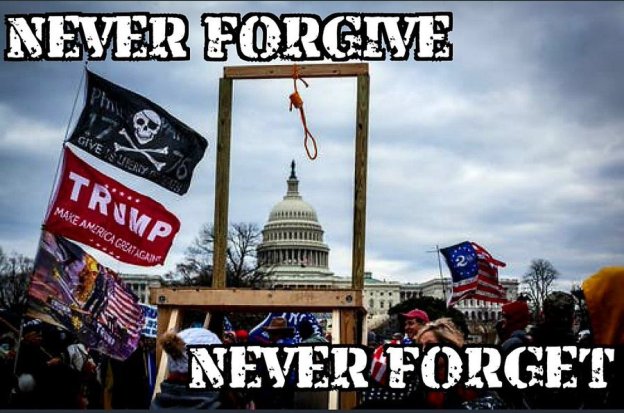
Twilight Time?

It is a desultory day in Washington, overcast and gray, with predictions of potentially catastrophic storms, flash floods and tornados, almost none of which are likely to happen. They are predicted every time a “storm” passes through. We persist. But the weather threatens to postpone the baseball game on which I have been counting to distract from all the other negatives – being alone on Saturday night, the air outside so heavy that it is hard to breathe (earlier the heat index was 111, now a refreshing 92), Chinese leftovers from last night for dinner (wasn’t great then, likely less so now), and so on.

And then there is the blow to my already dwindling hopes for our country. No doubt I am under the stultifying influence of having, foolishly I admit, undertaken to argue with a bunch of “business people” on LinkedIn, which has, sadly, become yet another forum for right-wing hysteria. At times the people involved have been vicious, but what is most dispiriting is that they, as classical Trump acolytes, simply cannot accept what I believe to be reality. One example: they reject the reality of the January 6 assault on the Capitol. One of them flat-out called it “all lies.” The videos are just “fake news” to them, further evidence that the “left” has stolen from them their rightful leader whom some still appear to believe will be “restored” in August. They think the violence following George Floyd’s murder is no different than the insurrection at the Capitol.

I have been seeking to understand that type of thinking for some time. For a while I was impressed by George Lakoff’s Moral Politics, that argues the core issue is different understandings of proper family life and hierarchies of morality and social order. And there are others that, at one time or another, seemed to be on to something.

Then, today, I finished Anne Applebaum’s Twilight of Democracy, subtitled The Seductive Lure of Authoritarianism. I didn’t much care for most of it; too much personal style and mostly about Europe, Poland in particular, but … near the end, I am afraid to think she nailed it. The book mainly lays out the ways in which authoritarian ideas emerge and irreparable divisions develop in societies that were seemingly oriented toward, if not in fact, functioning democracies. The stories are compelling if remote from my experience.

But the ultimate conclusion is something else again: it’s as if the explanation was staring us in the face, was so obvious, and the same time so frightening, that we didn’t see it.

Applebaum notes that Trump’s inaugural speech signaled the beginning of the revelation in its early and repeated references to the decline of America and its values, what he called the “American carnage.” He posited a state of fundamental conflict between the government and the people, and between the United States and the rest of the world. Trump’s solution: “America First.”

Applebaum tellingly analyzes Trump:

To the millenarianism of the far right and the revolutionary nihilism of the far left he adds the deep cynicism of someone who has spent years running unsavory business schemes around the world. Trump has no knowledge of the American story and so cannot have any faith in it. He has no understanding of or sympathy for the language of the founders, so he cannot be inspired by it. Since he doesn’t believe American democracy is good, he has no interest in an America that aspires to be a model among nations.  [Twilight at 154]

Applebaum then observes that Trump’s embrace of Vladimir Putin’s rhetoric translates directly to a form of moral equivalence. The essence of that equivalence is that all countries, certainly all governments, are corrupt in equal measure. If all are corrupt, then “whatever it takes to win is okay.” [Twilight at 155] This, she notes,

is the argument that anti-American extremists, the groups on the far-right and far-left fringes of society, have always made. American ideals are false, American institutions are fraudulent, American behavior abroad is evil, and the language of the American project – equality, opportunity, justice – is nothing but empty slogans. The real reality, in this conspiratorial view, is that of secretive businessmen, or perhaps “deep state” bureaucrats, who manipulate the voters into going along with their plans, using the cheesy language of Thomas Jefferson as a cover story. Whatever it takes to overthrow these evil schemers is justified….

This form of moral equivalence – the belief that democracy is no different, at base, from autocracy – is a familiar argument, and one long used by authoritarians….

… this is what Trump has proven: beneath the surface of the American consensus, the belief in our founding fathers and the faith in our ideals, there lies another America, Trump’s America – one that sees no important distinction between democracy and dictatorship. This America feels no attachment to other democracies … The unity of this America is created by white skin, a certain idea of Christianity, and an attachment to land that will be surrounded and defended by a wall. This America’s ethnic nationalism resembles the old-fashioned ethnic nationalism of older European nations. This America’s cultural despair resembles their cultural despair. [Twilight at 155-158]

This explanation flies in the face of much of the rhetoric of the Republican Party, including Trump’s most ardent acolytes who speak passionately, but falsely, after freedom and “the American way of life.” The relentless drumbeat of USA, USA and the flags and all the rest obscure the real message.

Applebaum’s book has many other insights to commend it for reading by anyone interested in the question whether we are in the twilight of democracy, but for me, she has encapsulated in the above quotes the true explanation of the Trump phenomenon. It comes down to the simple proposition that Trump and those who support him do not believe in the democratic principles on which the country was founded.

Some time back I had speculated that Trump’s election in 2016 led him to believe that he had somehow been granted ownership of the country, that he was owner and CEO of the United States vested, as he saw it, with unlimited power (“I can do whatever I want”). He is another dictator in the making, another Viktor Orbán (Hungary), another Vladimir Putin wannabe. Those men aren’t interested in democracy – they just want to rule. That is Trump as well, and the Republican Party now belongs to him, just as Don Jr. proclaimed a while back.

These people do not recognize the fundamental legitimacy of the legal and traditional arrangements that have been the foundation for our democracy since the Constitution was ratified. Think back to Trump’s statements and behavior. Trump does not believe in democracy. That is why Trump saw no real problem in proclaiming, against all the evidence, that the election was stolen and why he saw no problem in directing a mob of true believers to attack the Capitol on January 6.

This is not about policy disputes over immigration policy or tax philosophy or deficit spending. It is about the essential principles that must be respected if a democratic republic is to function. Thinking of this as just another, though perhaps more serious, dispute about political philosophy, fatally overlooks the reality that the Republican Party no longer operates under the rules and principles of a free democracy.

Democratic politicians who think that Trump is just a temporary phenomenon who can be dealt with by traditional political means are making a potentially fatal mistake. The danger of further attacks on the national government is very real. All elements of the government, including particularly law enforcement and the military, must be prepared to respond as necessary to put down any such assaults. The next time must be the last or surely we will lose our republic, just as Ben Franklin warned. It is past time for the government to demand accountability for the many crimes committed by Trump and his henchmen while in office. This is necessary to make clear that there will be no repeat.


“Lawless White House” – the Mueller Report – “Oh! What A Tangled Web We Weave …”

The rest of line, you likely know, is “when first we practice to deceive.” Originally published in 1808 but completely relevant to the politics of today. The quote of a “lawless White House” is in the extraordinary book I’m about to describe.

We’ll never know the whole truth about Russian interference in the 2016 election or, most likely, many of the other crimes committed by Donald Trump and his White House/Congressional enablers. Most of the relevant documents have likely been destroyed or hidden away from the prying eyes of investigators armed with subpoenas and, one may wish, indictments. Trump and his enablers have shown they have no regard for law and will do anything to avoid being held accountable.

A bitter pill to swallow. There is, however, still much we don’t know that can be discovered despite the fact that the relevant rules favor the criminals and traitors – see, e.g., the accused is innocent until proven guilty, proceedings of the grand jury are secret, non-disclosure agreements are enforceable, attorney-client privilege and executive privilege, to name just a few.

In 2019 I read every word of and wrote extensively about the Mueller Report, with emphasis on what seemed to me the glaring shortcomings of the investigation and the conclusions reached. The links to those posts are set out at the end of this post for those who care to look back. Little did I know what was really going on. I had only the report itself and various news reports as sources.

But now we have Andrew Weissmann’s remarkable book, Where Law Ends—Inside the Mueller Investigation, published in Sept. 2020, but which I have just discovered and read compulsively. It is a barn burner in the truest sense and should be read by everyone who is genuinely interested in saving our democracy. When you are done, you will understand much better the frailties of our constitutional system and the means by which a putative dictator can undermine the separation of powers and subvert the rights we have taken for granted.

You know you’re in for a wild ride in the Introduction, where Weissmann describes AG William Barr’s 4-page letter purporting to explain and elaborate on the Mueller Report as “so many deceptions,” “deliberately worded obfuscations,” and “unbridled lies.” Weissman, after a long career in the FBI under Mueller, was put in charge of the “M Team” for the Special Counsel Investigation. The M Team was the group of lawyers, FBI agents and others who would determine what crimes had been committed, if any (obligatory qualification there) by Paul Manafort, who for a time was Donald Trump’s campaign manager, among many other roles. The other teams were the “R” (to investigate Russian interference in the 2016 election and possible collusion by the Trump campaign with Russian bad actors) and the “600” team (to determine whether Trump had obstructed justice in violation of federal law).

Weissmann thus was in the center of the investigation, privy to most of the challenges and involved in most of the discussion of strategy and tactics as Trump’s determination to undermine the investigation at all costs became apparent.

I am only going to touch on some highlights, that I hope will induce everyone reading this to acquire and digest Weissmann’s book. A full summary would far exceed the bounds of a reasonable blog post and give away too much of the astonishing revelations.

With books like this one, there are often questions about the content and timing of publication. The Twitterverse and other commenters reacted as expected, with some questioning “why wait so long?” “why not reveal everything, including the secret grand jury evidence?” and so on. My response to those critics is (1) pre-publication review was essential to the book’s publication at any time, (2) the book is meticulously fact-oriented and replete with legal analysis (presented mainly in laymen’s’ terms) – something of this nature could not be rushed, and (3) Weissmann gained nothing personally or professionally from delay – he was and is committed to the preservation of law and would have been foolish to violate the confidentiality of grand jury proceedings.

It is also telling that, atypically of exposé books, Weissmann does not make himself the unsung hero of the tale. Quite the contrary, he admits to more than one serious error of judgment in dealing with Mueller and Mueller’s uptight top deputy (Aaron Zebley, Mueller’s former Chief of Staff at the FBI) who was brought in from Mueller’s law firm even before Weissmann was hired. Weissmann takes great pains to explain the competing considerations and why he made particular decisions, while also, appropriately in my view, assigning serious errors to people who deserved the rebukes in light of everything known at the time. Anyone who has been involved in any kind of serious investigation (I have) can surely appreciate the difficult choices confronting the leadership of the investigative teams. Nevertheless, rigid thinking and timidity in the face of threats from the subjects of the investigation led to catastrophic errors.

More important, this is a true inside account of the investigation. Weissmann, while in thrall of Mueller before, during and after the investigation/report, is unrelenting in exposing the investigation’s problems and mistakes, laying out the consequences in stark terms. Examples abound throughout the 346 pages. It reads like a good murder mystery, but you know from page one that it is real, not fiction, and all the more chilling for that.

Weissmann flatly accuses the Trump administration of unlawfully interfering with the DOJ Criminal Division in Foreign Corrupt Practices Act cases. Trump had always railed against the FCPA because it interfered with his ability to bribe foreign officials to get development rights he was after overseas.

James Comey comes in for particularly harsh assessment regarding his decision, shortly before the 2016 election, to disclose the discovery of additional emails on the computer of Anthony Weiner who was (inexplicably, to me) the husband of Huma Abedin, a senior aide to Hillary Clinton. Weissmann sets out the multiple options Comey had in addition to the two he claimed were the only ones open to him. Weissmann at 54.

Weissmann also endorses the critique of Comey by Deputy AG Rosenstein while noting that Rosenstein was effectively covering for Trump’s desire to remove Comey because Comey refused to drop the investigation of General Michael Flynn. Weissmann notes that Trump’s statement on the Comey firing was drafted by Trump with Stephen Miller before Rosenstein became aware of Trump’s plan to fire Comey. Thus, “The White House’s effort to pass off the Comey firing as Rosenstein’s idea was a fabrication.” Weissmann at 60. Only one of many, it would turn out.

The White House also withheld from the Special Counsel an important document pertinent to the Russian interference in 2016. Trump’s lack of concern or interest about it made for Obstruction of Justice No. 11 in the pantheon of obstruction uncovered by Mueller, or would have been uncovered. If Mueller had insisted that Trump testify under oath.  Weissmann at 61. In any case, the firing of Comey is explained and shown to be a clear case of obstruction of justice by Trump. Weissman at 64.

An entire chapter of the book is devoted to the infamous Trump Tower meeting, that was the subject of withheld information (Jared Kushner) and lies (Papadopoulos). Weismann at 86. Among the conclusions: “it was clear that the highest levels of the Russian government were trying to help Trump and damage his opponent” and “the Trump campaign was extremely receptive to this help.” Weissmann at 88.

In a second chapter entitled “The Trump Tower Cover-Up,” Weissmann notes that neither Donald Trump nor Don Jr. ever agreed to meet with the investigators voluntarily and neither was brought before the grand jury. And the parties coordinated their versions of events to, among other things, support Don Jr’s claim that he had never meet any Russian officials. Weissmann at 103. Weissmann concluded that Trump himself lied about the Trump Tower meeting, that lying was in effect a basic Trump strategy for solving problems and that he seemed to believe there were never any consequences to his doing so. Weissmann at 107. History, so far, shows that Trump’s belief in his invulnerability is justified.

That episode reveals one of the serious points of disagreement within the investigative team. Team 600 concluded that it had found no evidence, through a witness or documents, that proved the president’s motive in lying was to deceive Congress and thus he could not be found to have engaged in criminal obstruction of justice. Weissmann calls this conclusion “timorous,” which in retrospect seems an understatement at best. Weismann at 108. At 110, Weissman concludes, more precisely, that the Trump Tower meeting was “damning.”

This episode, however, was prescient for the future of the investigation as Mueller and Zebley adopted a narrow and rigid view of the mission of the Special Counsel, what the evidence showed and what was risked by being too aggressive in the investigation. See, e.g., Weissmann at 128-129. Eventually, for a time at least, Mueller realized how impactful Russian interference could be and authorized a more full-throated investigation into all aspects of Russian interference, Weissmann at 132, but the ongoing reality was that Mueller was influenced far too much by Trump’s shenanigans throughout the investigation and creation of the final report.

That observation brings me to the most important points about this book. I may have more to say about the details in a future post, but it is vital to understand the overall process and how Mueller’s and Zebley’s conservatism led to a flawed process and failed report.

The harsh and ugly truth is that the presidency, in the wrong hands, gave the subject of the investigation an unequaled power to influence the behavior of witnesses, principally in this case Paul Manafort, but others as well. One such influence is the pardon power that Trump unsubtly dangled to assure witnesses that if they remained loyal to him, even to the extent of repeatedly lying to the investigators, they would be spared any consequences. And we know that this was a situation where loyalty to Trump was indeed rewarded with pardons or commuted sentences– for Manafort, for Flynn, for Stone, for Bannon, for Papadopoulos and others. https://bit.ly/3hfx7O3

The other major influence was Trump’s ability to fire the Special Counsel and thus end the investigation. If Mueller’s fears about this were based on the idea that the Republican Party (his party) would not hold Trump to account, he would have been right to be concerned. Nevertheless, Weissmann argues, persuasively, that the impact of this concern unduly colored many of the most important judgments made in the ultimate report.

Whether or not our skepticism is warranted, the book makes very clear that these two elements: Trump’s ability to pardon wrongdoers and his power to fire the Special Counsel, when used to serve Trump’s personal interest, are matters of the most profound concern for the future of our governance.

One of the most remarkable effects of this, when combined with the relentless attacks from the right-wing “media,” was that while Ivanka Trump, for example, almost certainly had relevant information about, for example, the Trump Tower meeting, the decision was that Ivanka was not to be interviewed. Weissmann at 117-118. Don Jr similarly could have been subpoenaed after refusing to be interviewed, but this was not done either. Weissman at 118. Astonishing. Fear of being fired also impacted decisions regarding how broadly to look into Trump’s finances in search of indirect Russian contributions (the Deutsche Bank subpoenas, for example, still not fully fleshed out). Weissmann at 147-148.

It is clear that Trump’s willingness to, directly and indirectly, threaten the Special Counsel with termination had major effects on the scope and aggression of the investigation. That reality explains many of the obvious and serious defects in Mueller’s final report discussed in detail in my earlier blog posts and exposed by Weissmann’s inside knowledge.

Weissmann demonstrates a clear-eyed understanding of the extent of Donald Trump’s corruption: “One cannot plausibly deny that Trump was seeking foreign assistance from Russia and was open to accepting it if offered.” Weissmann at 126, 135, 140. He labels Trump a continuing “counterintelligence threat.” As long as he remains free and unindicted for his multiple crimes in office, Trump remains such a threat despite his lazy indifference to national security briefings that have been a daily staple in the lives of presidents for a very long time. He knows a lot that would be valuable to our adversaries. Continuing through to the end of his presidency, Trump never acted against the Russian interference that was proven to continue into the 2020 campaigns. Weissmann at 218-219, 222. The book lays out a stark and disturbing list of failures to confront the Russian interference threat. Weissmann at 224.

Similarly, Weissmann describes how Rick Gates was aggressively pressured by Paul Manafort and unnamed others to refuse cooperation to the investigation. Weissmann at 206-208. The prospect of a pardon from Trump was part of the “package” of sweeteners to keep Gates quiet. Ultimately, the pressure failed to silence Gates, but just barely.

One particularly interesting story involved Manafort ginning up attacks from Fox’s Sean Hannity against the Special Counsel investigation in violation of the trial judge’s bail orders that had permitted Manafort to remain free pending trial. The investigators correlated Manafort’s texts to Hannity with on-air smears of Mueller and staff. Aaron Zebley, however, prevented the submission of the texts to the court, saying, “they are too explosive.” Weissmann at 209.

Much of the story of the Mueller investigation reads like the script of a television drama series. Typically, parts of such plots are so over the top, so corrupt and malign that they strain credulity. Trump, however, must have studied those shows because his conduct with people like White House counsel McGahn showed a willingness to flout the law at will. Trump never believed, and likely still does not believe, that he can be held accountable. He genuinely believes he is above the law and able, as he said, “to do whatever I want.”

Skipping much material that I may cover in a future post, Weissmann’s narrative ends full circle, reviewing then-Attorney General Barr’s letter purporting to summarize the Mueller Report, but which in fact was a green light to unleash Trump’s corruption in full and unrestrained flower. It led directly to the Ukraine extortion attempt that led to Trump’s first impeachment. Weissmann at 331. And to Giuliani, Nunes, and the political forgiveness of Roger Stone and Michael Flynn, that Weissmann refers to as the “gaggle of presidential defenders and conspirators.” At 332.

Weissmann surgically dissects Barr’s falsities, noting, for example, that Barr’s claim that the president had “full cooperated” with the investigation “”is not just untrue, it’s astonishingly far from the truth.” Weissmann at 333. The same for Barr’s claim that Trump had not asserted presidential privilege to withhold information.  And the same for Barr’s assertion that Trump had formed a “sincere belief” that his presidency was being undermined by the investigation, a claim whose provenance was never explained and in any case was irrelevant to the question whether Trump had obstructed justice.  Weissmann rips Barr’s claim that the Russian active measures were directed at “social discord” rather than helping Trump defeat Hillary Clinton. Lie after lie after lie.

Weissman concludes with some recommendations for ways to strengthen the Special Counsel regulations but, more importantly, disputes compellingly the DOJ policy, adhered to strictly by Mueller, that if the president could not be indicted, it was improper to accuse him of wrongdoing. Weissman at 342. A sitting president can indeed defend himself if he chooses to do so. The policy makes no sense. I addressed the no-indictment policy in a prior post on this blog.

Finally, and perhaps most important of all, Weissman notes that the presidential pardon power in the Constitution should not be used to protect the president personally by, in effect, covering up the crimes of others who would, absent the pardon power, have incriminating information on the sitting president. He argues that it should be unconstitutional for a president to use the pardon power to protect himself, independent of whether that power could be used to directly pardon himself. Weissmann at 344. That seems exactly right to me, although I have some doubts that the “conservative” majority now on the Supreme Court wouldn’t just take the simple-minded approach that the words conferring the pardon authority contain no limitations and therefore are absolute. That is a view that would further cement the anti-Constitutional idea of the imperial presidency that Trump tried to impose on the country. We can see in the events of January 6, among many other examples, where that leads.

*********

Links to Posts re Mueller Investigation:

Mueller’s Indictment of Russia Hackers   https://bit.ly/3gQe7Xb    July 13, 2018

Mueller’s Indictment of Russia Hackers – Updated  https:://bit.ly/3h33lvl July 14, 2018

The Mueller Report – Where From Here? https://bit.ly/3gZQElm   March 24, 2019

Semi-Final Thoughts on Mueller Report https://bit.ly/3j8gVRh  March 25, 2019

Issues raised by Mueller/Barr/Rosenstein https://bit.ly/3wSPjni March 27, 2019

Redactions of Mueller Report Must Be Coded  https://bit.ly/3j8nX8q April 6, 2019

MUELLER REPORT PART I – TRUMP CANOODLING WITH RUSSIA https://bit.ly/3jeBNGr  July 9, 2019

MUELLER REPORT PART I — TRUMP CANOODLING WITH RUSSIA – A https://bit.ly/3dagOkk  July 10, 2019

MUELLER REPORT PART I – TRUMP CANOODLING WITH RUSSIA – B https://bit.ly/3zNATqe  July 10, 2019

MUELLER REPORT PART I – TRUMP CANOODLING WITH RUSSIA – C  https://bit.ly/3xTRsPI  July 11, 2019

MUELLER REPORT PART I – TRUMP CANOODLING WITH RUSSIA – D  https://bit.ly/3vUR1D9  July 11, 2019

MUELLER REPORT PART I – TRUMP CANOODLING WITH RUSSIA – E https://bit.ly/2U46bIX  July 11, 2019

Mueller Report Part II – Trump Guilty of Obstruction of Justice-A   https://bit.ly/3gQAXOu   July 23, 2019

Mueller Report Part II – Trump Guilty of Obstruction of Justice-B, C  https://bit.ly/3A5gf5l   July 23, 2019

Mueller Report Part II – Trump Guilty of Obstruction of Justice – D    https://bit.ly/3wVcw8l   July 23, 2019

Mueller Report Part II – Trump Guilty of Obstruction of Justice-E   https://bit.ly/3gRyKlW  July 23, 2019

Mueller Report Part II – Trump Guilty of Obstruction of Justice – F   https://bit.ly/3gRHR61  July 23, 2019

January 6 Video: Capitol Under Siege

The New York Times has published a video covering the events of January 6, 2021 at the U.S. Capitol Building. There is nothing to add to this at the moment, except to wish that the government arrests, convicts and sends to long prison terms the Proud Boys, Oath Keepers and other white supremacist groups that planned their attack, along with those who joined them in a lunatic rampage of violence and desecration. I also urge everyone to subscribe to the New York Times. You may not agree with everything the publish (I don’t) but their comprehensive coverage and analysis is unparalleled in journalism.

Here is the link to the video: https://www.nytimes.com/video/us/politics/100000007606996/capitol-riot-trump-supporters.html?