Category Archives: Politics

Twilight Time?

It is a desultory day in Washington, overcast and gray, with predictions of potentially catastrophic storms, flash floods and tornados, almost none of which are likely to happen. They are predicted every time a “storm” passes through. We persist. But the weather threatens to postpone the baseball game on which I have been counting to distract from all the other negatives – being alone on Saturday night, the air outside so heavy that it is hard to breathe (earlier the heat index was 111, now a refreshing 92), Chinese leftovers from last night for dinner (wasn’t great then, likely less so now), and so on.

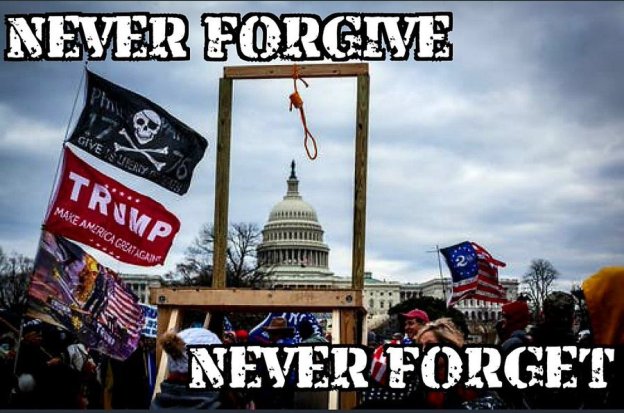
And then there is the blow to my already dwindling hopes for our country. No doubt I am under the stultifying influence of having, foolishly I admit, undertaken to argue with a bunch of “business people” on LinkedIn, which has, sadly, become yet another forum for right-wing hysteria. At times the people involved have been vicious, but what is most dispiriting is that they, as classical Trump acolytes, simply cannot accept what I believe to be reality. One example: they reject the reality of the January 6 assault on the Capitol. One of them flat-out called it “all lies.” The videos are just “fake news” to them, further evidence that the “left” has stolen from them their rightful leader whom some still appear to believe will be “restored” in August. They think the violence following George Floyd’s murder is no different than the insurrection at the Capitol.

I have been seeking to understand that type of thinking for some time. For a while I was impressed by George Lakoff’s Moral Politics, that argues the core issue is different understandings of proper family life and hierarchies of morality and social order. And there are others that, at one time or another, seemed to be on to something.

Then, today, I finished Anne Applebaum’s Twilight of Democracy, subtitled The Seductive Lure of Authoritarianism. I didn’t much care for most of it; too much personal style and mostly about Europe, Poland in particular, but … near the end, I am afraid to think she nailed it. The book mainly lays out the ways in which authoritarian ideas emerge and irreparable divisions develop in societies that were seemingly oriented toward, if not in fact, functioning democracies. The stories are compelling if remote from my experience.

But the ultimate conclusion is something else again: it’s as if the explanation was staring us in the face, was so obvious, and the same time so frightening, that we didn’t see it.

Applebaum notes that Trump’s inaugural speech signaled the beginning of the revelation in its early and repeated references to the decline of America and its values, what he called the “American carnage.” He posited a state of fundamental conflict between the government and the people, and between the United States and the rest of the world. Trump’s solution: “America First.”

Applebaum tellingly analyzes Trump:

To the millenarianism of the far right and the revolutionary nihilism of the far left he adds the deep cynicism of someone who has spent years running unsavory business schemes around the world. Trump has no knowledge of the American story and so cannot have any faith in it. He has no understanding of or sympathy for the language of the founders, so he cannot be inspired by it. Since he doesn’t believe American democracy is good, he has no interest in an America that aspires to be a model among nations.  [Twilight at 154]

Applebaum then observes that Trump’s embrace of Vladimir Putin’s rhetoric translates directly to a form of moral equivalence. The essence of that equivalence is that all countries, certainly all governments, are corrupt in equal measure. If all are corrupt, then “whatever it takes to win is okay.” [Twilight at 155] This, she notes,

is the argument that anti-American extremists, the groups on the far-right and far-left fringes of society, have always made. American ideals are false, American institutions are fraudulent, American behavior abroad is evil, and the language of the American project – equality, opportunity, justice – is nothing but empty slogans. The real reality, in this conspiratorial view, is that of secretive businessmen, or perhaps “deep state” bureaucrats, who manipulate the voters into going along with their plans, using the cheesy language of Thomas Jefferson as a cover story. Whatever it takes to overthrow these evil schemers is justified….

This form of moral equivalence – the belief that democracy is no different, at base, from autocracy – is a familiar argument, and one long used by authoritarians….

… this is what Trump has proven: beneath the surface of the American consensus, the belief in our founding fathers and the faith in our ideals, there lies another America, Trump’s America – one that sees no important distinction between democracy and dictatorship. This America feels no attachment to other democracies … The unity of this America is created by white skin, a certain idea of Christianity, and an attachment to land that will be surrounded and defended by a wall. This America’s ethnic nationalism resembles the old-fashioned ethnic nationalism of older European nations. This America’s cultural despair resembles their cultural despair. [Twilight at 155-158]

This explanation flies in the face of much of the rhetoric of the Republican Party, including Trump’s most ardent acolytes who speak passionately, but falsely, after freedom and “the American way of life.” The relentless drumbeat of USA, USA and the flags and all the rest obscure the real message.

Applebaum’s book has many other insights to commend it for reading by anyone interested in the question whether we are in the twilight of democracy, but for me, she has encapsulated in the above quotes the true explanation of the Trump phenomenon. It comes down to the simple proposition that Trump and those who support him do not believe in the democratic principles on which the country was founded.

Some time back I had speculated that Trump’s election in 2016 led him to believe that he had somehow been granted ownership of the country, that he was owner and CEO of the United States vested, as he saw it, with unlimited power (“I can do whatever I want”). He is another dictator in the making, another Viktor Orbán (Hungary), another Vladimir Putin wannabe. Those men aren’t interested in democracy – they just want to rule. That is Trump as well, and the Republican Party now belongs to him, just as Don Jr. proclaimed a while back.

These people do not recognize the fundamental legitimacy of the legal and traditional arrangements that have been the foundation for our democracy since the Constitution was ratified. Think back to Trump’s statements and behavior. Trump does not believe in democracy. That is why Trump saw no real problem in proclaiming, against all the evidence, that the election was stolen and why he saw no problem in directing a mob of true believers to attack the Capitol on January 6.

This is not about policy disputes over immigration policy or tax philosophy or deficit spending. It is about the essential principles that must be respected if a democratic republic is to function. Thinking of this as just another, though perhaps more serious, dispute about political philosophy, fatally overlooks the reality that the Republican Party no longer operates under the rules and principles of a free democracy.

Democratic politicians who think that Trump is just a temporary phenomenon who can be dealt with by traditional political means are making a potentially fatal mistake. The danger of further attacks on the national government is very real. All elements of the government, including particularly law enforcement and the military, must be prepared to respond as necessary to put down any such assaults. The next time must be the last or surely we will lose our republic, just as Ben Franklin warned. It is past time for the government to demand accountability for the many crimes committed by Trump and his henchmen while in office. This is necessary to make clear that there will be no repeat.


“Lawless White House” – the Mueller Report – “Oh! What A Tangled Web We Weave …”

The rest of line, you likely know, is “when first we practice to deceive.” Originally published in 1808 but completely relevant to the politics of today. The quote of a “lawless White House” is in the extraordinary book I’m about to describe.

We’ll never know the whole truth about Russian interference in the 2016 election or, most likely, many of the other crimes committed by Donald Trump and his White House/Congressional enablers. Most of the relevant documents have likely been destroyed or hidden away from the prying eyes of investigators armed with subpoenas and, one may wish, indictments. Trump and his enablers have shown they have no regard for law and will do anything to avoid being held accountable.

A bitter pill to swallow. There is, however, still much we don’t know that can be discovered despite the fact that the relevant rules favor the criminals and traitors – see, e.g., the accused is innocent until proven guilty, proceedings of the grand jury are secret, non-disclosure agreements are enforceable, attorney-client privilege and executive privilege, to name just a few.

In 2019 I read every word of and wrote extensively about the Mueller Report, with emphasis on what seemed to me the glaring shortcomings of the investigation and the conclusions reached. The links to those posts are set out at the end of this post for those who care to look back. Little did I know what was really going on. I had only the report itself and various news reports as sources.

But now we have Andrew Weissmann’s remarkable book, Where Law Ends—Inside the Mueller Investigation, published in Sept. 2020, but which I have just discovered and read compulsively. It is a barn burner in the truest sense and should be read by everyone who is genuinely interested in saving our democracy. When you are done, you will understand much better the frailties of our constitutional system and the means by which a putative dictator can undermine the separation of powers and subvert the rights we have taken for granted.

You know you’re in for a wild ride in the Introduction, where Weissmann describes AG William Barr’s 4-page letter purporting to explain and elaborate on the Mueller Report as “so many deceptions,” “deliberately worded obfuscations,” and “unbridled lies.” Weissman, after a long career in the FBI under Mueller, was put in charge of the “M Team” for the Special Counsel Investigation. The M Team was the group of lawyers, FBI agents and others who would determine what crimes had been committed, if any (obligatory qualification there) by Paul Manafort, who for a time was Donald Trump’s campaign manager, among many other roles. The other teams were the “R” (to investigate Russian interference in the 2016 election and possible collusion by the Trump campaign with Russian bad actors) and the “600” team (to determine whether Trump had obstructed justice in violation of federal law).

Weissmann thus was in the center of the investigation, privy to most of the challenges and involved in most of the discussion of strategy and tactics as Trump’s determination to undermine the investigation at all costs became apparent.

I am only going to touch on some highlights, that I hope will induce everyone reading this to acquire and digest Weissmann’s book. A full summary would far exceed the bounds of a reasonable blog post and give away too much of the astonishing revelations.

With books like this one, there are often questions about the content and timing of publication. The Twitterverse and other commenters reacted as expected, with some questioning “why wait so long?” “why not reveal everything, including the secret grand jury evidence?” and so on. My response to those critics is (1) pre-publication review was essential to the book’s publication at any time, (2) the book is meticulously fact-oriented and replete with legal analysis (presented mainly in laymen’s’ terms) – something of this nature could not be rushed, and (3) Weissmann gained nothing personally or professionally from delay – he was and is committed to the preservation of law and would have been foolish to violate the confidentiality of grand jury proceedings.

It is also telling that, atypically of exposé books, Weissmann does not make himself the unsung hero of the tale. Quite the contrary, he admits to more than one serious error of judgment in dealing with Mueller and Mueller’s uptight top deputy (Aaron Zebley, Mueller’s former Chief of Staff at the FBI) who was brought in from Mueller’s law firm even before Weissmann was hired. Weissmann takes great pains to explain the competing considerations and why he made particular decisions, while also, appropriately in my view, assigning serious errors to people who deserved the rebukes in light of everything known at the time. Anyone who has been involved in any kind of serious investigation (I have) can surely appreciate the difficult choices confronting the leadership of the investigative teams. Nevertheless, rigid thinking and timidity in the face of threats from the subjects of the investigation led to catastrophic errors.

More important, this is a true inside account of the investigation. Weissmann, while in thrall of Mueller before, during and after the investigation/report, is unrelenting in exposing the investigation’s problems and mistakes, laying out the consequences in stark terms. Examples abound throughout the 346 pages. It reads like a good murder mystery, but you know from page one that it is real, not fiction, and all the more chilling for that.

Weissmann flatly accuses the Trump administration of unlawfully interfering with the DOJ Criminal Division in Foreign Corrupt Practices Act cases. Trump had always railed against the FCPA because it interfered with his ability to bribe foreign officials to get development rights he was after overseas.

James Comey comes in for particularly harsh assessment regarding his decision, shortly before the 2016 election, to disclose the discovery of additional emails on the computer of Anthony Weiner who was (inexplicably, to me) the husband of Huma Abedin, a senior aide to Hillary Clinton. Weissmann sets out the multiple options Comey had in addition to the two he claimed were the only ones open to him. Weissmann at 54.

Weissmann also endorses the critique of Comey by Deputy AG Rosenstein while noting that Rosenstein was effectively covering for Trump’s desire to remove Comey because Comey refused to drop the investigation of General Michael Flynn. Weissmann notes that Trump’s statement on the Comey firing was drafted by Trump with Stephen Miller before Rosenstein became aware of Trump’s plan to fire Comey. Thus, “The White House’s effort to pass off the Comey firing as Rosenstein’s idea was a fabrication.” Weissmann at 60. Only one of many, it would turn out.

The White House also withheld from the Special Counsel an important document pertinent to the Russian interference in 2016. Trump’s lack of concern or interest about it made for Obstruction of Justice No. 11 in the pantheon of obstruction uncovered by Mueller, or would have been uncovered. If Mueller had insisted that Trump testify under oath.  Weissmann at 61. In any case, the firing of Comey is explained and shown to be a clear case of obstruction of justice by Trump. Weissman at 64.

An entire chapter of the book is devoted to the infamous Trump Tower meeting, that was the subject of withheld information (Jared Kushner) and lies (Papadopoulos). Weismann at 86. Among the conclusions: “it was clear that the highest levels of the Russian government were trying to help Trump and damage his opponent” and “the Trump campaign was extremely receptive to this help.” Weissmann at 88.

In a second chapter entitled “The Trump Tower Cover-Up,” Weissmann notes that neither Donald Trump nor Don Jr. ever agreed to meet with the investigators voluntarily and neither was brought before the grand jury. And the parties coordinated their versions of events to, among other things, support Don Jr’s claim that he had never meet any Russian officials. Weissmann at 103. Weissmann concluded that Trump himself lied about the Trump Tower meeting, that lying was in effect a basic Trump strategy for solving problems and that he seemed to believe there were never any consequences to his doing so. Weissmann at 107. History, so far, shows that Trump’s belief in his invulnerability is justified.

That episode reveals one of the serious points of disagreement within the investigative team. Team 600 concluded that it had found no evidence, through a witness or documents, that proved the president’s motive in lying was to deceive Congress and thus he could not be found to have engaged in criminal obstruction of justice. Weissmann calls this conclusion “timorous,” which in retrospect seems an understatement at best. Weismann at 108. At 110, Weissman concludes, more precisely, that the Trump Tower meeting was “damning.”

This episode, however, was prescient for the future of the investigation as Mueller and Zebley adopted a narrow and rigid view of the mission of the Special Counsel, what the evidence showed and what was risked by being too aggressive in the investigation. See, e.g., Weissmann at 128-129. Eventually, for a time at least, Mueller realized how impactful Russian interference could be and authorized a more full-throated investigation into all aspects of Russian interference, Weissmann at 132, but the ongoing reality was that Mueller was influenced far too much by Trump’s shenanigans throughout the investigation and creation of the final report.

That observation brings me to the most important points about this book. I may have more to say about the details in a future post, but it is vital to understand the overall process and how Mueller’s and Zebley’s conservatism led to a flawed process and failed report.

The harsh and ugly truth is that the presidency, in the wrong hands, gave the subject of the investigation an unequaled power to influence the behavior of witnesses, principally in this case Paul Manafort, but others as well. One such influence is the pardon power that Trump unsubtly dangled to assure witnesses that if they remained loyal to him, even to the extent of repeatedly lying to the investigators, they would be spared any consequences. And we know that this was a situation where loyalty to Trump was indeed rewarded with pardons or commuted sentences– for Manafort, for Flynn, for Stone, for Bannon, for Papadopoulos and others. https://bit.ly/3hfx7O3

The other major influence was Trump’s ability to fire the Special Counsel and thus end the investigation. If Mueller’s fears about this were based on the idea that the Republican Party (his party) would not hold Trump to account, he would have been right to be concerned. Nevertheless, Weissmann argues, persuasively, that the impact of this concern unduly colored many of the most important judgments made in the ultimate report.

Whether or not our skepticism is warranted, the book makes very clear that these two elements: Trump’s ability to pardon wrongdoers and his power to fire the Special Counsel, when used to serve Trump’s personal interest, are matters of the most profound concern for the future of our governance.

One of the most remarkable effects of this, when combined with the relentless attacks from the right-wing “media,” was that while Ivanka Trump, for example, almost certainly had relevant information about, for example, the Trump Tower meeting, the decision was that Ivanka was not to be interviewed. Weissmann at 117-118. Don Jr similarly could have been subpoenaed after refusing to be interviewed, but this was not done either. Weissman at 118. Astonishing. Fear of being fired also impacted decisions regarding how broadly to look into Trump’s finances in search of indirect Russian contributions (the Deutsche Bank subpoenas, for example, still not fully fleshed out). Weissmann at 147-148.

It is clear that Trump’s willingness to, directly and indirectly, threaten the Special Counsel with termination had major effects on the scope and aggression of the investigation. That reality explains many of the obvious and serious defects in Mueller’s final report discussed in detail in my earlier blog posts and exposed by Weissmann’s inside knowledge.

Weissmann demonstrates a clear-eyed understanding of the extent of Donald Trump’s corruption: “One cannot plausibly deny that Trump was seeking foreign assistance from Russia and was open to accepting it if offered.” Weissmann at 126, 135, 140. He labels Trump a continuing “counterintelligence threat.” As long as he remains free and unindicted for his multiple crimes in office, Trump remains such a threat despite his lazy indifference to national security briefings that have been a daily staple in the lives of presidents for a very long time. He knows a lot that would be valuable to our adversaries. Continuing through to the end of his presidency, Trump never acted against the Russian interference that was proven to continue into the 2020 campaigns. Weissmann at 218-219, 222. The book lays out a stark and disturbing list of failures to confront the Russian interference threat. Weissmann at 224.

Similarly, Weissmann describes how Rick Gates was aggressively pressured by Paul Manafort and unnamed others to refuse cooperation to the investigation. Weissmann at 206-208. The prospect of a pardon from Trump was part of the “package” of sweeteners to keep Gates quiet. Ultimately, the pressure failed to silence Gates, but just barely.

One particularly interesting story involved Manafort ginning up attacks from Fox’s Sean Hannity against the Special Counsel investigation in violation of the trial judge’s bail orders that had permitted Manafort to remain free pending trial. The investigators correlated Manafort’s texts to Hannity with on-air smears of Mueller and staff. Aaron Zebley, however, prevented the submission of the texts to the court, saying, “they are too explosive.” Weissmann at 209.

Much of the story of the Mueller investigation reads like the script of a television drama series. Typically, parts of such plots are so over the top, so corrupt and malign that they strain credulity. Trump, however, must have studied those shows because his conduct with people like White House counsel McGahn showed a willingness to flout the law at will. Trump never believed, and likely still does not believe, that he can be held accountable. He genuinely believes he is above the law and able, as he said, “to do whatever I want.”

Skipping much material that I may cover in a future post, Weissmann’s narrative ends full circle, reviewing then-Attorney General Barr’s letter purporting to summarize the Mueller Report, but which in fact was a green light to unleash Trump’s corruption in full and unrestrained flower. It led directly to the Ukraine extortion attempt that led to Trump’s first impeachment. Weissmann at 331. And to Giuliani, Nunes, and the political forgiveness of Roger Stone and Michael Flynn, that Weissmann refers to as the “gaggle of presidential defenders and conspirators.” At 332.

Weissmann surgically dissects Barr’s falsities, noting, for example, that Barr’s claim that the president had “full cooperated” with the investigation “”is not just untrue, it’s astonishingly far from the truth.” Weissmann at 333. The same for Barr’s claim that Trump had not asserted presidential privilege to withhold information.  And the same for Barr’s assertion that Trump had formed a “sincere belief” that his presidency was being undermined by the investigation, a claim whose provenance was never explained and in any case was irrelevant to the question whether Trump had obstructed justice.  Weissmann rips Barr’s claim that the Russian active measures were directed at “social discord” rather than helping Trump defeat Hillary Clinton. Lie after lie after lie.

Weissman concludes with some recommendations for ways to strengthen the Special Counsel regulations but, more importantly, disputes compellingly the DOJ policy, adhered to strictly by Mueller, that if the president could not be indicted, it was improper to accuse him of wrongdoing. Weissman at 342. A sitting president can indeed defend himself if he chooses to do so. The policy makes no sense. I addressed the no-indictment policy in a prior post on this blog.

Finally, and perhaps most important of all, Weissman notes that the presidential pardon power in the Constitution should not be used to protect the president personally by, in effect, covering up the crimes of others who would, absent the pardon power, have incriminating information on the sitting president. He argues that it should be unconstitutional for a president to use the pardon power to protect himself, independent of whether that power could be used to directly pardon himself. Weissmann at 344. That seems exactly right to me, although I have some doubts that the “conservative” majority now on the Supreme Court wouldn’t just take the simple-minded approach that the words conferring the pardon authority contain no limitations and therefore are absolute. That is a view that would further cement the anti-Constitutional idea of the imperial presidency that Trump tried to impose on the country. We can see in the events of January 6, among many other examples, where that leads.

*********

Links to Posts re Mueller Investigation:

Mueller’s Indictment of Russia Hackers   https://bit.ly/3gQe7Xb    July 13, 2018

Mueller’s Indictment of Russia Hackers – Updated  https:://bit.ly/3h33lvl July 14, 2018

The Mueller Report – Where From Here? https://bit.ly/3gZQElm   March 24, 2019

Semi-Final Thoughts on Mueller Report https://bit.ly/3j8gVRh  March 25, 2019

Issues raised by Mueller/Barr/Rosenstein https://bit.ly/3wSPjni March 27, 2019

Redactions of Mueller Report Must Be Coded  https://bit.ly/3j8nX8q April 6, 2019

MUELLER REPORT PART I – TRUMP CANOODLING WITH RUSSIA https://bit.ly/3jeBNGr  July 9, 2019

MUELLER REPORT PART I — TRUMP CANOODLING WITH RUSSIA – A https://bit.ly/3dagOkk  July 10, 2019

MUELLER REPORT PART I – TRUMP CANOODLING WITH RUSSIA – B https://bit.ly/3zNATqe  July 10, 2019

MUELLER REPORT PART I – TRUMP CANOODLING WITH RUSSIA – C  https://bit.ly/3xTRsPI  July 11, 2019

MUELLER REPORT PART I – TRUMP CANOODLING WITH RUSSIA – D  https://bit.ly/3vUR1D9  July 11, 2019

MUELLER REPORT PART I – TRUMP CANOODLING WITH RUSSIA – E https://bit.ly/2U46bIX  July 11, 2019

Mueller Report Part II – Trump Guilty of Obstruction of Justice-A   https://bit.ly/3gQAXOu   July 23, 2019

Mueller Report Part II – Trump Guilty of Obstruction of Justice-B, C  https://bit.ly/3A5gf5l   July 23, 2019

Mueller Report Part II – Trump Guilty of Obstruction of Justice – D    https://bit.ly/3wVcw8l   July 23, 2019

Mueller Report Part II – Trump Guilty of Obstruction of Justice-E   https://bit.ly/3gRyKlW  July 23, 2019

Mueller Report Part II – Trump Guilty of Obstruction of Justice – F   https://bit.ly/3gRHR61  July 23, 2019

January 6 Video: Capitol Under Siege

The New York Times has published a video covering the events of January 6, 2021 at the U.S. Capitol Building. There is nothing to add to this at the moment, except to wish that the government arrests, convicts and sends to long prison terms the Proud Boys, Oath Keepers and other white supremacist groups that planned their attack, along with those who joined them in a lunatic rampage of violence and desecration. I also urge everyone to subscribe to the New York Times. You may not agree with everything the publish (I don’t) but their comprehensive coverage and analysis is unparalleled in journalism.

Here is the link to the video: https://www.nytimes.com/video/us/politics/100000007606996/capitol-riot-trump-supporters.html?


What Do You Call a Collection of Traitors & Cowards?

There is a gaggle of geese (also a press gaggle and, generically, any group)… a coven of witches, pride of lions (definitely not lions), herd of giraffes (also cattle) … getting warmer.

Not that important, I suppose, to have a name for the mob of people who attacked the Capitol on January 6, 2021, in an attempt to stop the election of Joe Biden and replace him with the dictator Donald Trump. I was inspired to think about this when I found this site https://bit.ly/3xRc2QA which the FBI’s display of 1,175 photos of people they are still seeking to arrest for their role in the January 6 insurrection (a very few since arrested). The list bears this note:

If you have any information on the individuals pictured above, please call 1-800-CALL-FBI or submit a tip online at tips.fbi.gov. Please reference the photo number, including the AFO or AOM if applicable, when calling or submitting information online.

Aside from the outrageous nature of the attack itself, the shocking thing about these photos is that many of them are very clear, full face shots that could be identified readily by any number of friends, family, acquaintances, co-workers or customers. Still, however, these people are at large. I’m sure most people who read this blog will not know any of these charmers, but just in case, I am writing this post in the hope that readers will review the photos and report anyone they know.

I understand the idea that “ratting out” someone is frowned upon, even by upstanding people of strong religious and patriotic values. But these people were trying to overthrow the democracy on which your freedoms depend. Don’t think for a moment that if they had succeeded in installing Trump for a second term, despite his election loss, everything would just have continued as before. Recall that Trump himself spoke on multiple occasions about a third term, to rousing applause from his rally acolytes. It was no joke then and certainly no joke after January 6. So, please review the photos and see if you recognize anyone. If you do, report them to the FBI.

And don’t miss the list of arrest announcements at the bottom of the pages of photos. Each is linked to a press release with details of the person’s involvement in the January 6 attack. Makes interesting reading.

While I’m on this subject, I want to make a few comments about some of the “defenses” that I have heard made by January 6 defendants who have been arrested.

One is the “pure of heart” defense, which goes something like, “I was there because I truly believed what Trump had said and I thought I was patriotically defending my country…blah, blah.” Nonsense, you don’t get passing grades in school even if you convince yourself that Martians ate your homework. Belief is a choice you make and every person who claims they believed Trump had access to information that would have shown he was lying about the election. No defense.

Then there is the “I didn’t know it was illegal” defense, based on the idea that the Capitol is a “public building” and therefore the public has the right to go there any time and under any circumstances the public chooses. No, actually, untrue and any person with a functioning mind would know, from personal experience and casual observation, that “public” buildings are normally guarded now-a-days and access is strictly controlled. Moreover, and it pains me to have to add this, there were Capitol police on site who were obviously indicating that access to the building was not open, and no normal person would think it’s just fine to ignore their presence and their resistance to entry.

Finally, there is the “I just got caught up in the crowd” argument. Well, that could possibly be true for a few of the people who walked to the Capitol from Trump’s incendiary speech, but … once there, it should have been clear, again to anyone with a functioning mind, that the crowd had turned into a violent mob and that it was better to skedaddle than to just go along to get along. This “defense” is nonsense and, in my view, even if factually accurate in a handful of cases, it is no excuse. It reads a lot like “yeah, I knew my friends were going to rob the store, but I drove the get-away car anyway because, you know, they were my friends.”

Rant over. Please look at the FBI photos and see your fellow Americans at play. If you recognize anyone, turn him/her in to the FBI. You will feel better for it.


A Darkness in the Heart

A few days ago, Rep. Carolyn Maloney, Chair of the House Committee on Oversight and Reform, releaseddocuments showing ex-President Trump’s efforts to pressure the Department of Justice (DOJ) to overturn the results of the 2020 presidential election.  https://bit.ly/35wq4uL Maloney’s release says, in part,

These documents show that President Trump tried to corrupt our nation’s chief law enforcement agency in a brazen attempt to overturn an election that he lost. Those who aided or witnessed President Trump’s unlawful actions must answer the committee’s questions about this attempted subversion of democracy.

This is not really new. Recall that on May 3, 2017, more than four long long years ago, I published, https://bit.ly/3vObOrS that included a 24-item list of indictable/impeachable offenses by Donald Trump. That was long before the March 2019 Mueller Report, laying out conclusive evidence of at least ten instances in which Trump obstructed justice. And longer still before the July 2019 phone call in which Trump threatened the President of Ukraine that he would withhold Congressionally-approved aid if Ukraine did not announce an investigation of Joe and Hunter Biden. See https://bit.ly/3vBQ7LF It was even longer before the January 6, 2021 Trump-inspired and Trump-led (“I will be there with you.”) attack on the Capitol, for which I recommended that Trump be indicted, arrested and charged with Sedition & Felony Murder. https://bit.ly/3q7iaSb

Thus, it comes as no surprise that unleashed Trump has once again committed multiple crimes. [An aside: this is not an exaggeration. I will soon be reviewing the extraordinary memoir, Where Law Ends, by Andrew Weissmann, the inside account of the Mueller investigation that reveals in horrifying detail the determination of Donald Trump to retain power and remain unaccountable to the people, including multiple crimes in office]

In a nutshell, as exposed in the released documents, here is how Trump attempted to subvert the Department of Justice in the wake of his 2020 election defeat [full details here; https://bit.ly/35wq4uL]:

Trump Sent Bogus Election Fraud Claims to Top DOJ Officials Minutes Before Announcing Their Promotions to the Top Two Spots in the Department

Trump Used Official White House Channels and a Private Attorney to Pressure DOJ to Urgently File a Supreme Court Lawsuit to Nullify the Election

      • The draft 54-page complaint demanded that the Supreme Court “declare that the Electoral College votes cast” in six states that President Trump lost “cannot be counted,” and  requested that the Court order a “special election” for president in those states.

Trump Enlisted Assistant AG Jeffrey Clark in an Attempt to Advance Election Fraud Claims; The White House Chief of Staff Pressured DOJ to Investigate Conspiracy Theories At Least Fives Times

 Examples [“Rosen” refers to then Deputy AG Jeffrey Rosen]:

      • On December 30, 2020, Mr. Meadows forwarded Mr. Rosen an email from Cleta Mitchell, a Trump advisor who later participated in a January phone call with Georgia Secretary of State Brad Raffensperger.  During that call,  President Trump reportedly asked Georgia election officials to “find” enough votes to declare him the winner of the state.  The December 30 email contained allegations of “video issues in Fulton County.”  Mr. Meadows wrote to Mr. Rosen:  “Can you have your team look into these allegations of wrongdoing.  Only the alleged fraudulent activity.”
      • Later on December 30, 2020, Mr. Meadows emailed Mr. Rosen a translation of a document from an individual in Italy claiming to have “direct knowledge” of a plot by which American electoral data was changed in Italian facilities “in coordination with senior US intelligence officials (CIA)” and loaded onto “military satellites.”  This individual claimed that the true data, as well as sources within the conservative wing of the Italian secret service, confirmed that Donald Trump was “clearly the winner” of the 2020 election.

Further nuances and details about these sorry episodes were reported in the Washington Post. https://wapo.st/3q4tP49 One element of that recital is the repetition of “no comment” and no response to inquiries from the press about the narrated events. Even those Justice Department officials who were steadfast in declining Trump’s overtures to overturn the election are apparently unwilling to address the revelations in the emails released by the Oversight Committee. And, quite expectedly, Mark Meadows and Trump himself had nothing further to say regarding their blatant attempts to overturn the election.

 What Should Happen Now

Trump and all of the people involved in attempts to suborn the Department of Justice should be indicted under 18 USC § 371,arrested and tried. It’s past time to put a stop to Trump’s campaign to undermine the central fabric of our democracy.

The US Criminal Code, 18 U.S.C. § 371, if violated when two or more persons conspire either to (a) commit any offense against the United States, or (b) defraud the United States, or any agency thereof in any manner or for any purpose. Both offenses require the traditional elements of conspiracy: an illegal agreement, criminal intent, and proof of an overt act.

In Hass v. Henkel, 216 U.S. 462 (1910) the Supreme Court stated:

The statute is broad enough in its terms to include any conspiracy for the purpose of impairing, obstructing or defeating the lawful function of any department of government . . . (A)ny conspiracy which is calculated to obstruct or impair its efficiency and destroy the value of its operation and reports as fair, impartial and reasonably accurate, would be to defraud the United States by depriving it of its lawful right and duty of promulgating or diffusing the information so officially acquired in the way and at the time required by law or departmental regulation.

In Hammerschmidt v. United States, 265 U.S. 182 (1924), the Court elaborated:

To conspire to defraud the United States … also means to interfere with or obstruct one of its lawful governmental functions by deceit, craft or trickery, or at least by means that are dishonest. It is not necessary that the Government shall be subjected to property or pecuniary loss by the fraud, but only that its legitimate official action and purpose shall be defeated by misrepresentation, chicane or the overreaching of those charged with carrying out the governmental intention.

A multitude of later cases confirm the ongoing vitality of those early definitions.

Proof of conspiracy requires knowledge by the perpetrators that the statements were false. The claims made by Trump, Meadows and others acting on Trump’s behalf were not just obviously false but bordered on hallucinatory. Trump’s repeated claims that there was “no way” he lost Georgia, for example, have no plausible factual predicate and after sixty lawsuit failures, no plausible factual basis has been presented. Trump’s claims were a blatant attempt to both “interfere or obstruct legitimate Government activity” and/or to “make wrongful use of a governmental instrumentality.”

The Manual of Model Criminal Jury Instructions: 8. Offenses Under Title 18, referring to 18 USC § 371,  states,

A conspiracy is a kind of criminal partnership—an agreement of two or more persons to commit one or more crimes. The crime of conspiracy is the agreement to do something unlawful; it does not matter whether the crime agreed upon was committed….

One becomes a member of a conspiracy by willfully participating in the unlawful plan with the intent to advance or further some object or purpose of the conspiracy, even though the person does not have full knowledge of all the details of the conspiracy. Furthermore, one who willfully joins an existing conspiracy is as responsible for it as the originators.…

An overt act does not itself have to be unlawful. A lawful act may be an element of a conspiracy if it was done for the purpose of carrying out the conspiracy. The government is not required to prove that the defendant personally did one of the overt acts.

A conspirator may not defend on the basis that he believed in fantasies when he made claims he knew were unjustified. In this case Trump and his henchmen tried to enlist the personnel and resources of the nation’s top law enforcement agency to accomplish what they failed to accomplish in the election, knowing to a moral certainty that their claims lacked a basis in reality. The conduct in question occurred almost two months after the election and after numerous lawsuits throughout the country failed to persuade a single judge (including some Trump himself appointed) that there was any basis for claims of election fraud that could change the result. Even Trump’s Attorney General Barr publicly rejected the fraud claims.

I am not alone in advocating strong and prompt action to stop Trump’s continuing effort to overturn the election . Jennifer Rubin suggested the following in the Washington Post on [https://wapo.st/3wz0sJM]:

    1.  criminal investigation into post-election actions in which officials were pressured to change election outcomes, including attempts at DOJ and at state officials such as Georgia Secretary of State Brad Raffensperger,
    2. create strict guidelines for Justice Department attorneys regarding efforts to undo lawful elections, including whistleblower protections and mandatory duty to report such actions to Congress,
    3. sue to stop the bogus so-called “audits” in Arizona and elsewhere,
    4. develop federal legislation to strengthen the Electoral Count Act, such as requiring a supermajority to challenge electoral votes.

Rubin’s final recommendation is probably the most important: establish an election-monitoring program for 2022 and 2024 that will assign Justice personnel to prevent voter intimidation, measure wait times, observe election counting, receive complaints and, ultimately, render a report on the functioning of elections in all 50 states.  That’s the most critical because Republicans throughout the country are legislating changes in local election procedures to enable Republican-controlled legislatures and political appointees to control and even overturn election results.

Following Republicans’ uniform refusal to hold Trump accountable for any of his many crimes in office, it is now clear that the fate of the nation’s election system is under systemic attack. It is no exaggeration to say that Republicans are prepared, without compunction, to adopt totalitarian tactics to establish themselves as the permanent ruling party in American politics. They seem to believe that the majority of Americans will accept such actions in peaceful submission. That, I believe, is a fundamental misjudgment, the consequences of which are unimaginably horrible. Among many other things, the United States is no longer separated from its enemies by oceans that take weeks or months to cross. A violent civil conflict would expose the country to attacks from which it could never recover.

In any case, there is no reason to sit idly by while the Republicans attempt in plain view to subvert the Constitution and establish a Republican dictatorship under Donald Trump. Aggressive and immediate actions can prevent the unthinkable and avert more drastic measures later. Trump and his co-conspirators should be indicted forthwith. Time and opportunity are wasting.

The Kindness of Strangers

The title of this post is borrowed from the famous last line of Tennessee Williams’ play, A Streetcar Named Desire, see https://bit.ly/3ge4ce1, but has no connection to it:

Blanche [DuBois] is led off to a mental hospital by a matron and a kind-hearted doctor. After a brief struggle, Blanche smilingly acquiesces as she loses all contact with reality, addressing the doctor with the most famous line in the play: “Whoever you are…I have always depended on the kindness of strangers.”

It’s a line, though, that fits in every other way with my experience yesterday at the rally in support of S.1, the For the People Act. The site was in front of the Supreme Court, an appropriate location to address the need for protection of voting rights for all Americans. Typically for a Democratic rally, at least 18 people were scheduled to speak. It was hot, really hot, and, typically for this time of year in Washington, quite humid. Still, I’ve attended plenty of rallies and marches in all kinds of weather, so no worries. Wrong.

I arrived early and was pleased that among the early speakers were Senators Amy Klobuchar and Jeff Merkley. I secured a good spot for photos with a direct line of sight to the podium. The crowd was smaller than I expected, but vocal and passionate about the matter at hand. Some photos appear at the end of this post.

Returning to my theme, as I continued shooting, I failed to notice how “close” the atmosphere had become. As my lightheadedness become more apparent, I realized, too late, that I needed to leave. I summoned an Uber and moved toward the curb to wait, as the dizziness worsened rapidly. I bent over a few times and was thinking of sitting down on the curb when … I realized that several people had their hands on me. I had literally become unconscious for a few moments. Unknown to me, though, several people had their eyes on me, including at least one police officer and some others from the crowd.

They basically held me up, then pushed me down on the curb. The police officer told me I was not going to leave until they had a medical evaluation. I heard discussion of calling a nurse from the Supreme Court. A complete stranger handed me a bottle of water, assuring me it had been poured that morning from the faucet and was safe. Another person appeared with an even colder unopened bottle of water which I gratefully guzzled. Within what seemed like only a minute to me, Nurse Pat appeared, crushed to active two cold packs and quizzed me about my health and present state. She was really outstanding at nursing and her confidence in my well-being restored my own sense of stability: “Gatorade is your best friend now.”

The Uber car arrived, and the police officer told him what was going on. He made clear that I could not leave yet. The driver, named Michael, without hesitation, insisted on waiting for me.

After a while, when I had regained my composure and was feeling much better, the officer and nurse guided me into the Uber car and off we went. Turned out that Michael was wearing a Harley-Davidson shirt and was a traveler, so we talked motorcycles and Alaska cruises while driving. After a cool shower and some down time with more hydration, I began to feel normal again, though still a bit shaken by the unexpected take-down.

Looking back, several things about this stand out. One, I must be more careful about hydration in this Washington DC heat and humidity. Readers, take note. Two, how amazing it was that within seconds of my going wobbly, people who did not know me had rushed to grab me and prevent a nose-dive into the street. Then they gave up their water to help me recover. Nurse Pat was amazing, kind but firm and obviously very competent.  Three, and this lingers even now, I am upset not so much that this happened, but that I don’t know the names of the strangers who came to my aid. I don’t even know which police department the officers were with: DC or Capitol. I was too dazed to notice or ask. Four, the kindness of these strangers saved me from a potentially serious disaster. No one asked for anything; they just wished me well as I departed, carrying their spontaneous goodwill and generosity with  me. I am and will always be most grateful for the kindness of those strangers.

DOJ Defends Trump’s Defamation of Jean Carroll

The Twitterverse is aflame with indignation at the news that the Department of Justice has filed a brief in the case of E. Jean Carroll v Donald J. Trump “in his personal capacity.” DOJ’s brief argues that, based on federal statutory law and multiple court precedents, Trump’s statements that Carroll was lying when she claimed he raped her, while offensive and potentially defamatory, were “within the scope of his employment as President” and thus the United States of America in its sovereign capacity may, indeed must, replace Trump as defendant and Trump’s attorneys as his representatives in the litigation.

This was a genuinely shocking development, especially considering that neither Trump nor any of his co-conspirators have been brought to justice in any way in connection with the January 6 assault on the Capitol that he inspired and directed, nor for any of the acts of obstruction of justice that were described in detail in the Mueller Report. While it’s obviously true that many of the mob that attacked the Capitol have been arrested and charged with various offenses, and others are being hunted as we write, the suspicion is that there were many senior Trump aides, likely including some members of Congress, who were guilty of conspiring to cause the insurrection/sedition of January 6. Many people around the country are outraged that the DOJ would undertake to defend Trump in the Carroll defamation case.

I am among those outraged Americans. At the same time, I am, or was, a licensed attorney and, therefore, had to take the time to read the cases cited by DOJ to try to understand the legal basis for its stunning decision to take over Trump’s defense. I have completed my review of DOJ’s brief and the cases cited and will now set out my views about them.

Preliminary Statement

The position outlined by DOJ amounts to a per se position. That is to say, given DOJ’s articulation of its theory of the case, it is almost impossible to think of a situation in which a sitting president, accused of defamation, responds with, we’ll assume, outright lies constituting blatant overt defamation of the accuser and such responses would not be determined to be within the scope of the president’s employment by the federal government.

I will try to explain why this is wrong. Considerable simplification is necessary. You can read DOJ’s brief in full here: https://bit.ly/3g2Vfnr

Background to DOJ’s Analysis

Under the  federal statute known as the Westfall Act [technically, the Federal Employees Liability Reform and Tort Compensation Act of 1988] bars tort claims against government employees acting within the scope of their employment. Instead, such claims must be brought under the Federal Tort Claims Act, but the catch is that unless the government consents to be sued, defamation cases are barred and, in effect, even though the plaintiff may have been defamed, there is no legal remedy. The District Court succinctly explained it this way:

the FTCA specifically excepts libel and slander cases from the United States’s consent to be sued. Thus, if this really is a suit against the United States, it is one to which the United States seemingly has not waived its sovereign immunity.

As the District Court also noted in the Carroll case,

Because the Westfall Act operates where a lawsuit could have been brought against the United States under the FTCA, the statutes share the same threshold requirements. Thus, in order for the Westfall Act to apply, the defendant must be an “employee of the Government” who was acting within the scope of his or her employment.

Because the goal of all this is to protect federal employees who are claimed to have committed torts  (civil wrongs, such as libel) from having to defend suits when the employees were acting with the scope of their employment, the Attorney General may certify that challenged conduct was indeed within the scope of employment and, therefore, the United States becomes the defendant in lieu of the employee originally sued and the DOJ takes over the defense.

Certifications can be challenged, however, and that is what has happened in the Carroll case. Under the Westfall Act, the question of “scope of employment” is decided according to the law of the state with the closest connection to the events in question.

You can read the District Court opinion here: https://bit.ly/3cs3Huw

Facts in the Carroll case

Carroll claimed in a book that was reported in New York Magazine that Donald Trump raped her in a department store in the mid-1990s. About two hours after the magazine published, Trump, on his own initiative, issued a statement denying that he knew Carroll, asserting that the report was false and designed to sell books. Shortly thereafter, in response to a press inquiry and in an interview, Trump expounded at length on his position that Carroll had fabricated the entire story.

Carroll sued Trump in New York state court, claiming defamation. After ten months of litigation, DOJ decided to step in, removed the case to federal court and certified the scope of employment necessary to invoke the Westfall Act.

DOJ’s Argument

To some degree, DOJ’s framing of the issues stacks the deck in its favor. That is what litigants do when they file briefs arguing for their preferred outcome. We should not, therefore, be shocked that DOJ did that here. There are, however, fair questions to be raised about the approach DOJ took in its analysis of the legal issues.

I will not discuss the threshold question whether the President of the United States is a “employee of the federal government.” Carroll argued the negative; DOJ strongly disagreed and, I believe, has the better argument on that question. A large part of its brief was devoted to that issue.

The critical issue remains whether Trump’s unilateral declaration that Carroll was lying about the alleged rape was within the scope of Trump’s employment as president.

DOJ describes the key question as “whether a high-ranking elected official subject to close public scrutiny acts within the scope of employment when making public statements denying and responding to serious accusations.” And,

The FTCA and Westfall Act, and the common law tort principles that they incorporate, recognize that in some instances employees will commit torts—including intentional torts—for which the employer bears responsibility, even when the employer disapproves of or expressly forbids the tortious conduct. Conduct that falls within the scope of employment for purposes of the Westfall Act thus need not be authorized or acceptable. Indeed, the premise of a scope-of-employment analysis is that a tort may have been committed. Under the Westfall Act, even conduct involving “serious criminality,” … or which runs “contrary to the national security of the United States,” … may fall within the scope of employment. In making and defending a Westfall Act certification, therefore, the Department of Justice is not endorsing the allegedly tortious conduct or representing that it actually furthered the interests of the United States….[case cites omitted]

… the question in a Westfall Act case is whether the general type of conduct at issue comes within the scope of employment. Speaking to the public and the press on matters of public concern is undoubtedly part of an elected official’s job.

Stated differently,

The key inquiry is whether the conduct at issue is of the type an official generally performs, rather than whether the particular allegedly tortious act was improper.

And,

in undertaking a scope-of-employment inquiry, a court must look to “the type of act” the defendant took, rather than its “wrongful character.”

And,

What matters is whether the underlying activity itself was part of the employee’s duties.

DOJ then makes the great leap, sliding past the fact, not disputed to my knowledge, that Trump initiated his public attack on Carroll in the first instance. It was not in response to media inquiries but occurred almost immediately after the New York Magazine publication of her book excerpt. That is why I put bold-face type on that fact earlier. DOJ:

When members of the White House media asked then-President Trump to respond to Ms. Carroll’s serious allegations of wrongdoing, their questions were posed to him in his capacity as President. Likewise, when Mr. Trump responded to those questions with denials of wrongdoing made through the White House press office or in statements to reporters in the Oval Office and on the White House lawn, he acted within the scope of his office.

This is critically important because the cases cited by DOJ are all distinguishable from the Carroll situation. In the opinion in Council on American Islamic Relations v Ballenger (444 F3d 659), on which DOJ heavily relies, the Congressman’s comments about CAIR were made in the context of an explanation why the Congressman’s marriage was dissolving currently which was a matter bearing on his ongoing conduct while in office. Trump’s comments, initially given of his own volition and not in response to media questions, were about events that happened more than two decades ago.

In Does 1-10 v Haaland (973 F3d 591) the statements made by the Congressman were “intended to convey the politicians’ views on matters of public interest to their constituents,” namely an incident at Lincoln Memorial between students and a Native American veteran. Clearly that is not what the Trump-Carroll dispute involves.

In Operation Rescue National v. U.S. (975 F. Supp. 92), “Senator Kennedy said, in part, that the proposed legislation was needed because “we have a national organization like Operation Rescue has as a matter of national policy firebombing and even murder …” The District Court found that that Kennedy’s comments were within the scope of employment because,

Senator Kennedy was providing political leadership and a basis for voters to judge his performance in office—two activities that public officials are expected, and should be encouraged, to perform,”…. In this sense, the Senator’s employer was his constituents and he served them by fully informing them of his views and working to pass legislation he believed would benefit them.. [italics added]

The Operation Rescue analysis is particularly interesting. The court flipped the employment relationship to one in which Kennedy was working for his constituents. If so, the “scope of employment” analysis that would substitute the United States for Kennedy should have failed.

The bottom line is that the DOJ analysis leading to its decision to replace Trump with the United States government is pedestrian. It fails to account for important differences in the Trump case from the precedents cited. And, worse, it creates a nearly per se rule that immunizes all future presidents from slanderous/defamatory statements about disputed matters without regard to the time when those events occurred. DOJ’s analysis is a license for a sitting president to defame people he may have harmed long before taking office. Trump accused Carroll of lying on three separate occasions at least. Under DOJ’s interpretation of the Westfall Act, he could have spent hours more on national television at his rallies and in other public statements attacking her credibility and, after all that abuse, she would have no effective remedy. The United States has not waived sovereign immunity for defamation and there is nothing to suggest that it intends to do so in the future.

Admittedly, the case law opens the door to this approach, but DOJ did not have to walk through it. Given Trump’s history of grifting at the expense of the government, and thus of taxpayers, it is painful to see the Department of Justice bend over backwards to continue putting resources at his disposal while giving him, and future presidents, an essentially free hand.

The legal precedents that make this possible should be closely re-examined. The Westfall Act should be amended to put at least some fences around permissible expression by a sitting president who already has enormous advantages in the fight for public opinion. What happened to Ms. Carroll, regardless of the truth of the underlying allegations, should not be repeated. Republicans would, no doubt, oppose any legislation that might prevent Trump from doing what he does. The only hope for rectifying this miscarriage of justice is to replace more Republicans with Democrats in Congress.


Marjorie Taylor Greene Does Not Believe in Evolution

You may think the title of this short post is click-bait, but I assure you I saw the video with my own eyes and ears just a few minutes ago. You can see for yourself at https://www.rawstory.com/marjorie-taylor-greene-evolution/

A Member of Congress, an up and coming standard bearer of the Trumpublican Party, formerly the Republican Party, does not believe in what she calls the “so-called science” of evolution.

There is nothing left to say.


Manchin Both Ways – Political Double Speak

Senator Manchin of West Virginia, putative Democrat, published a statement of principles of sorts in the Charleston Gazette-Mail on June 6, 2021. https://bit.ly/3x5q9S8 In matters of this import, reasonable people will expect the ideas expressed to have been expressly approved by the senator. What, then, is the putative Democrat from West Virginia telling us?

The title of the piece tells us that Manchin is going directly in the face of everyone who is concerned about voter suppression in the United States: “Why I’m voting against the For the People Act.” Then, in a remarkable exercise in double speak, Manchin purports to explain why he thinks this is justified. To more clearly set out what Manchin is saying, along with the foreseeable consequences, I have arranged his statements in a table:

Principle                     Manchin Position                    Result                      Effect on Democracy

Right to vote critical to democracy For it Manchin looks good but …. Zero, just platitude
Right to vote is not about party or politics For it Manchin looks good but …. Zero, just platitude
Protecting that right should never be partisan For non-partisanship Good in theory but if Republicans are partisan anyway, law is defeated Negative
Elections should be fair, accessible and secure For it Good if parties agree on what is fair & secure; if not, Repubs defeat law Negative
Early voting is good For it Good if parties agree but if not, Repubs defeat early voting Negative
Party labels can’t prevent doing what is right For it Wrong; party labels often prevent doing what is right Negative
Debate about voting rights is about partisan advantage Against it Wrong; debate is abt voting rts or voter suppression Negative
Partisan policy re voting rights is anti-democratic Against it Manchin looks good but … Negative
We should get along For it Manchin looks good but … Negative
Repubs who voted to impeach Trump shoudd vote for the bill For it Manchin looks good but … Negative
Partisan voting reform will lead to more partisanship Against it Republicans should get their way so we can be non-partisan Negative
Democrats are just as bad as Republicans re filibuster Against it Republicans should get their way so we can be non-partisan Negative
Founders built checks/balances to force compromise For it Republicans should get their way, even though filibuster not in Constitution Negative
Absolute power is bad Against it If Republicans get their way, we will have solutions Negative – Republicans will defeat bill
Better way is to “find it together” For it Republicans defeat the bill Negative

Manchin goes on to argue that the Voting Rights Act was reauthorized five times with bipartisan support, overlooking that the Supreme Court, at the behest of Shelby County, Alabama, gutted the VRA in 2013, leading to immediate resumption of voter suppression laws that continues to this day. The reality is that Republicans who, with the filibuster at their disposal, control the outcome in the Senate with Manchin’s support, are dead set against the readoption of the key provisions of the VRA in any form.

Manchin’s enthusiasm about having one Republican senator supporting the John Lewis Voting Rights Advancement Act is just so much hypocritical deflection. There is zero evidence to think Lisa Murkowski’s support is going to lead Republican senators to support the legislation. It is therefore completely transparent cynicism for Manchin to declare:

I continue to engage with my Republican and Democratic colleagues about the value of the John Lewis Voting Rights Advancement Act and I am encouraged by the desire from both sides to transcend partisan politics and strengthen our democracy by protecting voting rights.

That is politician double speak for “I don’t want this legislation but I’m going to act like I do. Trust me.”

Thus, Manchin, the Republican sheep in Democrat’s clothes, concludes with his rejection of the For the People Act and rejection of efforts to end the filibuster that gives the Republicans a chokehold on the separate voting legislation, all on the blatantly false premise that “bipartisan compromise” is still possible. Manchin’s hypocrisy is transparent. The question now is: what will the Democratic Party do about this continuing roadblock to meaningful protection of voting rights in America? The Democratic Party is never going to get the cooperation of Joe Manchin who is full of platitudes about bipartisanship and cooperation when he knows full well that neither of those is going to happen in the face of trenchant Republican opposition.

We are at the crossroads now – one path leads to restoring voting rights and protecting democracy, while the other leads directly to more voter suppression and, potentially, the establishment of a dictatorship as Donald Trump has made clear he intends to pursue.

Jennifer Rubin’s opinion piece in the Washington Post yesterday has it right. https://wapo.st/3puKvkV  Manchin’s objection comes down to the fact that Republicans object. His objection, therefore, has nothing to do with bipartisanship. That is a smokescreen for the position that the Republicans should get their way, which is the way of voter suppression and not the path to restoring the highly effective processes that were in place under the Voting Rights Act of 1965. Rubin argues,

Manchin’s bland platitudes suggest he prefers stalemate to taking hard votes. The status quo leaves him with latitude to make holier-than-thou pronouncements to decry both sides.

Rubin proposes a series of specific actions to bring the Manchin play to a head. All make great sense. Democratic leadership must demand that Manchin,

(1) “come up with 10 Republicans for H.R. 4 and for a slimmed down H.R. 1” and  “four more Republicans to support the Jan. 6 commission.”

If he cannot, then his thesis that the filibuster promotes debate and makes way for compromise collapses and his role in promoting the tyranny of the minority is laid bare.

(2) spell out what reforms he would accept. Is requiring Republicans to hold the floor (i.e., demanding a talking filibuster) “weakening” the rule? …. If the filibuster is simply a means of thwarting any reasonable legislation, why is it worth preserving? What if the integrity of our democracy is at stake?”

Elevating the filibuster to the sine qua non of our constitutional system is absurd. It is not in the Constitution. It protects no constitutional principle. It does not constitute a check or balance on the other branches as, for example, a veto override or the Senate’s advise and consent power on nominees. It does not protect minority rights when it is used to thwart voting rights protection for disfavored minorities.

(3) “Democrats should compel Republicans to filibuster again and again the bills Manchin himself thinks are entirely reasonable. Bring up H.R. 4. Put the Jan. 6 commission back on the floor. After 5 or 6 of these rounds, Manchin’s bipartisan fetish may subside.”

(4) Democrats should also  “demand he present compromise legislation that has 10 Republicans. What magic formula is he aware of that has evaded others? Where are four more Republicans in addition to the six who would support the Jan. 6 commission?”

(5) “voters and voting rights activists need to confront Manchin civilly and peacefully, but with unrelenting demands for him to justify his position. An array of interest groups hurt by Republican obstruction and assaults on voting rights — e.g., organized labor, seniors, the disabled community — must turn up the heat. Most of all, Capitol Hill police and other law enforcement officials must demand passage of the Jan. 6 commission — or Manchin’s agreement to push it through with less than 60 votes. They and the widows of law enforcement personnel killed from the Jan. 6 events need to be omnipresent and unrelenting.”

The final word from Rubin, well and truly said:

The time for Manchin’s excuse-mongering is over. It is time to demonstrate his bipartisan notions are more than fantasy.


Trump, Seriously

It is tempting to treat Donald Trump as a sick joke at this point. He sits in Trumplandia, aka Mar-a-Lago, spewing lies about the 2020 election and lashing out as his enemies, perceived or otherwise. He is apparently planning to hold more “rallies,” that many view as simply another way for Trump to scam his political base.

Twitter is ablaze with mocking commentary about Trump, his family who can’t resist tweeting about all the outrages against them, his political allies in the Republican Party who, terrified that Trump’s supporters will turn on them, are willing to sell the country down the drain to avoid his anger. Hundreds of the people he inspired, indeed directed, to attack the Capitol on January 6 are facing serious prison time, loss of jobs, financial ruin, loss of respect and more.

And, according to multiple reported sources, Trump is asking whether he is, as many of his supporters have declared, going to be restored to the presidency in August or perhaps later. The apparent basis for this is the collection of so-called “election audits” being conducted by a rag-tag bunch of Republicans in Arizona and other closely contested states.

As ludicrous as all this is, and as tempting as it is to believe that the left-leaning side of Twitter is justified in mocking all of it, there remains a serious undercurrent of concern that Trump’s followers will, once again, attempt to disrupt the government through a violent insurrection. A group of 100 scholars of history/democracy has signed a letter expressing their belief that anti-government sentiment inspired by Trump should not be simply dismissed. They and many other serious observers have drawn the parallels from history elsewhere as evidence that the threat of undoing the American republic and its democratic ideals is real.

Recall that, despite his gross mishandling of the pandemic, among many other failures, 74 million Americans voted to give Trump a second term. Those people were, for whatever reasons, unimpressed with Trump’s admission that he downplayed the seriousness of the coronavirus, undeterred by his overt racism, misogyny, criminality and indifference to the plight of so many – approaching now 600,000 dead from COVID-19. There is little reason to believe that the majority of those 74 million people feel any differently today. Many, apparently, would readily yield their democratic freedoms, such as the right to vote, in exchange for restoring Trump to power by whatever means necessary.

I restate these concerns because the threat is, in my judgment and that of many serious thinkers with far greater credentials than mine, very real.

An easy case can be made that Trump’s delusions of grandeur, his belief in so many unbelievable things (for example only, the idea that the “ election audits” can somehow put him back in power) are evidence of mental decline, perhaps severe mental illness, held up by his rage and inability to accept that, finally, he was defeated in a way that cannot be overcome by lawsuits, threats, bribes or anything … anything short of violence, that is. Violence is the one tool left for Trump, and there may well be large numbers of Americans prepared to engage in it if he tells them to do it. No different than many of the so-call Third World countries that Americans often ridicule as “not us.”

I am not, obviously I hope, suggesting there is a high probability that Trump will attempt to retake power through violence. On the other hand, we have already seen in the events of January 6 that he is not beyond doing it. His most ardent followers are easily misled. The stories of his increasing anger and irrationality from apparently reliable inside sources should, therefore, be taken seriously. I hope, and believe, that the current President is doing so but is just not giving oxygen to the idea that Trump is a real threat.

So, we can continue to have our fun on Twitter and Facebook by mocking Trump’s delusions, but everyone dedicated to Benjamin Franklin’s prescient declaration, “a republic, if you can keep it,” should remain alert and focused. Hopefully, the Department of Justice will, as it is intended to do, act aggressively against the members of the January 6 mob and show the world that we take our democracy seriously here. Any who would be its enemies, foreign or domestic, will be dealt with fairly but with severity appropriate to the nature of the challenge. It’s our republic and, yes, we mean to keep it.