Category Archives: Photos

Good, Bad, Ugly and … Bad

My last post at, or as close as my reflexes allowed, the stroke of midnight, when last year became this year, was a record of brevity. Nevertheless, last year had some moments and I am sharing them now. Some are good, some are bad, some are ugly, and some are just plain bad. The narrative will help sort them out, but you will, as always, be the judge.

Looking ahead, and backward as well (2021 will not go away that easily), we have much to look forward to, even as many of us crave the justice that so far has failed to materialize regarding, among many other things, the attempt by Donald Trump to overturn the results of the 2020 election. Trump’s attempt was supported by, and likely planned by, many Republicans in Congress who remain in their positions, enjoying the extraordinary privileges and comforts accorded to nationally elected representatives of the people. The same is true of members of Trump’s Cabinet who, from some compelling indications, were complicit and indeed actively engaged in the coup attempt.

Those of us who retain our rational faculties even after the Trump presidency and a year of non-stop Republican-led terror and fantasizing are not going to be satisfied with letting bygones be. As the clock ticks down toward the 2022 mid-term elections, and many experts predict a traditional outcome in which the “out” party resumes control of Congress, the omens for the future of our democratic republic appear dark indeed. But it doesn’t have to be that way. We outnumber them – our future is in our own hands, not theirs, unless our indifference lets them have the victory they do not deserve.

With that in mind, and given the dual personality of this post, here are some of the planned topics you can look forward to in 2022:

Fahrenheit 2021 – the crypt has opened and the book-burners walk among us

Life Under Republican Rule – do you want leaders who believe in magic?

States – What Good Are They? – how states promote tribalism

Anti-Vaxxers Must Take No Medications – if they read the labels ….

Books, Truth and Elections – truth is not infinitely malleable

Voice Bots – how to remove the human element from humanity

The Fear Equation – what is everyone so afraid of?

Communicating with the Voter – ya think?

Cliches of the Day – substituting slogans for thought

… and others in a seemingly infinite list. Meanwhile, back at the launchpad, here are some things to ponder and, hopefully, enjoy in a perverse 2022 kind of way.

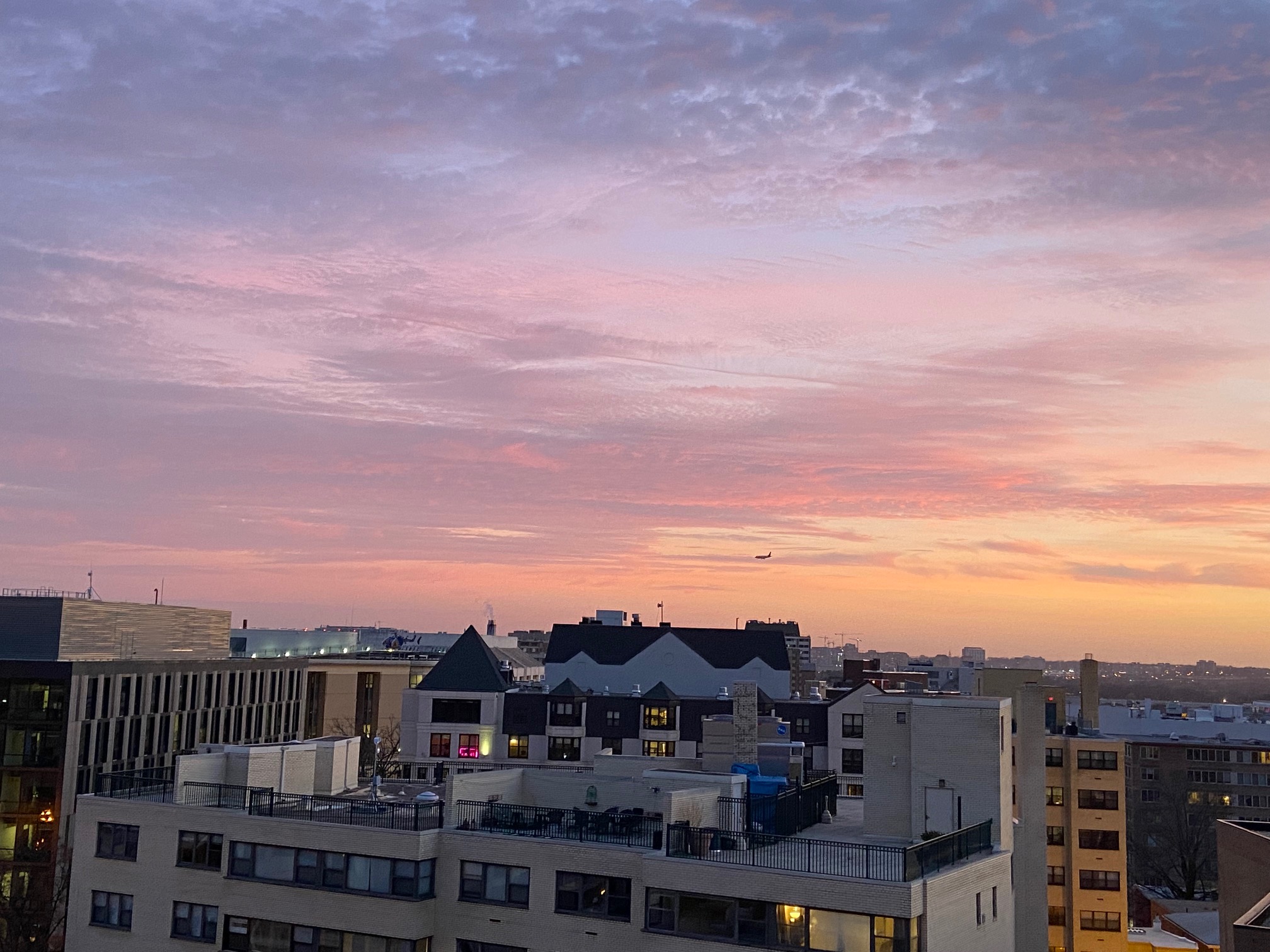
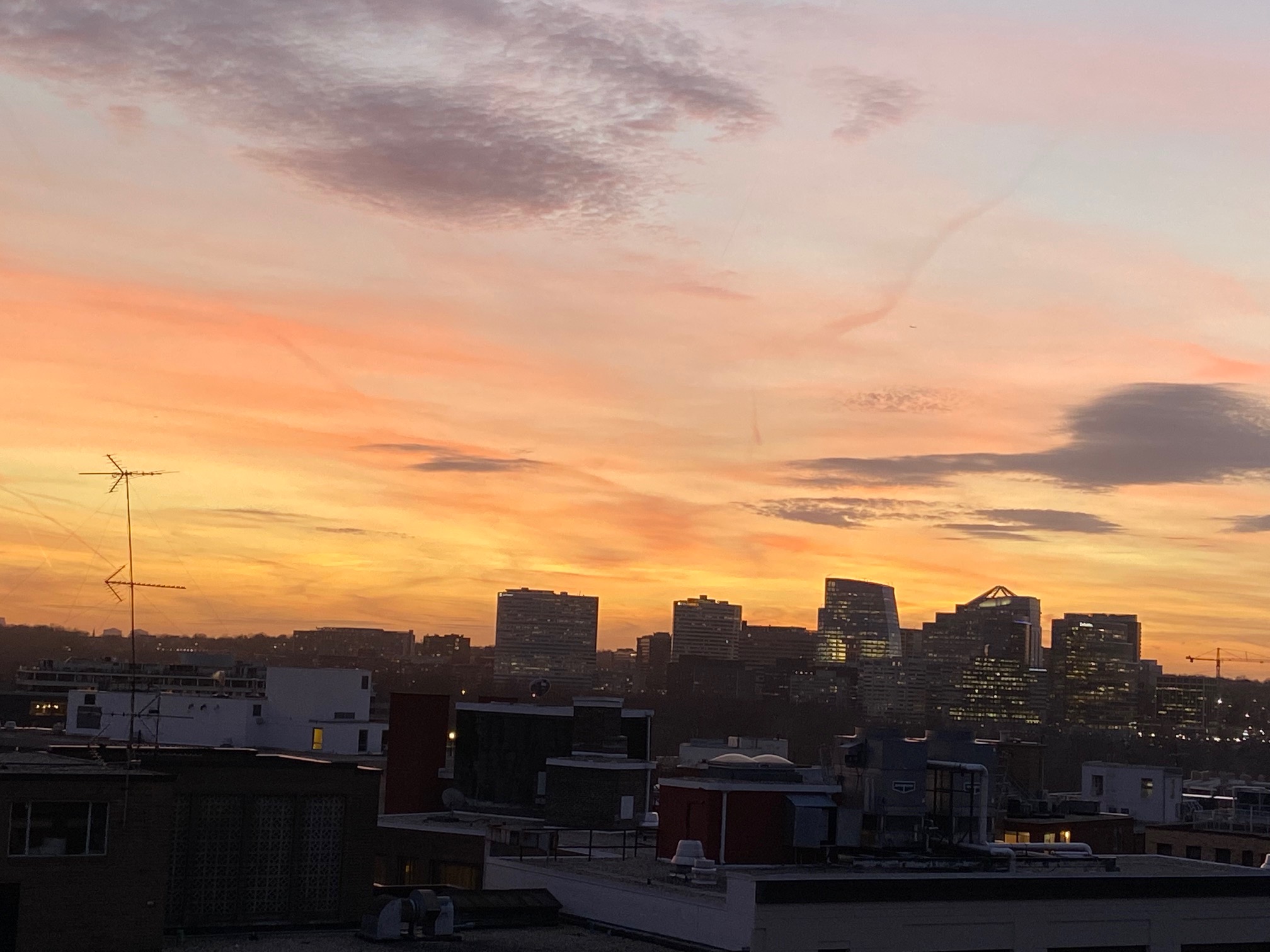
Cloudy skies as seen from the roof:

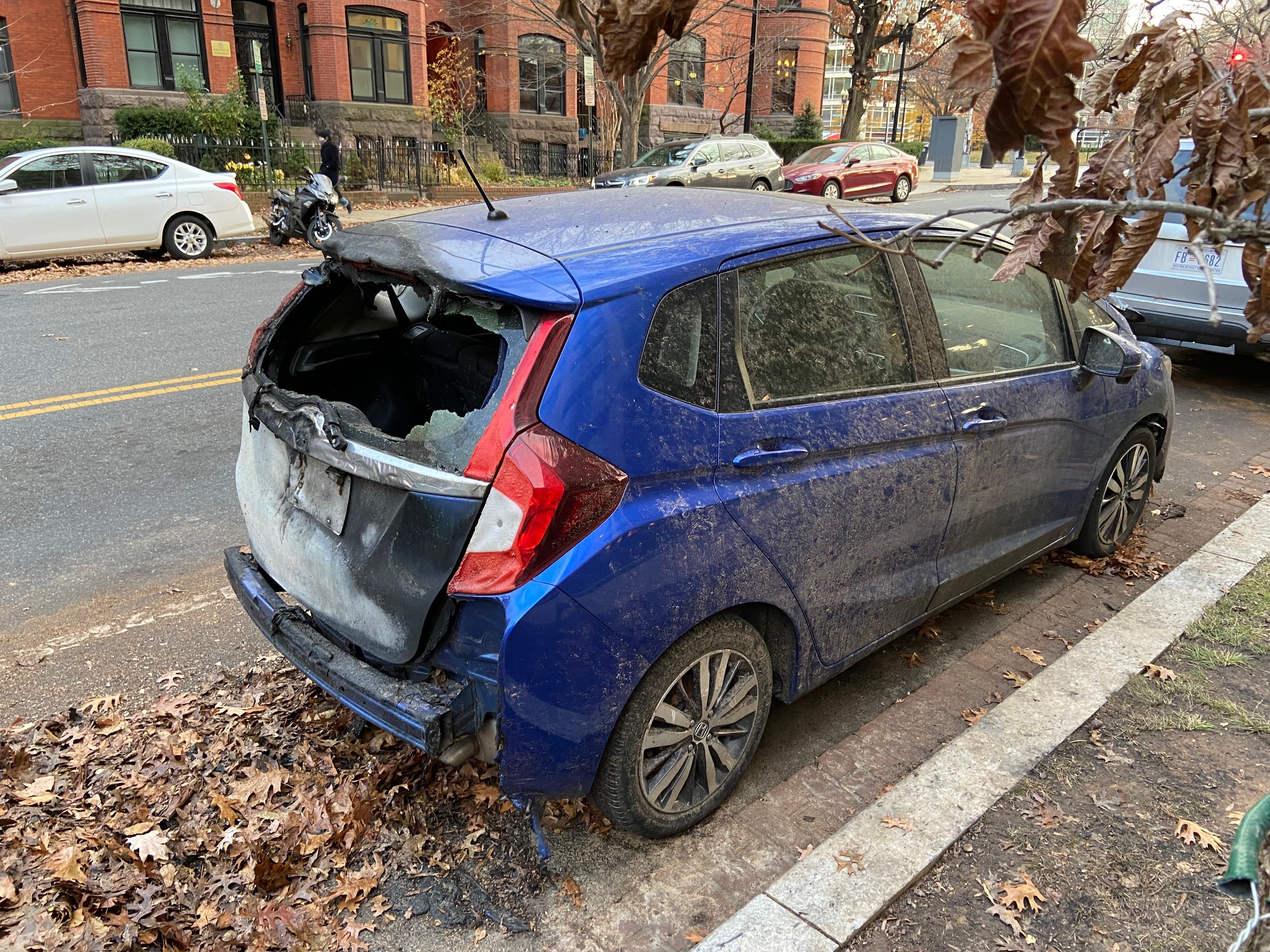
In the Yikes Department, these cars were, according to reports, parked on leaves that had been deposited in the curb and a hot catalytic converter did its thing. I don’t know whether that’s really what happened, but Yikes.

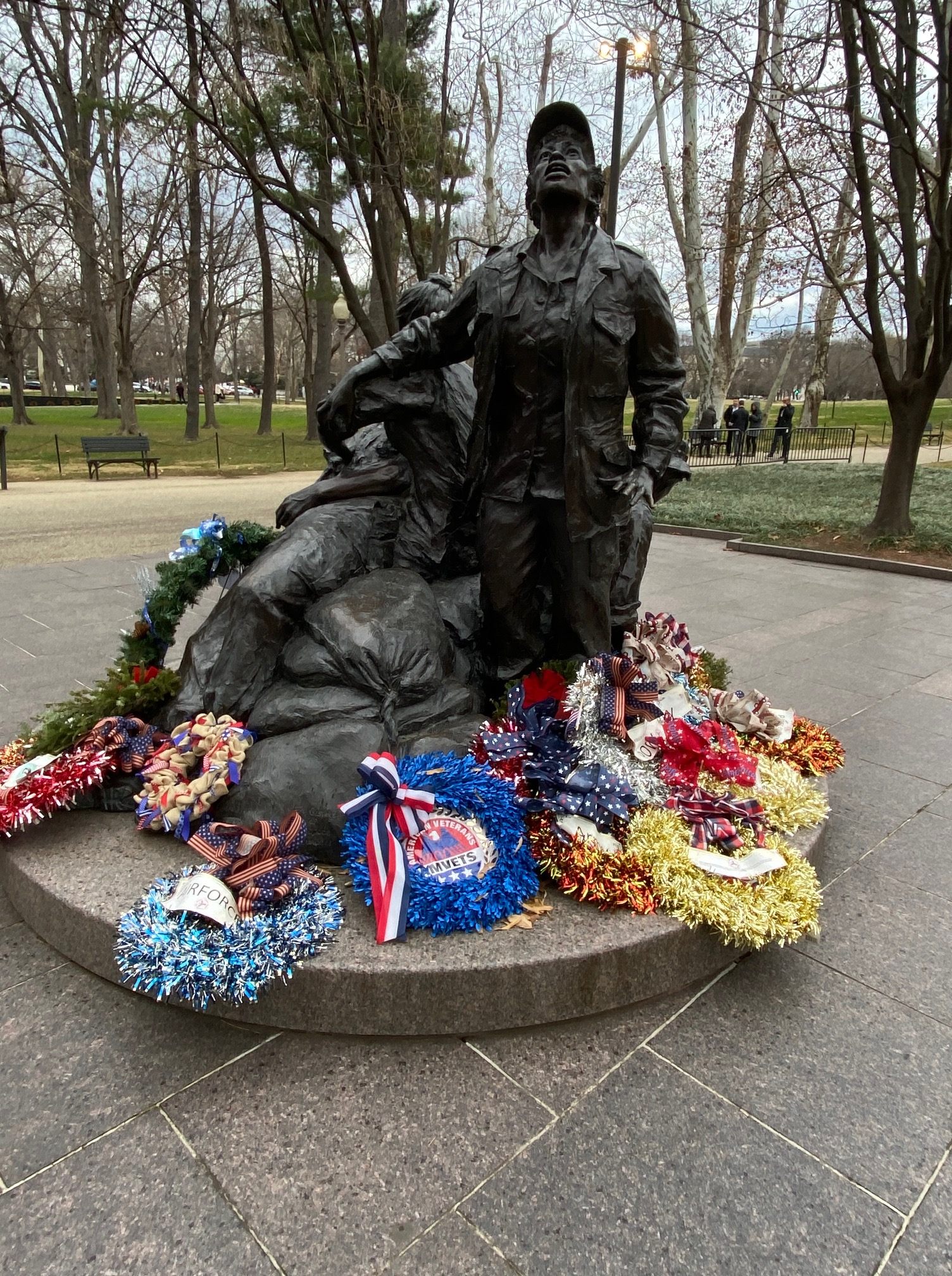
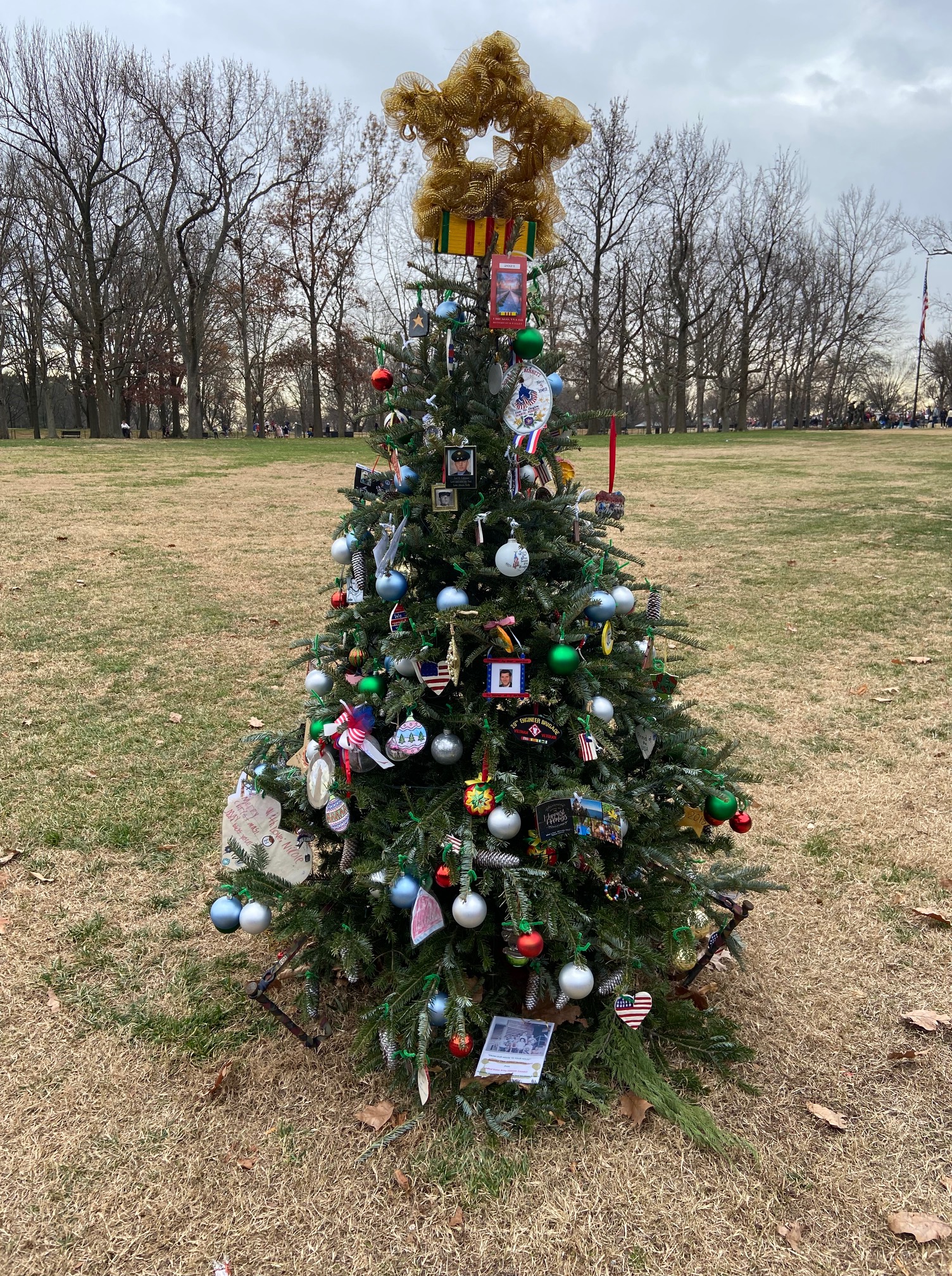
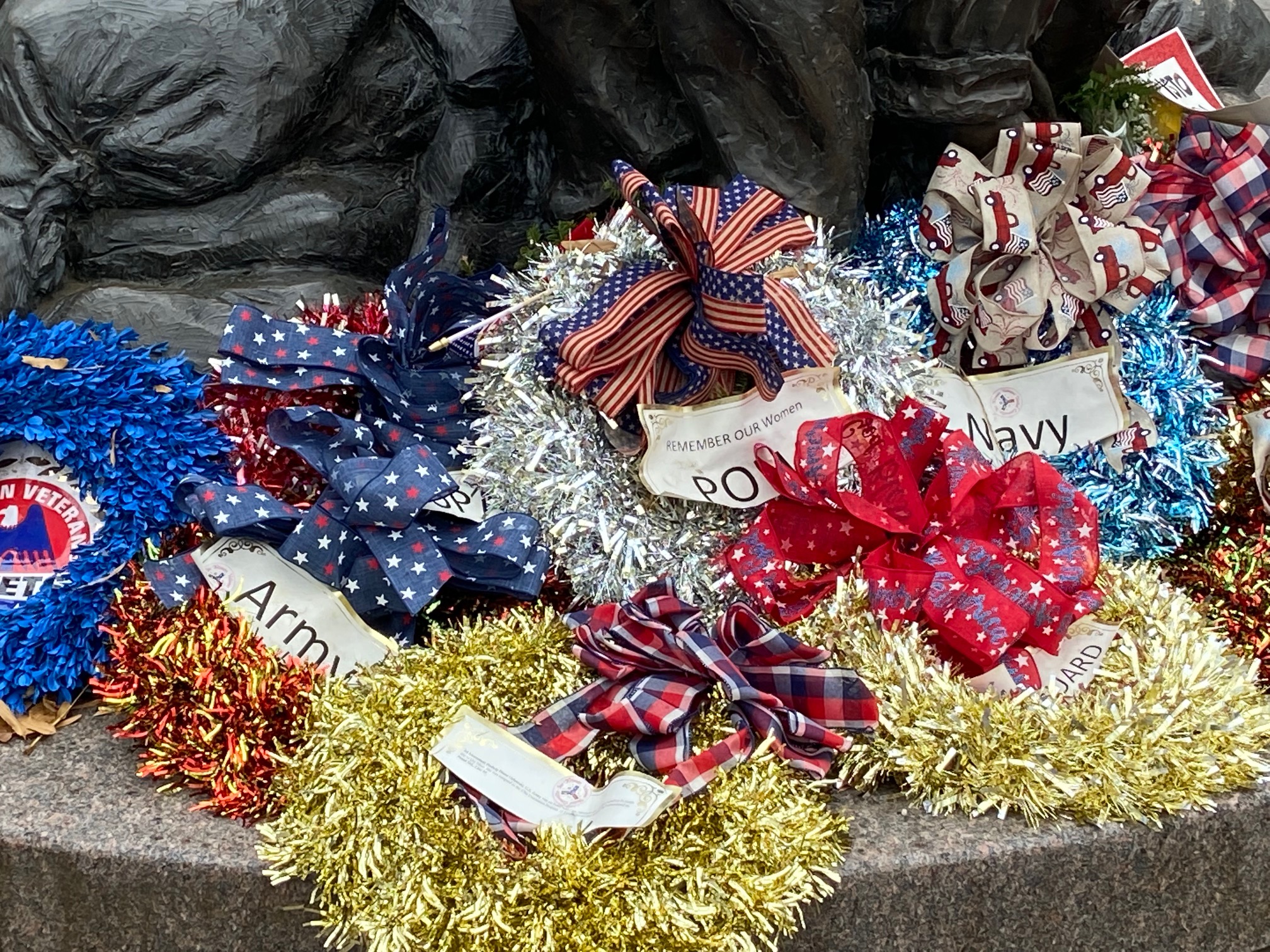
On Christmas Day, we visited the National Mall to get some fresh air and see what was going on. Generally, it was a normal-looking day, as these photos show. Many visited the military memorials.

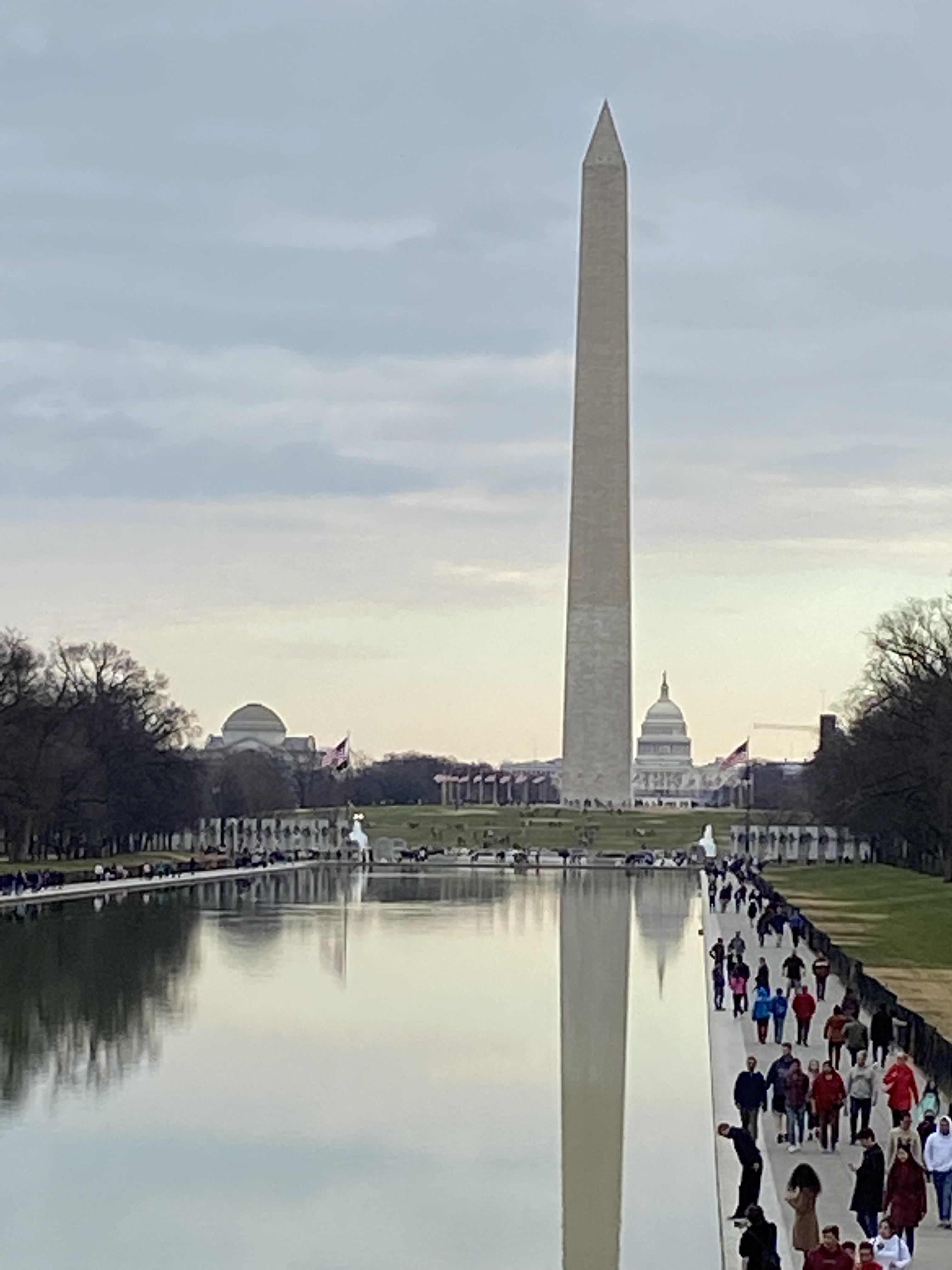
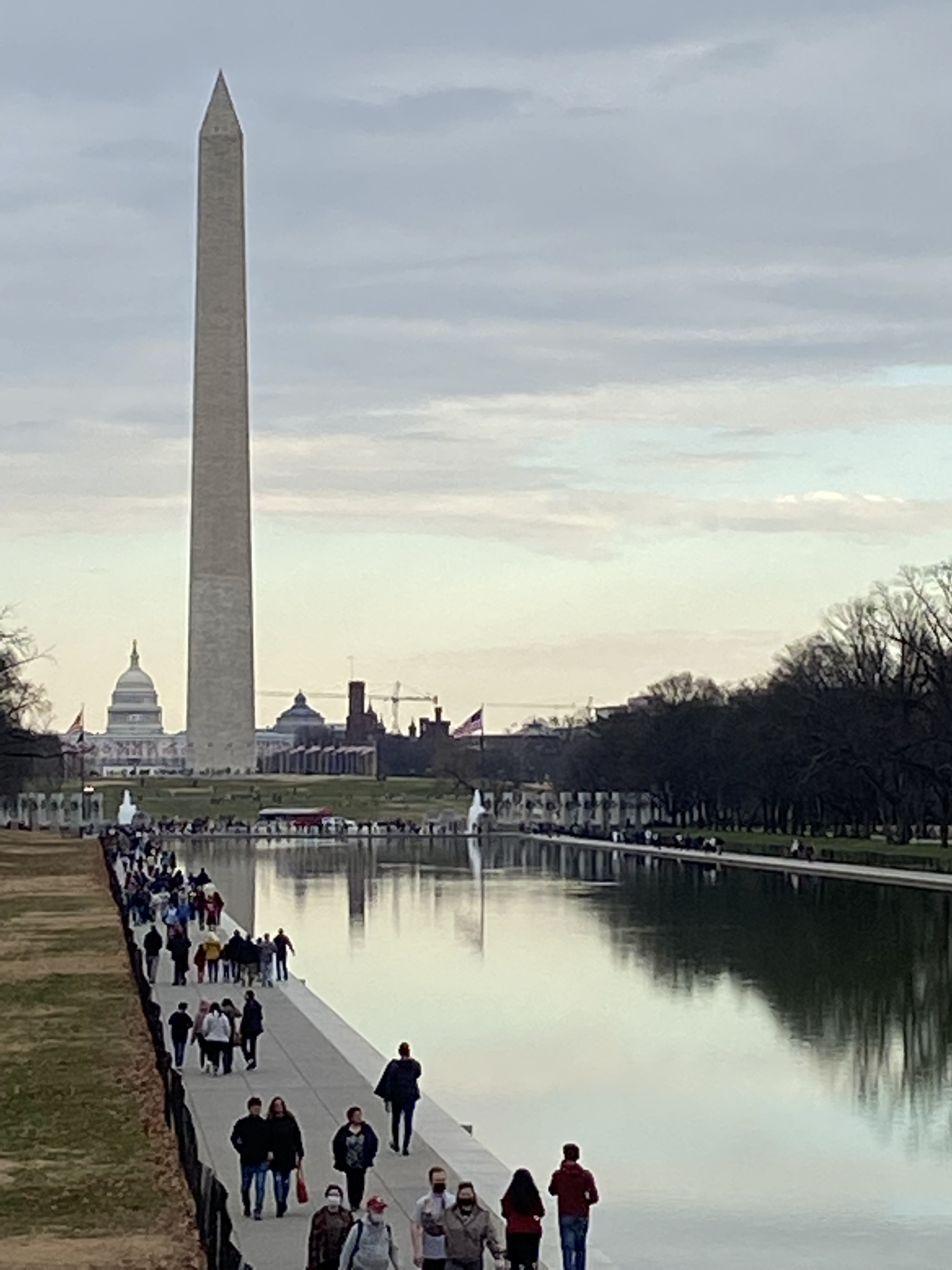
Some walked along the Reflecting Pool.

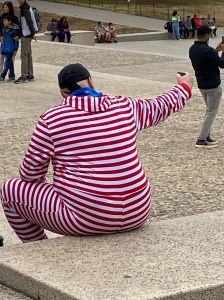
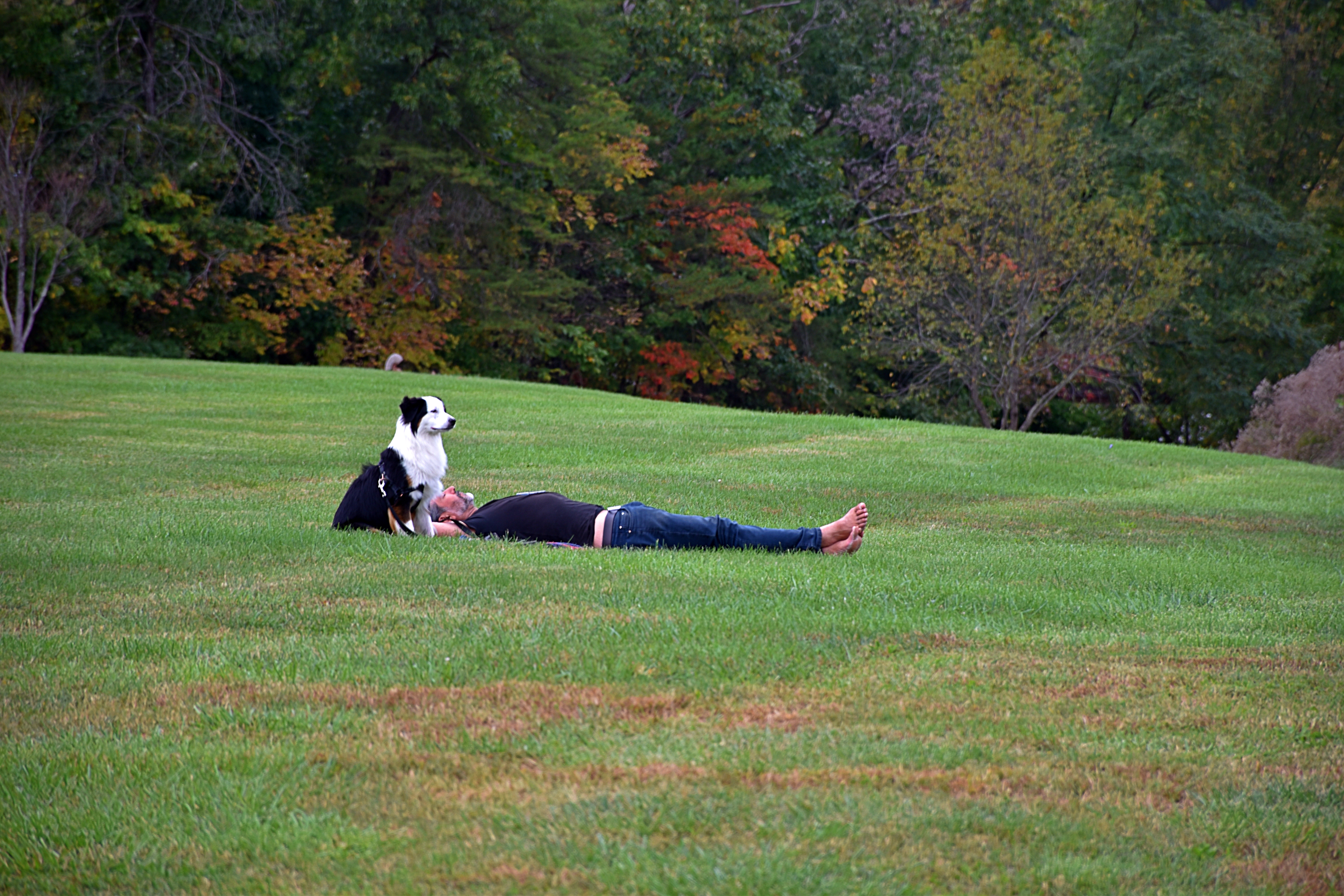
One person visited with himself. We’re pretty sure he enjoyed the experience.

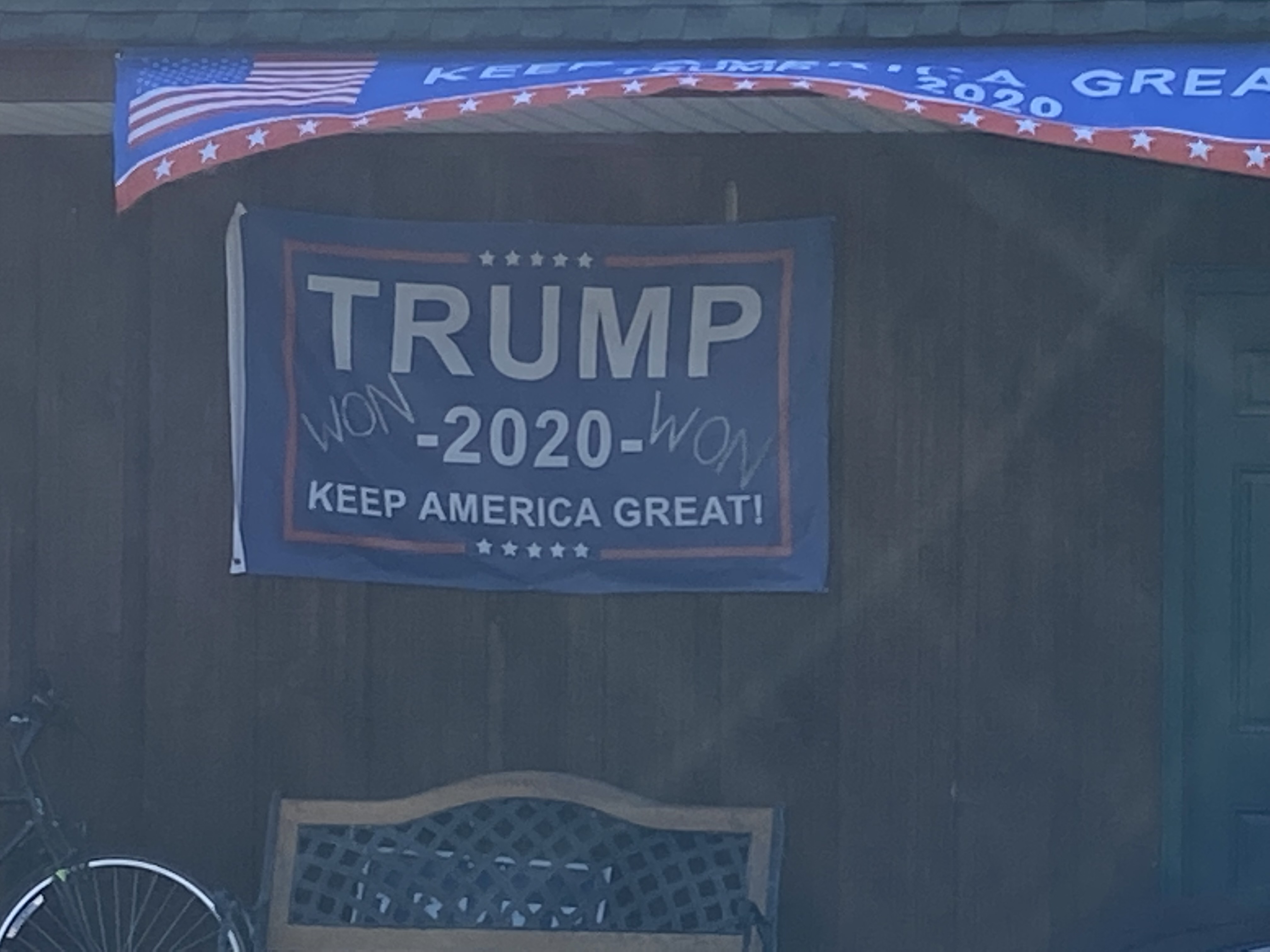
A few days later we drove into the Virginia countryside to introduce my stepdaughter to the wonders of Hill High Orchard and pie place extraordinaire, about which I have previously written. The plan was to eat lunch outside at a restaurant in Bluemont, VA. When we arrived, however, we saw these “signs” hanging from a building on the property:

We returned to the car and went elsewhere. We will NEVER eat at a place owned by people who believe Trump won the election. Not now, NOT EVER.

Which brings us to Meme Time. Someone wise once said that a picture was worth a thousand words. I think that’s mostly true. These memes/photos were copied from tweets and Facebook posts. Where they originated, I have no idea but kudos to the people who created them. They speak volumes about the challenges we face. There is no doubt the country has made many mistakes. In that sense it is “normal.” But we also aspire to higher ideals, and it is those that we say “define America.” So, with a smile on our faces, let us confront our ghosts and move ahead as a people dedicated to the principles stated in the Declaration of Independence:

We hold these truths to be self-evident ….


The Right to Vote

One necessary condition for the existence of a democratic republic is the ability of the people to control their government representatives. The control may be indirect and often untimely, but without the ultimate power in the hands of the governed, there is no democracy and no republic.

The essential manifestation of the power of the governed to control the governors is the vote. Without a watchful voting population, the baser instincts of politicians will eventually prevail, and the system will devolve toward uncontrollable authoritarian rule that benefits the governors at the expense of the governed.

To be effective, the right to vote must be available to everyone affected by the decisions of the governors. They must be able to exercise the vote with sufficient ease and frequency that the governors will remain cognizant of, and influenced by, the belief that if they fail to adequately and properly represent their electing constituents, they may be replaced. Since under normal conditions (e.g., no gerrymandered districts) the electing populace will be a mixture of viewpoints and interests, elected officials will often necessarily seek compromise and consensus to retain the consistent favor of at least a working majority of the electorate. When the interests of large electoral sectors are ignored consistently by political leaders, the normal conclusion is that gerrymandering is at work and politicians believe they only answer to a subset of the electorate. That in turn means that the interests and views of many voters are being ignored, that laws and policies will lag behind (often very far behind) the current views of the majority.

This is a complex and fraught business especially given the propensity of politicians to want to insulate themselves from the employment vulnerability that democracy necessarily imposes. Thus, professed fealty to the electorate and the “common good” often conflicts with the self-interest of employment security and the other fruits of power and influence. Hence the truth of the aphorism, eternal vigilance is the price of liberty.

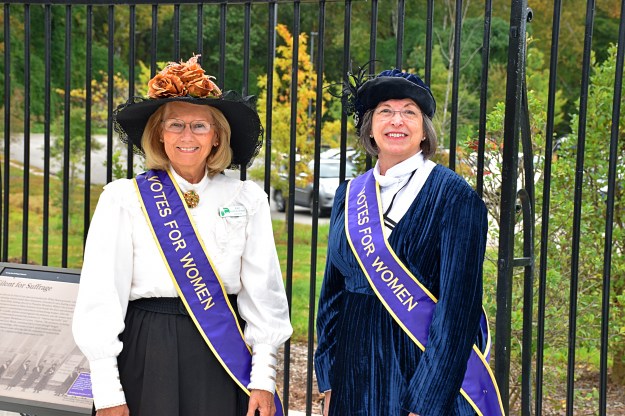
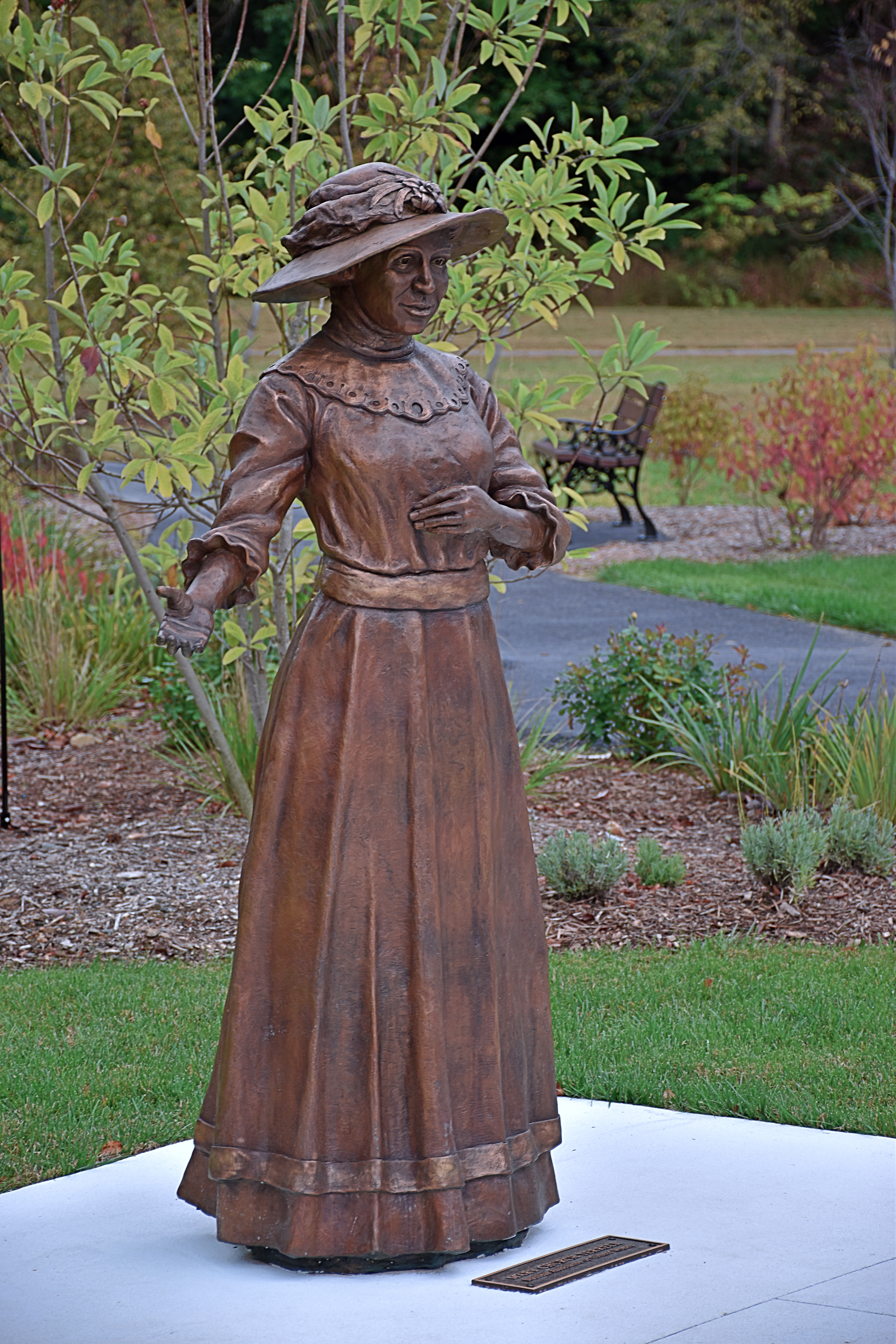
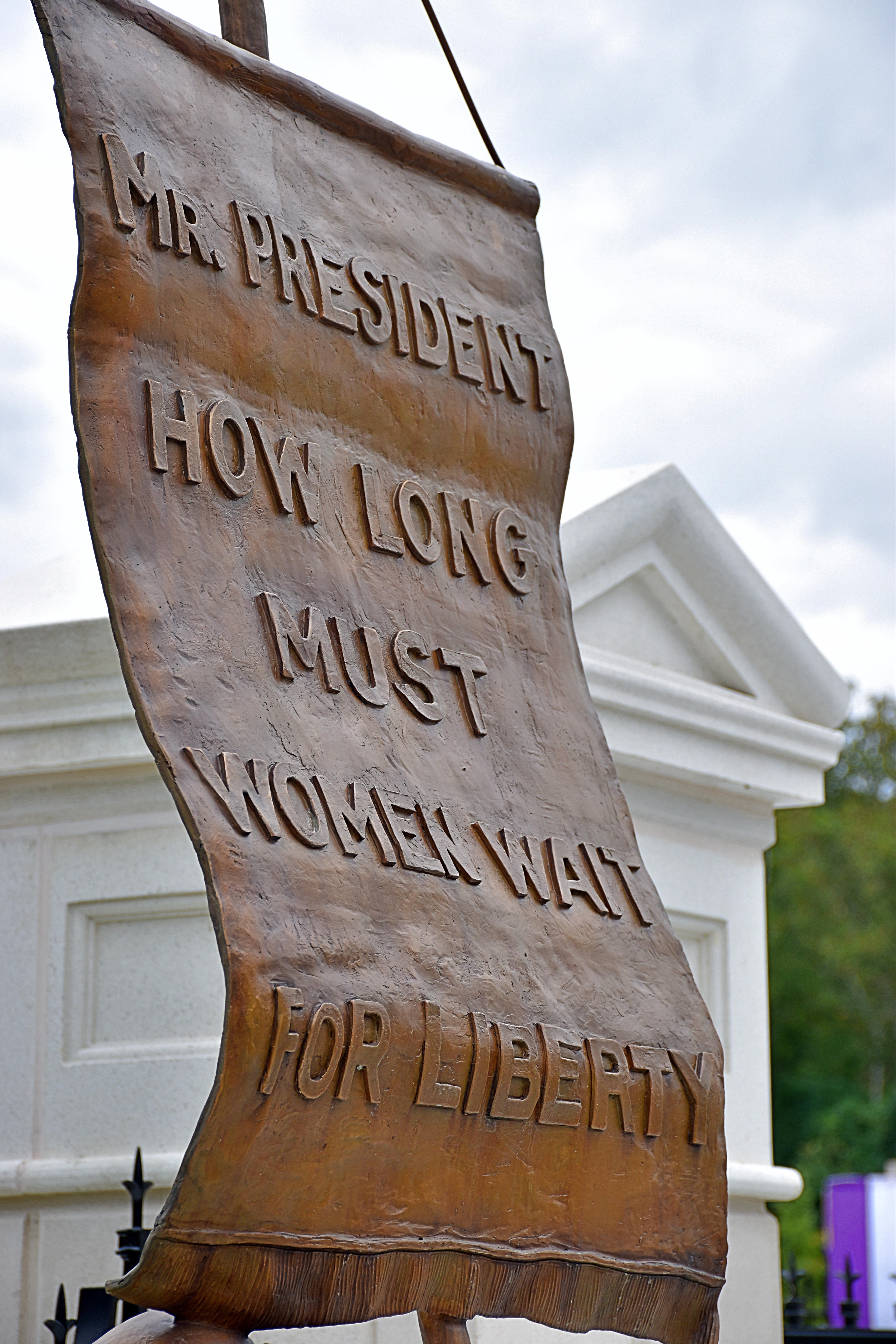
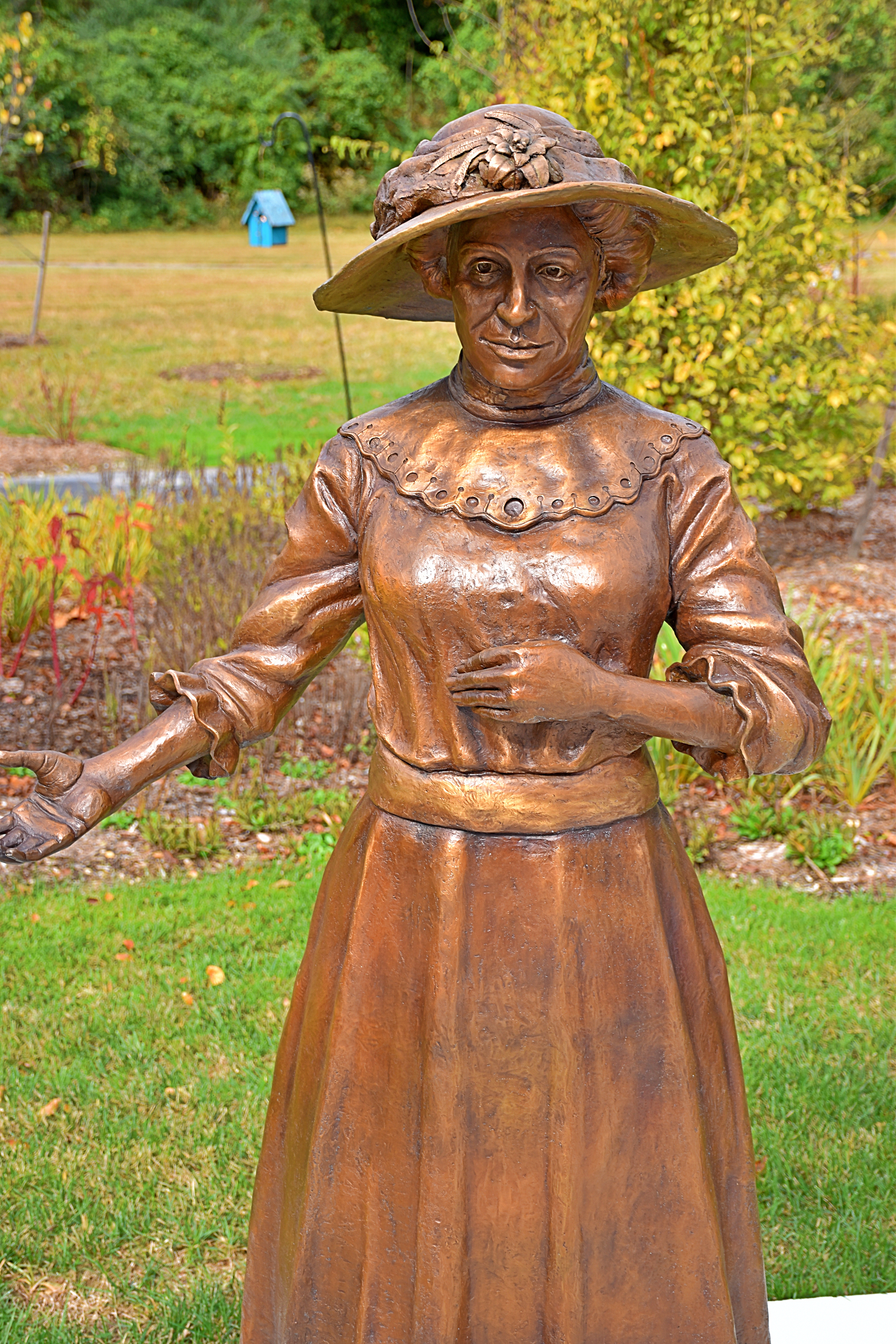
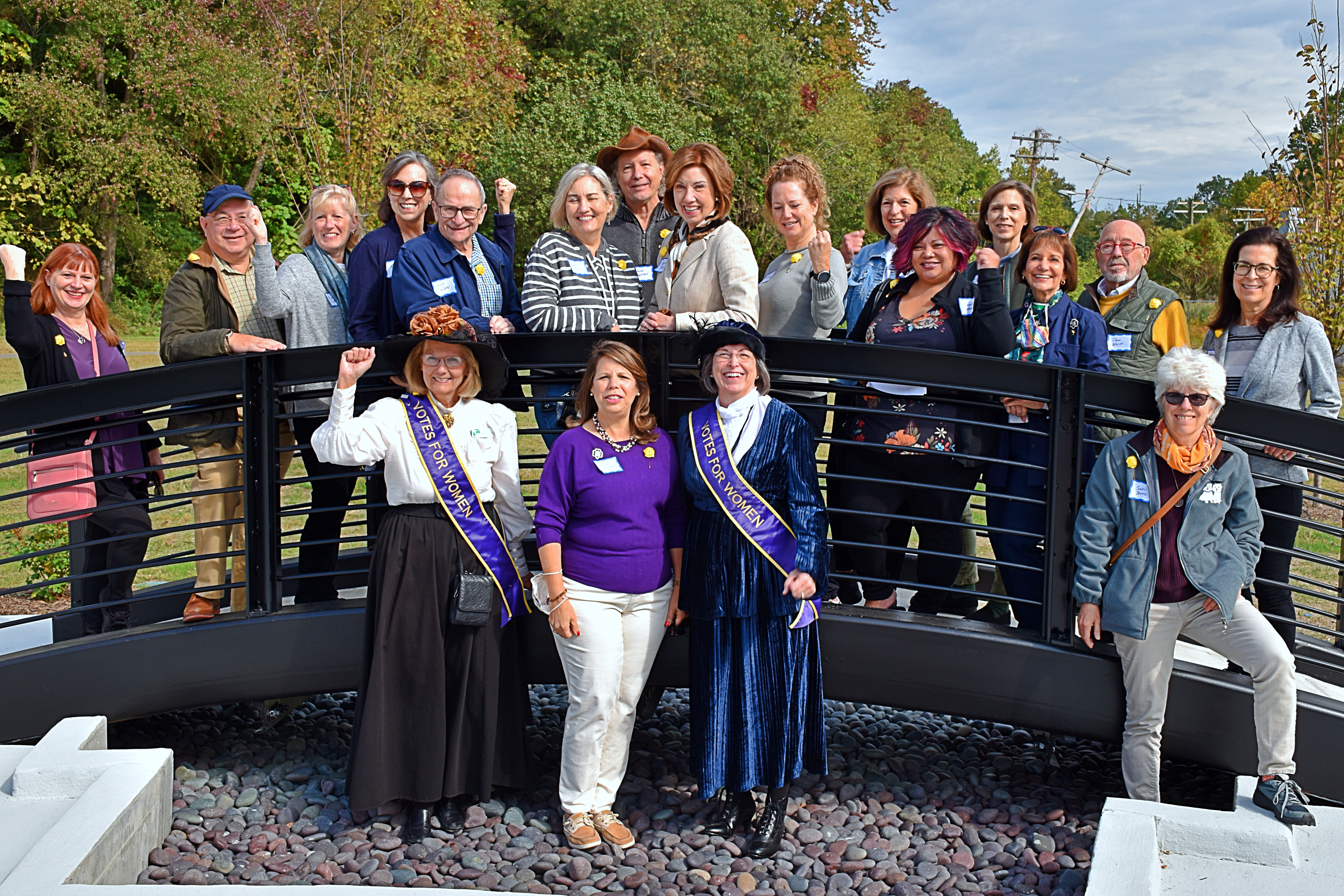
We were recently reminded of this, and more by the invitation of a good friend to attend a presentation of the Women’s Advisory Board of the Girl Scouts Nation’s Capital at the Turning Point Suffragist Memorial in Occoquan Regional Park. We learned some interesting history not covered in many American history curricula. Inconvenient truths, it seems, are everywhere.

In a nutshell, the right to vote for women was not included in the original Constitution. Men resisted the idea for a very long time, despite persistent efforts by women to secure equal standing at the ballot box. While there are varying explanations of what led to the eventual drastic measures, the common point in the narratives is that women suffragists took to picketing the White House during the Woodrow Wilson administration. Wilson’s support for female suffrage had been unenthusiastic at best.

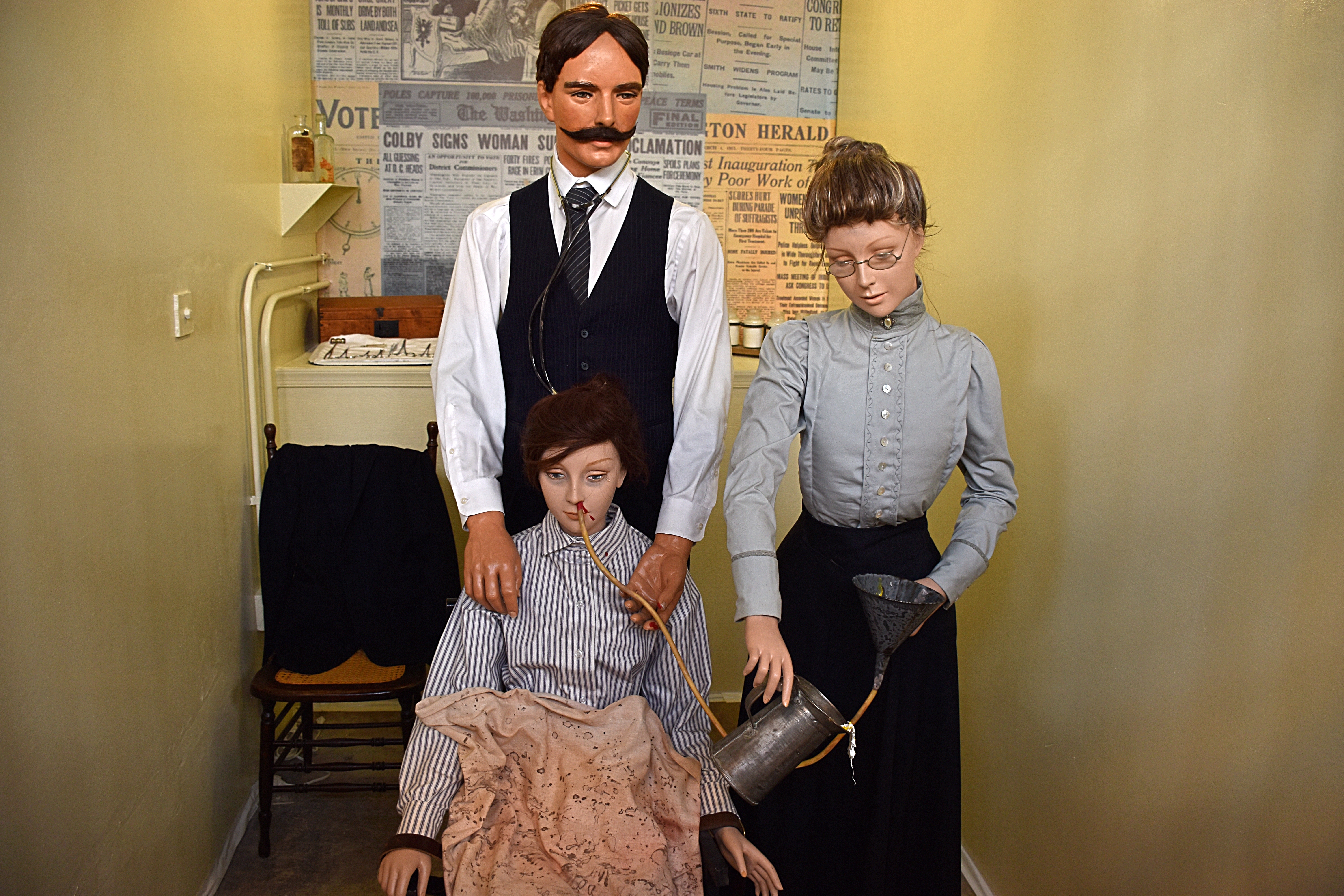
Eventually, the picketers, were arrested and jailed. They chose jail rather than pay fines they felt were unjust. In jail, fed rotten food with maggots, many of the women refused to eat and were force-fed with funnels and tubes. A diorama of this torture can be seen at the Lucy Burns Museum housed in the old Lorton Reformatory just up the road from the Suffragist Memorial. Lorton has now mostly been converted into an arts center, but the Burns Museum is must-see.

The Memorial is supported by the Girl Scouts National Capital. Lidia Soto-Harmon, the CEO of GSNC advised me that,

We are thrilled that in the design they created a bridge that will allow generations of Girl Scouts to “Bridge” to the next level in Girl Scouting.  We had two long time Girl Scout champions, that made a donation to the memorial on behalf of our council, and we are grateful to be listed along with the many contributors.

That bridge is pictured below with the attendees at the event.

Patricia Wirth, Executive Director of the Turning Point Suffragists Memorial Association, presented an extemporaneous and compelling history lesson for the enthusiastic group that attended. Pat is pictured here on the left, with Nancy Lyons Sargeant, who following long involvement in the TPSMA, has served as the Chairman of the Board since 2015.

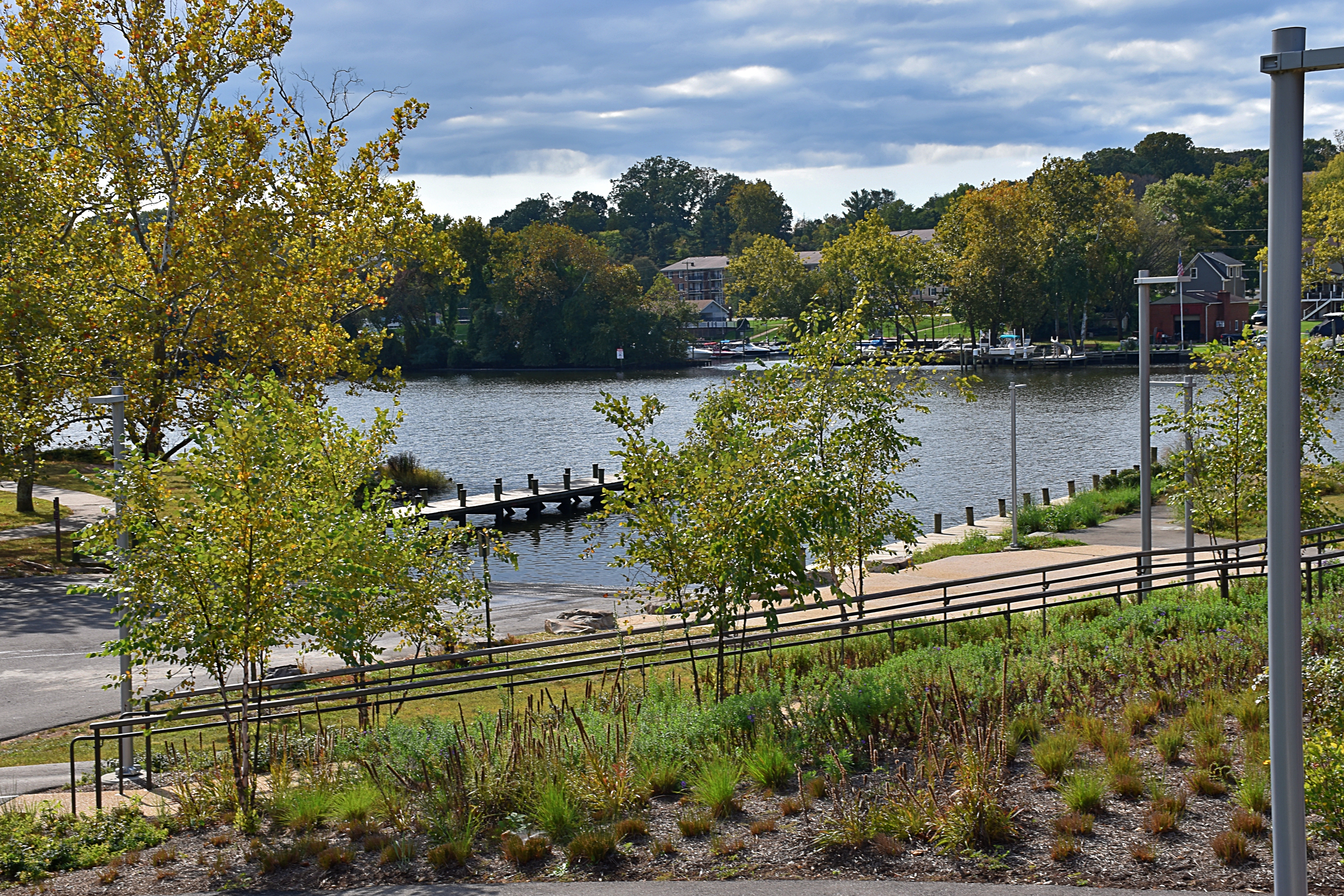
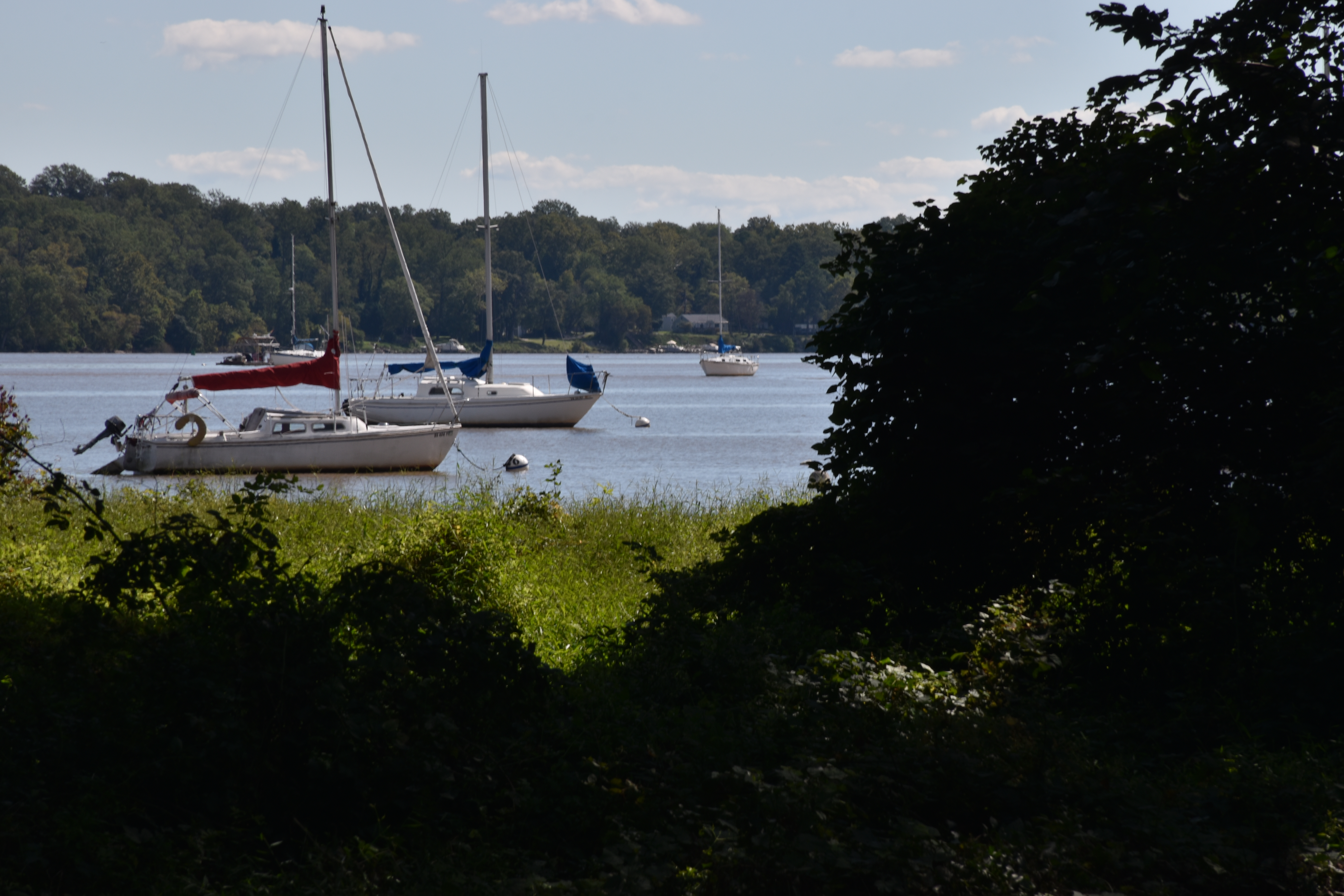
A trip to Occoquan Regional Park is worthwhile for other reasons. There are paved and unpaved paths of varying degrees of difficulty, a very nice café with outdoor seating, great views of the Occoquan River

and plenty of space to picnic and play. But you don’t want to overlook the Suffragist Memorial. It’s an excellent learning opportunity for some history often overlooked, and especially for young people who need to understand all aspects of America’s history so, hopefully, they can improve on it in the future.


Artists Speak in Tongues

I often don’t understand. I recently had this experience again at DC’s Hirshhorn Museum https://hirshhorn.si.edu/about-us/ when we visited the huge Laurie Anderson exhibit, https://hirshhorn.si.edu/exhibitions/laurie-anderson-the-weather/ that will be displayed until July 31, 2022.

The museum describes Anderson as a “groundbreaking multimedia artist, performer, musician, and writer.” While I’m not qualified to judge, the description seems accurate. She’s going to be performing live at the museum next year, at times yet to be published, and, to my surprise, I think I want to see her. This woman has designed new musical instruments! Hirshhorn describes her thus:

As a Grammy Award-winning musician, performer, writer, and artist, Anderson has an international reputation as an artist who combines the traditions of the avant-garde with popular culture. Anderson’s theatrical works combine a variety of media, including performance, music, poetry, sculpture, opera, anthropological investigations, and linguistic games, to elicit emotional reactions. As a visual artist, Anderson has been shown at the Guggenheim Museum, SoHo, and extensively in Europe, including the Centre Georges Pompidou in Paris. She has also released seven albums for Warner Brothers, including Big Science, featuring the song “O Superman,” which rose to No. 2 on the British pop charts. She is currently Charles Eliot Norton Professor of Poetry at Harvard University.

Her particular style/mode of artistic expression is not one to which I have been drawn in the past, but the two expressions below got my attention and I am something of a convert:

These photos are but a tiny portion of the full exhibit that includes many forms of multi-media, including video of Anderson dancing with electronic devices strapped to her body that make drum sounds when slapped.

You probably should read this before visiting the exhibit, https://www.nytimes.com/2021/10/06/magazine/laurie-anderson.html, but visit you should. I am still thinking about what I saw. Such stimulation of a distracted mind (you know, the destruction of our democracy) must mean something important is going on. Note that when the Hirshhorn first proposed a retrospective on Anderson’s long career (74 now), she refused and proposed an all-new show.

Places to Go, Things to See

The weekend looms. A good opportunity to review some of the places we’ve visited recently for relief from the continuing gloom of a city not yet recovered from COVID’s shutdown of the economy.

Over a span of a few months we have been on the road quite a bit. A very brief sample of some of the available delights follows, starting with the most distant from Washington:

Savage River Lodge

This place is located at the end of a 1.5 mile gravel road in upper northwest Maryland, best attempted only if you have at least a front-wheel drive vehicle and (in winter) 4-wheel drive. The lodge has a restaurant with outdoor seating and a collection of cabins and yurts for rent. The site is remote and hilly but abounds in natural beauty. It is an easy drive to Grantsville, MD and close to Frostburg.

In one day we saw about a dozen deer, a personal record. The Casselman Bridge in the last photo is in Grantsville whose principal attraction is the Hill Top Fruit Market which is mainly a candy store, lined with bins of all manner of sweet stuff, including many you haven’t seen since childhood. You can also buy fresh fruits and vegetables there. The Fernwood Soap shop and the flowers are in the Spruce Forest Artisan Village, adjacent to the Penn Alps Restaurant & Craft Shop.

Be advised that for a more accessible but still interesting “remote” experience, the cabins in New Germany State Park are very hospitable and inexpensive. They are a fun place to use as a base for exploring the area, maybe doing a little fishing, rafting and such.

Skyline Drive

This, of course, is the 105-mile mountain-top ride in Shenandoah National Park in the magnificent Blue Ridge Mountains of Virginia, Don’t  think about driving the full length of the Drive unless you plan to stay overnight at some of the few on-site lodges. The speed limit is low and the road curves, rises and falls incessantly so fast driving is not in the cards. Besides, you’ll miss the scenery.

Great Falls Park After Hurricane Ida

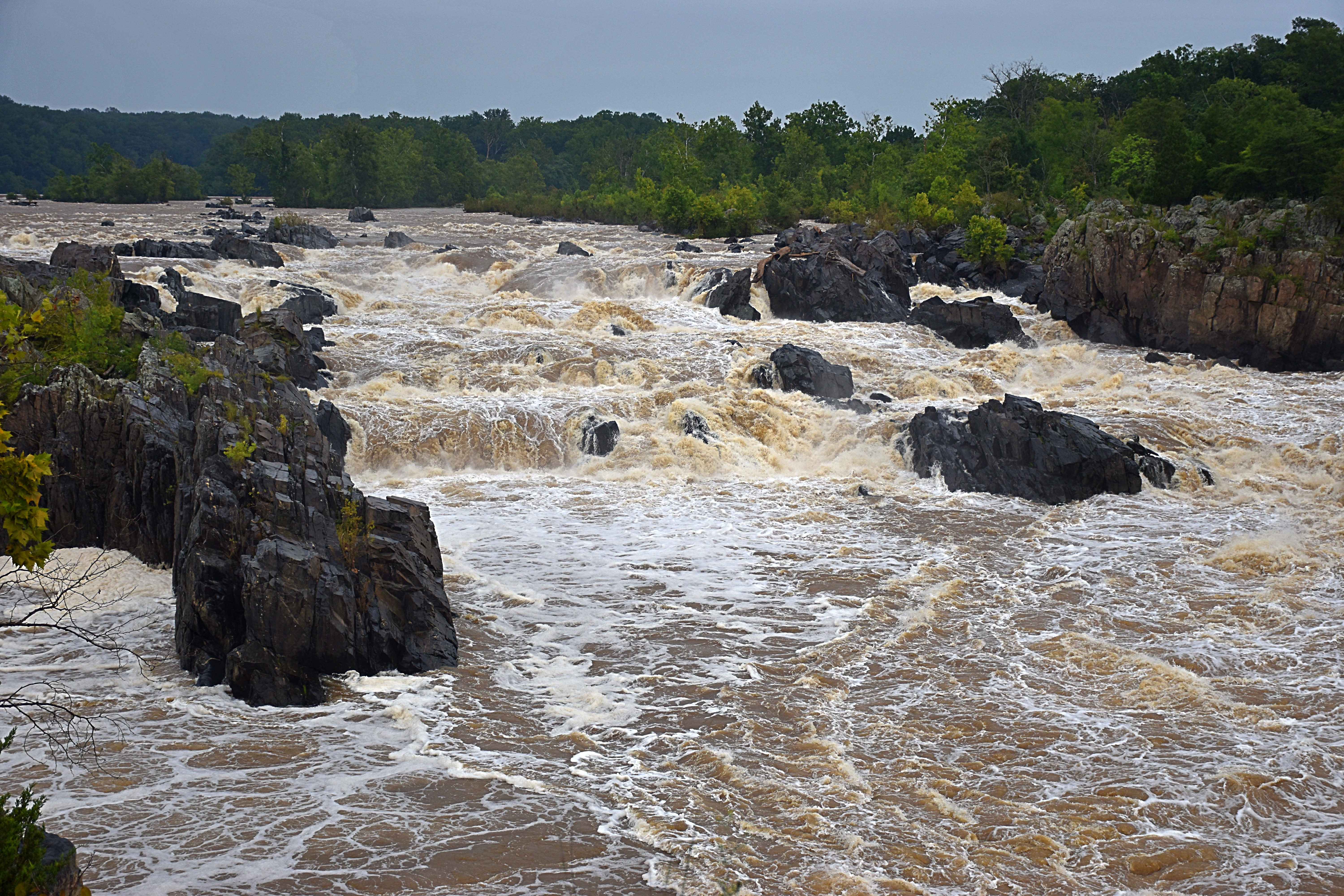
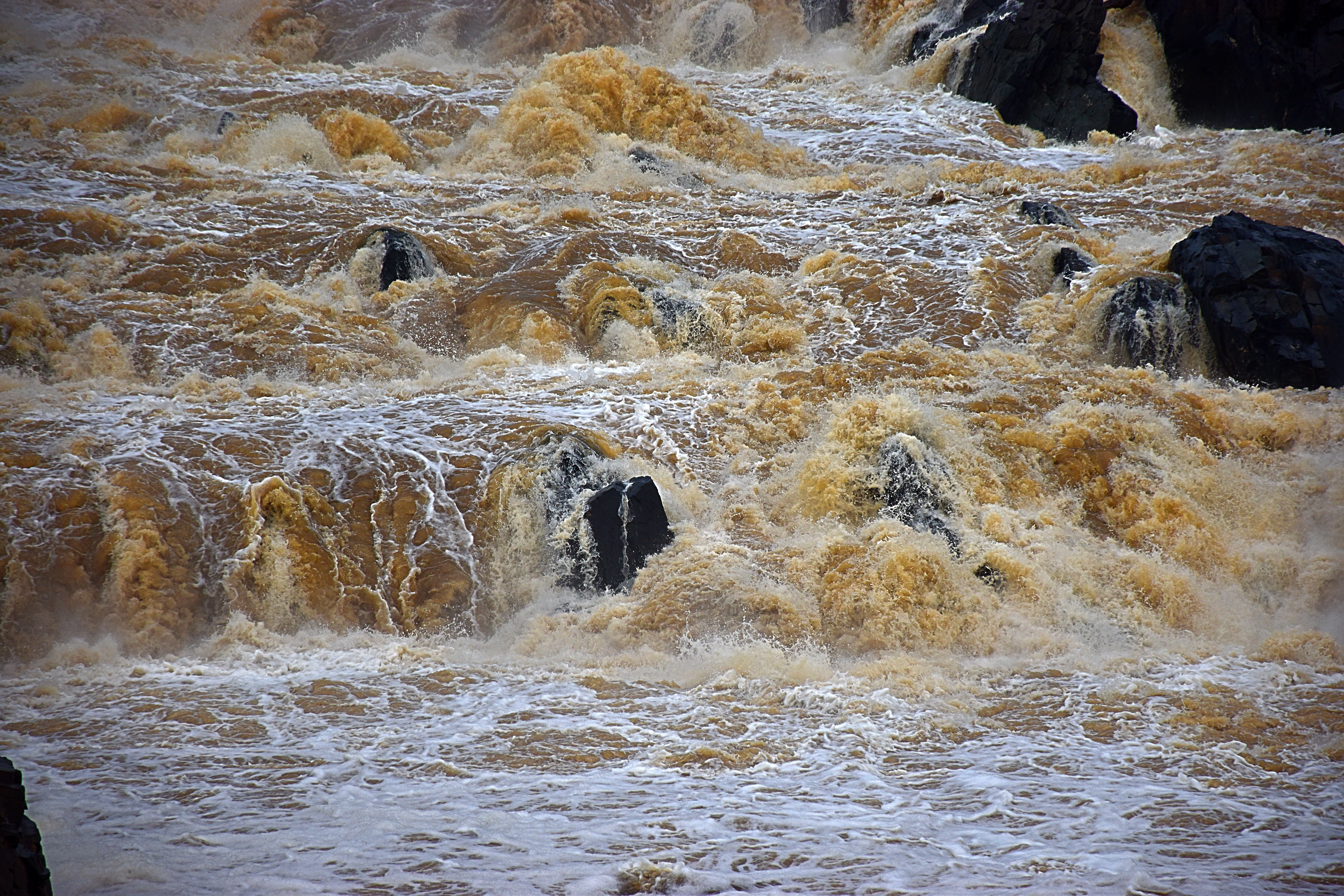
One of the interesting aspects of Great Falls Park is that it is radically affected by upstream rainfall, which is evident in this small sample of photos showing the impact of Hurricane Ida having dropped massive water upstream. The water is high and brown. Impressive but you wouldn’t want to fall in.

Dyke Marsh

This little gem, about two miles roundtrip, flat as a pancake, can surprise you with unexpected visual delights. In the right season, red-wing blackbirds make the adjoining vegetation their nesting grounds. The Potomac River runs alongside. There are usually a few walkers along the way but even on weekends, we have found Dyke Marsh trail uncrowded and pleasant for a short easy walk. My wife’s uncanny ability to spot creatures in the wild accounts for the grasshoppers and Blue-tailed Skinks that I would have missed entirely.

Sadly, there is always evidence that humans have been here before us, seemingly the unavoidable consequence of so much nature so close to so many people who just don’t understand:

Tregaron

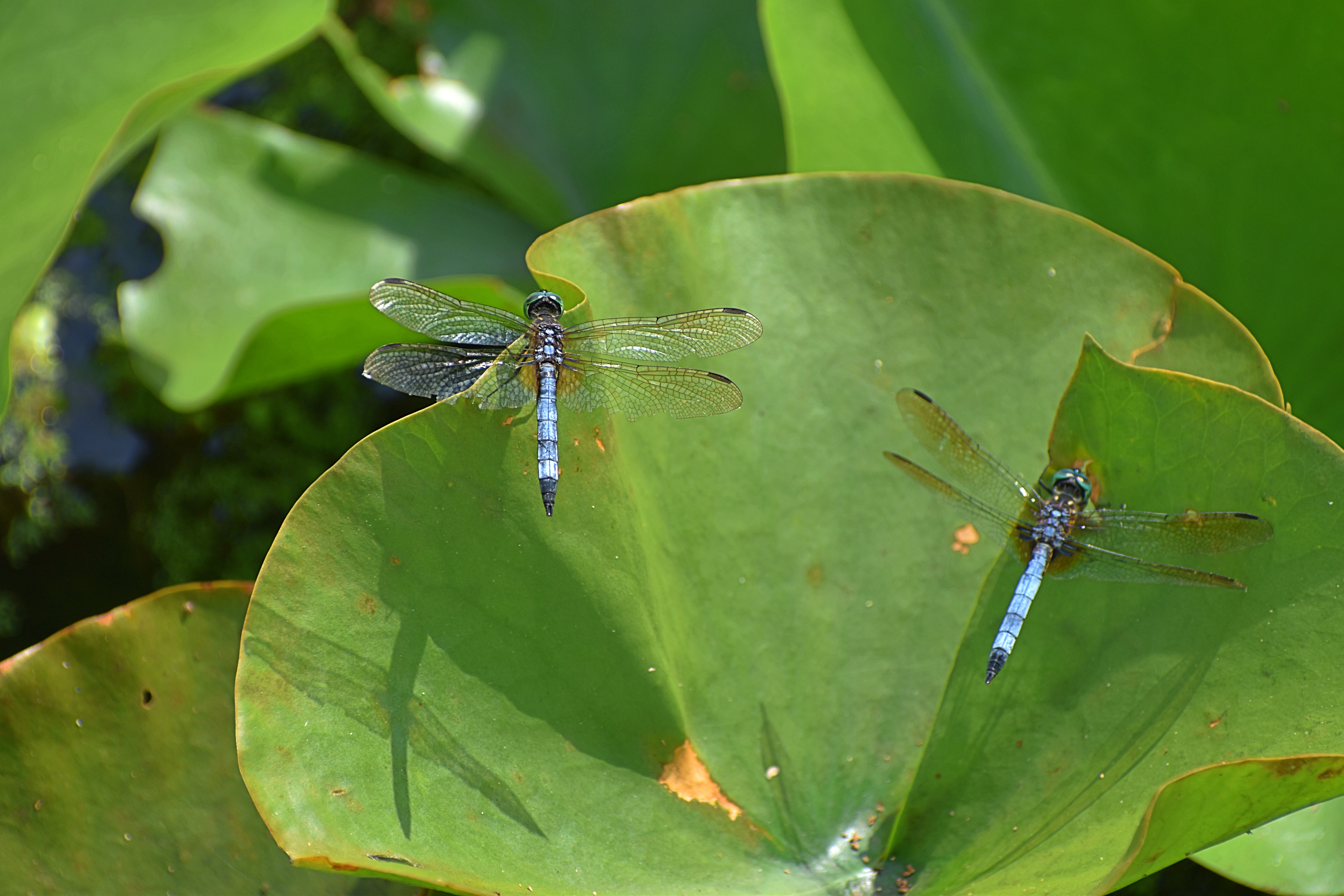
Finally, even closer to [our] home is Tregaron Conservancy, entered most conveniently from either Macomb Street NW or Klingle Road NW. It is situated between the Cleveland Park and Woodley Park neighborhoods just west of Rock Creek Park. The park is small but considering it’s in the middle of a city neighborhood, it has some interesting features, the best of which, for us, was the Lily Pond, small but full of life.

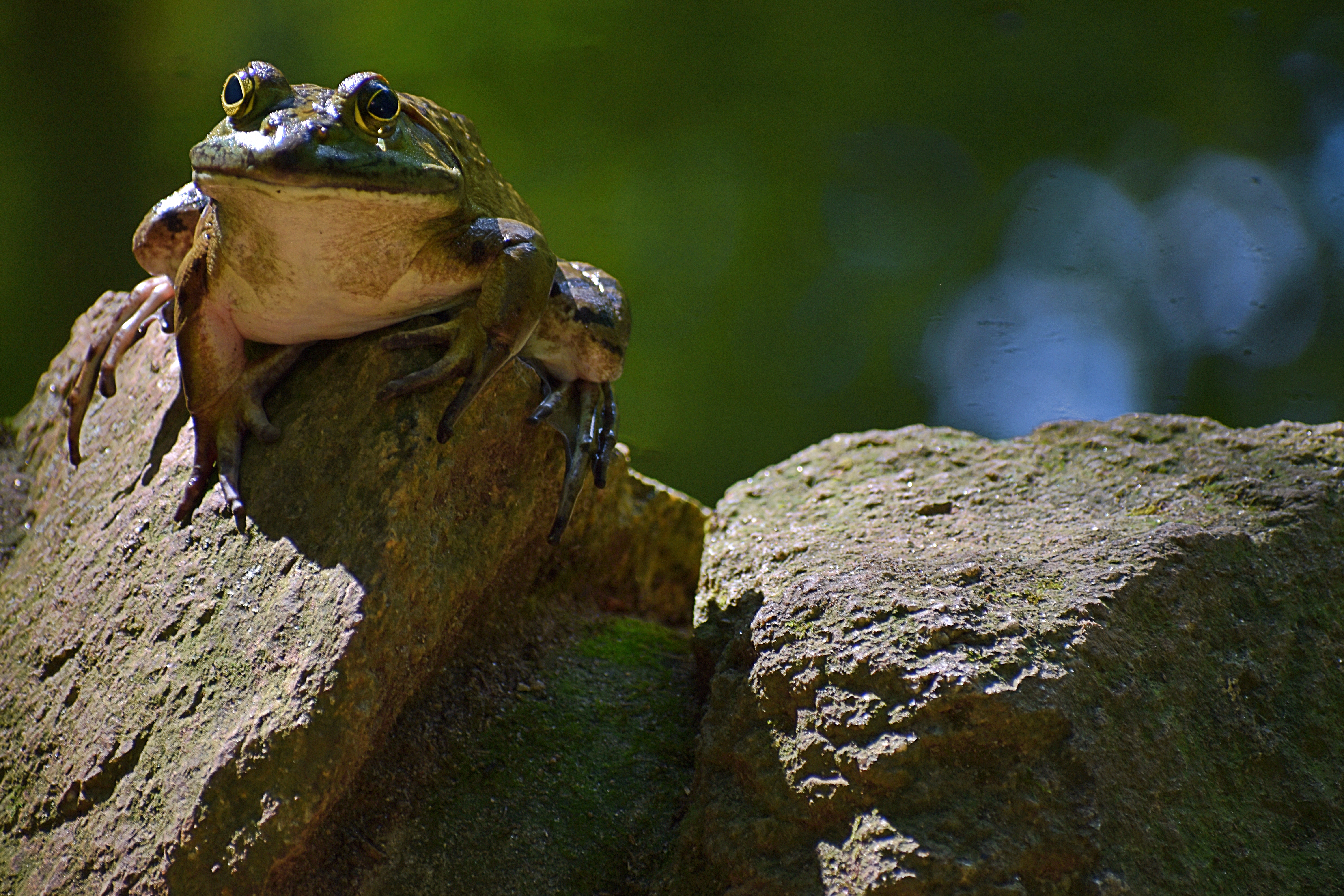
There were, of course, many more frogs and dragon flies, as well as a small armada of goldfish. The frogs are quite bold, as these photos attest.

Frogs have featured in Japanese haiku for centuries and somehow capture the essence:

The old pond

A frog leaps in.

Sound of the water.

What else is there to say?

Conclusion

We continue to be pleasantly surprised at the natural resources available around the Washington area and are often surprised by the wildlife that thrives in our midst. Walking slowly and observing quietly usually pays off.


More Than the Heart Can Bear

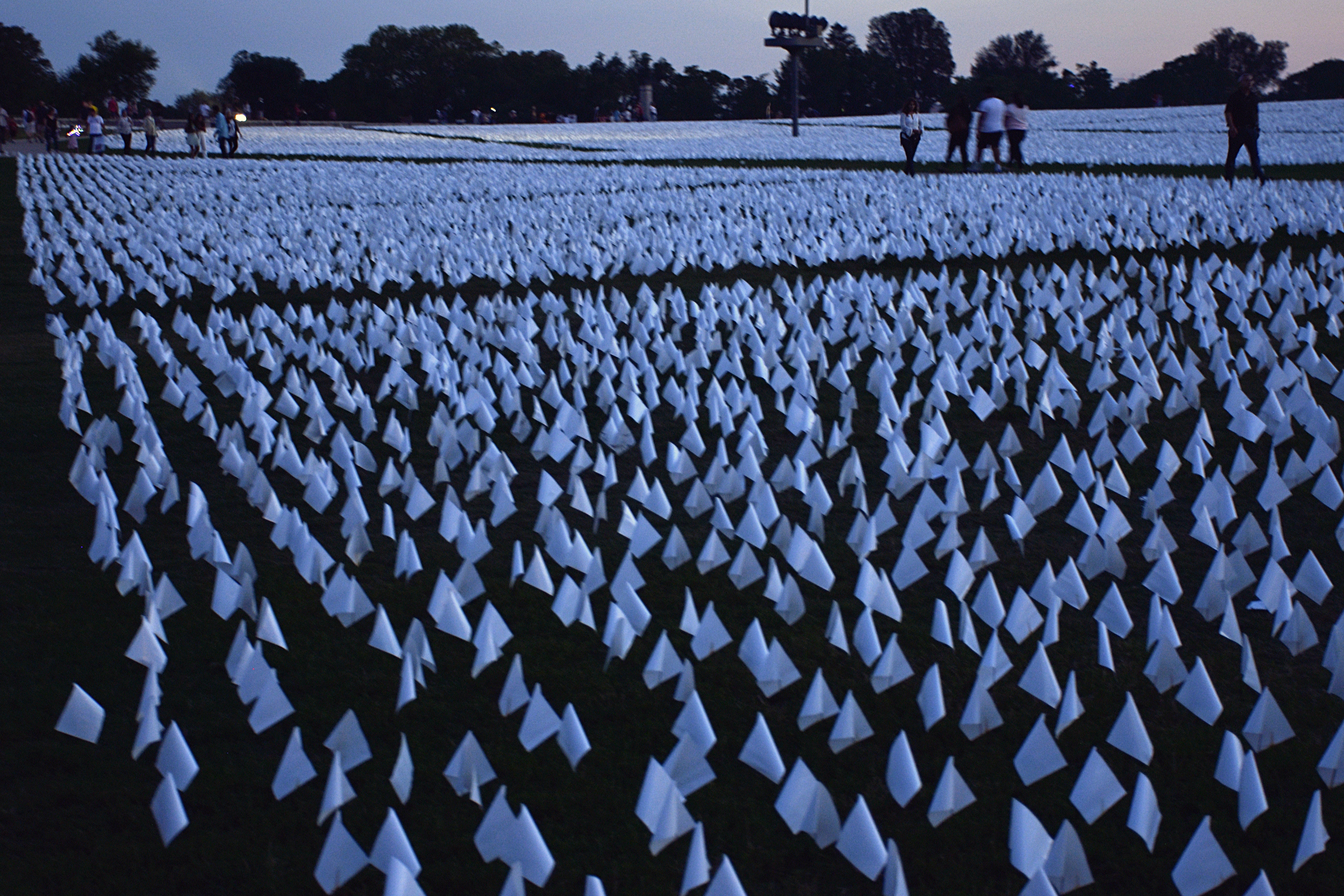
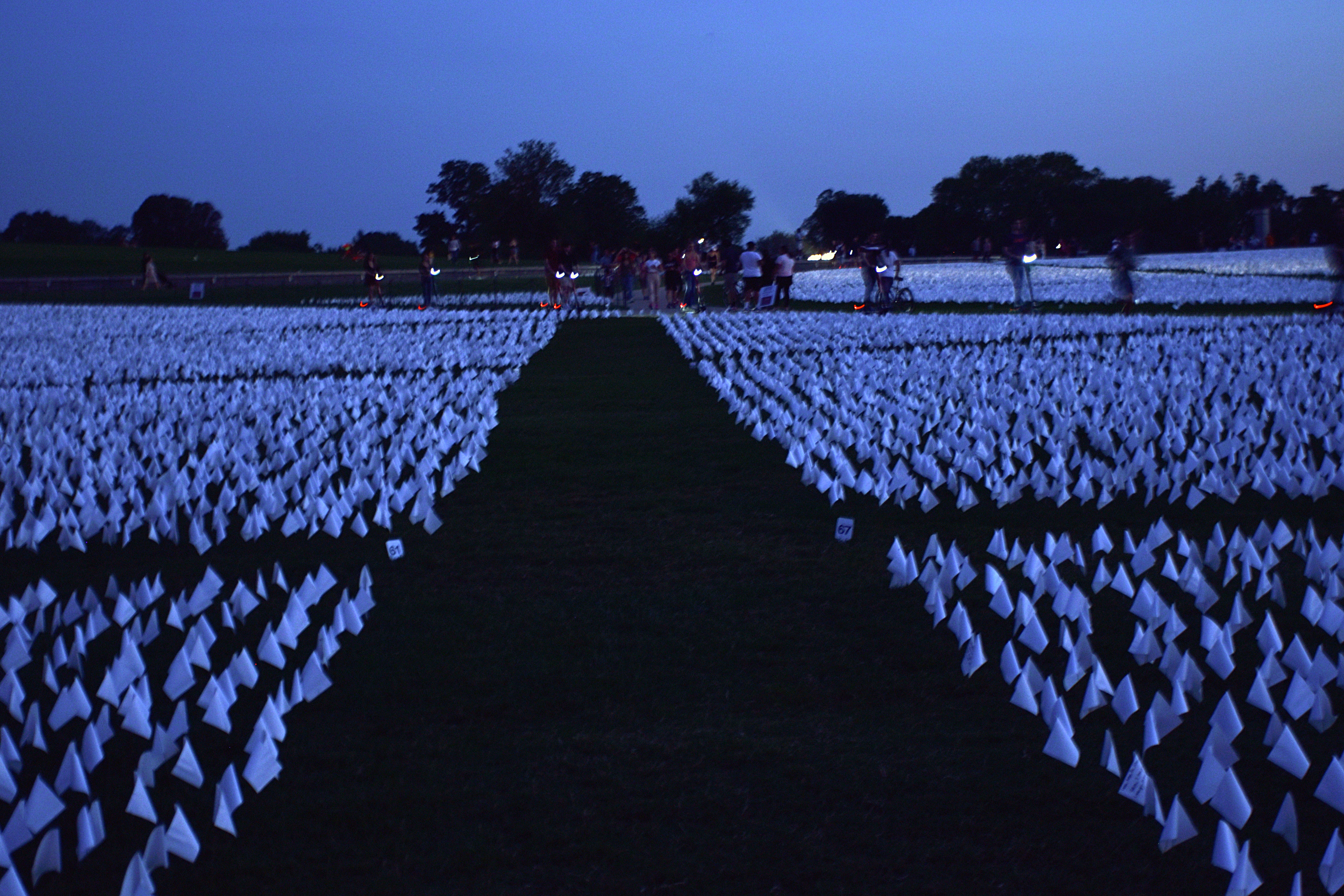
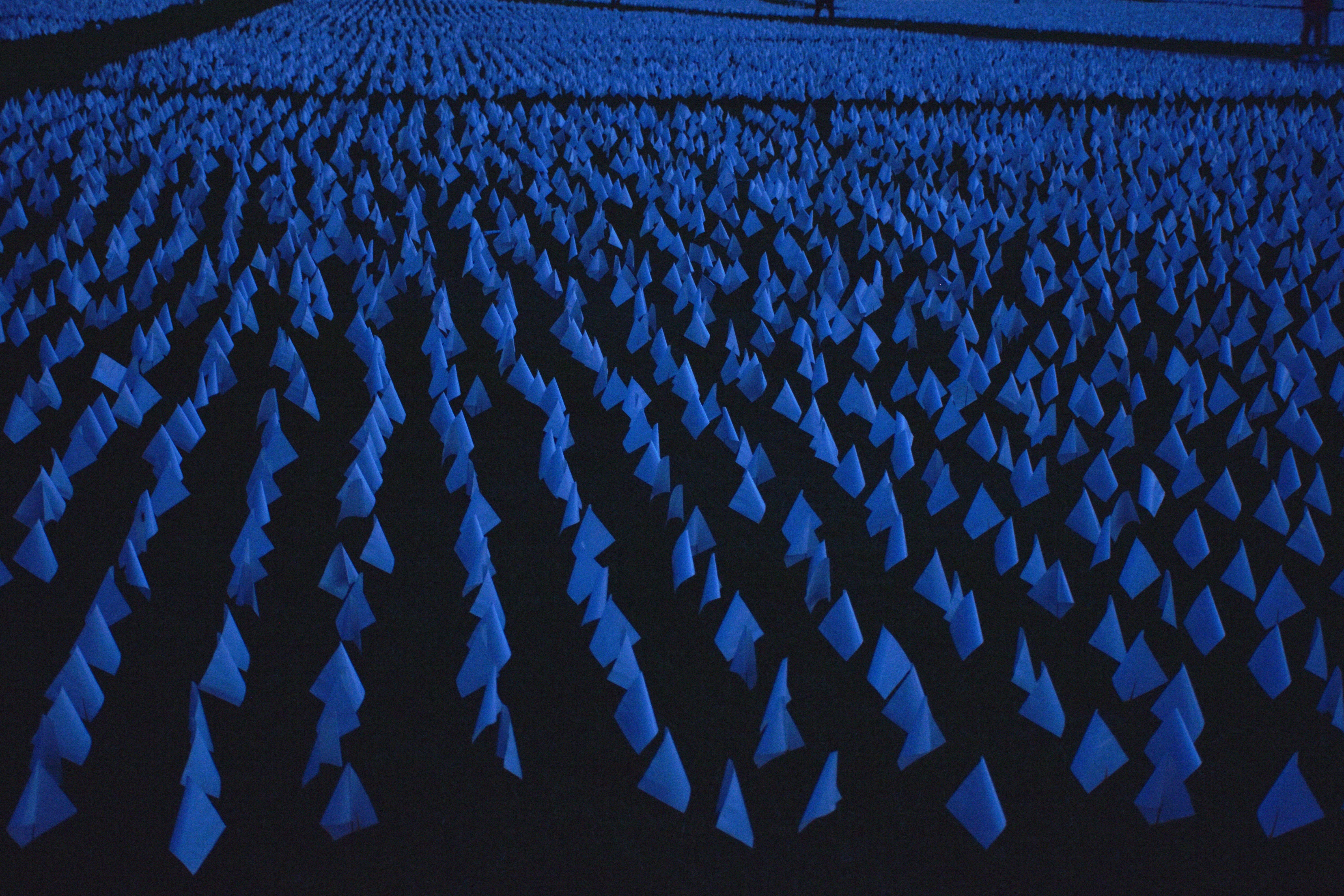
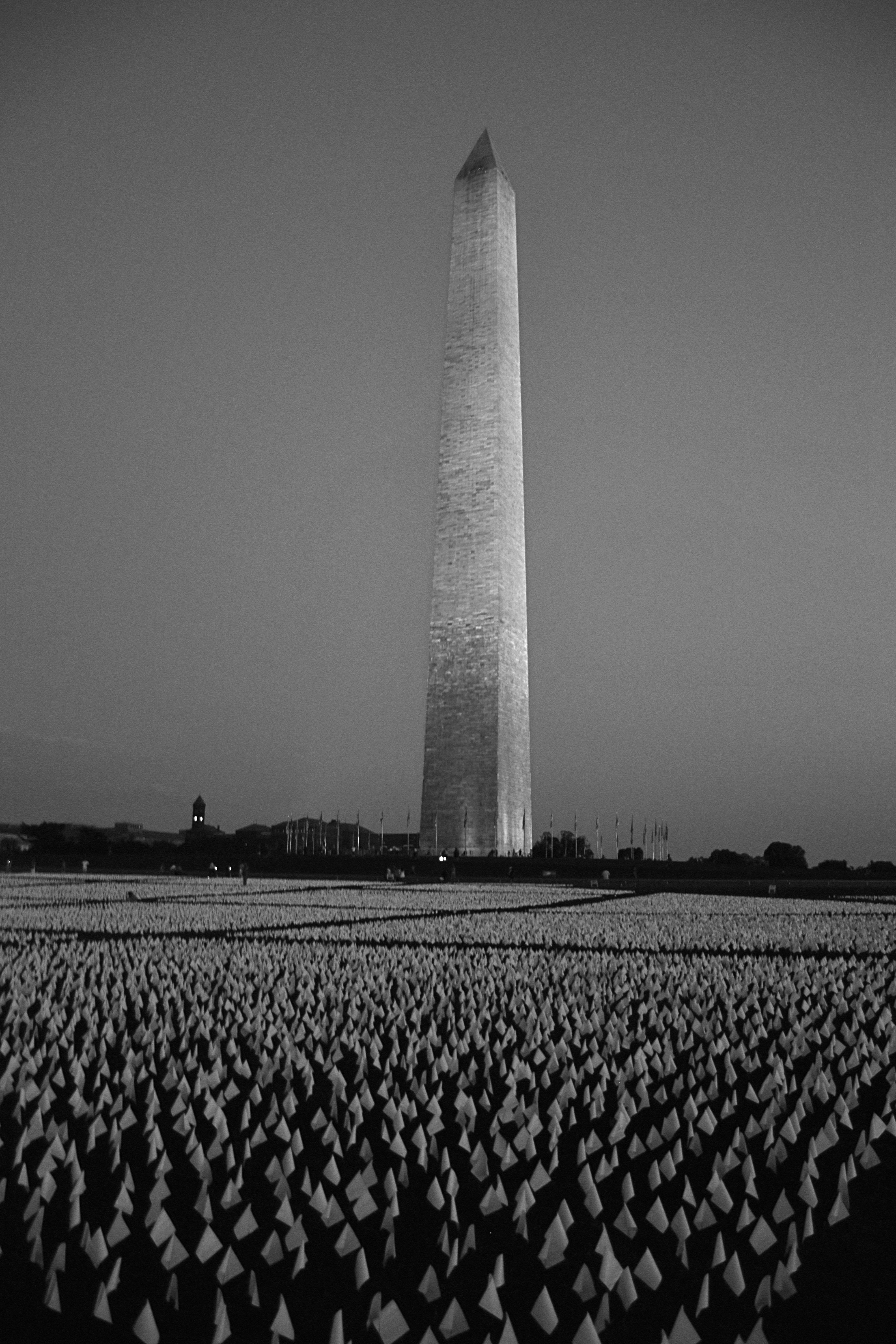
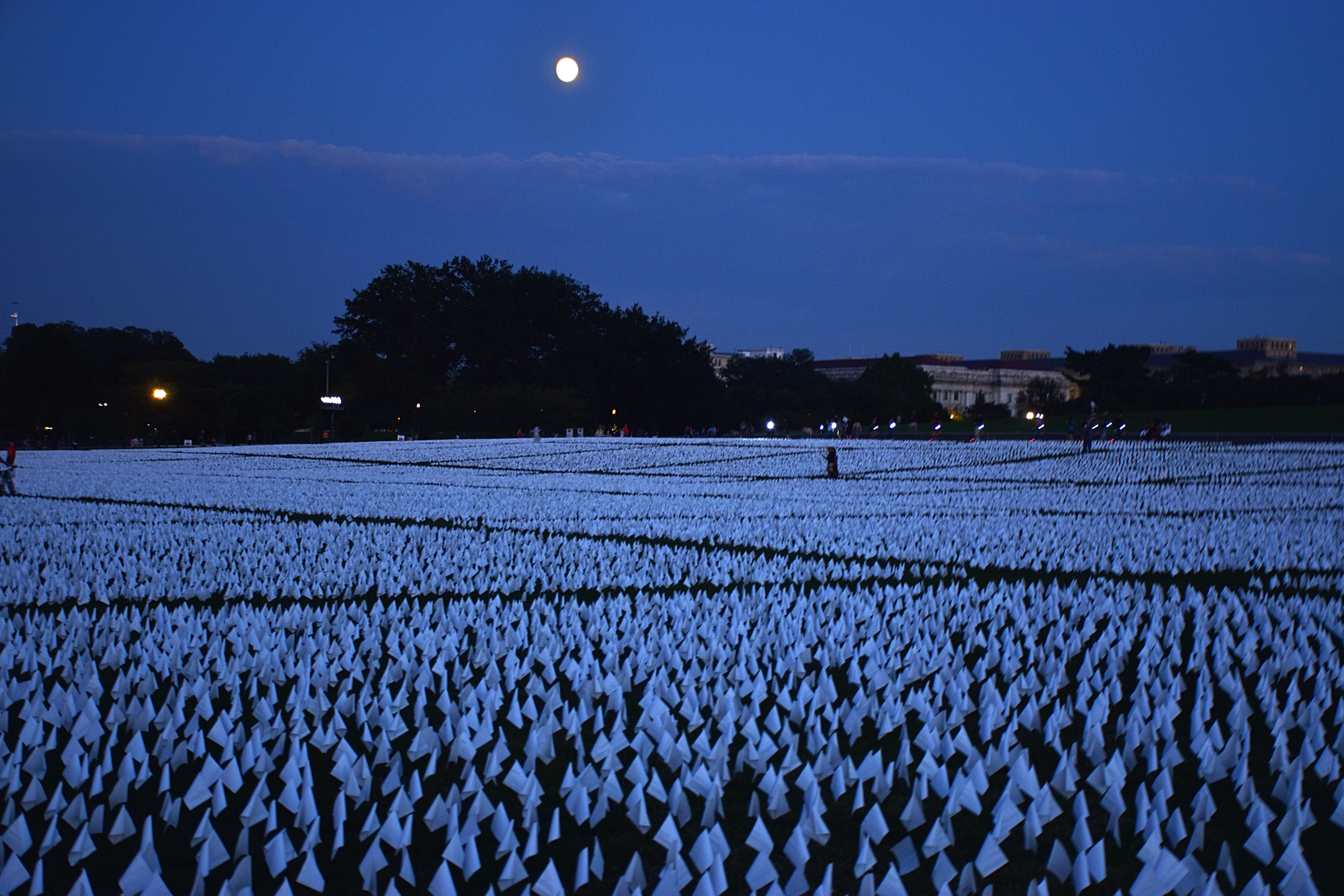
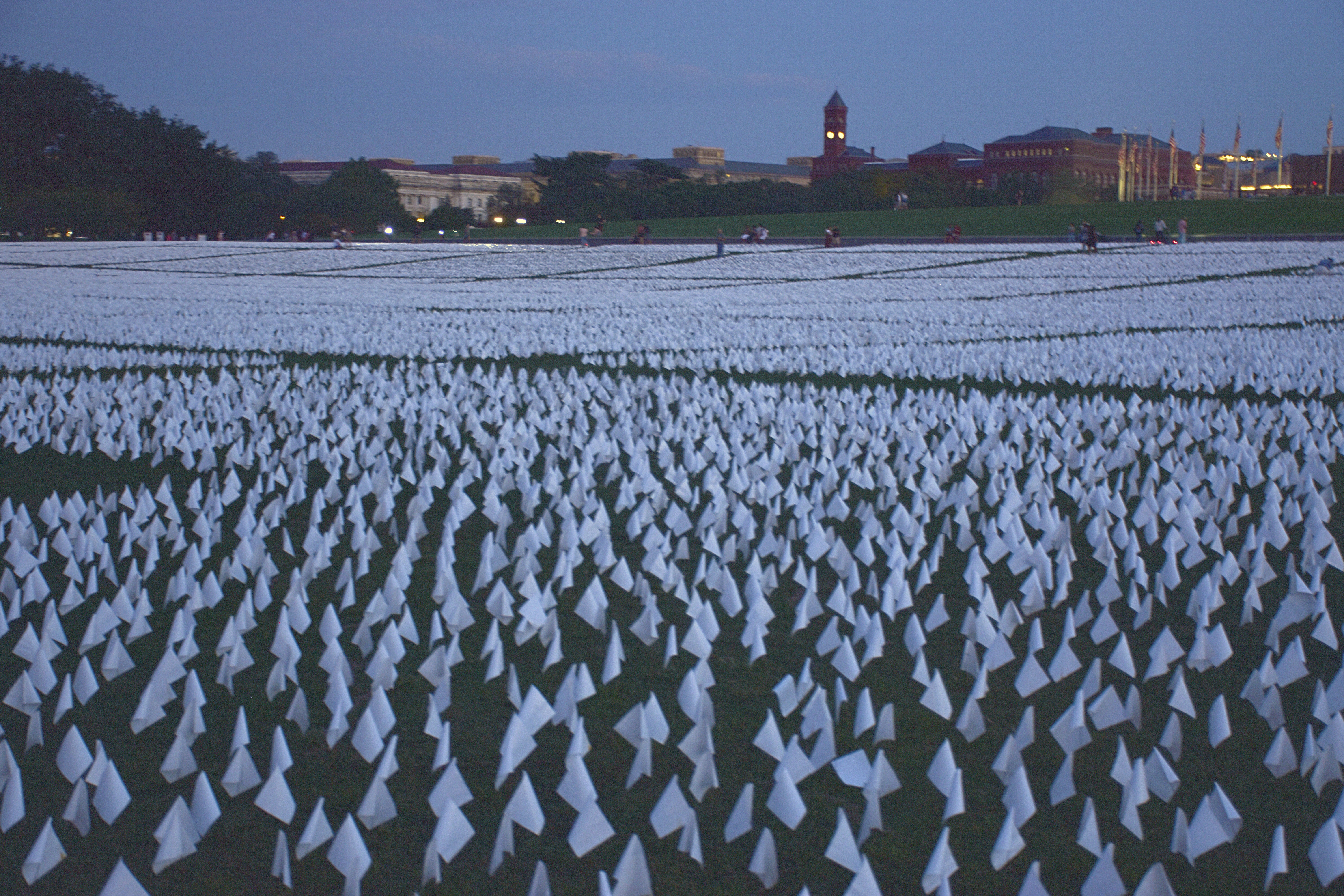
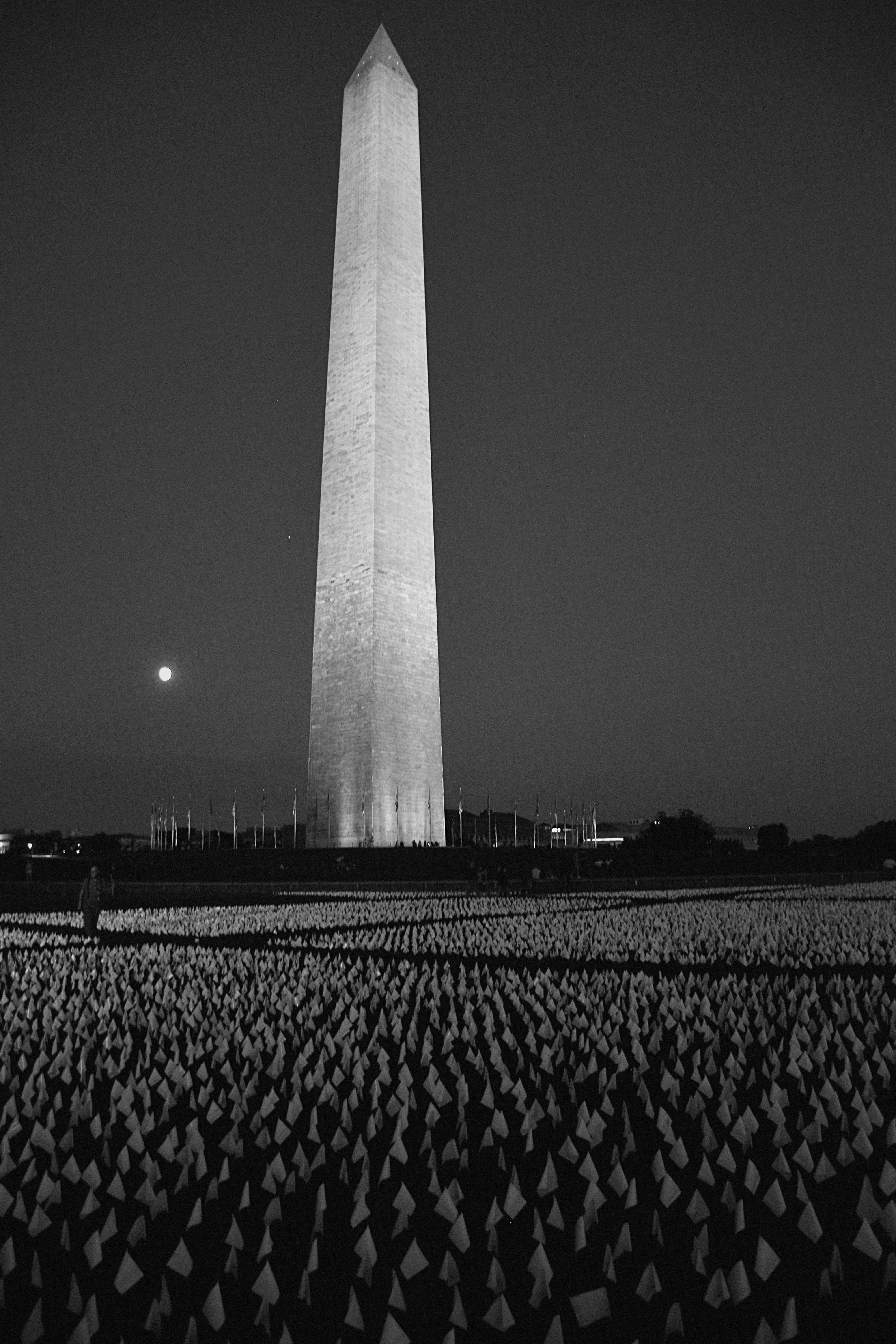
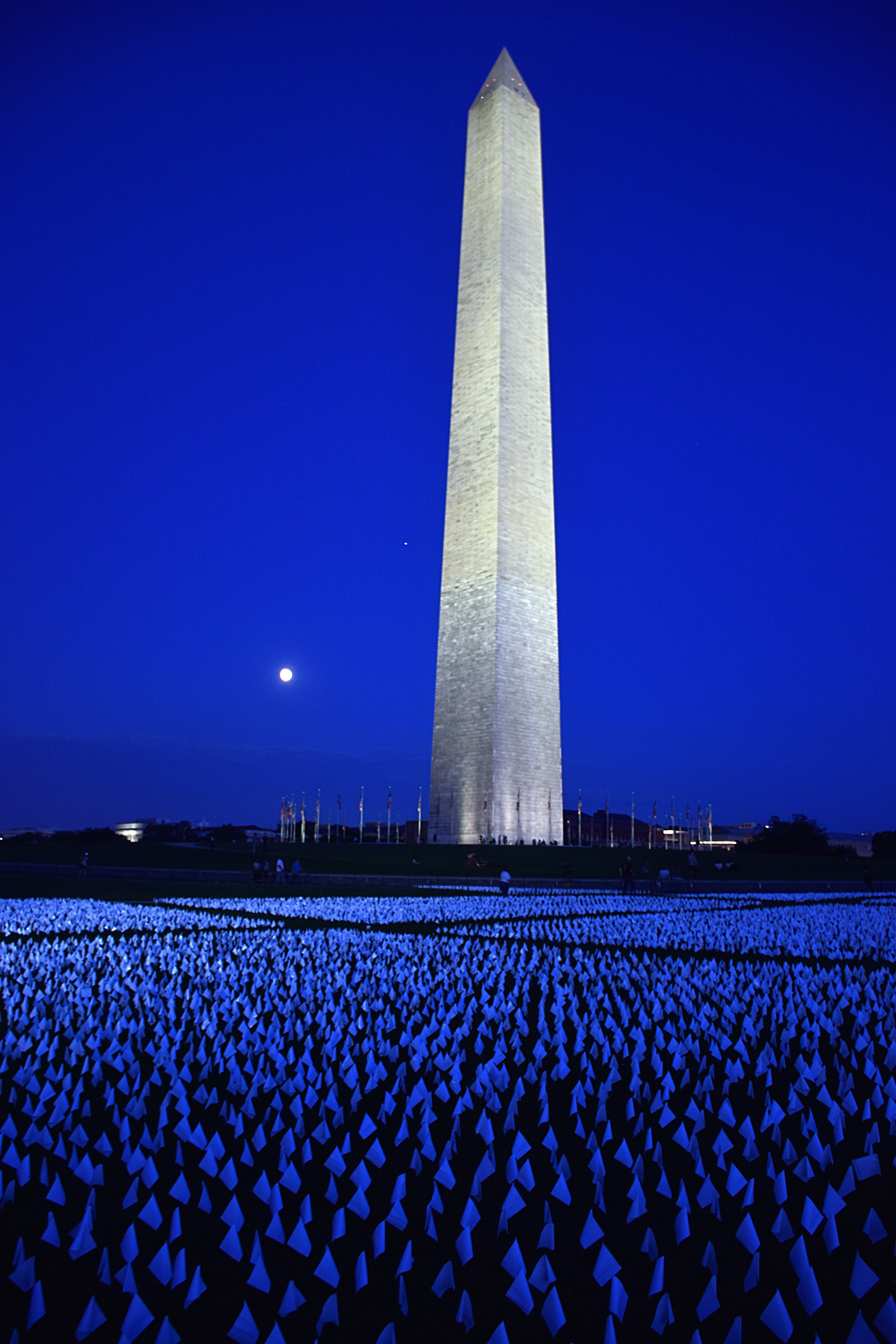
Early last evening we visited the Washington Monument grounds to see the acres and acres of white flags that have been placed there by artist Suzanne Brennan Firstenberg to memorialize the more than 670,000 Americans who have died from COVID-19. The display of flags is called America Remember. It has received little attention from media.

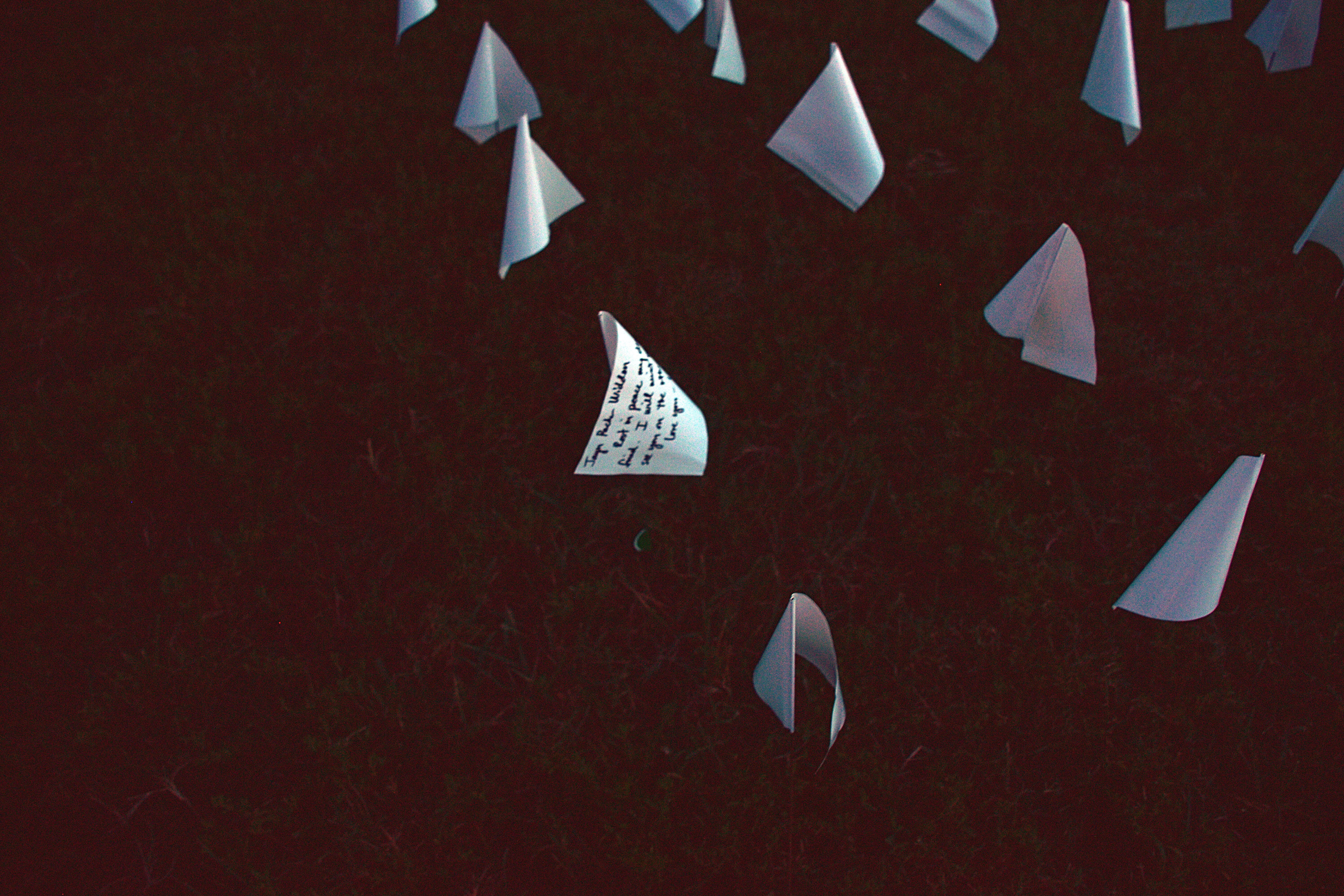
Stunning in scale, the flags cut into you, especially, I suspect if, like us, you have lost a loved one to the virus. Some who visited have penned notes on the flags, expressing their grief.

The setting is surreal, watched over by the Washington Monument. It can be seen from the White House. It is overwhelming. You have to see it, to walk among the endless row upon row of white symbols of death, of loss, of pointless tragedy. For those who can’t do so in person, I hope these photographs will suffice at least for now. There are no words.


Another Day, Another Park

Since a certain group of people continue to prevent the country from escaping the pandemic, we remain in partial shutdown and, if you regard your health seriously, limited to where we can eat and otherwise do “normally.” The road ahead seems long and unpleasant.

Thus, desperate for escape, needy of stimulation and just to get some air, we visited yet another “local” park last weekend. Two actually, though one barely counts, as you will see.

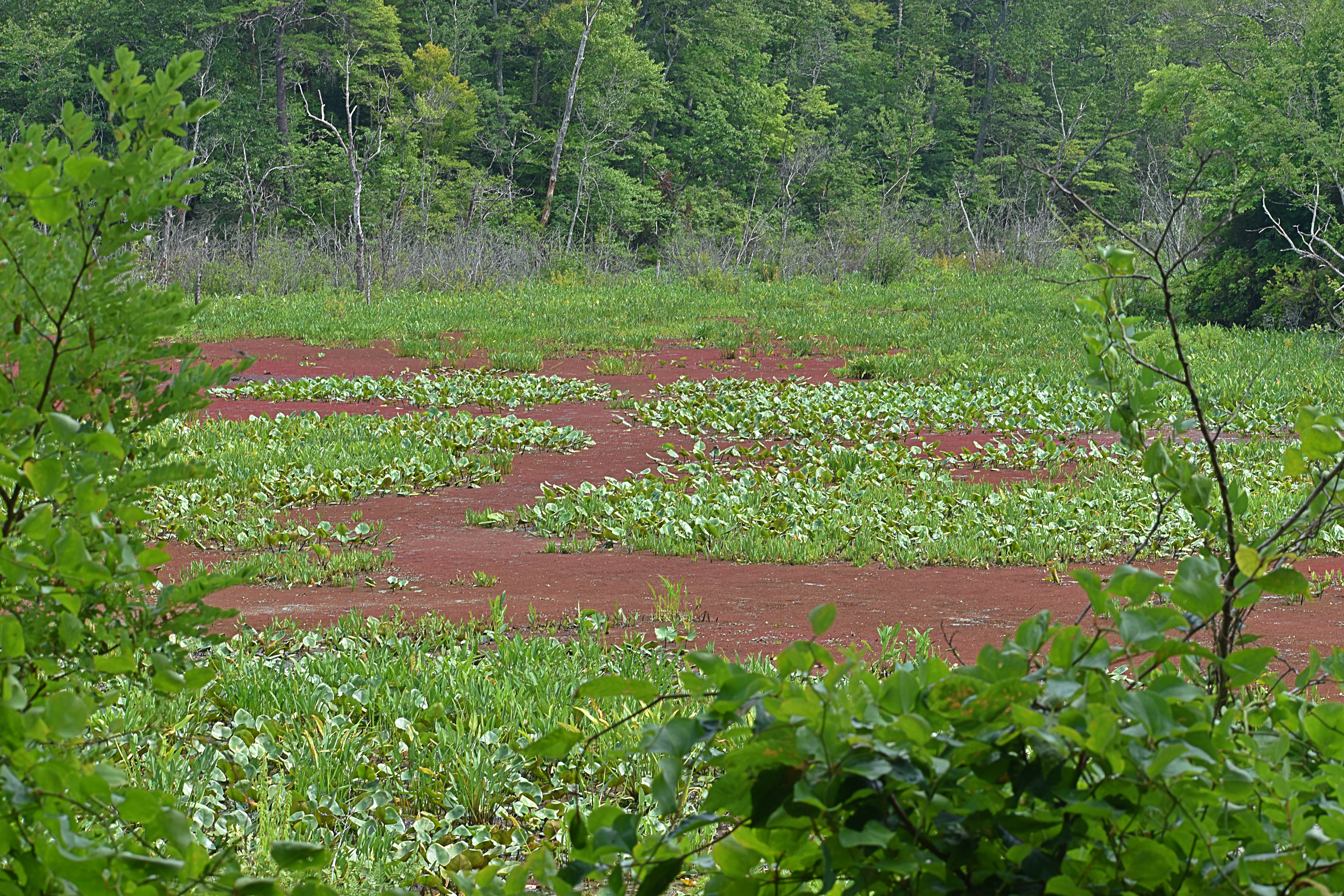
Our destination was Neabsco Regional Park in Woodbridge, VA, billed as “300 acres of natural, recreational, and historic amenities including the Rippon Lodge Historic Site, Rippon Landing, the Potomac Heritage National Scenic Trail Neabsco Creek Boardwalk, Julie J. Metz Neabsco Creek Wetlands Preserve, and portions of historic Kings Highway.” https://bit.ly/2VS0oYt We opted for the Boardwalk. You can see an aerial photo of the Boardwalk on the website.

The upside of the Boardwalk is that it’s a … boardwalk. You stay above the muck, mud and other “things” while having a broad view of the natural scene. The downside of the Boardwalk is that it enables bicyclists, strollers and large groups to move easily along and disrupt, in a minor way, your tranquility.

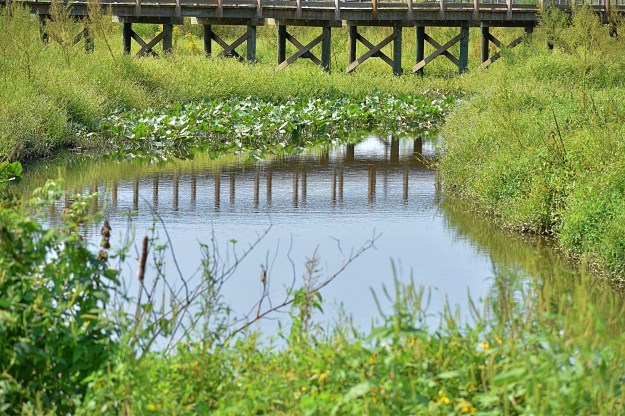
This is part of the Boardwalk that is surprisingly long:

The other outstanding feature of Neabsco is that the bog/swamp area is surprisingly uniform. For an area this large there appears to be relatively little biodiversity.

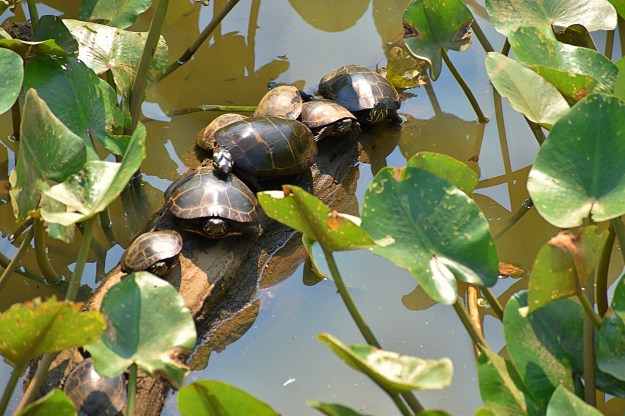
Nevertheless, the observant observer can see plenty of interesting activity in  and above the bush. In addition to the turtle “hotel”

we saw some beautiful flowers, though, curiously, they mostly were single blossoms poking through the surrounding greenery:

though, as always, there were brilliant exceptions:

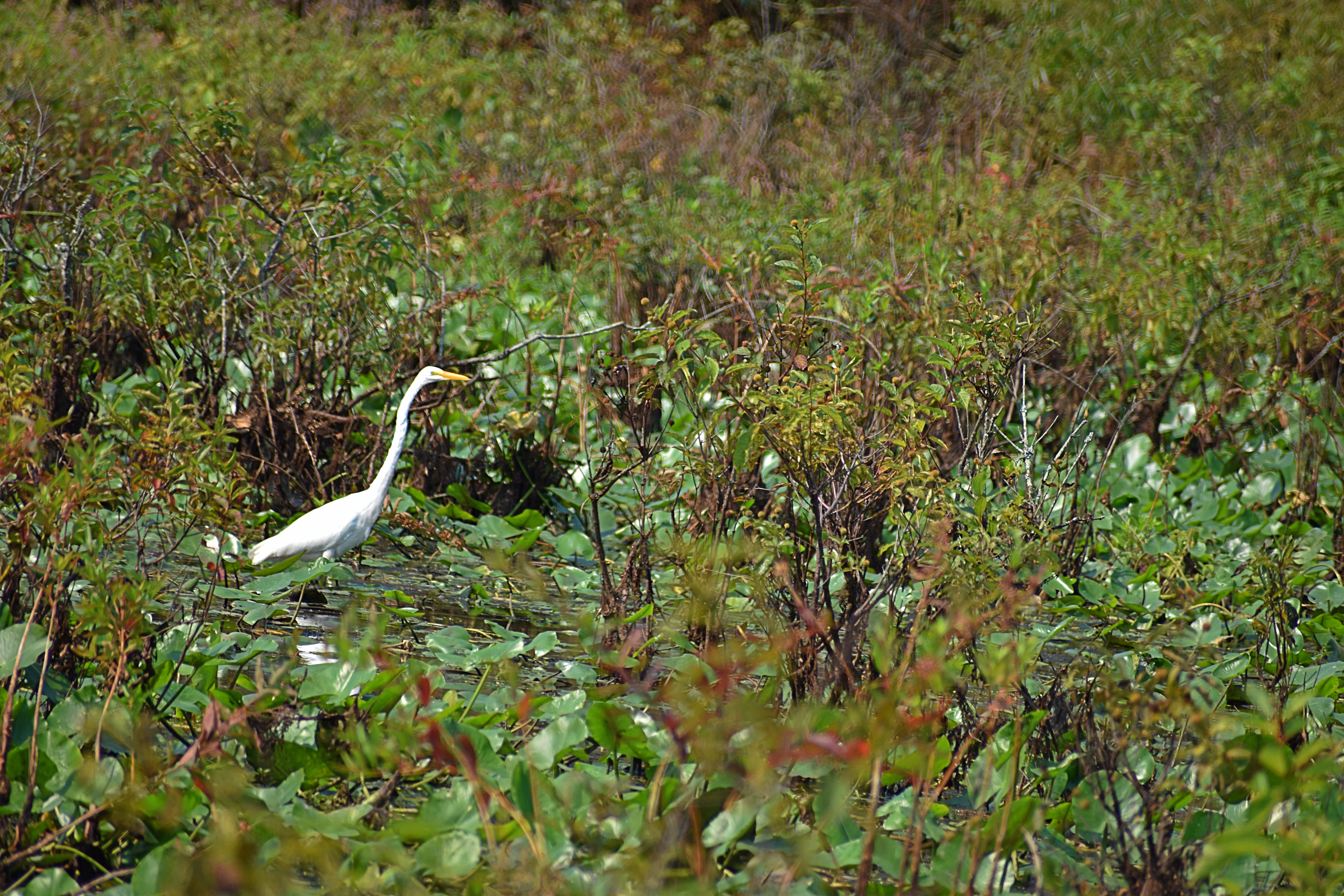
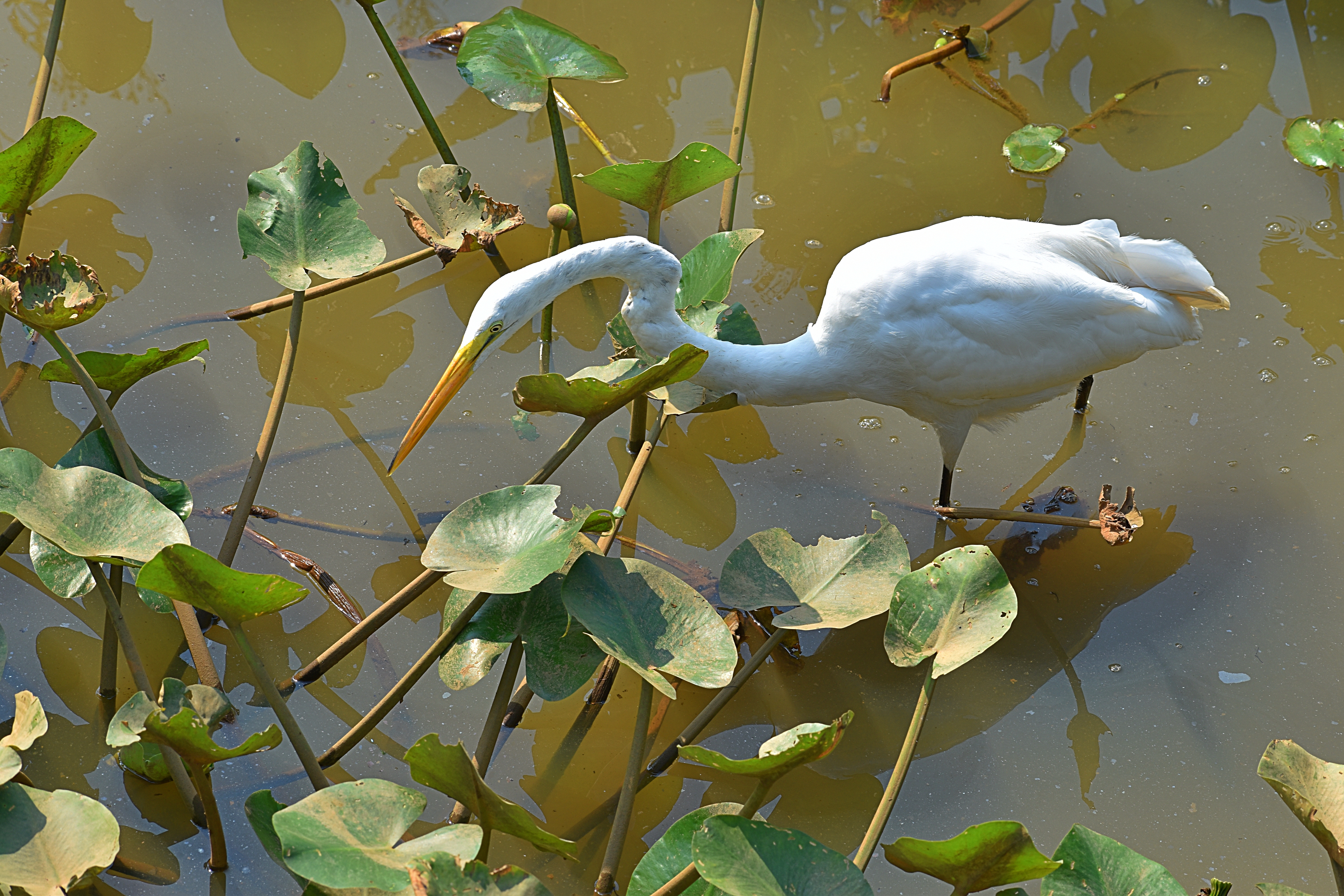
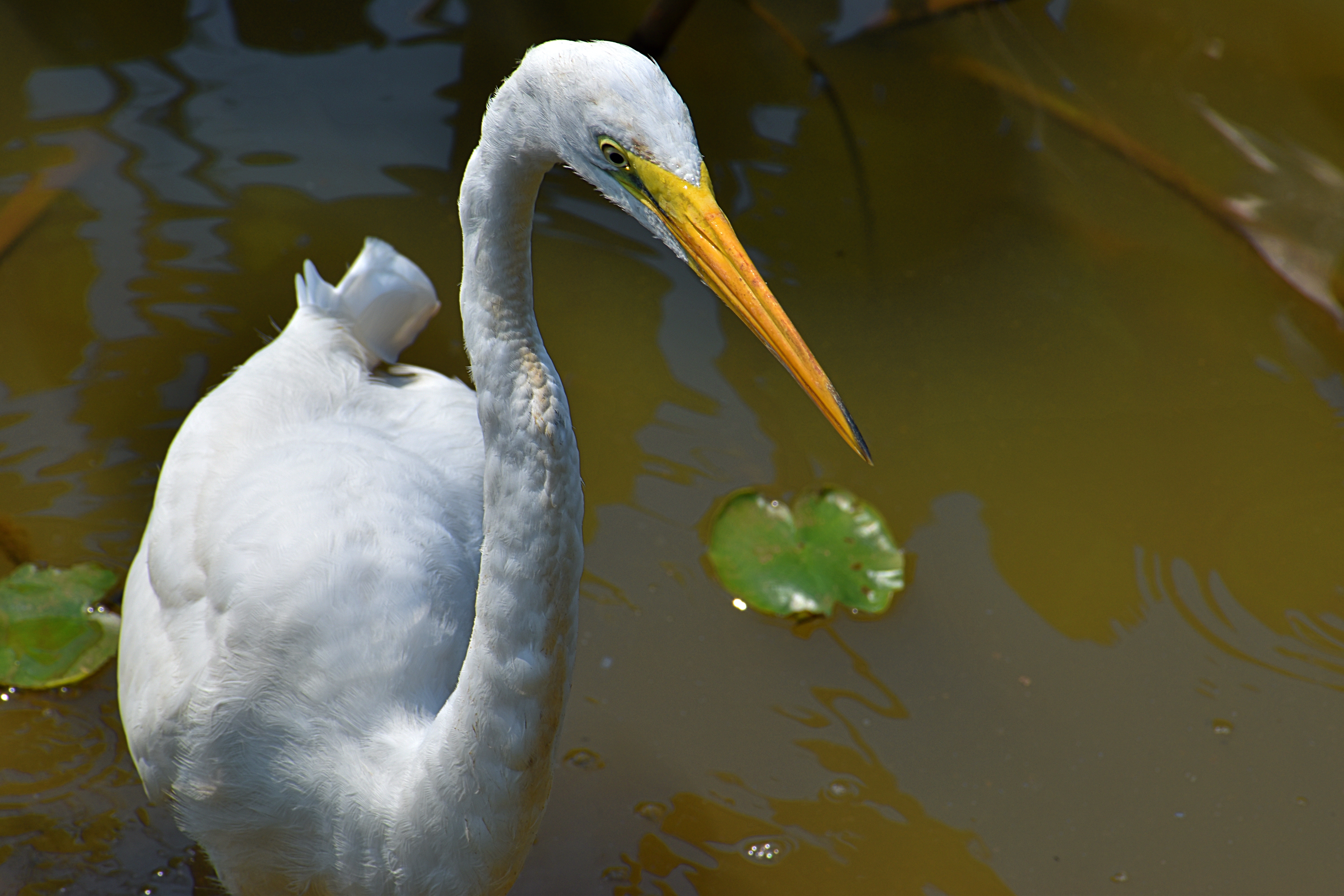
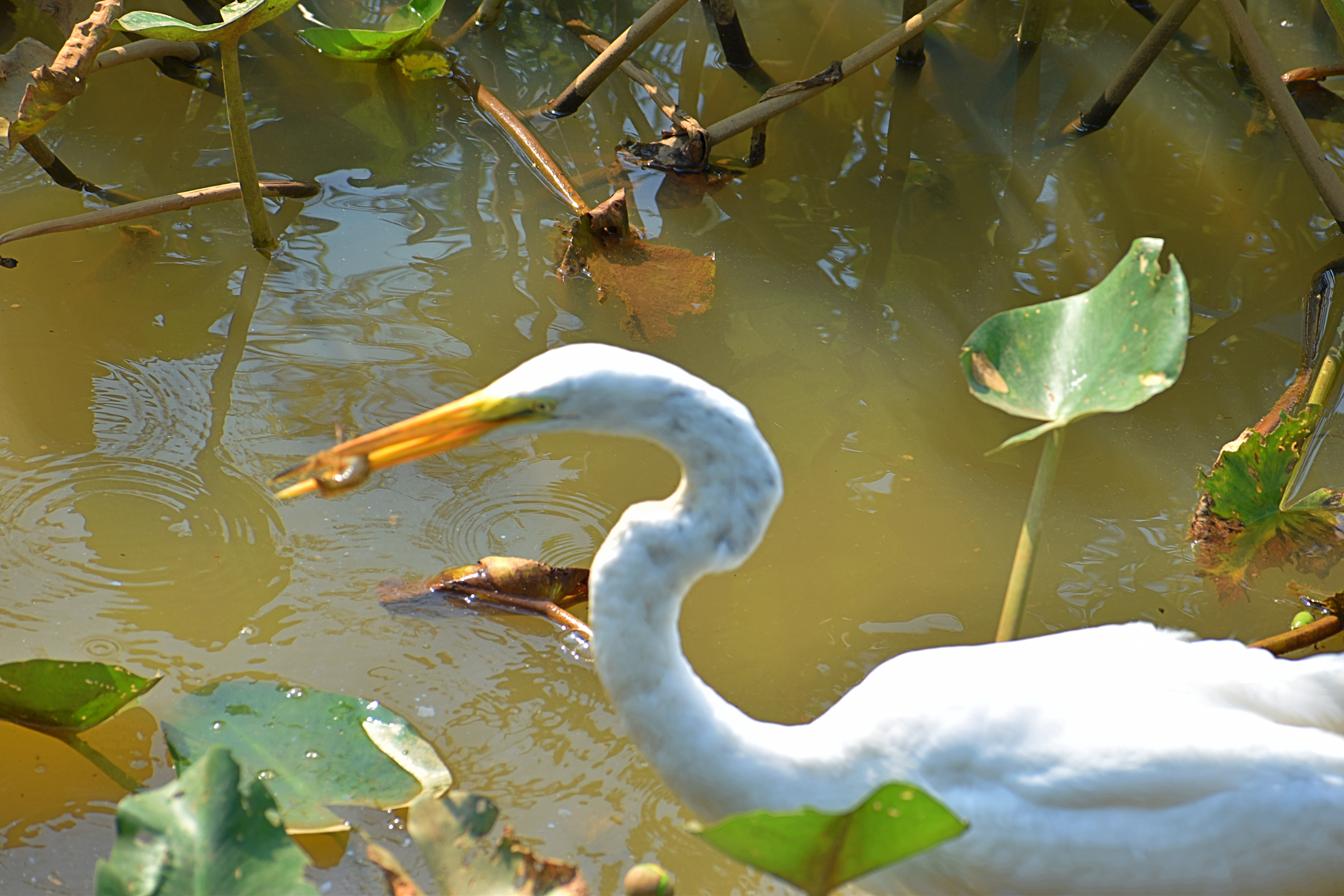
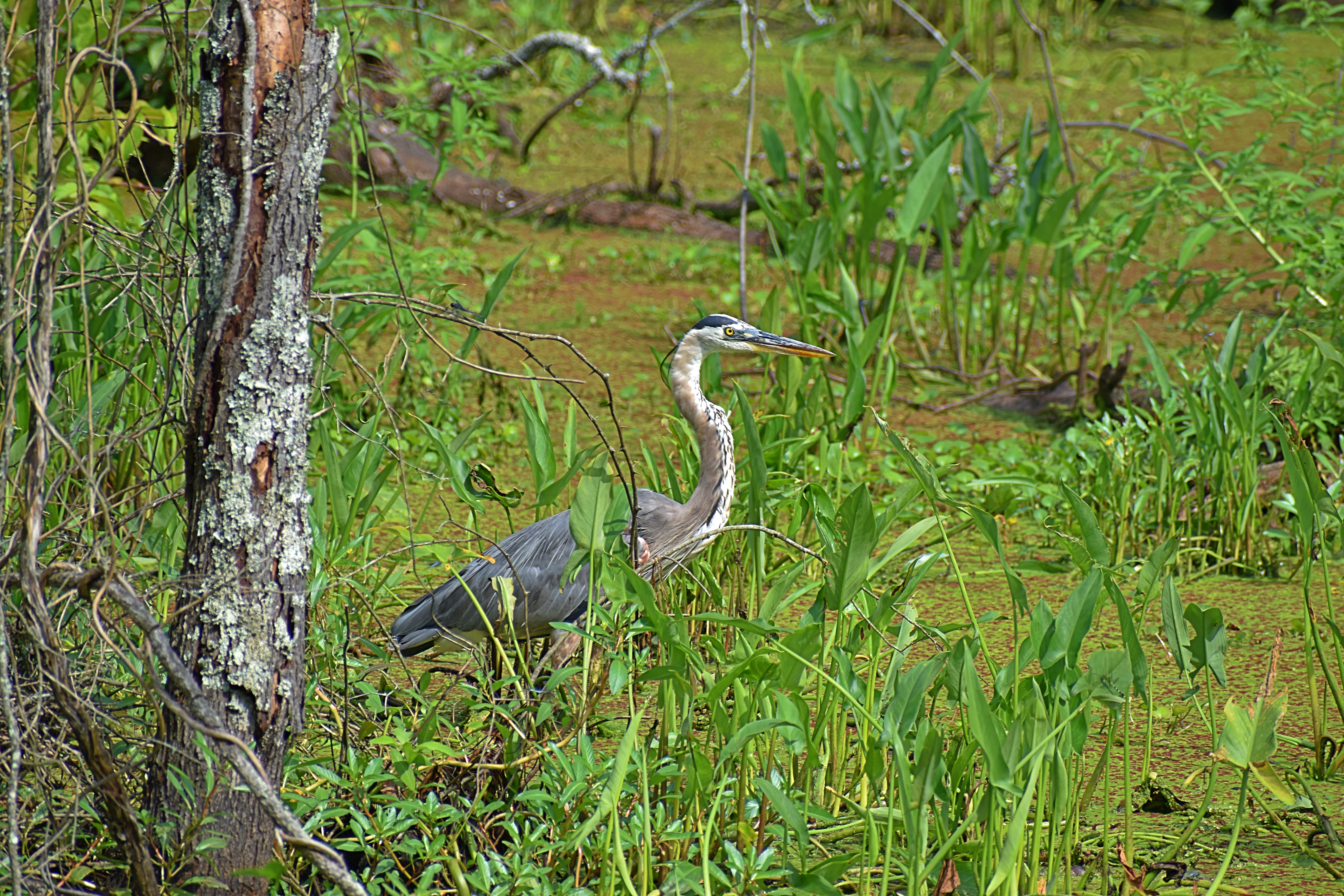
But, of course, the real “juice” at a place like this is the wildlife and we had several delightful surprises. At ground level, there was this amazing  heron whose neck contortions in his slow hunt for food were astonishing to see up close:

By the way, the crawfish (we think) in his bill in the last picture escaped at the least moment! The heron took it in stride and resumed his stalking through the bog.

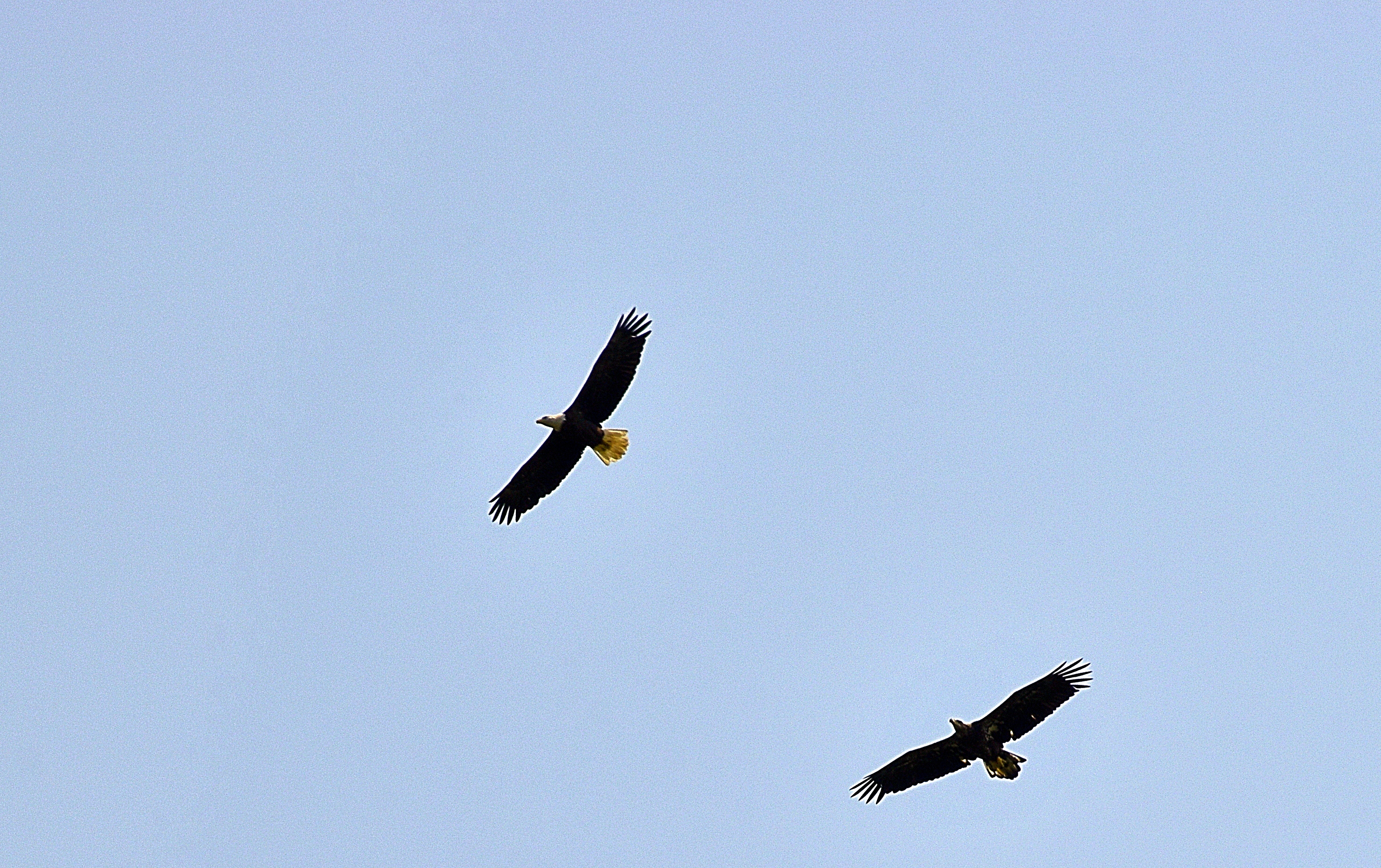
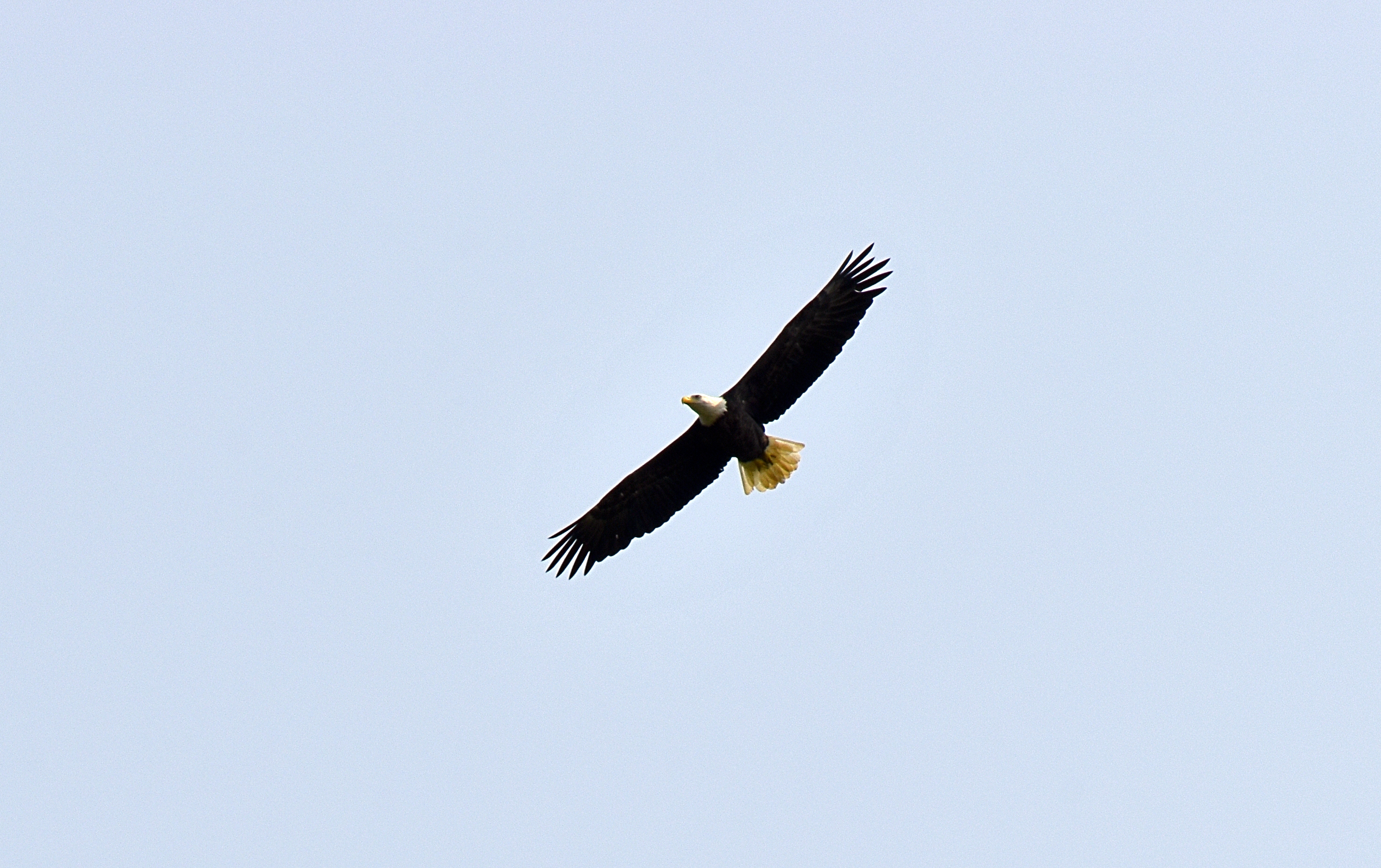
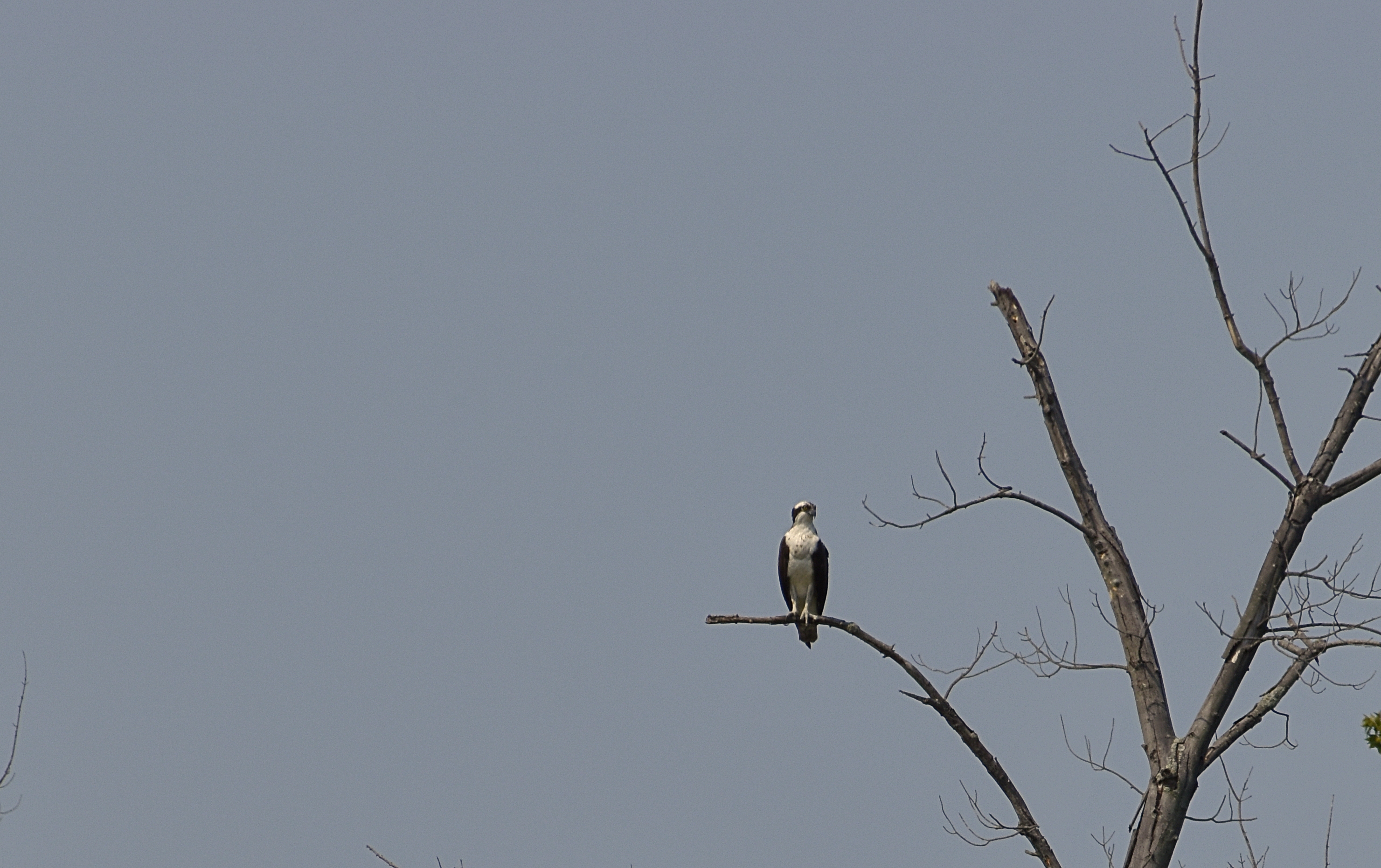
The thing is that in a place like this your attention is naturally drawn downward, but it’s important not to focus too much on what’s right in front of you. My wife’s vision for spotting animals in the wild is remarkable. and she detected these bald eagles quietly hunting and the osprey in a tree  probably a hundred yards away:

Largely sated by these experiences, we departed for Occoquan Bay National Wildlife Refuge, where we limited ourselves to what is billed as the Wildlife Drive. Mistake. If you want to see what this Refuge has to offer, you’ll have to do it on foot. The Wildlife Drive looks like a narrow gravel road running among bushes and trees for it’s entire distance. Nothing to see. There are foot trails; check the map carefully to find them. The oddest thing was that these signs appeared throughout the drive:

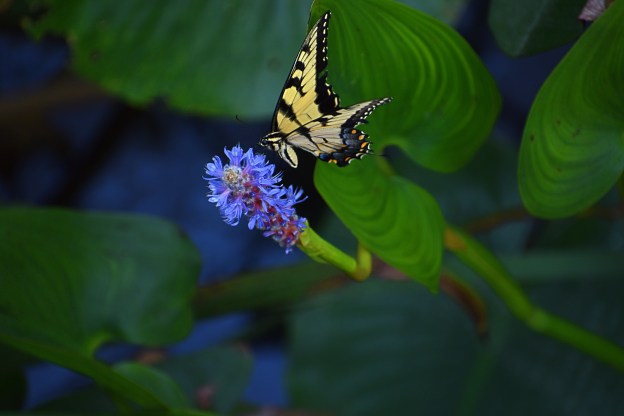
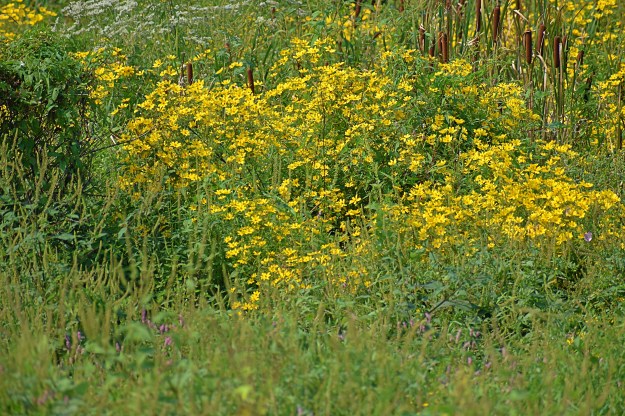
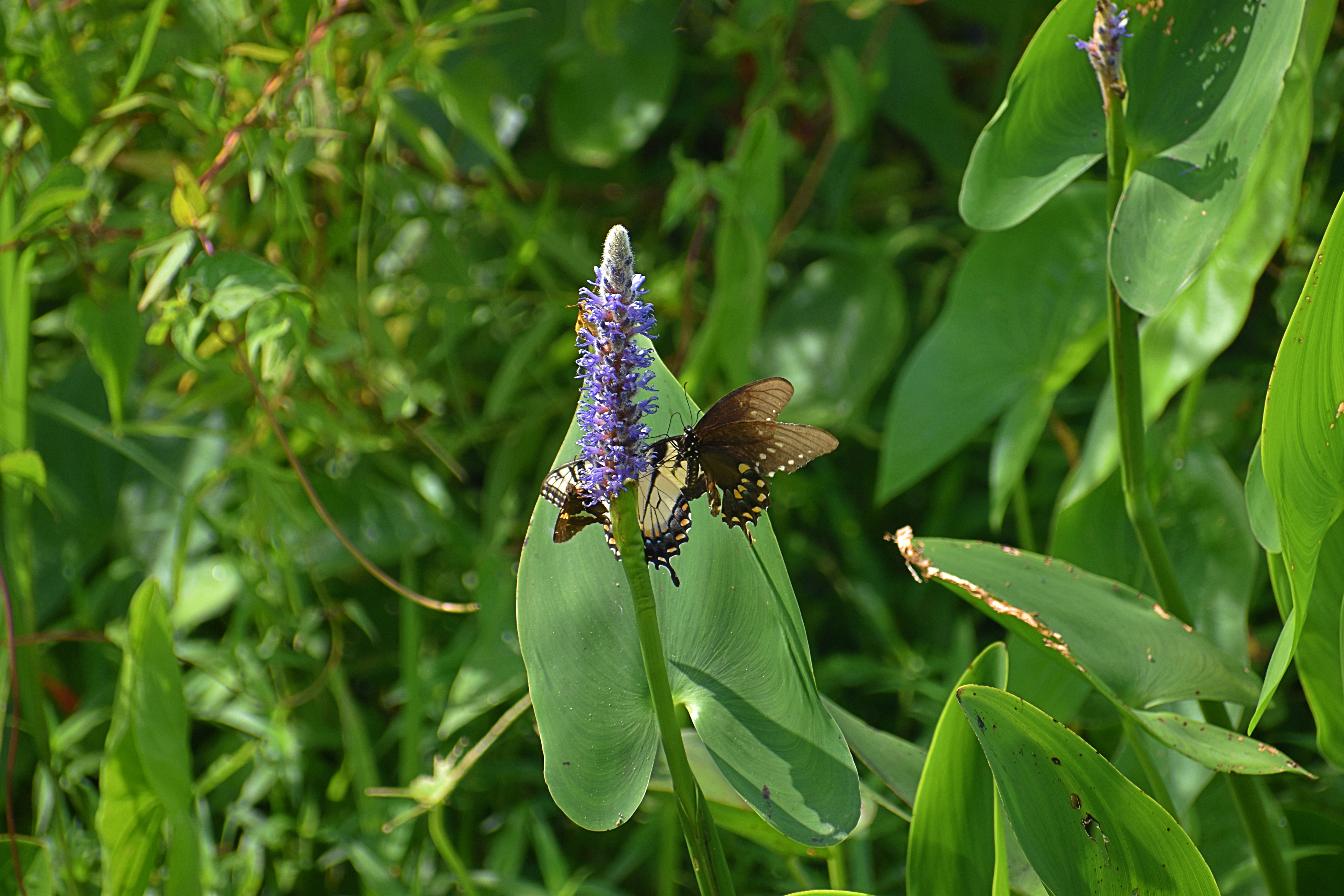
We still haven’t figured out what you would dig for but it must be a real problem because there were a lot of signs. We were pretty disappointed in this experience, but it did not detract from the cool stuff in Neabsco. And, yes, the featured image at the top of this post, butterfly on flower, was taken there.

Mason Neck “State” Park

One of our former regular go-to outdoor places is Mason Neck State Park [https://bit.ly/3m3qFh8] which is technically in Lorton, VA, but for us is just a drive out Route 1 (Richmond Highway) and Gunston Road – total distance from our place is about an hour’s drive (40 minutes, in theory, for high risk drivers using I-395). “State” is in quotes because the Park is also the Elizabeth Hartwell Mason Neck National Wildlife Refuge, which means my National Parks Lifetime Senior Pass is accepted for entry.

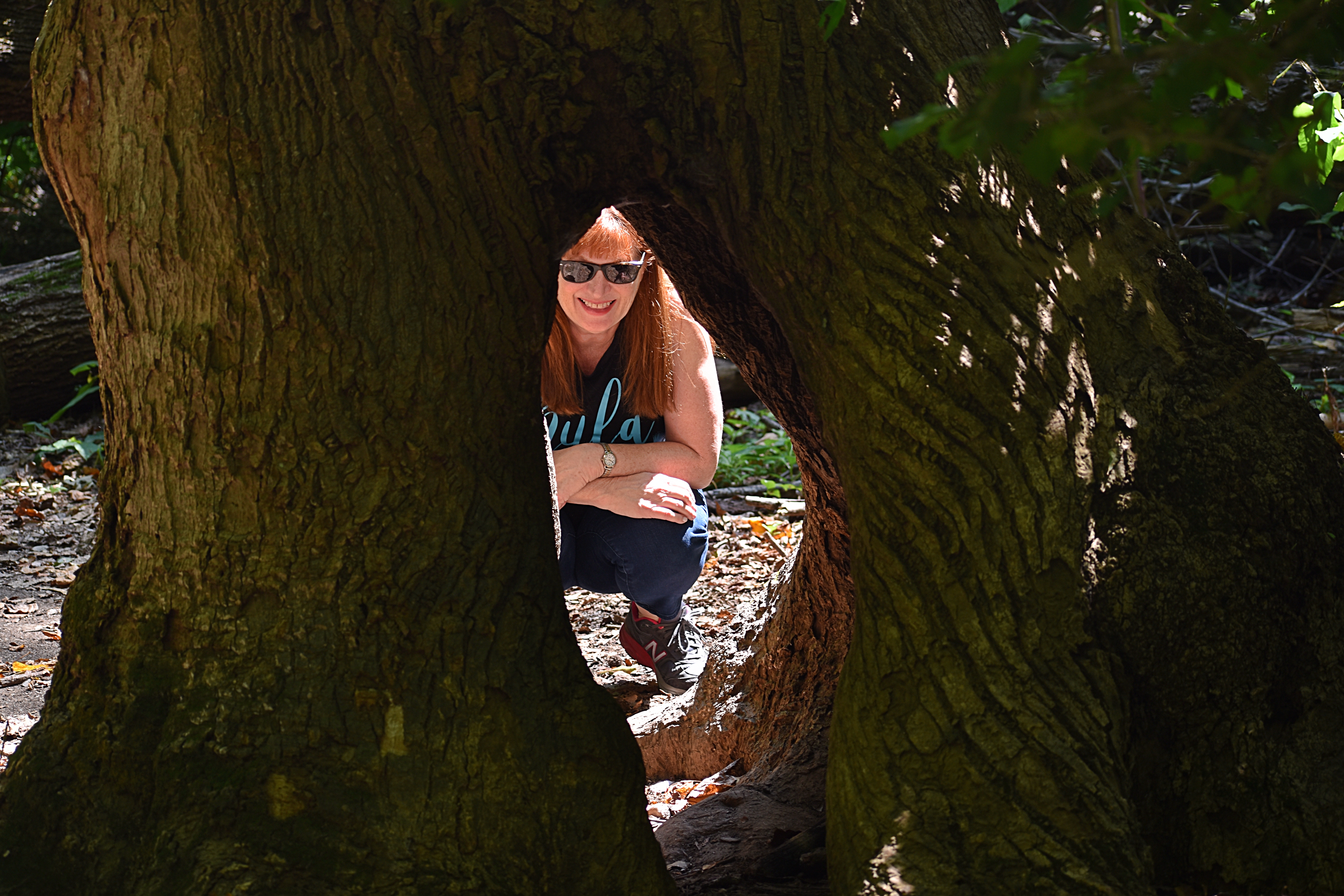
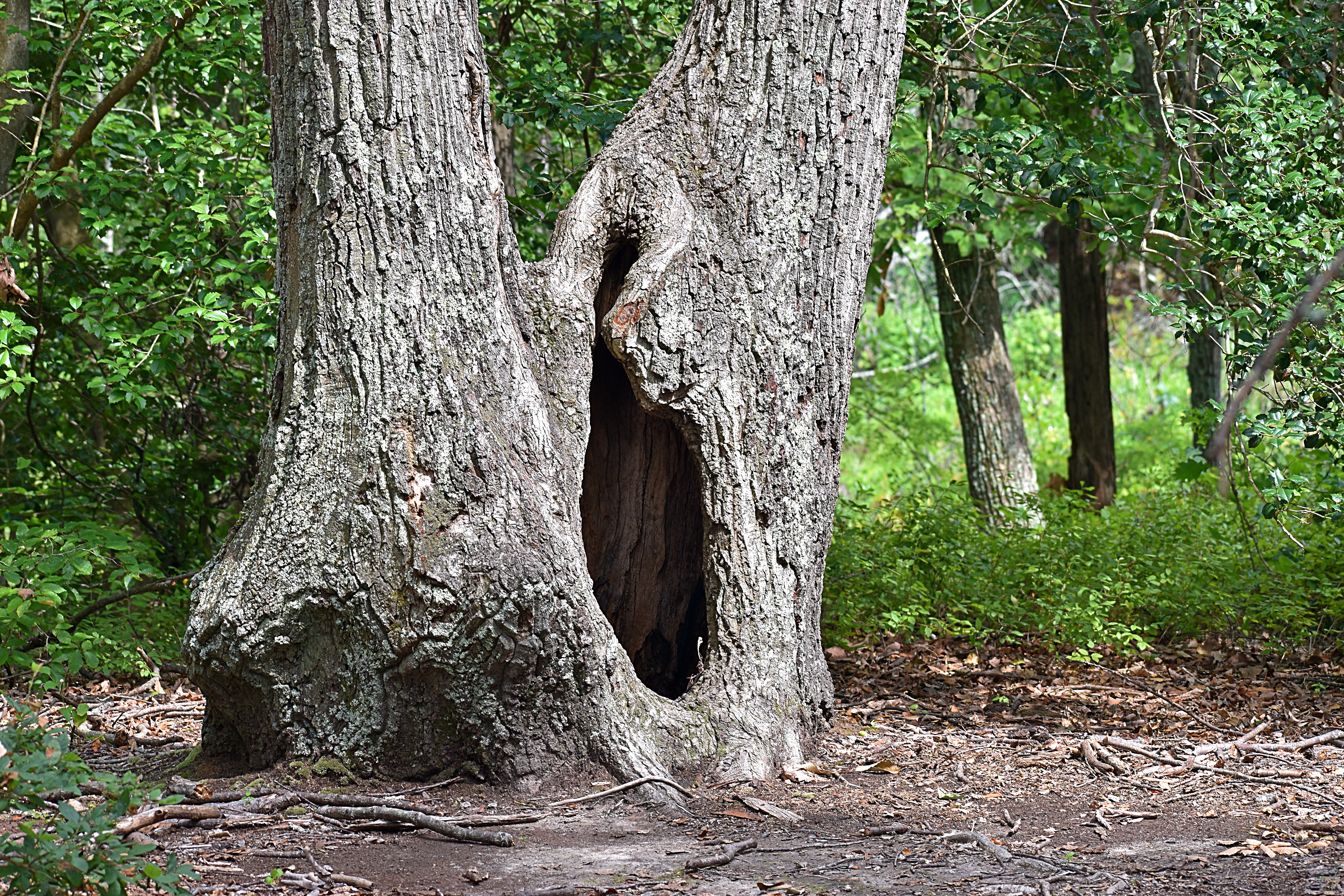
We returned there a couple of weekends ago. We chose to walk the one-mile Bayview Trail this time and had a remarkable experience, spying a number of forest creatures and some interesting trees as well. We encountered one of the rangers near the end of our walk and had an interesting discussion with her about the natural inhabitants of the park.

Here is a sample from our short walk.

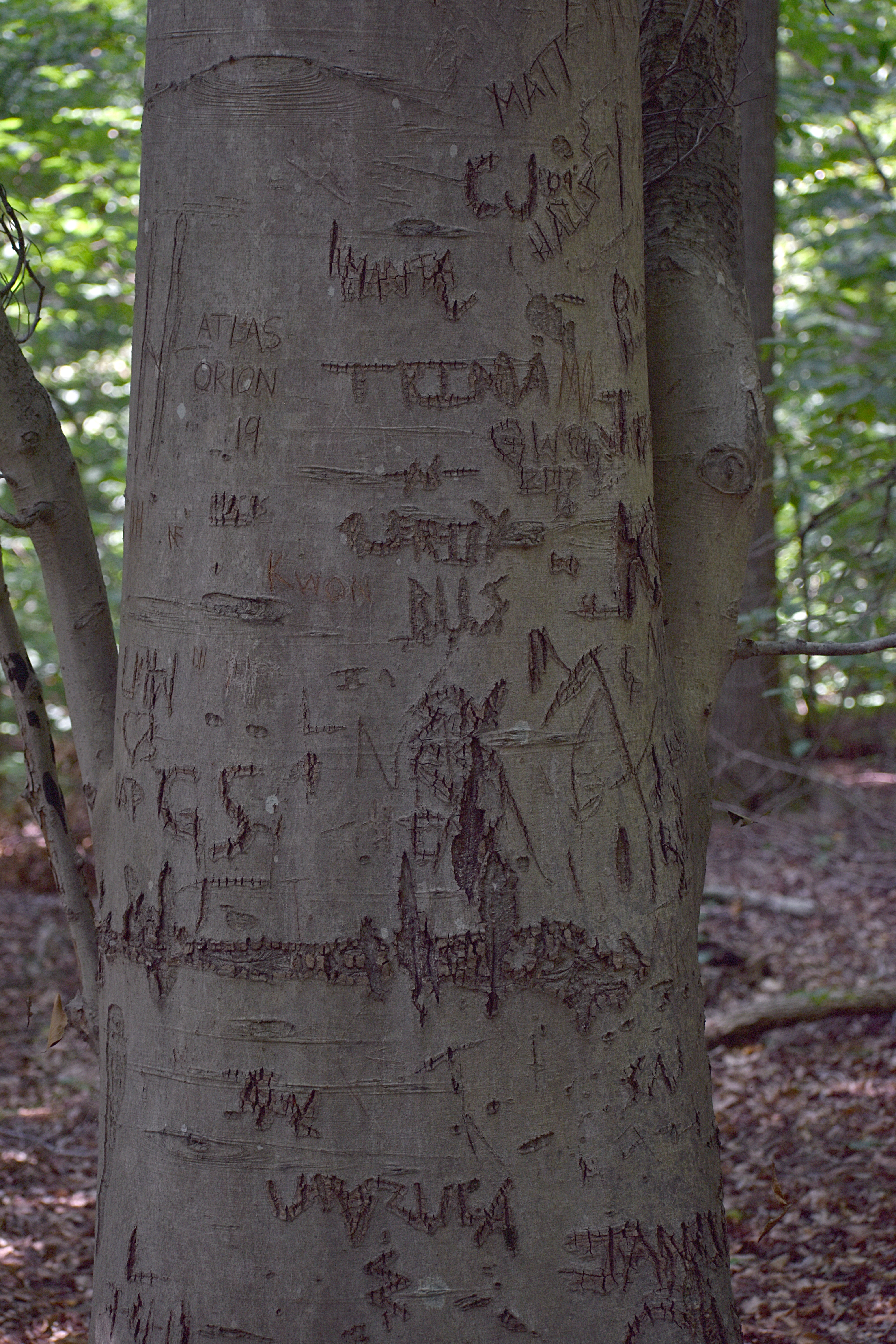
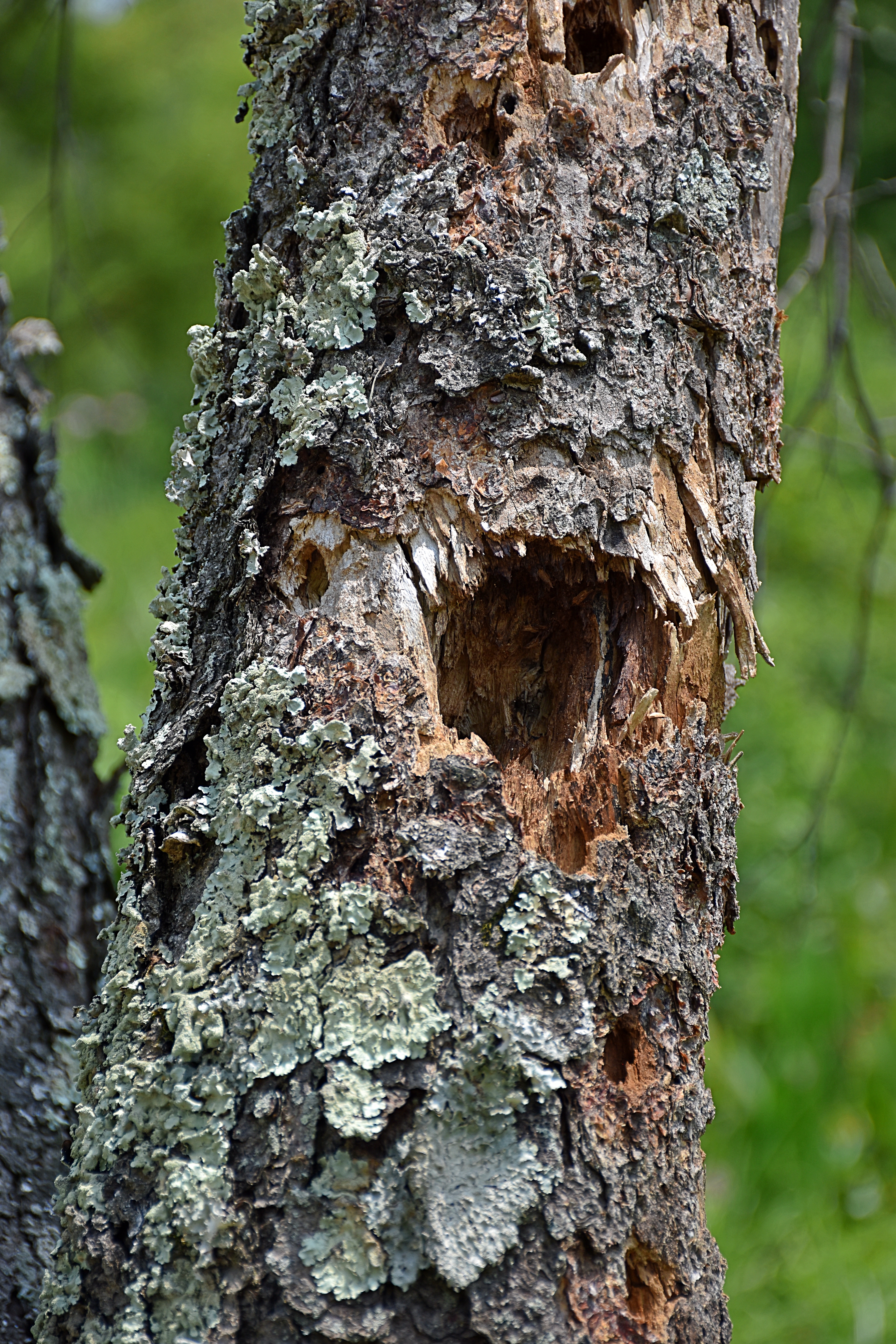
A final word about the tree with carved initials. PLEASE don’t desecrate the forest this  way. You could kill a tree by exposing its inner systems to disease and insect attacks. If you see someone doing this to a tree, anywhere, take their picture if you can and report them to the appropriate authorities. Let’s keep our natural places as natural as possible so that everyone can enjoy them.


Kenilworth Park & Aquatic Gardens

This past Saturday we visited Kenilworth  Park & Aquatic Gardens in the Anacostia section of the District of Columbia. We arrived before noon and were shocked to find the place packed with people. There were some parking spots left, however, so it all worked out.

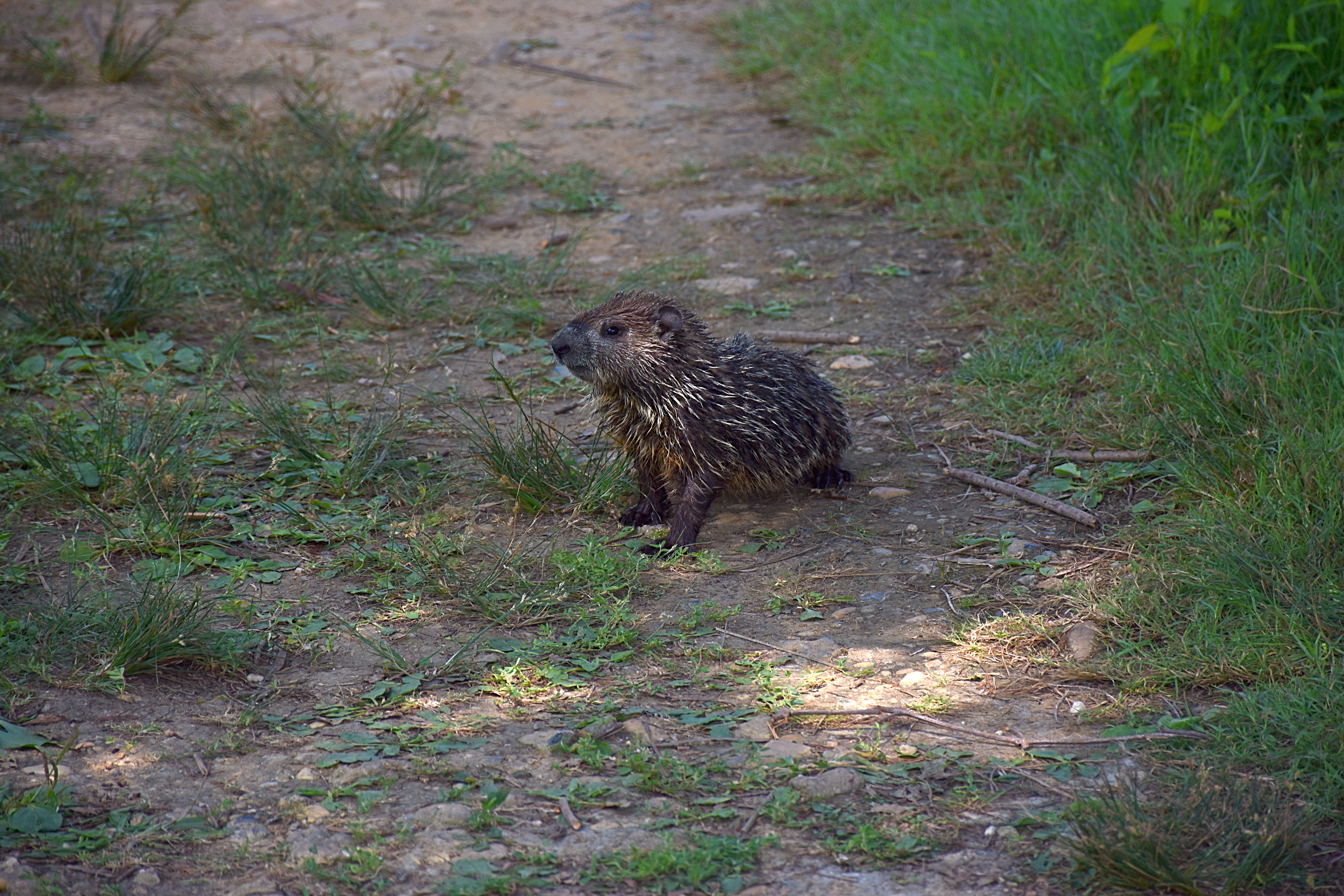
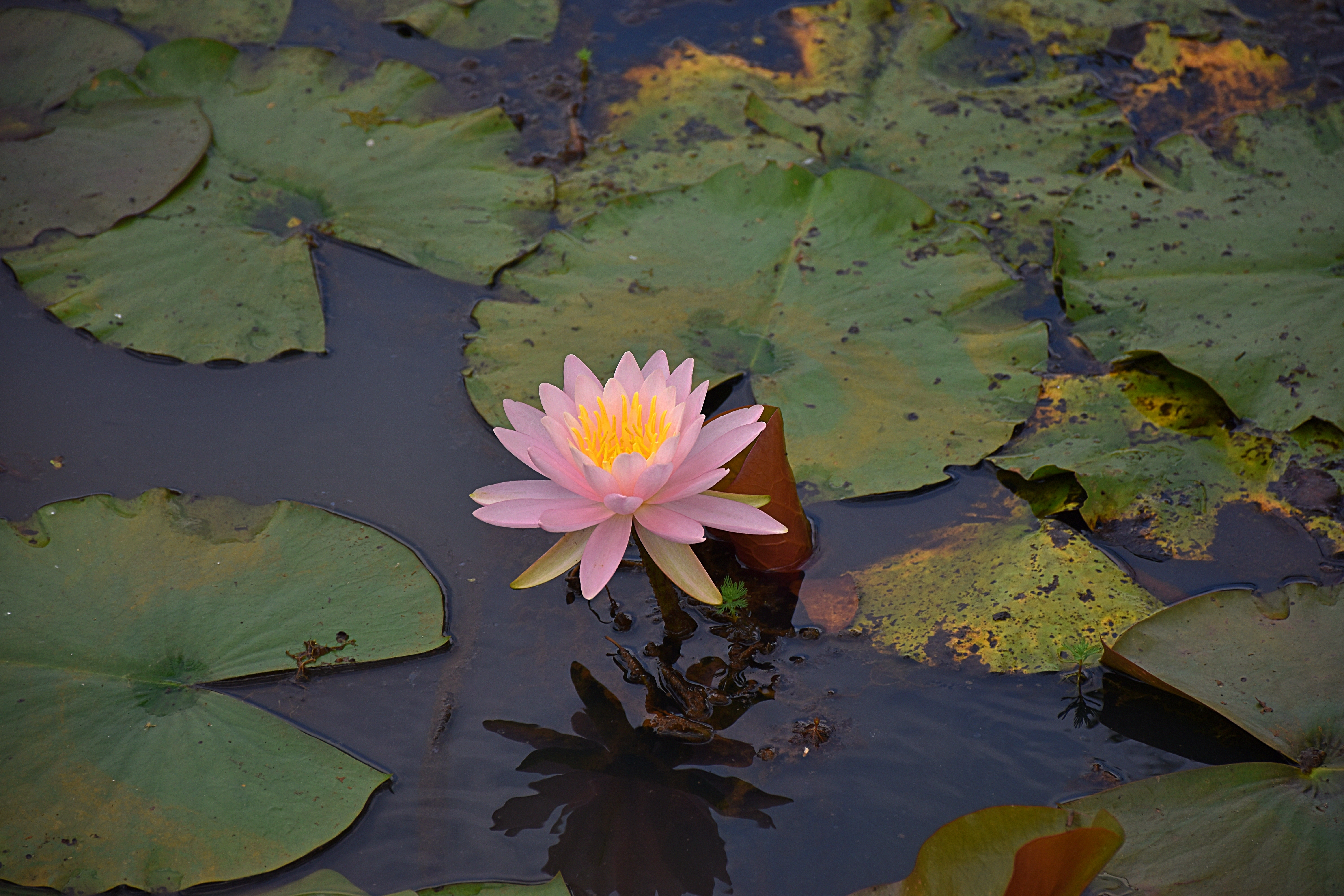
The Park is a National Park Service facility on the banks of the Anacostia River. It’s primary function is a large collection of ponds containing waterlilies and lotuses. We were fortunate to spot a young beaver — actually, my wife has a remarkable eye for spotting wildlife in obscure places but I took the photo looking into deep shadows that she assured me contained a critter. I did spot the two bumblebees … uh, making… bee whoopee in the flower shot below.

The other photos are a good sample of what can be seen at Kenilworth — of course, the real thing is always better. Visit the place — it’s a treat.

[To view as a slide show, click the first image]


Return to New York City—Jazz and More

That reads like the title of a novel, but it was just us finally getting back to the Great City for a visit, the first since moving to Washington on December 1, 2020. We stayed in the Loew’s Regency on Park Avenue, a nicely updated hotel with a surprisingly large room and, except for the bathroom, well designed.

We had planned this trip for some time and near the departure date learned that Birdland, one of New York’s legendary jazz clubs, would be re-opening for live performances just before our arrival. So, of course, we booked ourselves in there for Saturday night to see a group we had not known before – the Emmet Cohen Trio. The owner of the club opened the music part of the evening with a special welcome back to a packed and enthusiastic crowd, everyone excited to hear live jazz again. Then Cohen led the band in an opening medley of well-known jazz standards. Everyone was moved by the first piece—the classic Lullaby of Birdland made famous by George Shearing back in the day. An emotional and perfect way to start the evening.

Emmet Cohen proved an adept pianist in the jazz genre, moving easily among classical forms and more contemporary vibes. He and his musical mates, Russell Hall on bass (details about him here: http://www.russellhallbass.com/bio)  and Kyle Poole on drums (details about him here: http://www.kylepooledrums.com/about-1)  were perfectly matched and clearly had a great time entertaining the crowd.

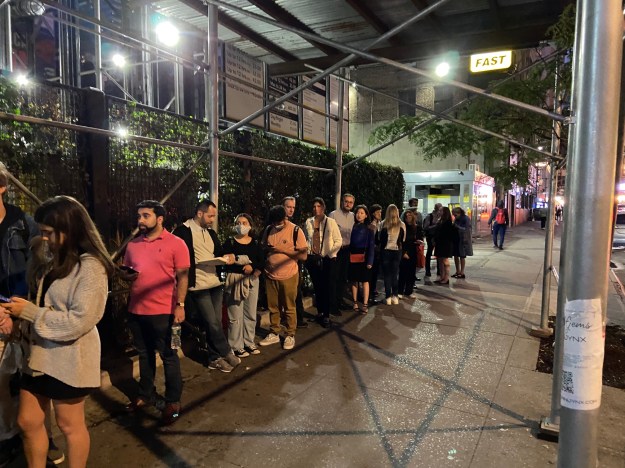
The food at Birdland was decent and the service excellent, especially considering they had just reopened two nights before. Interesting to us that there were so many young people in the audience. Here are photos of the line waiting to get in for the second show:

When we emerged after the show, we saw this:

a moving reminder of the scene just out of our apartment window during our three-year sojourn in the big city.

Sadly, we have lost the Jazz Standard to the pandemic, but the Village Vanguard and Smoke will hopefully reopen soon, and jazz will once again resound through the streets of New York.

On Sunday we lunched with a New York friend at Tavern on the Green, another great nostalgic return. That night, we dined at The Leopard at Des Artistes on West 67th. Our guest was my wife’s ballet instructor, Finis Jhung, New York City’s renowned ballet master. He danced with Joffrey Ballet, had his own company at one point and has trained some of the world’s greatest ballet dancers and Broadway stars. A very interesting person with whom to chat.

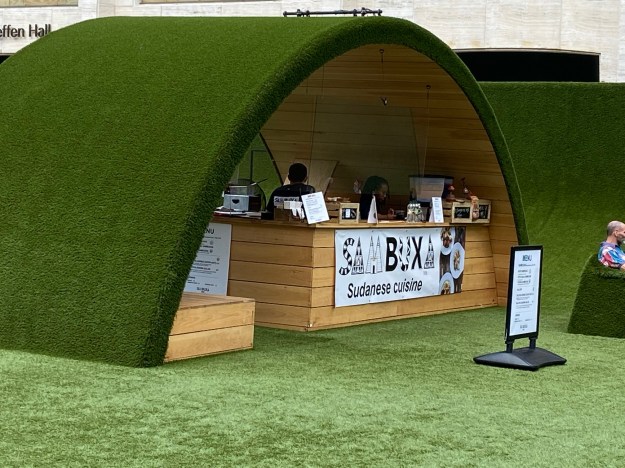
On Monday my New Jersey-resident daughter and family, my two grandsons in tow, joined us for lunch at Rosa Mexicano near Lincoln Center, which is just up the avenue from our old apartment. After lunch, we walked to Josie Robertson Plaza, the center element of the Center with its Revson Fountain running again. The Plaza has been completely covered in AstroTurf, with seats and other features (food stall, reading area) and is perfect for lounging around on a lazy day, which is just what we encountered:

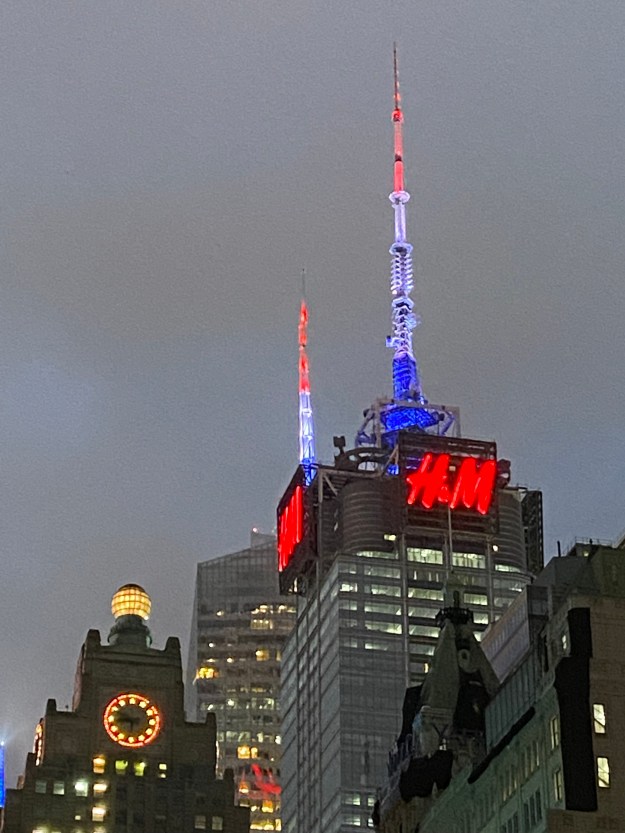
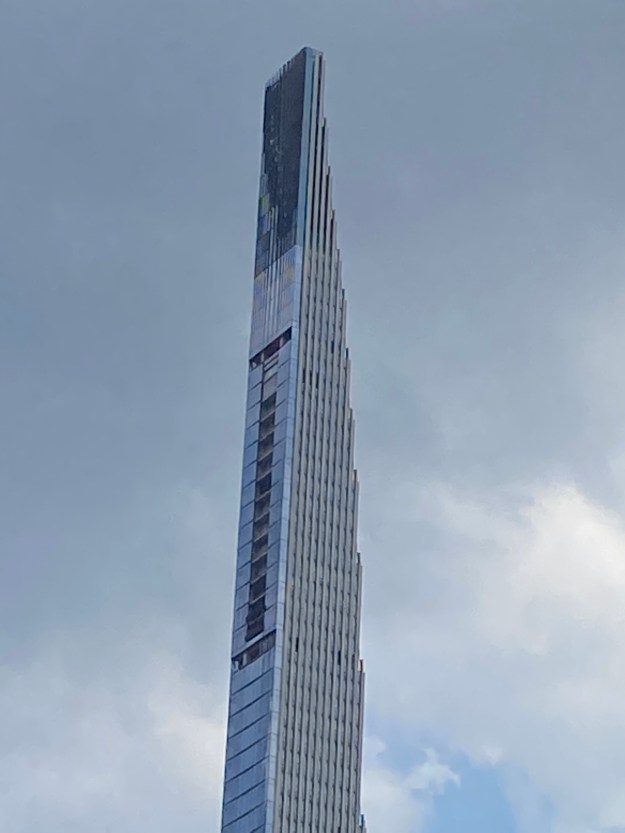
Finally, when in NYC, one should always look up. In addition to surprising art and architectural features, there is the sheer magnitude and daring of buildings like these:

If you don’t look up from time to time, you miss it.

Go Back Where You Came From!!

If you’ve been paying attention, you have seen many videos and news reports of people, on the street and in stores, yelling at, usually, Black people but also Asians, Latinos, Arabs or other “non-whites”  that they should “go back where you came from, you _______!” The blank often includes an obnoxious epithet of one kind or another that I choose not to repeat. You know what I’m talking about.

For the past three years, we lived in, and loved, New York City and in the course of that time observed literally hundreds of ethnically diverse people everywhere. It is reported that over 200 languages are spoken by people in New York City and on any given walk, if you paid attention, you usually heard quite a few.

That mixing does not imply harmony, of course. One rainy night, a torrential downpour actually, we emerged unprepared from a Broadway show but miraculously caught a taxi near the theater. Traffic was a snarled mess even by New York City standards, with vehicles and soaked pedestrians fighting for space. Our taxi and another vehicle, likely an Uber-type, came close to each other. No contact was made, but the drivers glared at each other. Our driver lowered his window and began muttering epithets at the other, who appeared to return the insults. The words weren’t about driving but about ethnicity. It wasn’t clear who was what, but it was clear enough that they hated each other on sight.

A while back, after we moved to Washington DC, it occurred to me to conduct a little thought experiment about this “go back where you came from” business. Because I have other things to do, I was forced to use a shortcut for my research: Wikipedia, the modern source of all knowledge not found in Google. I found three articles particularly relevant to my quest: American Ancestry (https://bit.ly/353Ywx8), Native American Ancestry (https://bit.ly/2KLJ4io), and Americans (https://bit.ly/3oc8Omj). Woe to the serious researcher.

My concept is straightforward: if everyone “went back where they came from,” where would they go and what would be the consequences, especially for those people most prone to yell this message at others presumed to come from somewhere that is not here.

The astounding complexity of this task became immediately apparent in thinking about my own “origins” (not genetic origins in the sense of ancestry.com or 23andMe.com, although that path would have similarly complex implications). My maternal grandparents emigrated to the United States from Russia. My father’s lineage, I was told, was Dutch but there is no objective evidence remaining to support that belief. So, set me aside for a moment and let’s look at some data.

Wikipedia reports that 6.6 % of the US population (21,227,906) self-identifies as “American.” They reside mainly in southern and midwestern states, speak only English and claim to be mostly Christian (Protestants). They appear to be White.

Much of this is attributed to the length of time their ancestors have been in the United States, as these people tend to have English, Scotch-Irish or other British ancestries.

Nevertheless, according to the U.S. Census, “the vast majority of Americans and expatriates do not equate their nationality with ancestry, race or ethnicity, but with citizenship and allegiance.” I am reminded of the fictional Popeye the Sailor Man’s famous line, “”I yam what I yam and that’s all what I yam.” Apparently, many so-called “Americans” have taken Popeye to heart. They have managed to forget their real origins, somehow coming to believe that they are the true original “Americans” with some unique entitlement to the space between the oceans.

On the other hand, given the re-emergence of racism, white supremacy and related bigotries in American behavior, there is now reason to question whether the Census is asking the right questions. Donald Trump didn’t create racism; he simply re-legitimized its expression, with horrific results.

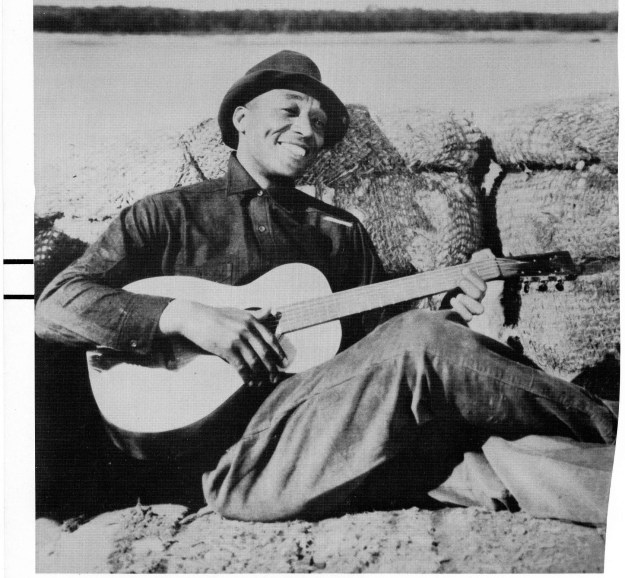
If you don’t get that, let me return briefly to my personal history. I recently came upon some photos I had scanned from my high school yearbook – Central High in Memphis, Tennessee, circa 1960. At the time Central was very well-regarded among public high schools, at least in the south. Here are two  photos from that yearbook:
Add to this that my junior high school history teacher made explicitly clear to our class that, in addressing the U.S. Civil War, there was to be no discussion of slavery. The War Between the States, we were assured, was not about slavery at all but about “states’ rights.” The reality that those “rights” involved legitimizing the ownership of one group of people by their white “masters” was, well, not to be mentioned.

I am not informed about the content of pre-college curricula around the country. I cannot, therefore, say with confidence that the distortion of history, the removal of civics courses and related “education” moves have produced the generations of ignorance that led 74 million Americans to vote for the likes of Donald Trump in 2020.

But, returning to my main theme, I can say with some confidence that the “go back where you came from” insult is based on a fundamental failure to grasp reality. For example, the self-identification of “American” in the Census is a gross example of what may be one of the first instances of cultural appropriation in “American” history.

The earliest use of “American” to “identify an ancestral or cultural identity dates to the late 1500s, with the term signifying “the indigenous peoples discovered in the Western Hemisphere by Europeans.”  The term was later extended to the white colonists from Europe. Skipping over the sordid history of early-comers’ resistance to newcomers from Ireland, Germany and other European countries, including many Catholics, the modern-day U.S. Census Bureau now defines “ancestry” as a reference to a person’s ethnic origin or descent, ‘roots,’ or heritage, or the place of birth of the person or the person’s parents or ancestors before their arrival in the United States.” That wide-open approach clears the path to ignoring reality by millions of people. They don’t have to think hard about it – “I’m American….You, on the other hand …..”

Among Census responders self-identifying their ancestry as something other than just “American,” the numbers are:

44.2 million — German

22.8 million English

4.5 million Norwegian

4.5 million Dutch

.6 million Finnish

33 million Irish (many more likely if survey had been done on St Patrick’s Day)

10.4 million French

15.6 million Italian

12.2 million Mexican

5.2 million Native American

10 million Spanish

46.7 million African American

5.8 million Puerto Rican

That collection totals 215.5 million people, roughly two-thirds of the US population. Add to that the 6.6 percent who are just “American” (21,227,906) and you get 236 million people. The rest (roughly 100 million) identify with some other origin, but don’t claim to be “American.”

Wikipedia quotes Professors Anthony Daniel Perez and Charles Hirschman in a 2009 publication for the proposition that

ethnicity is receding from the consciousness of many white Americans. Because national origins do not count for very much in contemporary America, many whites are content with a simplified Americanized racial identity. The loss of specific ancestral attachments among many white Americans also results from high patterns of intermarriage and ethnic blending among whites of different European stocks.

I wonder about that in light of developments since at least 2016 when Trump became president. It appears that the issues surrounding “otherness” have re-emerged with a vengeance since Trump became a political factor. That’s one reason for the imbalance of police force used against Black and Brown people here, as well as the “go back where you came from” carping that has emerged in video after video of (almost always) white people yelling at a person of color.

While non-Native Americans have occupied this land for a few hundred years, the fact remains that every one of the “white” people here came from, directly or through an ancestor, from somewhere else. It’s convenient, of course, to overlook that reality if you are one of those people who, with a sense of entitlement, has come to resent the presence of people who don’t look like you, talk like you or think like you.

The 2010 Census aligned U.S. responders this way:

Self-identified race Percent of population
White 72.4%
Black or African American 12.6%
Asian 4.8%
American Indians and Alaska Natives 0.9%
Native Hawaiians and Other Pacific Islanders 0.2%
Two or more races 2.9%
Some other race 6.2%
Total 100.0%

Reading the descriptions of racial and ancestral categories used by the Census and other surveys will simply make you more confused. By way of example only,

People of European descent, or White Americans (also referred to as Caucasian Americans), constitute the majority of the 308 million people living in the United States, with 72.4% of the population in the 2010 United States Census. They are considered people who trace their ancestry to the original peoples of Europe, the Middle East, and North Africa. Of those reporting to be White American, 7,487,133 reported to be Multiracial; with largest combination being white and black. Additionally, there are 29,184,290 White Hispanics or Latinos. Non-Hispanic Whites are the majority in 45 states. There are five minority-majority states: California, Texas, New MexicoNevada, and Hawaii. In addition, the District of Columbia and the five inhabited U.S. territories have a non-white majority The state with the highest percentage of non-Hispanic White Americans is Maine.
Everyone clear on all that? No? Me neither.

I will spare you further agonizing over the details. The main point is, and I believe it’s conclusive, that if we all went back where we came from, there would be damn few people left in the space we now call the United States.

So what, you may say. That’s not going to happen. True enough. But it should give us pause in how we view “America” and who we really are. It is no exaggeration to say, “we are all immigrants.” Maybe not first removed, but the vast vast majority of people who think of themselves as “American” are, by history, transplanted foreigners who occupied land that actually “belonged” to no  one (Native American populations often did not consider the idea of “property” to apply to the land – this was one of the ruses used to excuse white invaders’ taking their land: if they don’t “own” it, it’s there for anyone who wants to stake a claim to it. When the Native Americans resisted, they were killed or imprisoned, one way or another, in the service of “manifest destiny.”)
Still, the “so what” response must be reckoned with. Millions of people have simply lost, by one means other another, their connection to their historical roots, choosing to believe they are the original people who are entitled to everything they want by virtue of some supposed universal superiority. That fantasy is part of the root of the delusional thinking that divides the country politically and otherwise. A very long time will pass before it is resolved but it would help a lot if the educational system stopped reinforcing the illusion. The first step to resolving a problem is recognizing you have one.